

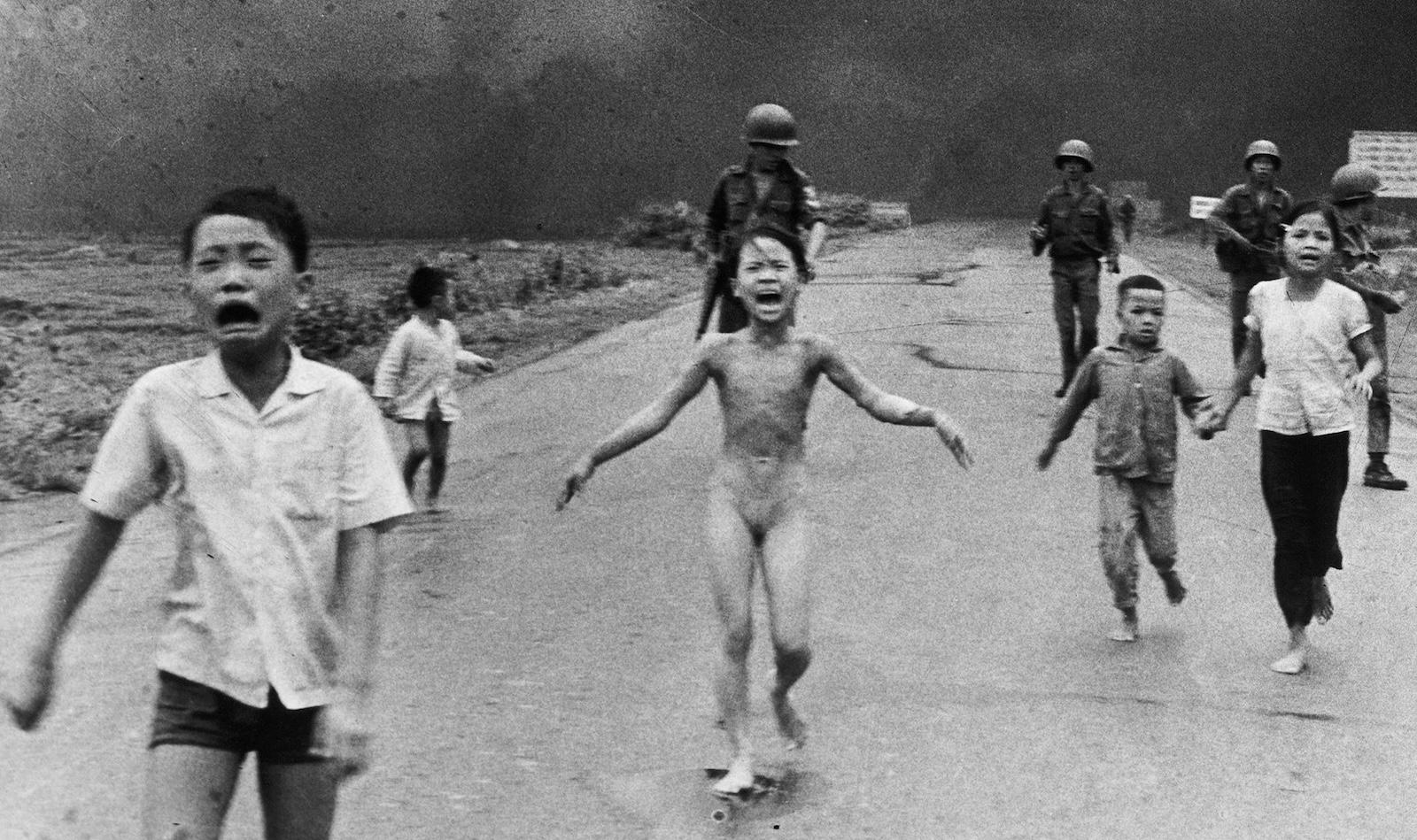
Of course, any artist wants to safeguard his or her intellectual property for professional and financial reasons, but when it comes to war photography, the identity of the creator takes on larger connotations having to do with bearing witness and seeing justice done. Ut has commented extensively on his personal connection with the girl at the center of the photograph. After taking the picture, he put his camera aside and brought her to a hospital, where her life was saved. “I saw Kim running and she [screamed in Vietnamese] ‘Too hot! Too hot!’,” Ut recalled. “I cried when I saw her running. If I don’t help her, if something happened and she died, I think I’d kill myself after that.”
The girl, Phan Thi Kim Phuc, recovered, grew to adulthood, was exploited for propaganda purposes by the Communist government of Vietnam, and eventually escaped to Canada. She and Ut have remained lifelong friends. Ut’s narrative of these events is a modern-day equivalent of the terse Yo lo vi (“I saw it”) that Francisco de Goya inscribed beneath an etching depicting atrocities committed during the Peninsular Wars in early 19th-century Spain—which could be considered photojournalism before the invention of photography (The title of the series to which the etching belongs, The Disasters of War, itself anticipates the title of the Vietnam photo). The authenticity of such visual documents is sealed by the personal statement of the eyewitness-artist.
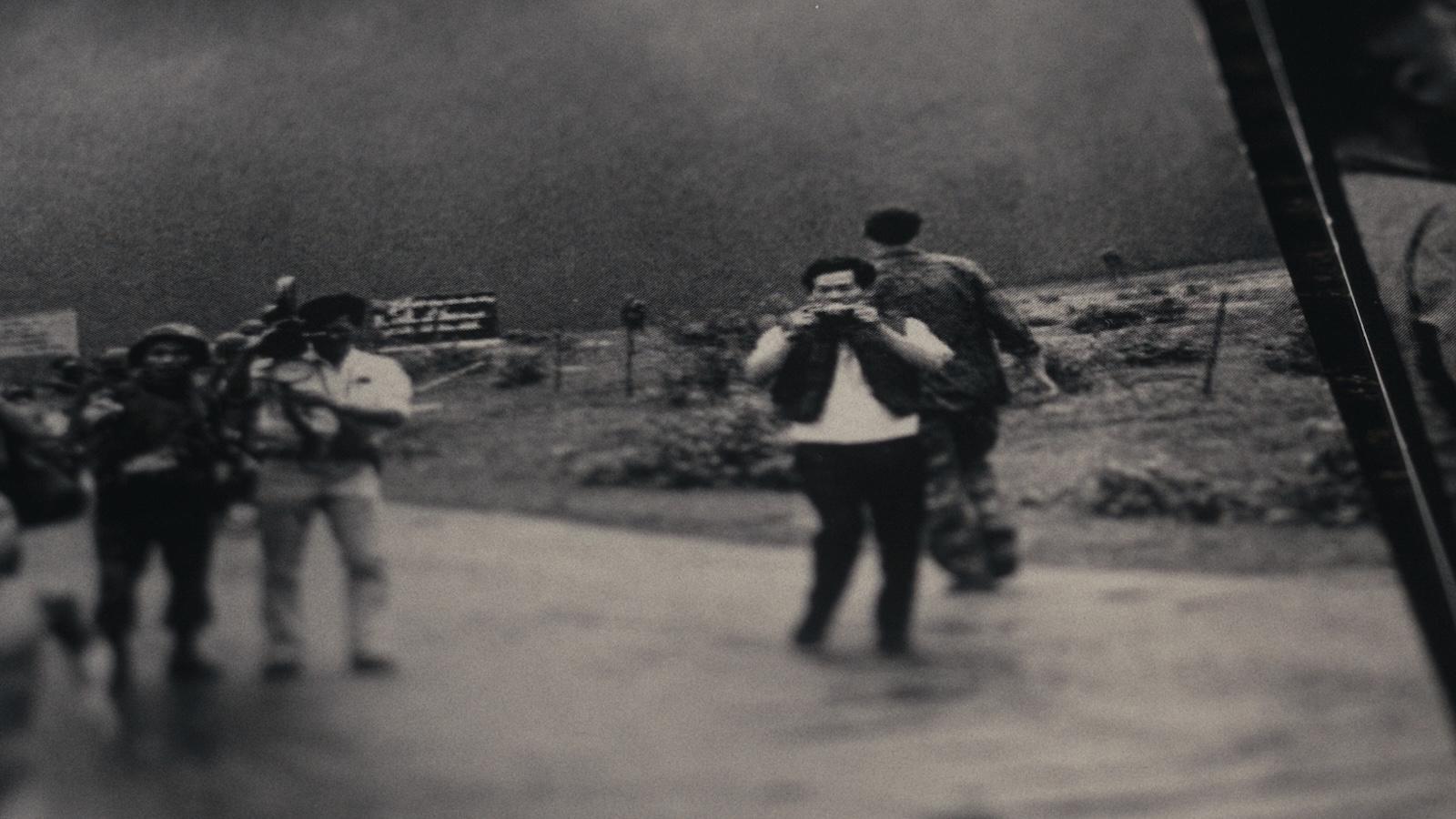
The methods used to assess the authenticity of The Terror of War present an interesting contrast with those used for other kinds of artworks. With a photograph, it is far more difficult to seek out traces of “the hand of the artist” than it would be with a drawing, etching, or painting, so the documentary filmmakers relied on a “geo-based timeline”—a reconstructed chronology of events on that long-ago June 8, coordinated with TV footage supposedly showing the movements of Ut and Nghe. At five decades’ remove, one might be forgiven for feeling skeptical about such an analysis and its conclusions. While no conclusive finding was made as to who actually took the photo, WPP executive director Joumana El Zein Khoury wrote that the “level of doubt is too significant to maintain the existing attribution.” So what we are dealing with here is analogous to the demotion of an Old Master painting to “school of” or “attributed to.” The documentarians also cite physical evidence from the film itself, which they say points to it having been run though a Pentax rather than the Nikon or Leica that Ut most often used. But even that ended up being murky, since Ut responded that he sometimes used a Pentax, as well.
When it comes to photojournalism, and perhaps especially to war photography, the image matters more than the maker, a fact that photographers themselves realize. When asked for details of how he created a particularly astonishing photograph, the great Henri Cartier-Bresson protested, “I tell you, I just happened to be there! I’m not responsible!” For a photographer of war, being there is an act of responsibility, as well as an act of courage. Faced with the image of a girl stripped not only of her clothing but of much of her skin, focusing on who pressed the button feels beside the point.
*This article originally appeared in Art & Object Magazine's Fall 2025 issue.