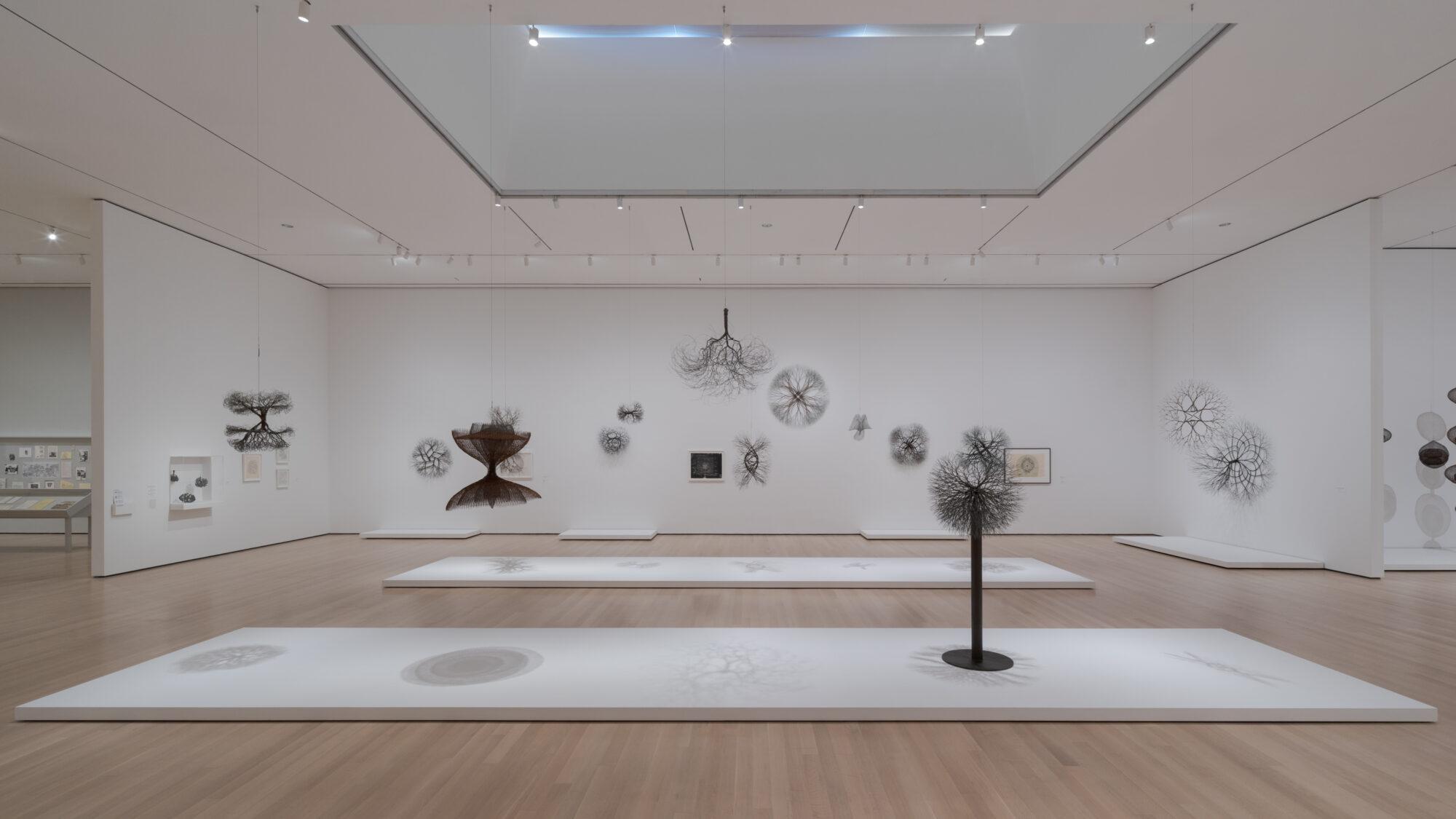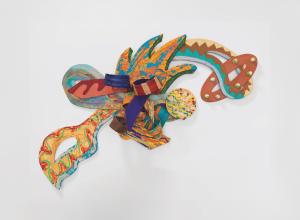
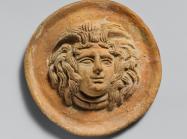

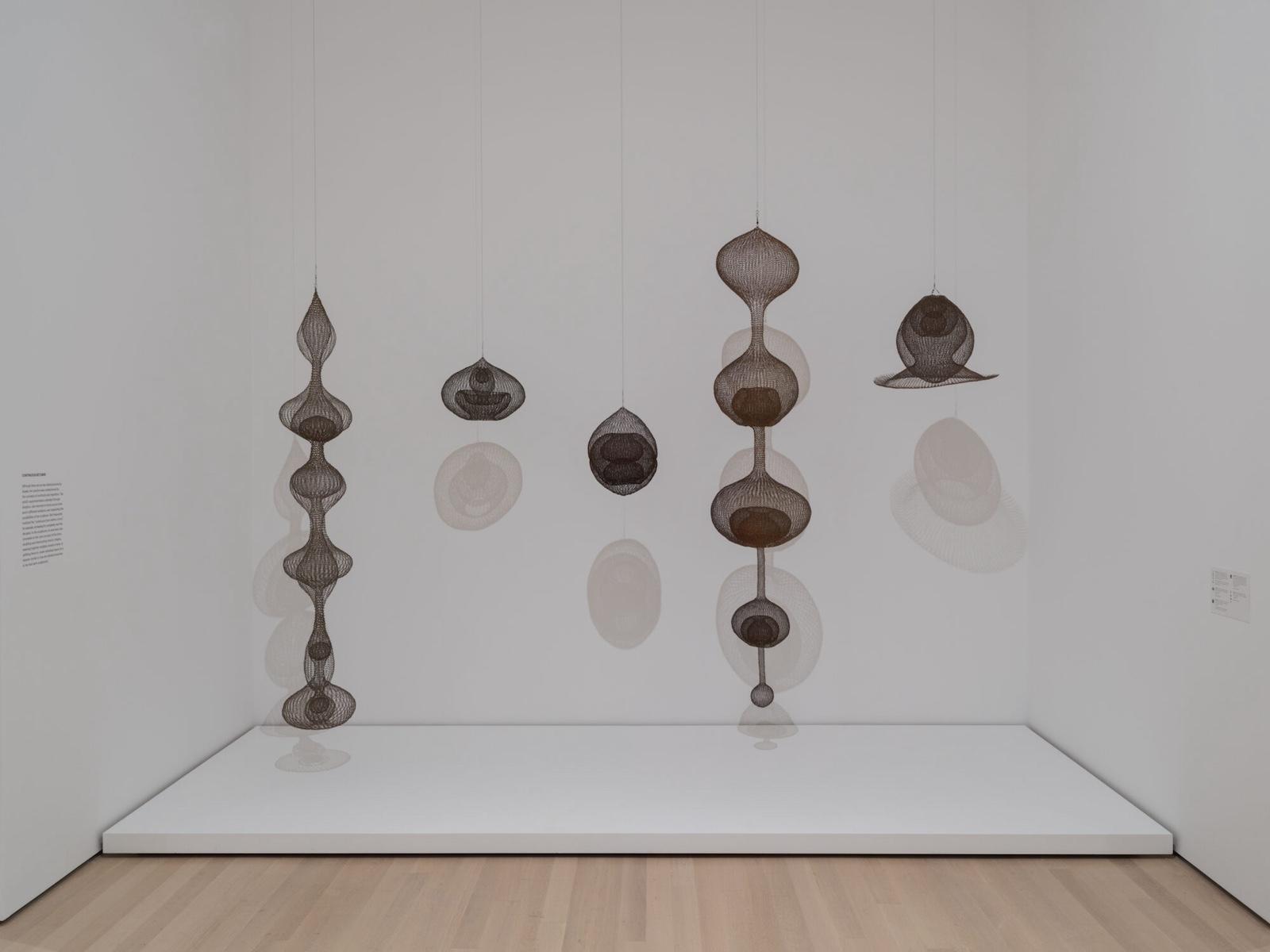
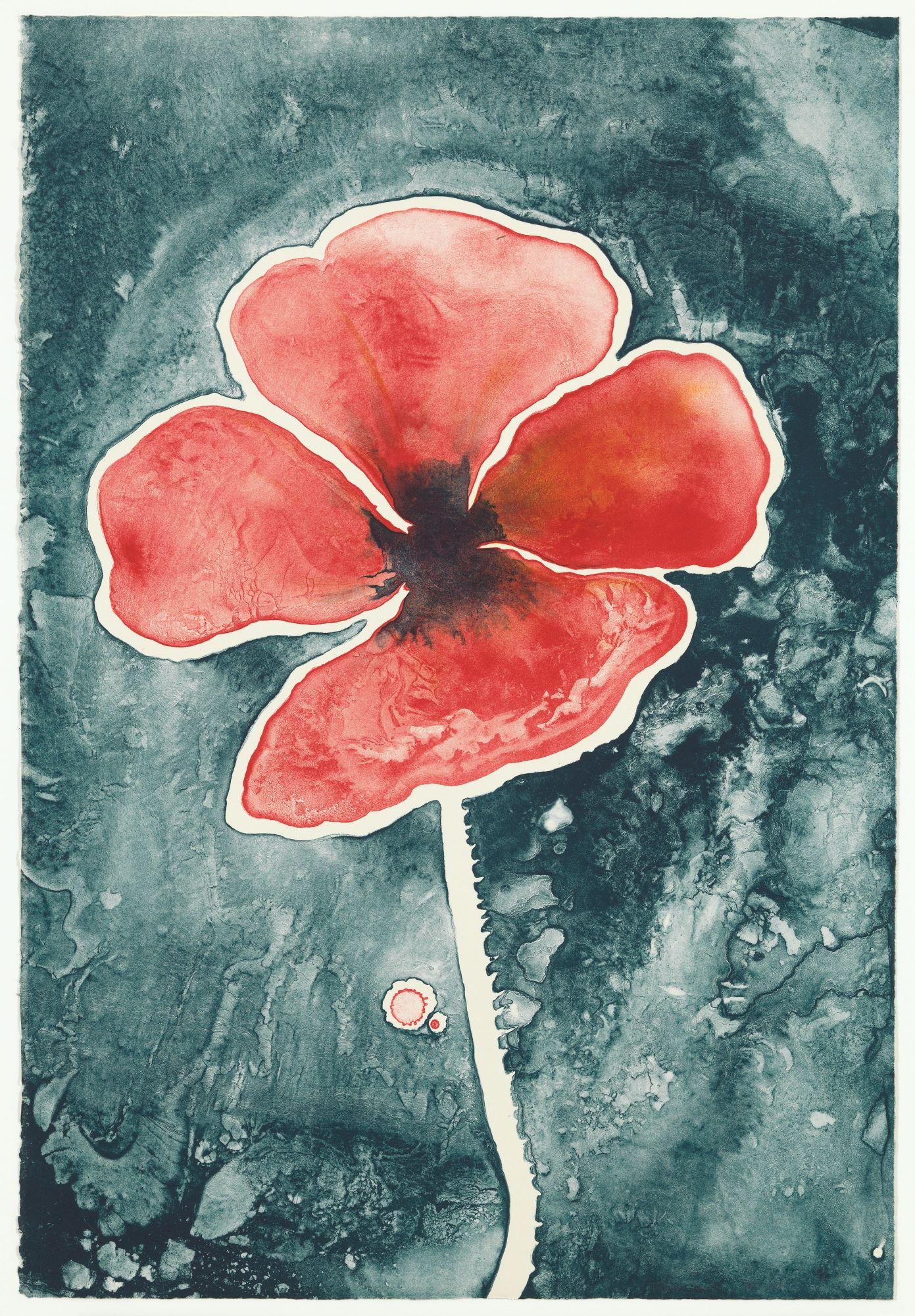
Born to Japanese immigrants in 1926, the artist died when she was 87. The retrospective clearly shows her massive output over six decades. Along with photographs, letters, and video, there are delicate line drawings on paper—cherries, apricots, chrysanthemums, fennel blooms, bouquets of flowers—notebooks filled with drawings, lithographic prints, bronze casts, paintings, screentones (a texturing technique) on matt board, rubber stamps inked on paper, potato prints, bisque-fired clay masks, and her work with children, such as a huge collage with playdough figures. The 16,000 square-foot exhibit with over 300 objects, along with her gorgeous wire sculptures, seems to keep on expanding, breathing with energy.
Traveling from SFMOMA to MoMA, this is the largest exhibit devoted to Asawa by these two museums. Co-curated by Janet Bishop (SFMOMA) and Cara Manes (MoMA), they have mounted an elegant, powerful show of grace and strength. The amorphic, dancing shapes, dark and light grey, black and silver wire, the muted shadows, the inside/outside of the shapes—only a woman could have created this work, and only women who surrendered so completely to the work could have created an exhibition that feels like an Asawa creation. The galleries keep on unfolding. There is always more coming, enveloping you in other-worldly wonder.