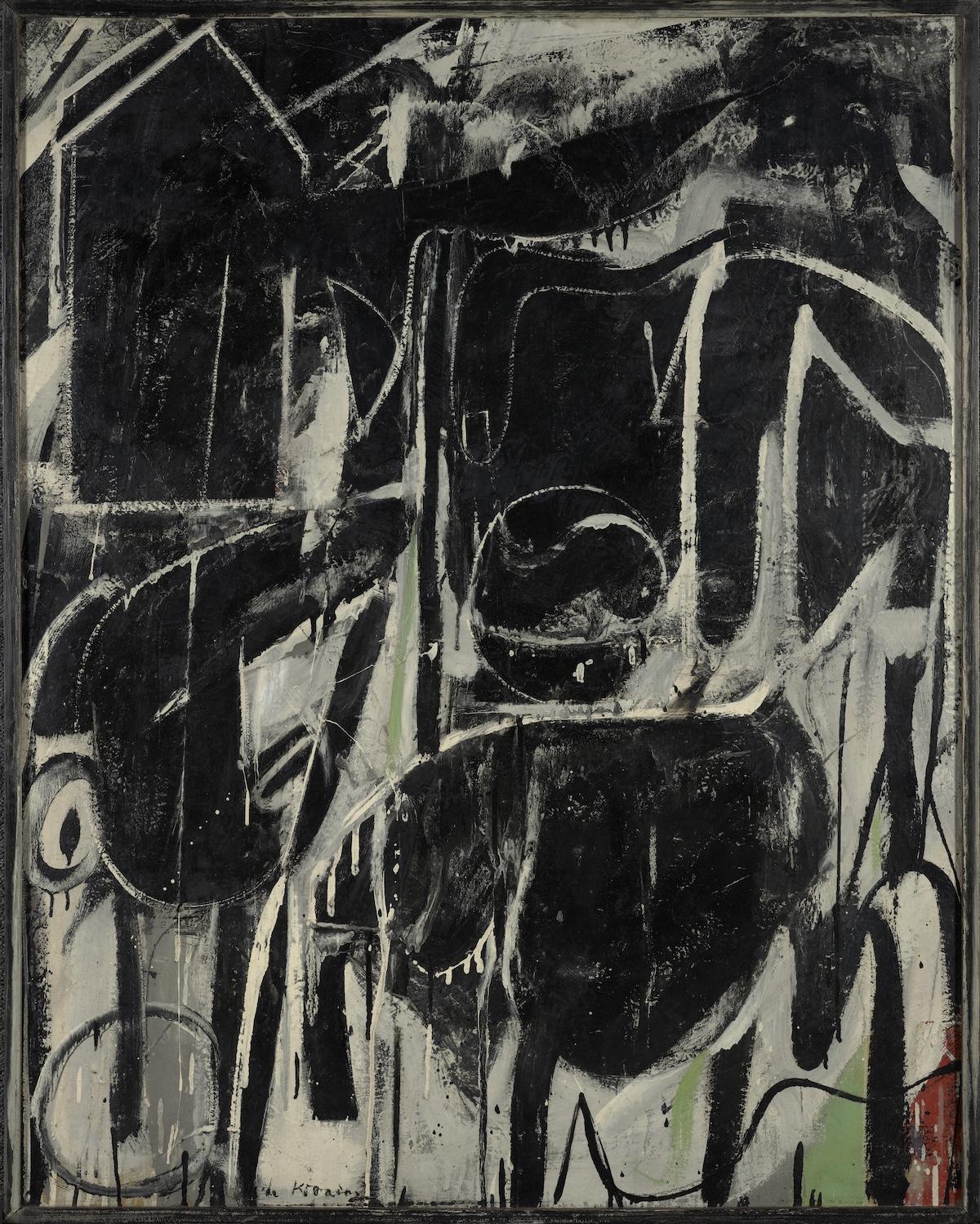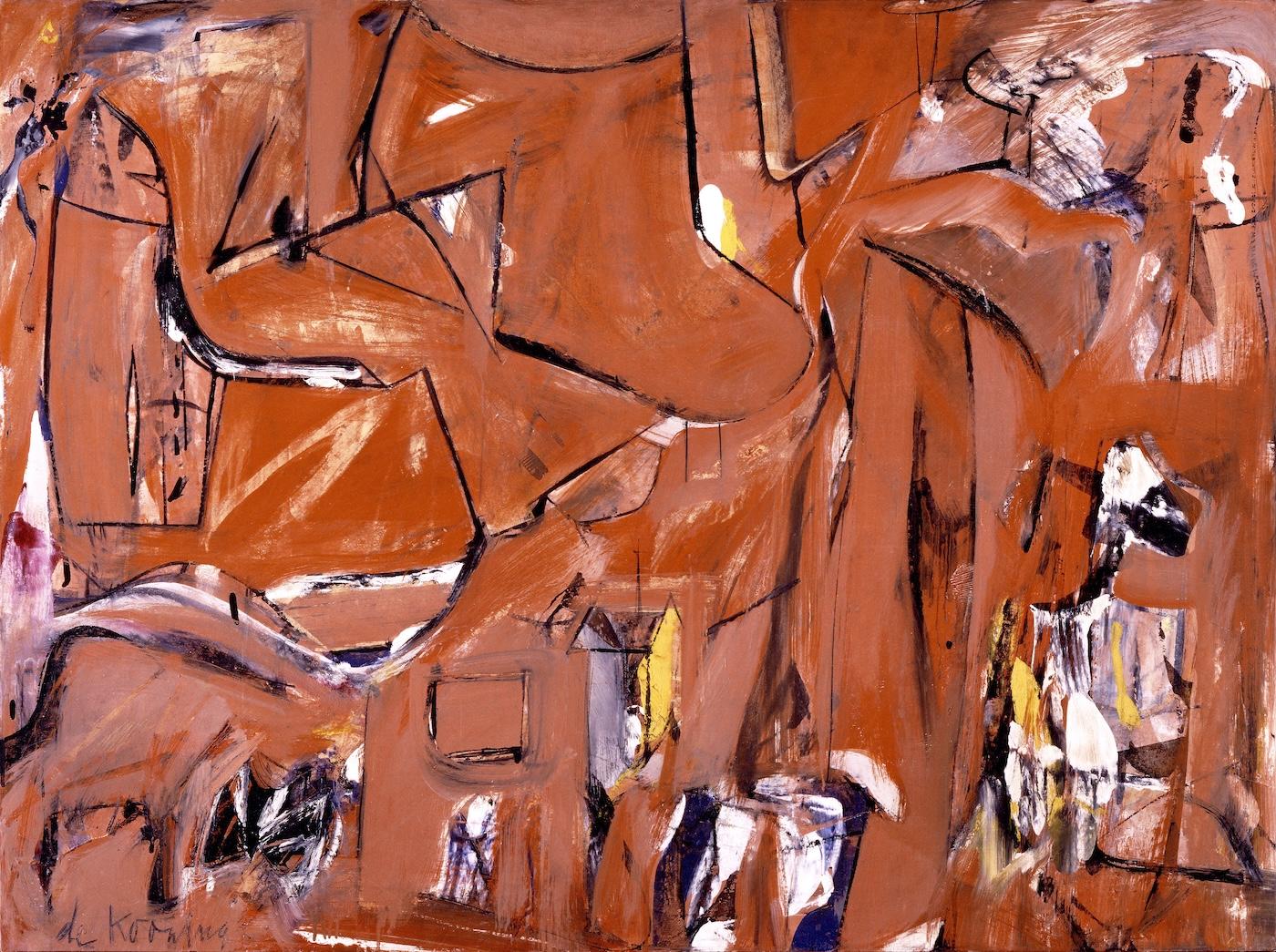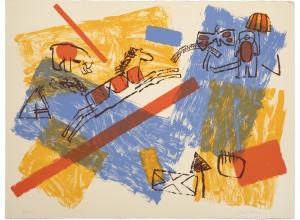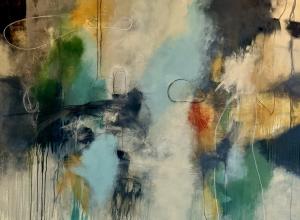
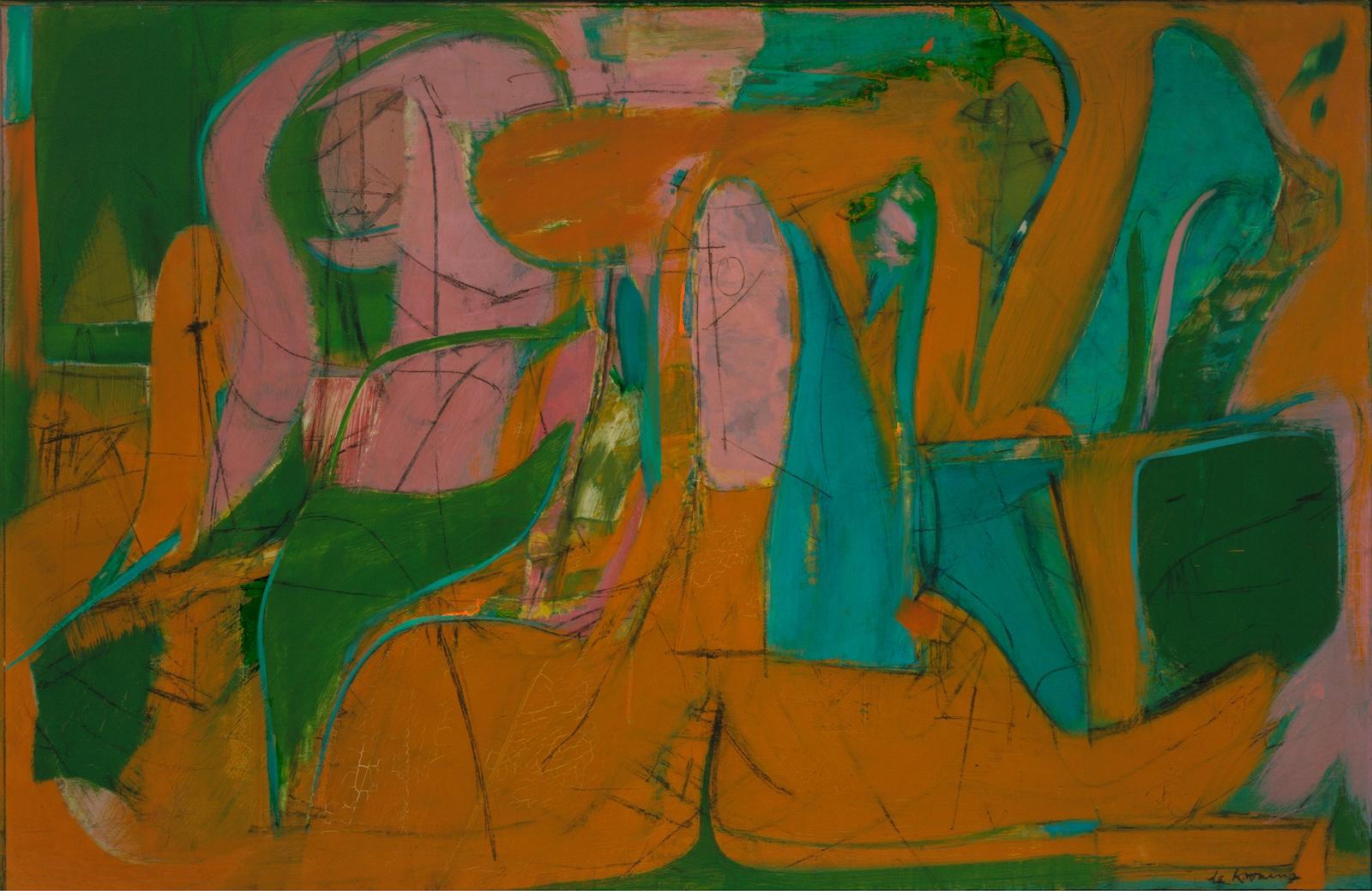
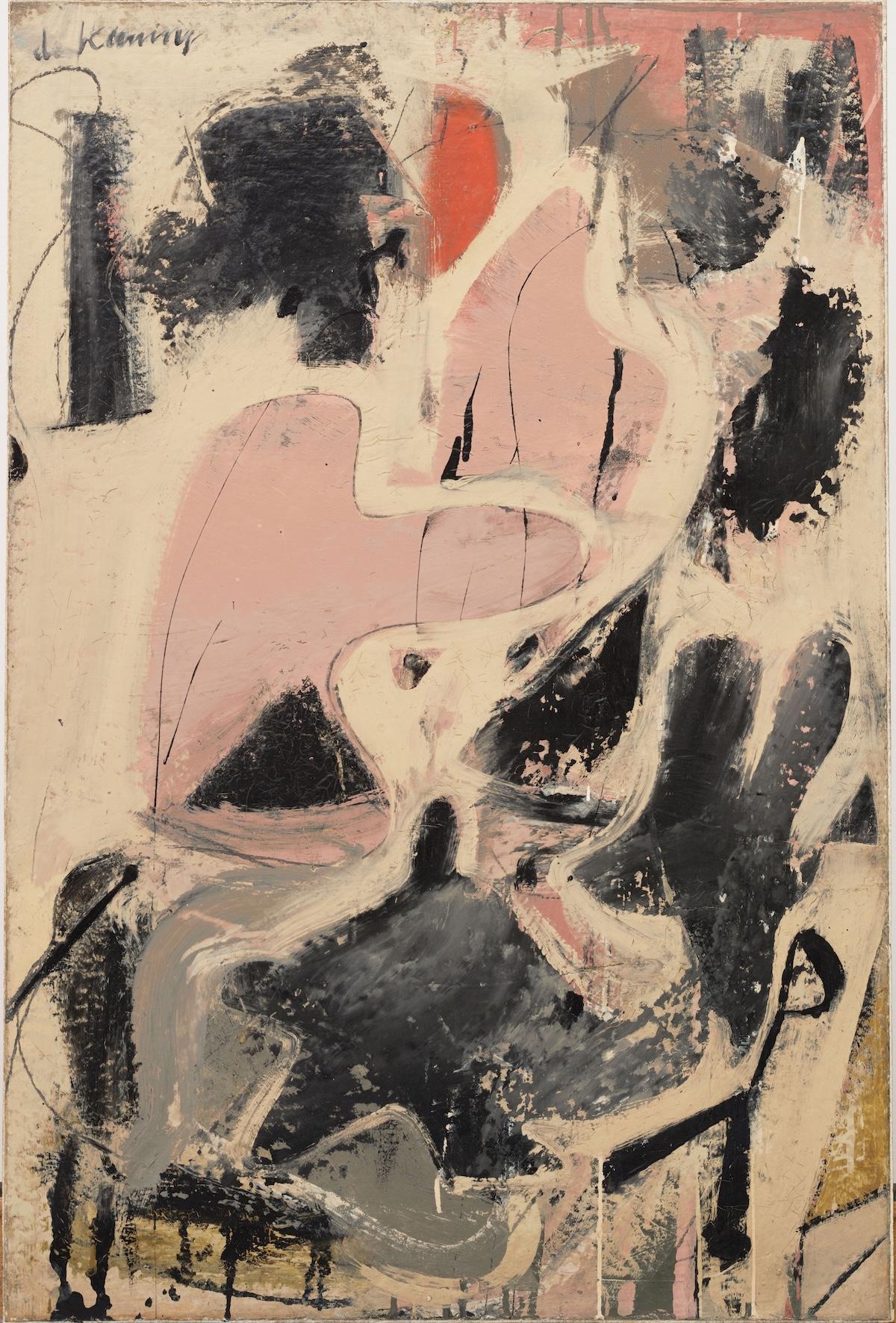
A current exhibition, Willem de Kooning: The Breakthrough Years, 1945–50, at the Princeton University Art Museum focuses on de Kooning’s art in the formative and thereby significant years when he established his style and laid the groundwork for his future reputation. De Kooning set about to explore a new definition of painting, a focus on both color and gesture. His gesture—his signature mark—was bold, swift, and heavy. He applied paint on the canvas wet, thick, and demonstrating speed. In his earlier pieces, he worked toward this more mature style.
In the Princeton show, viewers can see de Kooning’s first steps toward thinking about assembly, the abstract image, in both color and black and white. It demonstrates a process where the canvas is a place, like a stage, where the action of painting is recorded—a very personal and highly subjective point of view for the artist.
Breaking through the boundaries of Cubism and Surrealism, he formulated a method whereby the canvas became a field in which paint lived, and action appeared through brush strokes, patches of color, and the gifted line of a well-trained draughtsman. The result is a vibrant living canvas, one that exudes energy and at the same time a sense of discovery as the eye is provoked by color and texture. De Kooning made painting a drama, not simply the act of representation, but the expression of being a painter, demonstrated by the drawn line interwoven on the canvas. The two key words used to describe his work are immediacy and improvisation, like the music of the day, both rhythmic and syncopated.