
At Large  June 22, 2026  Christopher Siwicki

A Look at the New Piazza Around Rome’s Colosseum

Photo by Christopher Siwicki

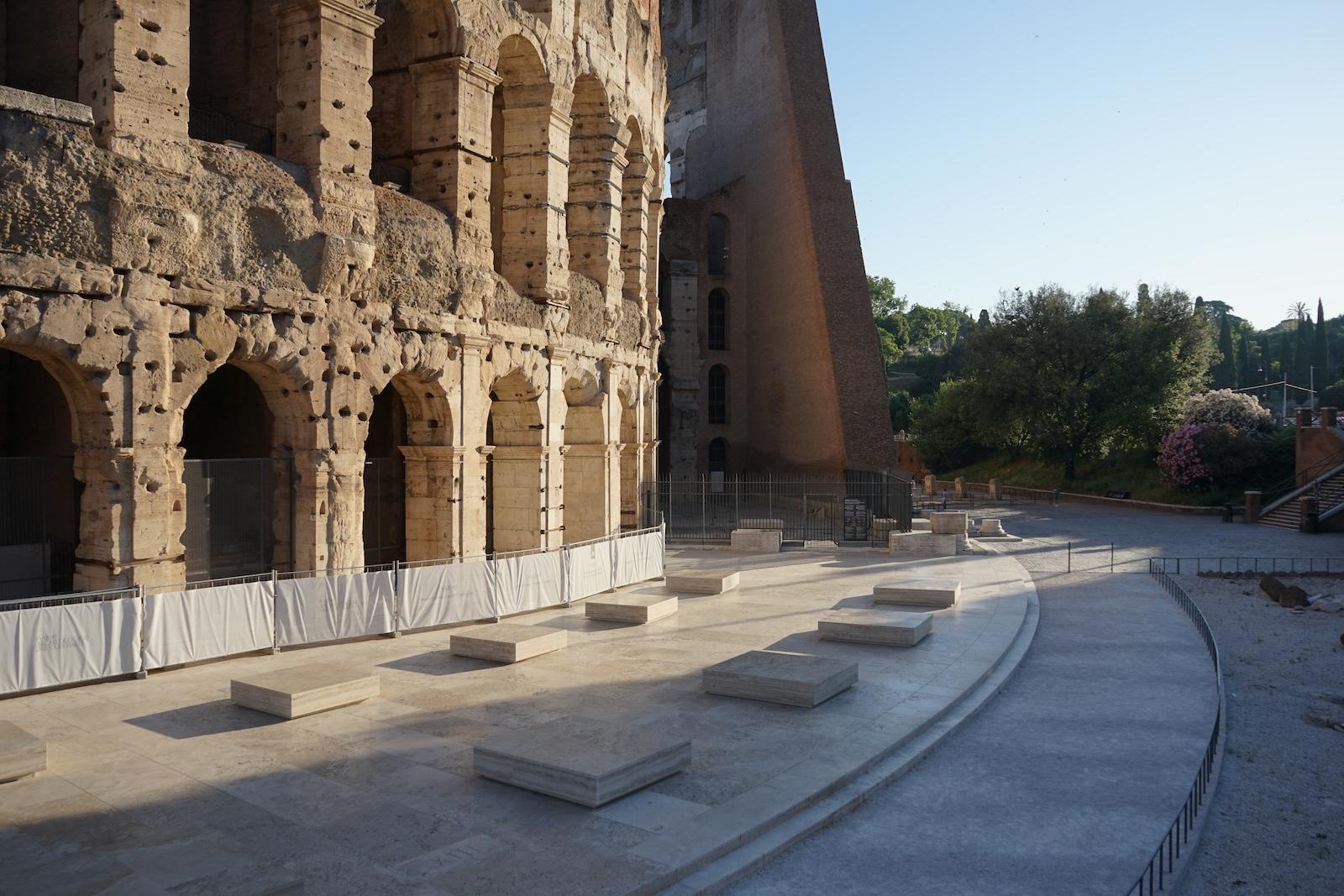
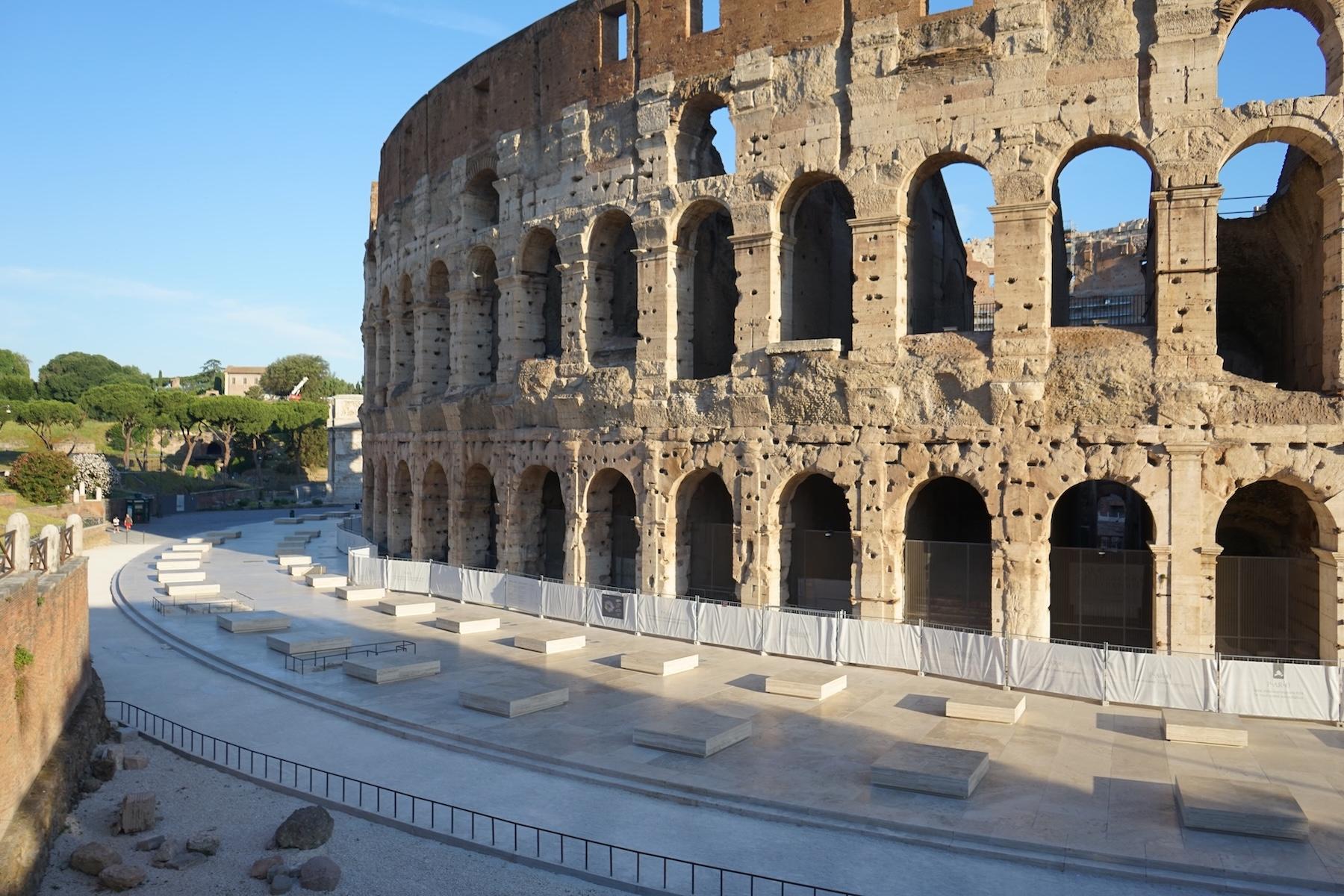
New piazza on south side of the Colosseum.

The south side of the Colosseum, Rome’s most famous ancient monument, has been revamped as a new public space. Opened in March, the piazza is the culmination of a four-year project, which began with the excavation of the area in 2022.

Photo by Christopher Siwicki

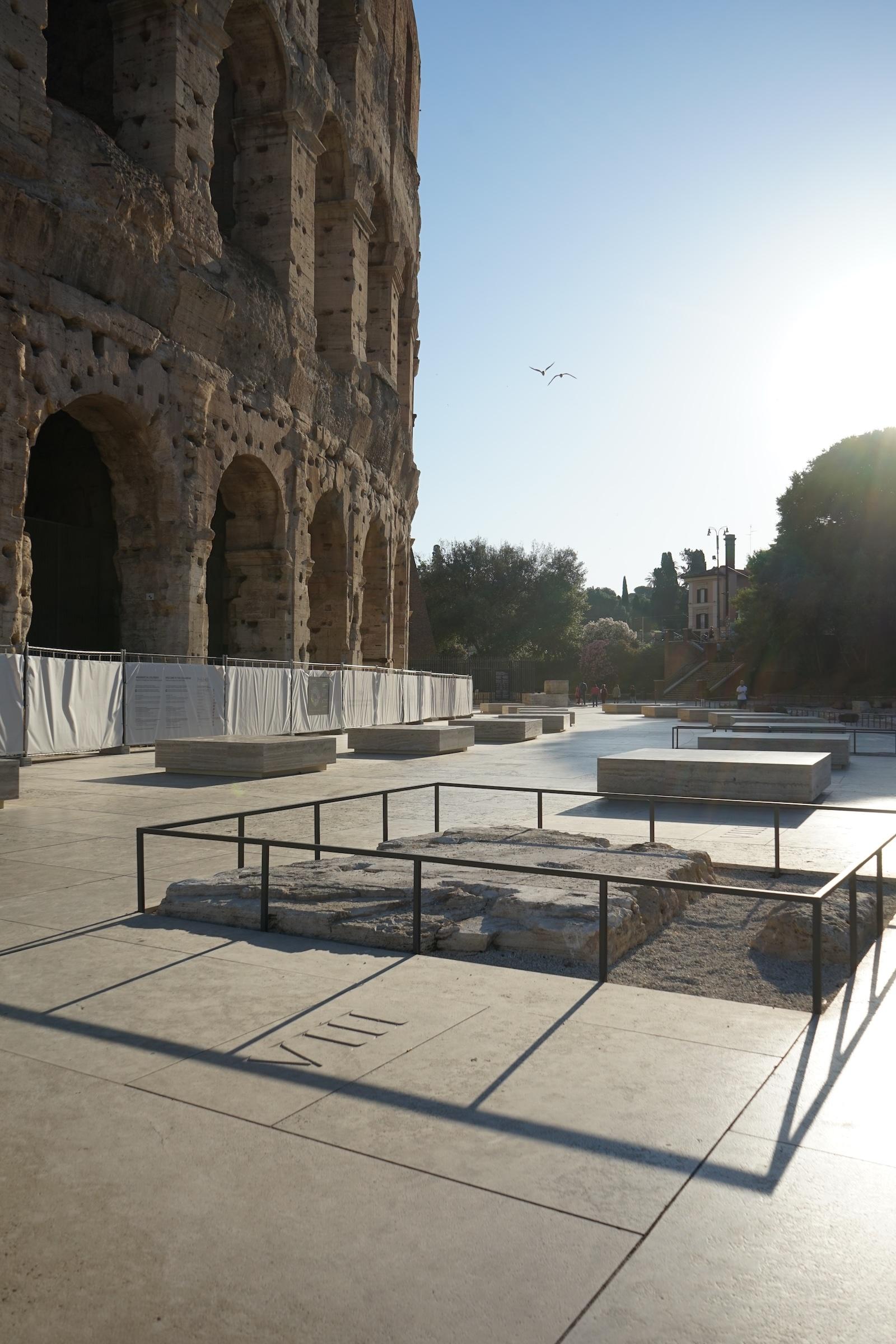
Benches and steps of the piazza with foundations of an ancient pier in the foreground and VIII inscribed on the paving.

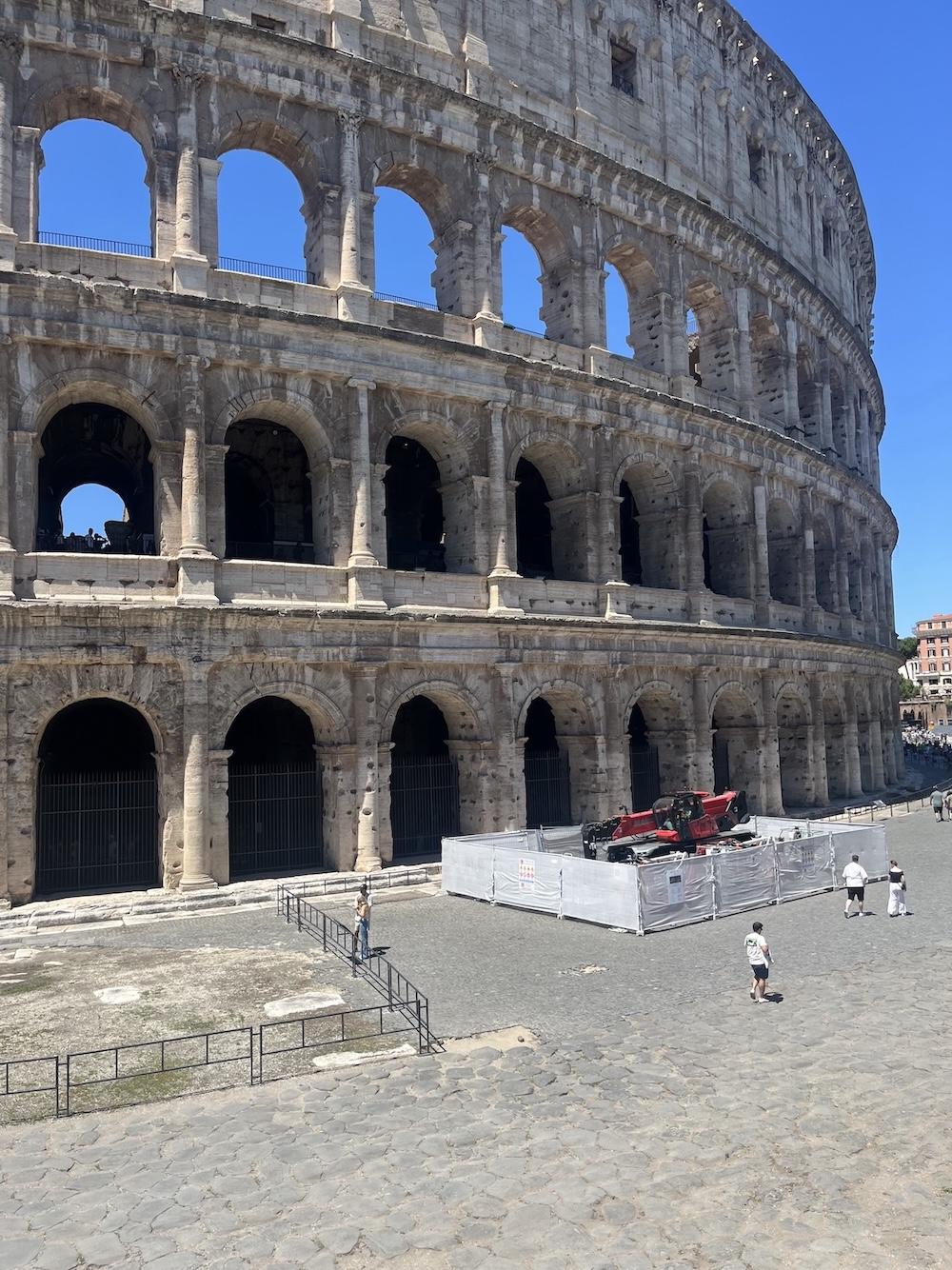
The largest amphitheatre in the Roman world, once measuring 545 meters around and rising 48 meters high, its facade comprised a series of stacked arcades, with 80 arches at ground level providing access to the arena. In the late Middle Ages, long after the Colosseum had ceased to be a venue for gladiatorial matches and animal hunts, the outer perimeter of the south side collapsed, probably in an earthquake. Over the subsequent centuries, the stone was carted off to be reused for building the churches and palaces of Renaissance Rome. It is this more ruined and neglected part of the monument which has been the focus of the recent work.

Designed by the Italian studio Stefano Boeri Interiors, the layout of the piazza is subtle and visually elegant, modern but intentionally respectful of the ancient building. The previous pavement of black, basalt cobbles (Rome’s iconic sampietrini) has been replaced with slabs of local, white limestone (travertine), as used for the amphitheatre’s original paving. Over 40 square benches, also of travertine, mark the position of the piers of the long-vanished arcade, and their level is reached by two steps running around the perimeter, again in accordance with the original design

Photo by Christopher Siwicki

New piazza on the south side of the Colosseum with travertine benches showing where the piers of the arcade once stood.

Incised into the paving between the benches are Roman numerals corresponding to the entrance number that was once inscribed above 76 of the arches, as can still be seen on those of the better preserved north side. Parts of the excavations have been left exposed, including the foundations of some of the ancient piers and a section of the Colosseum’s drainage system. It is a neat design that dramatically improves circulation and helps visitors understand the original layout of the amphitheatre by showing what is now missing.

Photo by Christopher Siwicki

North side of the Colosseum with its outer arcades and facade preserved to its full height.

The piazza compliments the also recently completed works to the north of the Colosseum related to the new metro station, making the entire area far more pleasant to visit than even a few months ago. However, there is an irony that while the ancient builders of the amphitheatre (and Roman architects more generally) placed great emphasis on providing visitors with shade, the new benches are fully exposed to the oppressive heat of the Roman summer sun—a critique that can be leveled at the city’s other new public space in front of the Mausoleum of Augustus—nor can one cool down by buying a drink in the piazza. 

While any proposal for a bar or caffè adjacent to the Colosseum would no doubt prove controversial, the perception that historic monuments should sit in isolation, artificially disconnected from everyday activity, is a 19th-century one. In ancient Rome, entertainment venues such as the Colosseum were served by shops and bars selling refreshments; it is an idea worth revisiting today. 

About the Author

Christopher Siwicki

Christopher Siwicki is an architectural historian, specializing in the ancient world. He is a postdoctural Research Fellow at the Norwegian Institute in Rome and an honorary research Fellow at the University of Exeter. He is the author of Architectural Restoration and Heritage in Imperial Rome (Oxford University Press).

Subscribe to our free art newsletter!

Webform
Art and Object Marketplace - A Curated Art Marketplace