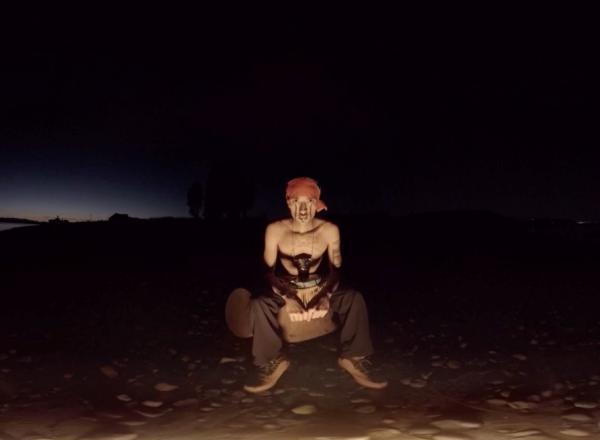
Now at the Seattle Art Museum, Double Exposure juxtaposes the work of iconic early American photographer Edward S. Curtis with contemporary Indigenous artists Marianne Nicolson, Tracy Rector and Will Wilson. Double Exposure contrasts Curtis’s haunting photos of a world he believed would soon be lost with current artistic expressions of Indigenous culture that’s very much alive.
Art Galleries & Museums
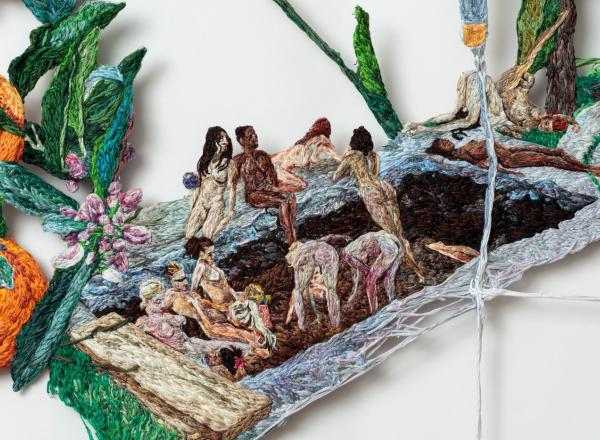
Paul Kasmin Gallery is opening a summer group show this week fit for the solstice. On June 21st, SEED debuts. As its title implies, themes of fertility, the body, sexuality, and the natural world abound. Curated by Yvonne Force, the 29 artists in the show work with variations of these themes in a range of media and styles.
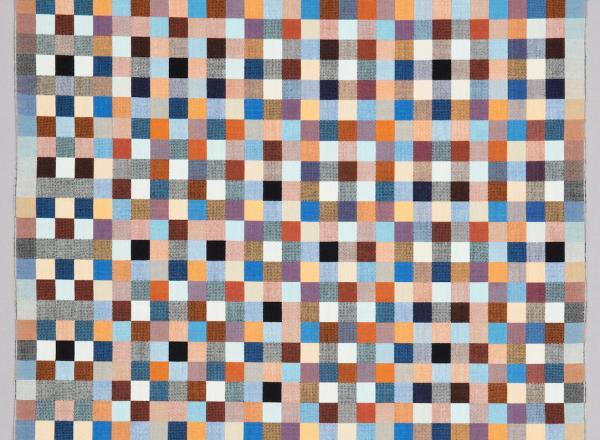
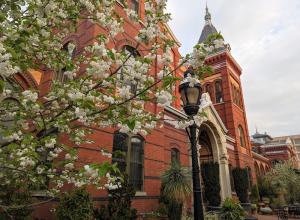
Celebrating several recent acquisitions, Color Decoded: The Textiles of Richard Landis at the Cooper Hewitt Smithsonian Design Museum offers insight into the making of six impressively complex Richard Landis weavings. A master of color theory and double-cloth weaving, Landis’ works are amazing technical feats. Double-cloth weaving uses multiple sets of warps (vertically running thread) and wefts (horizontally running thread). This produces two connected layers of cloth and allows for the resulting fabric to have two right sides (and no backside, as most fabrics do).
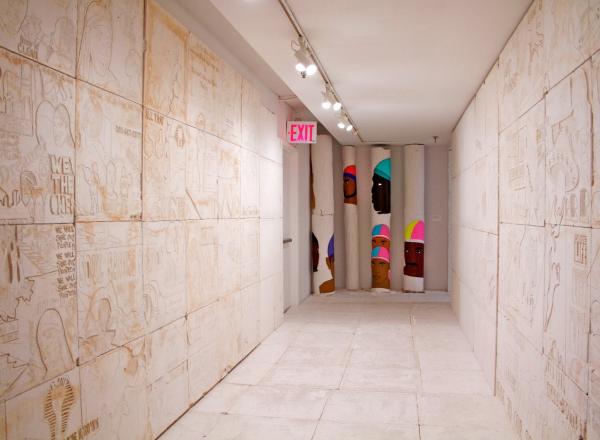
A sampling of current trends is on view at the Hammer Museum’s latest biennial, Made in L.A. 2018. The fourth iteration of Made in L.A., this biennial is an opportunity for the institution to shed light on local, emerging talent and celebrate the unique voice and identity of Los Angeles. With many works commissioned specifically for the biennial, the 32 artists selected touch on a range of themes in many media.
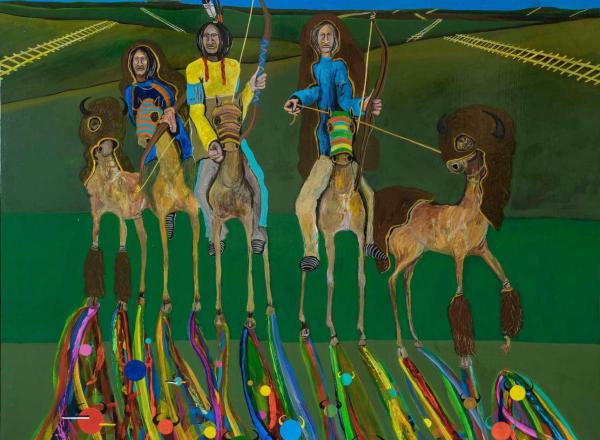
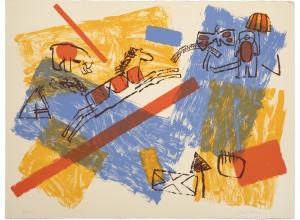
On its final stop of a nation-wide tour, “Horse Nation of the Očhéthi Šakówiŋ” is currently on display at the Minneapolis Institute of Art (Mia).
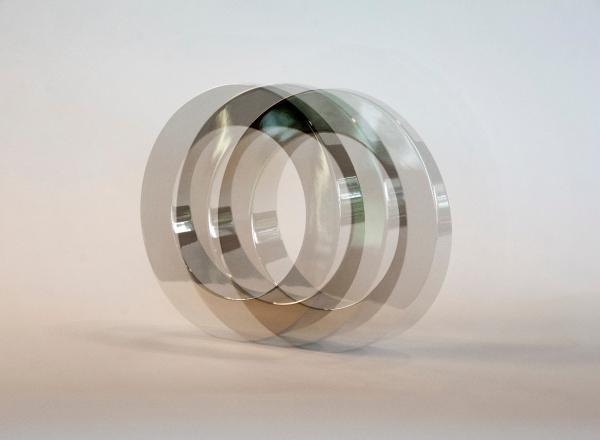
Now at the Long-Sharp Gallery, Tarik Currimbhoy’s first solo exhibition, Sway, fascinates viewers with over a dozen kinetic sculptures, ranging from 9" in diameter to 3' tall. Crafted from stainless steel and bronze with mathematical precision, the sculptures draw on Currimbhoy’s experience as a designer and architect. Expertly fashioned, their sleek, geometric shapes balance or rock in response to gravity and compression. They look striking both at rest and in motion.
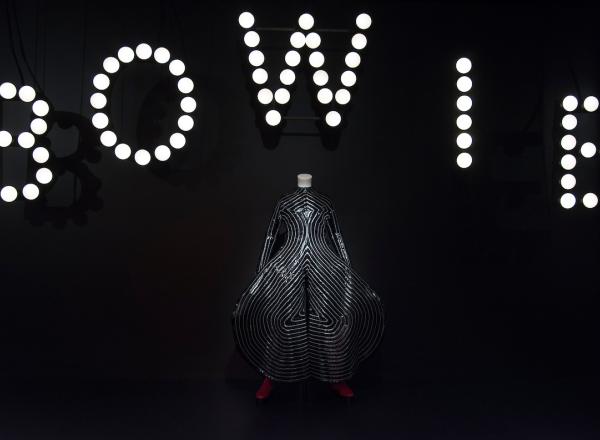
Though the handwritten lyrics and glittering costumes satisfy the crowds flocking to David Bowie is at the Brooklyn Museum, it is rich, unique storytelling that truly sets the popular exhibition apart. The show, which probes the legend’s fifty year career, originated at the Victoria and Albert Museum in London, but is splendidly organized for the Brooklyn’s space by their Director of Exhibition Design, Matthew Yokobosky.

The St. Louis Art Museum’s latest exhibition in its popular contemporary artist series, Currents 115, showcases work by Jennifer Bornstein. Using a variety of media, including etchings, photogravures, photographs, prints and video, Bornstein examines how technological image production, the social and identity-shaping powers of the media and the women's movement intersect.
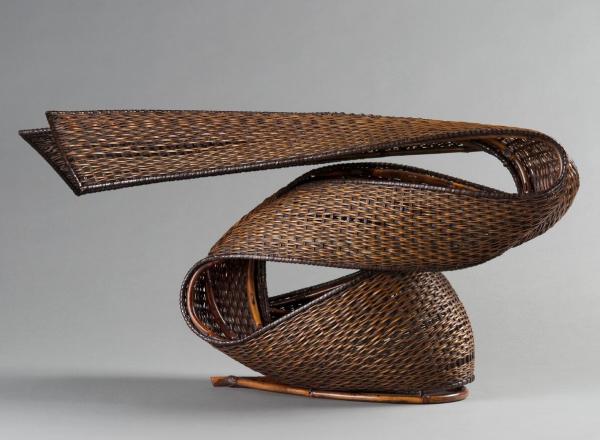
The versatile ways contemporary artists use bamboo is explored in a new exhibition at the Craft and Folk Art Museum (CAFAM) in Los Angeles. Japanese bamboo weaving is an art form that dates back centuries. A uniquely challenging medium, bamboo can be bent, tied, woven, plaited and dyed in a range of techniques that artisans have developed and passed down through generations of masters. Traditionally used for fine functional objects like baskets, since the 20th century, artists have become increasingly experimental, creating more sculptural works.
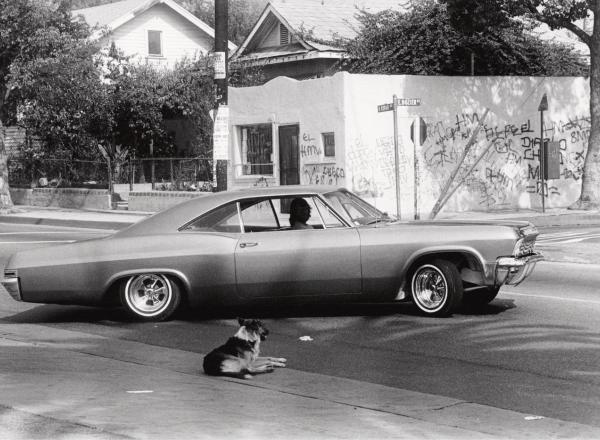
In a new exhibition and accompanying book, Double Vision: The Photography of George Rodriguez, offers a retrospective that covers the dual histories of Los Angeles. George Rodriguez, who has been capturing quintessential American images since taking a photography class to fulfill a high school elective requirement in 1954, has been documenting LA life from the gritty streets to the glitz of Hollywood for over four decades.