Top Art Museums and Archaeological Sites to See in Milan

Created:
Author: abby
Wikimedia Commons

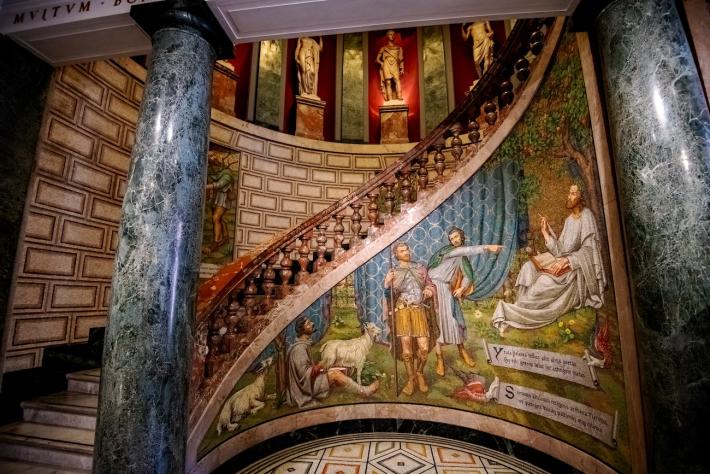
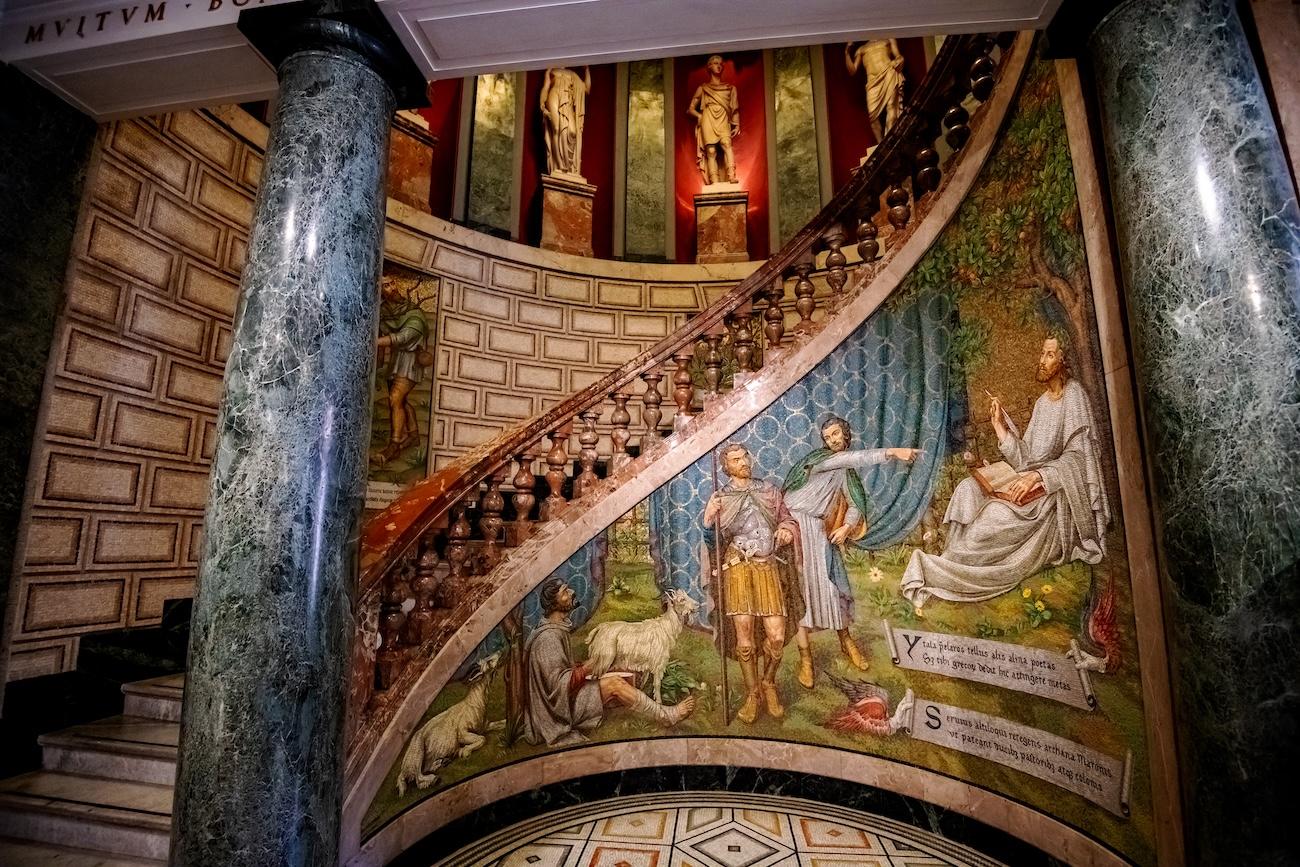
One of the ornate staircases within the Pinacoteco Ambrosiana. License

As the final stretch to the Winter Olympics comes into view, the world’s eyes turn once more to the city of Milan. Just weeks after the city closed out its annual Fashion Week, runways are being traded in for ice rinks as athletes and fans descend upon the Italian north for the winter games.

While the focus on the city will surely be pointed towards Milan’s modern seat as a fashion capital and host of the latest iteration of the Winter Olympics, there is also an opportunity to highlight Milan’s impressive and expansive history of art, architecture, and archaeology that reaches back millennia. Similar to many other Italian cities, Milan’s fabric is a rich meeting of old and new, modern and ancient, juxtaposing Italy’s past, present, and future in a seamless blend. Modern art displays abutt medieval churches and glass skyscrapers look down upon the tufa remains of Roman engineering in this city of opposites. For those lucky enough to attend these winter games, or others who simply want to find different ways to engage with Milan’s deeper history, we offer our list of the top art and archaeological museums and sites to see in the Lombardian capital.
1 of 6
Photo: Danielle Vander Horst
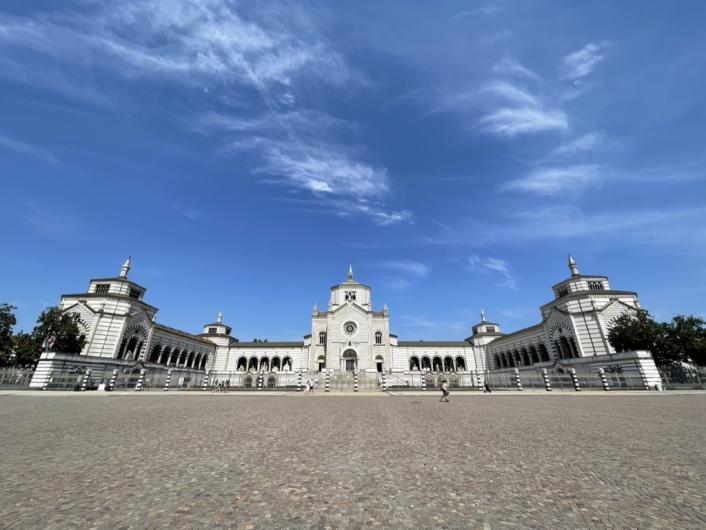
Milan Monumental Cemetery’s grand main entrance. Photo: Danielle Vander Horst
Monumental Cemetery

Started in 1863, Milan’s Monumental Cemetery is a unique blend of Milanese history and stirring funerary art. The cemetery covers over 250,000 square meters with crypts, mausolea, and tombs scattered throughout, all connected by meandering, tree-lined promenades. Once inside the boundary, the sheer tranquility makes it hard to imagine Italy’s busiest city is just beyond the walls. Every tomb and structure here is a testament to the individuals or families within, each one crafted with such emotion and individuality that one’s eyes never tire of taking in the next view. From famous poets, composers, ballerinas, scientists, and writers, the cemetery is a walk through Milan’s cultural past and those who created it. 

Image: Milan Monumental Cemetery’s grand main entrance. 

2 of 6
WikiCommons
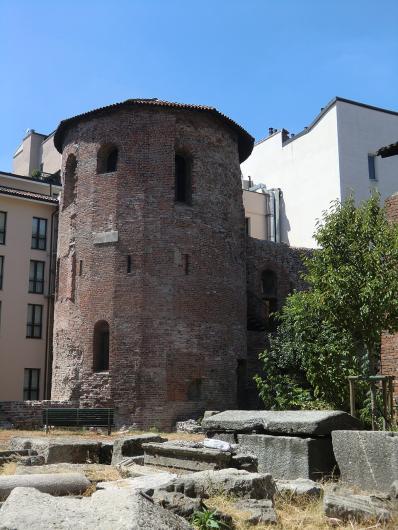
Ruins of the Roman walls outside of the Milan Archaeological Museum. Credit: Wikimedia Commons
Ruins of Roman Milan

Though perhaps better known for its Renaissance prominence and the powerful Sforza family, Milan’s history actually extends much further back. The earliest occupations in the city date to about 590 BCE when Celtic tribes settled the area. By 222 BCE, Rome had expanded into northern Italy and captured the city as well as the rest of the surrounding area in quick succession. Much like in Rome, modern Milan rests just atop the ancient city with later medieval, Renaissance, and contemporary structures quite literally built over ancient ones. Many of these ruins can still be visited across the city, such as those beneath the city’s famous cathedral (Il Duomo), around and within the Archaeological Museum of Milan, within the Museo Sensibile del Teatre Romano beneath the city’s Chamber of Commerce where the remnants of the Roman theater are located, and the Basilica di San Lorenzo. 

Image: Ruins of the Roman walls outside of the Milan Archaeological Museum. License

3 of 6
WikiCommons
One of the ornate staircases within the Pinacoteco Ambrosiana. License
Pinacoteca Ambrosiana

Filled to the brim with medieval, Renaissance, and early modern art, the Pinacoteca Ambrosiana features some of Milan’s most famous artworks including multiple works by Caravaggio, Botticelli, and Leonardo da Vinci. Beneath the museum also lies the Crypta del Santo Sepolcro, a hypogean church founded around 1030 CE. The floor of the crypt is made from the original stones that once formed the Roman forum which would have been the beating heart of the ancient city. The pinacoteca itself was founded in 1618 by Cardinal Federico Borromeo who donated his personal collection of paintingssculptures, and drawings to begin the museum. 

Image: One of the ornate staircases within the Pinacoteco Ambrosiana. License

4 of 6
Photo: Danielle Vander Horst
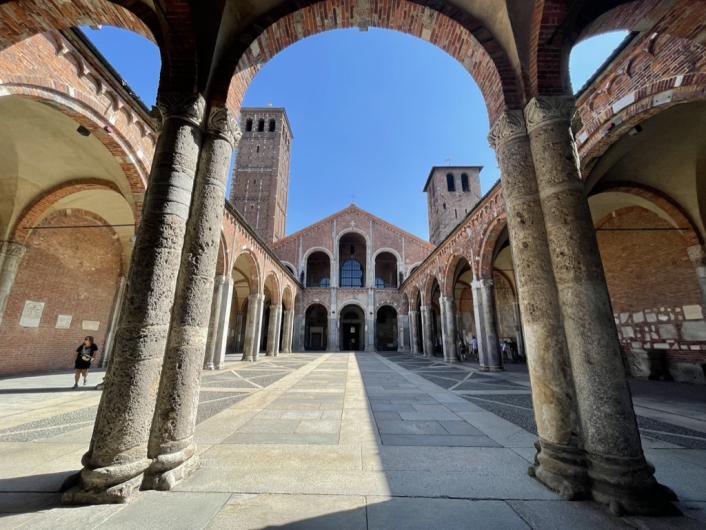
The courtyard of the Basilica di Sant’Ambrogio. Credit: Danielle Vander Horst
Basilica di Sant’Ambrogio

Named for Milan’s patron saint, this basilica is one of the earliest examples of a cross-plan church in Western architecture, dating to the 4th century CE. The main courtyard of the basilica is rife with spolia–architectural or decorative elements taken from other structures and reincorporated into new construction–from around the Roman city, including tombstones and column capitals. The main altar, located atop the original 4th century pavement, dates to around 824-859 and is the oldest extant gold altar revetment currently known. Expansions and additions over the centuries have transformed the original church into what we know it to be today: a stunning blend of architectural and religious history

Image: The courtyard of the Basilica di Sant’Ambrogio. 

5 of 6
WikiCommons
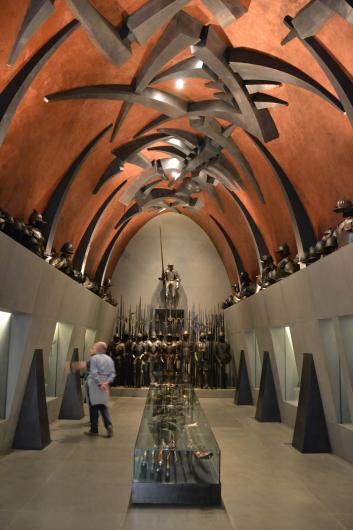
The “armory” exhibit of the Museo Poldi Pezzoli. Credit: Wikimedia Commons.
Museo Poldi Pezzoli

Beginning as a private art collection in the 19th century, today the Museo Poldi Pezzoli holds a dizzying array of works ranging from antiquity up to the Modern period. Not only does the museum have masterworks by Botticelli, Vermeer, and della Francesca, but it is also well-known for its impressive holdings of other art media. Armour, glass, furniture, carpets, clocks, jewelry, porcelain, lace, and smaller historical luxury items of incomparable beauty and craftsmanship fill the rooms and walls of this notable museum. The building itself speaks much to Milan’s more recent past as well, since a large part of the 17th century palace that holds the collections required extensive restoration work after it was bombed by allied forces in 1943.  

Image: The “armory” exhibit of the Museo Poldi Pezzoli. License

6 of 6
WikiCommons
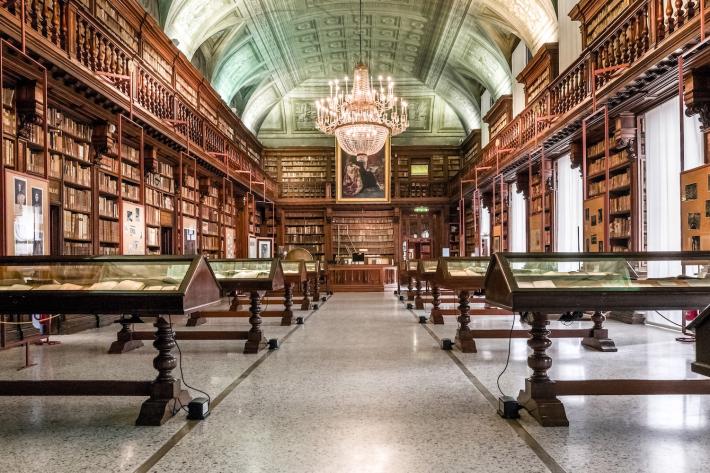
The Maria Teresa Hall of the Library. Credit: Wikimedia Commons.
Biblioteca Braidense (Biblioteca di Brera)

The Braidense National Library is one of the largest in Italy dating back to 1770 when Maria Theresa of Austria wanted to make personal collection available to the public. The library is housed within the Palazzo di Brera, an imposing structure with origins reaching back to the 12th century CE. Currently, the palazzo contains the library as well as the Brera Art Gallery, the Brera Astronomical Observatory, the Brera Botanical Gardens, the Lombard Institute of Science and Letters, and the Brera Academy of Fine Arts. The halls of the library retain much of their 18th century elegance with book-lined walls, ornate moldings, and stately portraits. In total, the library currently holds 898,377 printed volumes, 2,119 manuscripts, and 2,368 incunabula. 

Image: The Maria Teresa Hall of the Library. License

About the Author

Danielle Vander Horst

Dani is a freelance artist, writer, and a trained archaeologist. Her research specialty focuses on religion in the Roman Northwest, but her educational background encompasses more broadly Greek and Roman art, architecture, materiality, and history. She holds multiple degrees in Classics and Archaeology from the University of Rochester, Cornell University, and Duke University, and she is currently completing a PhD in History of Art & Archaeology at Cornell University.

Fabio Fiocchi

Fabio is an Italian archaeologist, native to the city of Milan. He specialized in cisterns, wells and underground excavations and holds a degree in Science of Cultural Heritage from the University of Milan and in Archaeology and Cultures of the Ancient World from the University of Bologna. A lover of books and art, his work has led him to develop a particular interest in ancient everyday objects from the Celtic, Roman and Etruscan worlds.

Art and Object Marketplace - A Curated Art Marketplace
Loading categories...