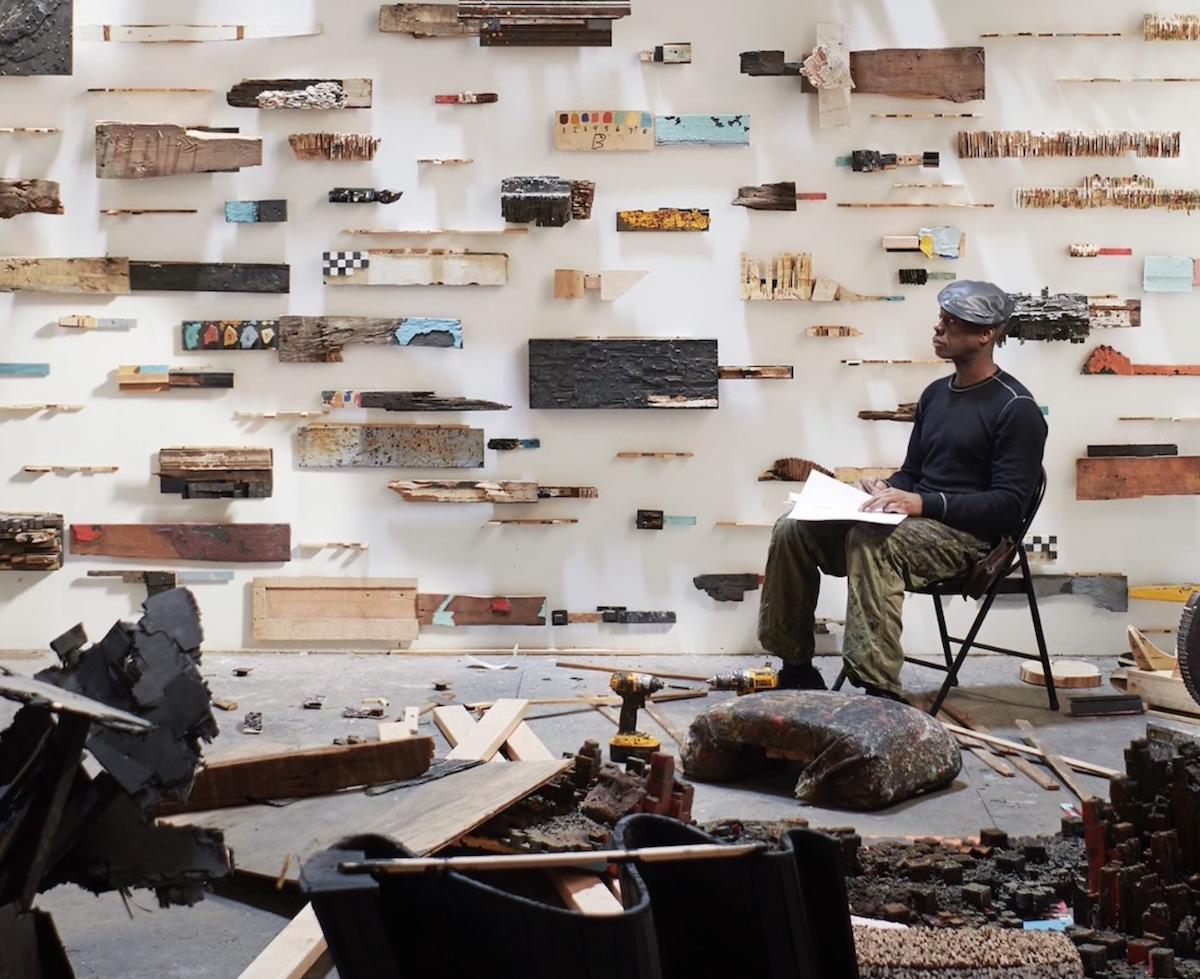
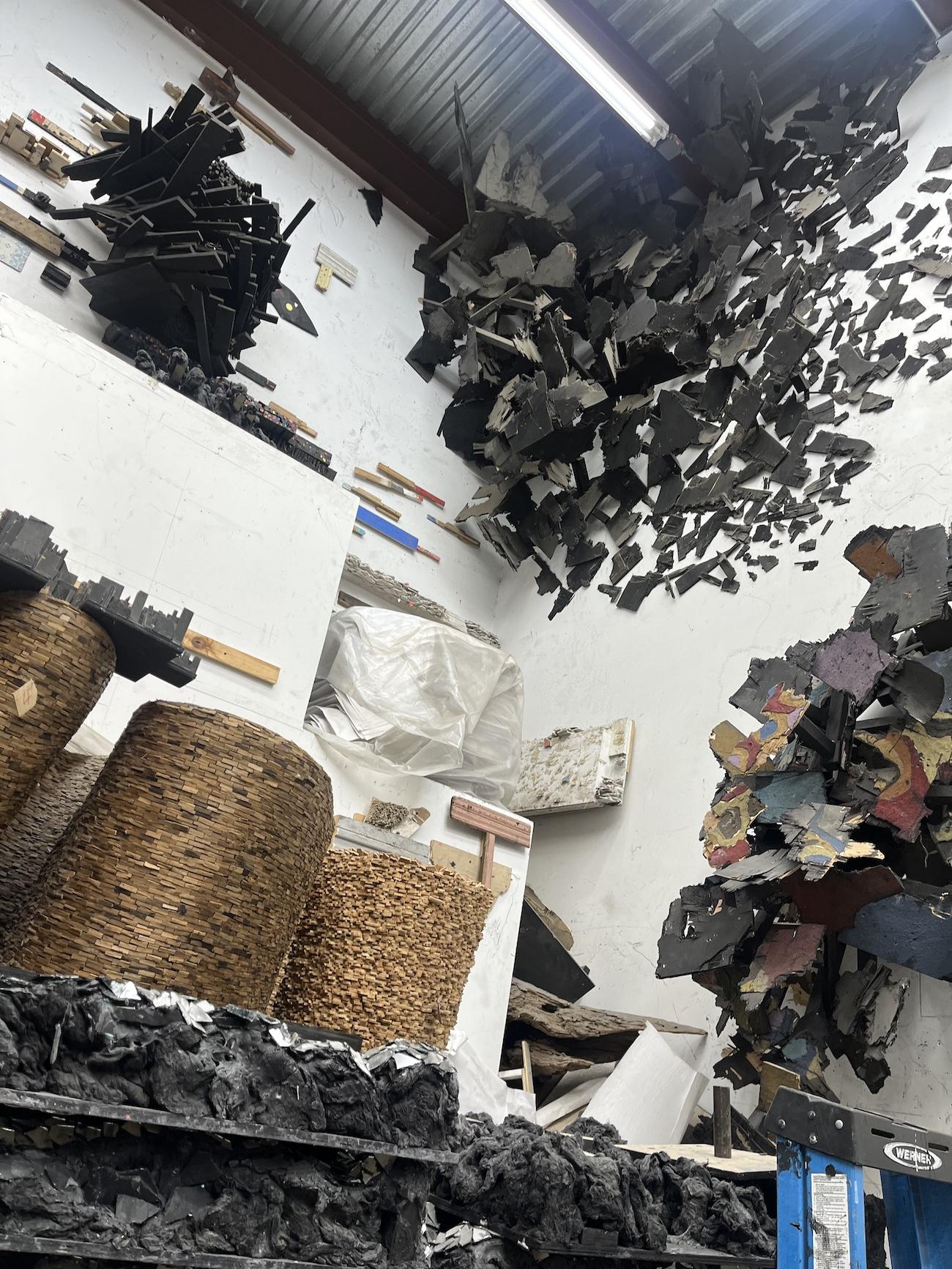
Speaking to Francesca Aton in Art in America in 2019 about an installation titled “City in the Grass” that he created for Madison Square Park, Drew said, “I stopped drawing and painting in the early ’80s, because I wanted to continue to push myself artistically in new ways, but those skills return in the way I see and compose ... . If I can go to another country where no one speaks my language and relate holistically to the people there and engage in fair trade-offs with them, spiritually and otherwise—there is nothing more beautiful than that.”
Drew participated in an artist residency at Artpace in San Antonio, TX, in 1994, and so enjoyed being there that he went on to buy 10 acres in the area, where he says he plans to “power down” and make more meditative work. “I’m always making work in different environments,” he says, inspired by the bigger-seeming sky and the insects, vegetation, and natural debris inhabiting the landscape beneath it, together with a wide variety of animals “walking around like it’s their property.” There’s also the constantly changing quality of light that adds to the effects of color. Drew is not territorial. He is open to all contributions, equally concerned with what younger artists can contribute to his work and thinking as with what they choose to glean from him. He says, “Young people bring you along and include you.” He told artist Alteronce Gumby in a discussion at Galerie Lelong—which represents
Drew—that he collects the work of younger artists and follows them. “New technology brings in new voices and materials,” he said, and, of course, it facilitates communication and easy access to research.
Dead people, too, add input. Not least was Drew’s discovery that his revered predecessor Piet Mondrian was buried in a cemetery near his studio. Excited to learn of it, his friend, the artist Paul Pagk, who was visiting Drew in his new Cypress Hills studio, decided to track down the site. But it wasn’t easy. Armed with a map, they schlepped up and down among the tombstones, hitched a ride, got lost, and then wound up at the front desk of the cemetery, where they were directed to the grave, Number 1191 on block 51. It was set in a grid in the paupers’ section of the cemetery. Nevertheless, as unlikely as it might seem, Mondrian’s energy and colors continue to vibrate in the slow and speedy work of both Drew and Pagk, all packed with contradictions. Reading, writing, time, and travel are all vital ingredients for Drew, especially trips to China and Peru. Four years in China invaded his work, introducing color through glazing and porcelain. Drew experienced craft there, almost as another language embedded in his process. He’s well aware that people tend to associate him with other artists, and that pleases him. Louise Nevelson is one, and he cites other figures such as Eva Hesse and Josef Albers. Dance, too, is part of the mix, including a collaboration with Merce Cunningham in 1997, with whose process and movement he felt an affinity.
And then there are books, including Journal: Leonardo Drew, a generous publication covering much of his career, put out by the Contemporary Art Museum in Raleigh, NC. The book lists every material Drew used in the depicted works, with processes and ideas scrawled in pencil and photographed. “You could almost make your own Leonardo based on that book,” he says.