Gallery  January 5, 2026  Emma Crichton-Miller

ART·HAND·WORK: An Exhibition for Studio Craft Artists

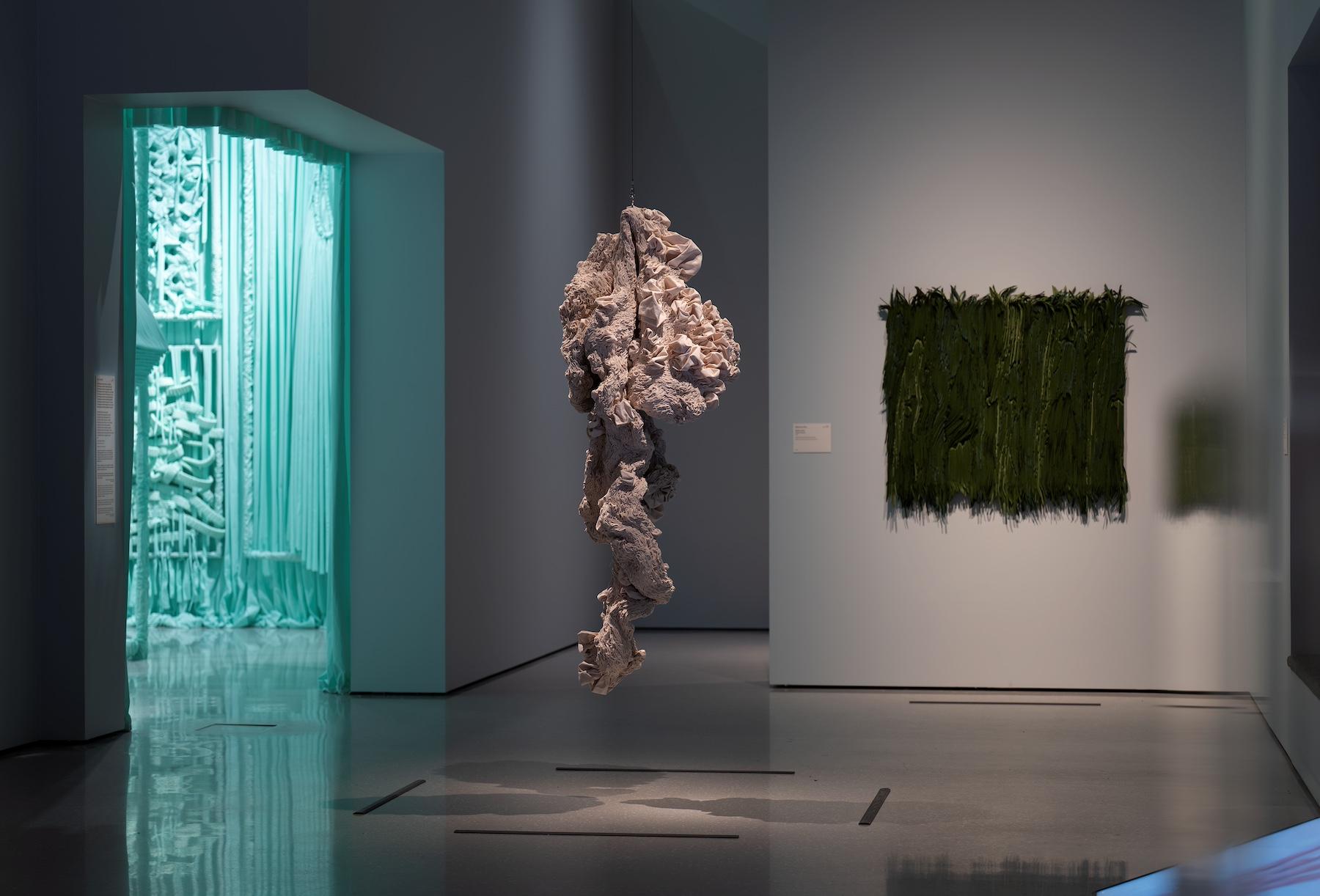
Photo: The National Museum / Ina Wesenberg

From the National Museum's exhibition ART·HAND·WORK

When the new National Museum of Art, Architecture, and Design opened in Oslo in 2022, its ambition was to challenge rigid boundaries between creative disciplines. Host to the combined collections of the National Gallery, the Museum of Decorative Arts and Design, the Museum of Contemporary Art, and the National Museum of Architecture, it saw its contemporary purpose to shake up conventional silos separating art from design and craft and to encourage a more fluid, less hierarchical understanding of the nation’s creativity. 

Among the broad family of Norwegian citizens are the Sámi, who only acquired the word dáidda– which translates to “art” in the Western sense– in the 1970s. This word is in contrast to duodji, usually translated into English as “traditional Sámi craft,” which used to cover a whole complex of cultural objects and expressions. It is no casual choice to place Tate Hyundai commissioned Sámi artist Máret Ánne Sara’s shocking 2017 piece, Pile o’ Sapmi, at the electronic entrance to the museum. The sculpture, formed from bleached reindeer skulls organized in a grid with steel fasteners to recall both the Sámi flag and a traditional Sámi rug, is a powerful cultural statement wrapping art, craft, and design in one.

Photo: The National Museum / Ina Wesenberg Rights : © Sara, Máret Ánne / BONO 2025.

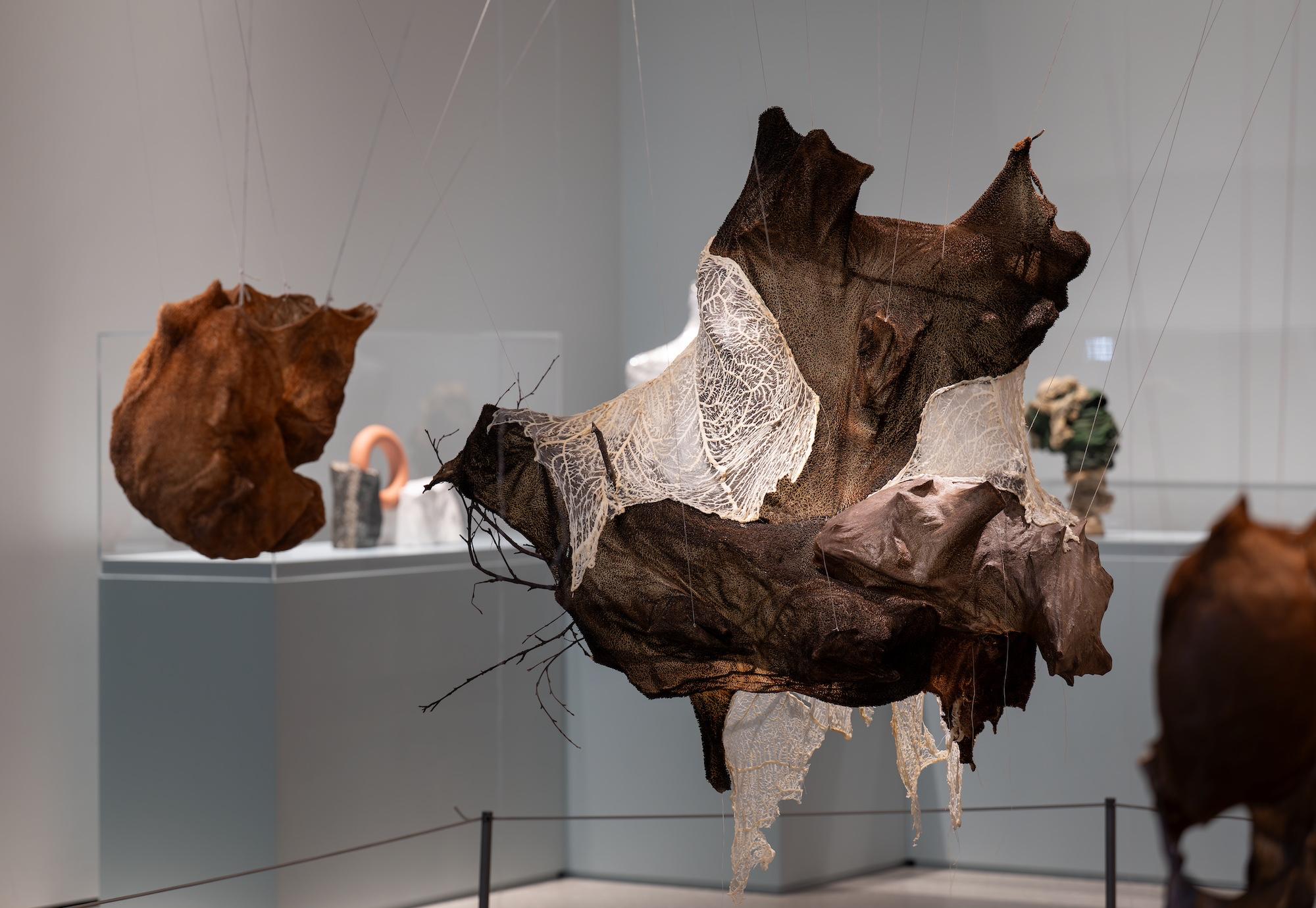
From the National Museum's exhibition ART·HAND·WORK. Máret Ánne Sara, Gutted – Gávogálši, 2022.

The ambitious traveling exhibition, ART·HAND·WORK, known for its initial outing in the spacious “light hall” at the top of the Oslo museum, offers a persuasive corrective to this critical direction. Organized by six specialist “studio craft” curators from the collaborating institutions, it showcases a wide range of work, loosely defined as craft, in a variety of media largely from their own collections. The curators argue that we lose something valuable when we simply fold craft into art. 

The show honors the 1974 “Artists’ Action,” when studio craft artists (those who make one-off art pieces) cut themselves off from the National Association of Applied Arts and set up the Norske Kunsthåndvekere (Norwegian Association of Arts and Crafts) in 1975. With government funding, for over 50 years, these makers were able to forge a space within the professionalized arts, alongside art and design, with their own specific shared values, perspectives, and traditions. It was this, rather than the actual objects they produced, that defined them, and it was through their different material disciplines that they both approached the world and communicated their visions. 
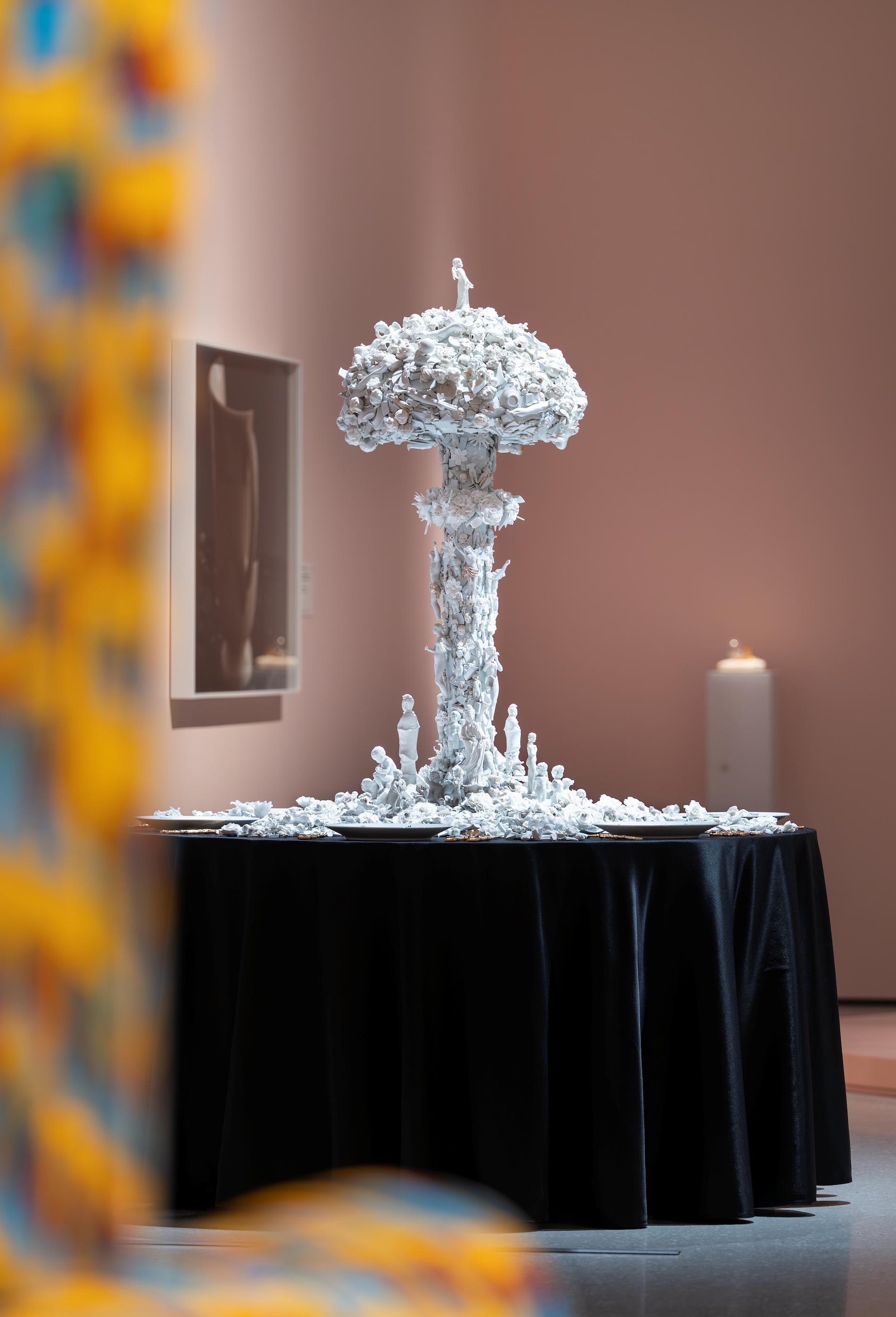
Photo: The National Museum / Ina Wesenberg Rights : © Bouke de Vries / BONO 2025. PICTURES | JPG

From the National Museum's exhibition ART·HAND·WORK. Bouke de Vries (1960), War and Pieces, 2019.

Hanne Friis, for instance, represented by the 2018 work Light Ornament, creates visceral, compelling textile artworks embedded in traditions of stitching and manipulating cloth and thread. Torbjørn Kvasbø’s sophisticated constructions, created from accumulations of gorgeously colored, thickly glazed extruded earthenware, represented by StackTube Forms, Red, 2009, have one foot in the long 20th century history of abstract sculpture and another in the technical practicalities of industrial ceramic production. 

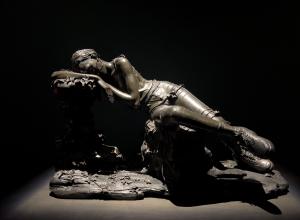
Dutch-born, UK-based Bouke de Vries’s 2019 installation War and Pieces, which hauntingly reflects human barbarity through his use of recycled fragments of old porcelain with cast and gilded steel, draws on de Vries’s experience as an expert ceramics conservator, intimate with the history and qualities of this medium.

All three makers are feted in an art world that has become increasingly fascinated by materials and processes– traditionally, the preserve of craft specialists. In turn, craftspeople have enjoyed the heightened prestige of their artworks and the opportunities to exhibit in previously exclusive fine art spaces. These curators fear, however, that we may miss the multiple resonances of these works if we see them only through the lens of fine art: that to liaise too closely with the art world is dangerous.

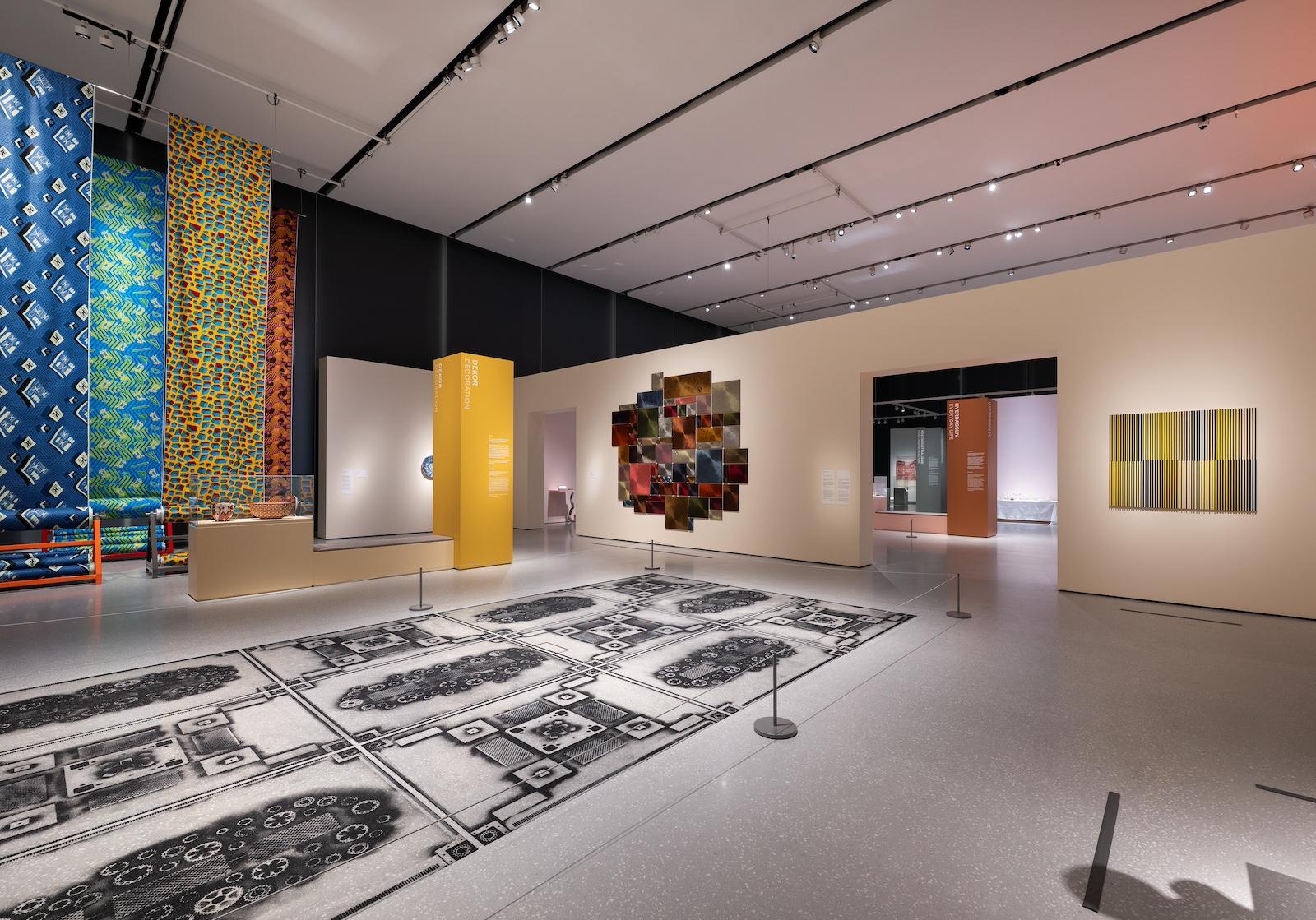
Thus, this spectacular show– which ranges from Konrad Mehus’s glinting Litter Brooch made from tin cans, buttons, porcelain shards, and coins to Marit Justine Huagen’s moving memorial, Kull/Coal, 2014, a floor-scale installation of ashes gathered from the remains of a burnt-down asylum seeker’s reception center, sifted over stencils made from the debris, such as cycle cog-wheels and flattened radiator components– is offered in six sections. Each provides a distinctive studio craft lens, through which to appreciate the work: Materiality, Recycling, Craft Traditions, Ornament, Post-Industrialisation, and Everyday Life. These are themes and debates which have animated the discussion of craft for the past 50 years, not just in Norway, but also in Britain, the United States, and beyond.

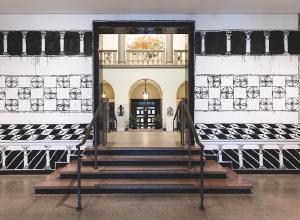
Photo: The National Museum / Ina Wesenberg

From the National Museum's exhibition ART·HAND·WORK.

To complement the Norwegian holdings, there are salient contributions from the UK: Yinka Shonibare’s Venus de Milo (after Alexandros), 2016, a fiber glass copy of an emblem of Western art, hand-painted in a pattern derived from West African fabrics inspired by Dutch cloths, wonderfully complicating issues of art, craft, colonialism, and cultural exchange; and Ghanaian sculptor El Anatsui’s monumental tapestry of recycled metals, Breaking News, 2015. Together, the exhibits testify to the continuing vitality of studio craft as a distinctive way of seeing and a unique approach to making, even as (or maybe because) its status remains embattled. 

59.910669077407, 10.7478303

ART·HAND·WORK
Start Date:
September 19, 2025
End Date:
February 1, 2026
Venue:
National Museum of Norway
About the Author

Subscribe to our free e-letter!

Webform
Art and Object Marketplace - A Curated Art Marketplace