
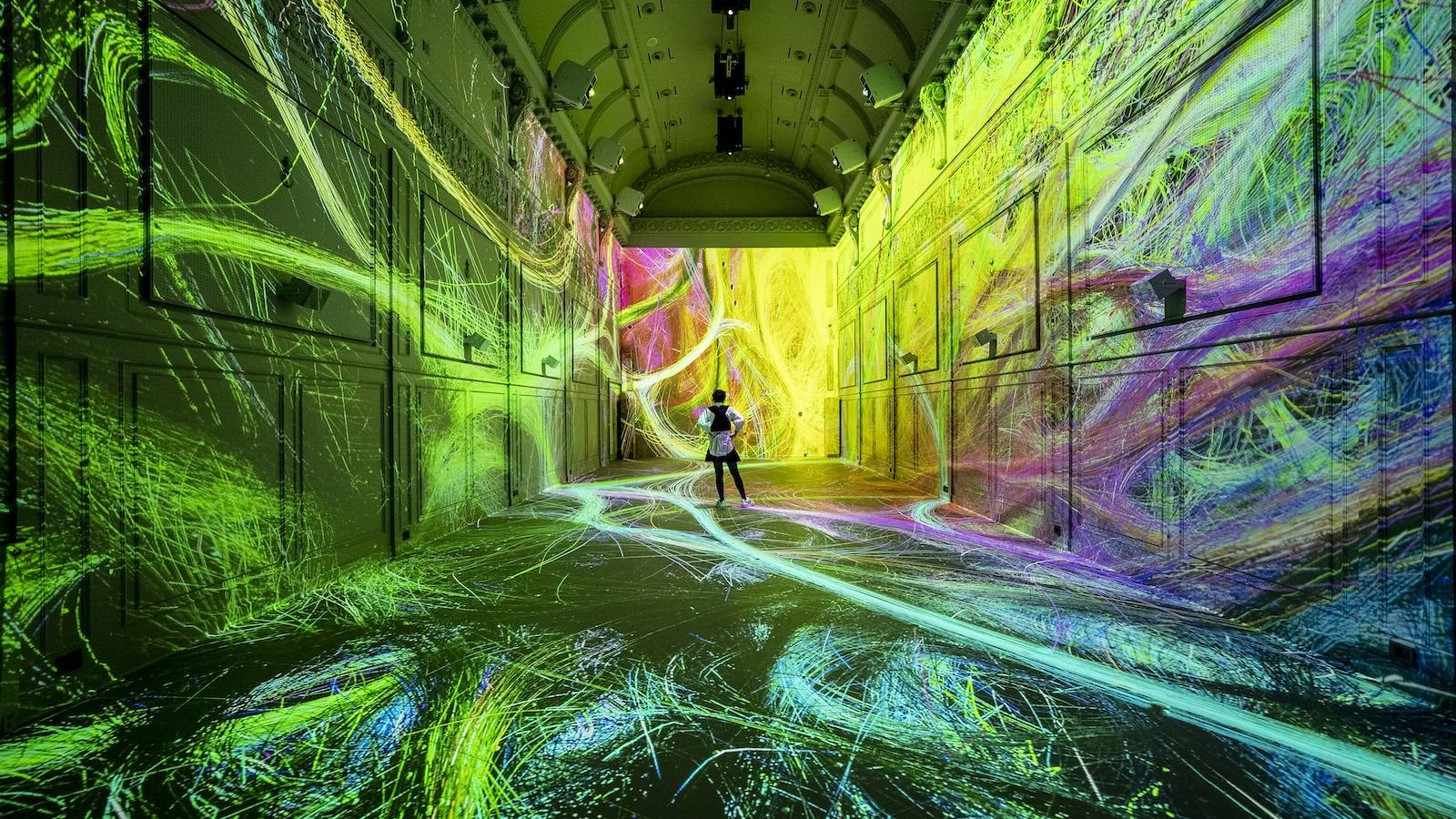
“It’s a Large Architecture Model that learns from incredible architects and their body of work,” says Anadol. “We transformed his entire archives, every building that’s been captured. We focused on how the public views his work, how it’s captured across the world. So we looked at the buildings and tried to project back to the building what the building may dream of Gehry.”
Since its inception, Refik Anadol Studios has been ethically amassing its own data bank to train its models. “We have to understand what type of data, which conditions, which AI. This teaches us to appreciate data so much.”
As ethically mindful about energy consumption as it is about procuring data, the studio is working with Google on access to an energy park in Oregon to power its AI tools without the use of fossil fuels, even if it means slowing down the process. “There’s no way to have zero energy AI, though it’s very possible to use less energy,” says Anadol. “How can we do something for nature with AI that doesn’t harm nature?”
The answer is the Large Nature Model, an open-source generative tool built on a data bank of over 100 million images, mainly from the Smithsonian and the UK’s Natural History Museum. Like last year’s Echoes of the Earth: Living Archive at London’s Serpentine Gallery, Glacier Dreams, which showed at Art Basel 2023, uses data which Anadol and his team collected in Iceland’s wilderness as well as its public libraries, in addition to libraries in Argentina and Switzerland.
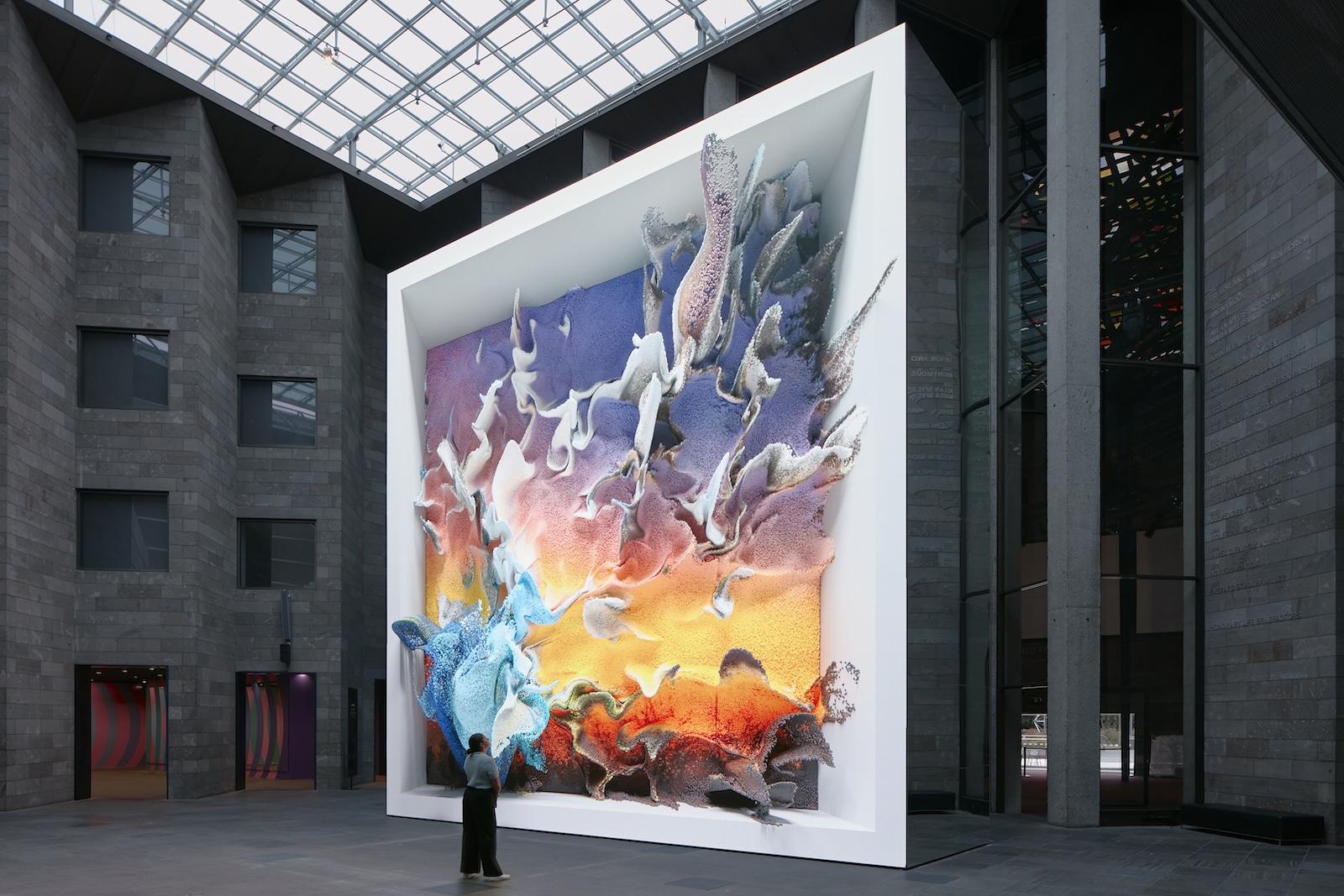
Unsupervised was realized through a similar process. A giant digital canvas, it generates constantly shifting imagery based on 200 years of MoMA’s collection. From November 2022 to March 2023, it mesmerized viewers for an average of 38 minutes. “It’s an amazingly long time,” says Anadol who, with his team, collected data on viewers. “Even with van Gogh they never saw anything like this. Even as it got viral, it jumped from 38 to 42 minutes.”
The studio worked with a neuroscientist at the University of California San Francisco on a survey of 32 people, half having experienced Unsupervised, half having not. “We recorded heartbeat and skin sensors and other information. And we learned that actually the artwork is activating a part of the brain that is more similar to flow state—imagination, wonder, inspiration. The first 10 years of the studio, we created artwork. And maybe in the next 10 years, I can turn art into medicine that truly heals the mind, heals the soul. It’s very ambitious research, but I believe we can do that.”
Half the country is concerned that AI will end humanity—or at least careers, especially for artists, but Anadol is hopeful. “I don’t think we are changing the context for artists. It’s just another very, very intelligent tool. But it is a tool. It doesn’t have its own consciousness. It means we are not really in that doomsday scenario with AI. It empowers artists with another brush, another pigment.”
Raised in a family of teachers in Istanbul, Anadol taught himself computer programming at the age of eight, around the time he saw the film Blade Runner and wondered what a machine might do with a human’s memories. He received a B.A. in photography and video in 2009, followed by an MFA in visual communication from Istanbul’s Bilgi University. At UCLA, he earned a second MFA, in design media arts.