Museum  June 9, 2026  Jordan Riefe

Nature’s Intelligence: Refik Anadol Redefines the Canvas

Refik Anadol Studio

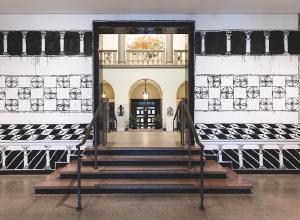
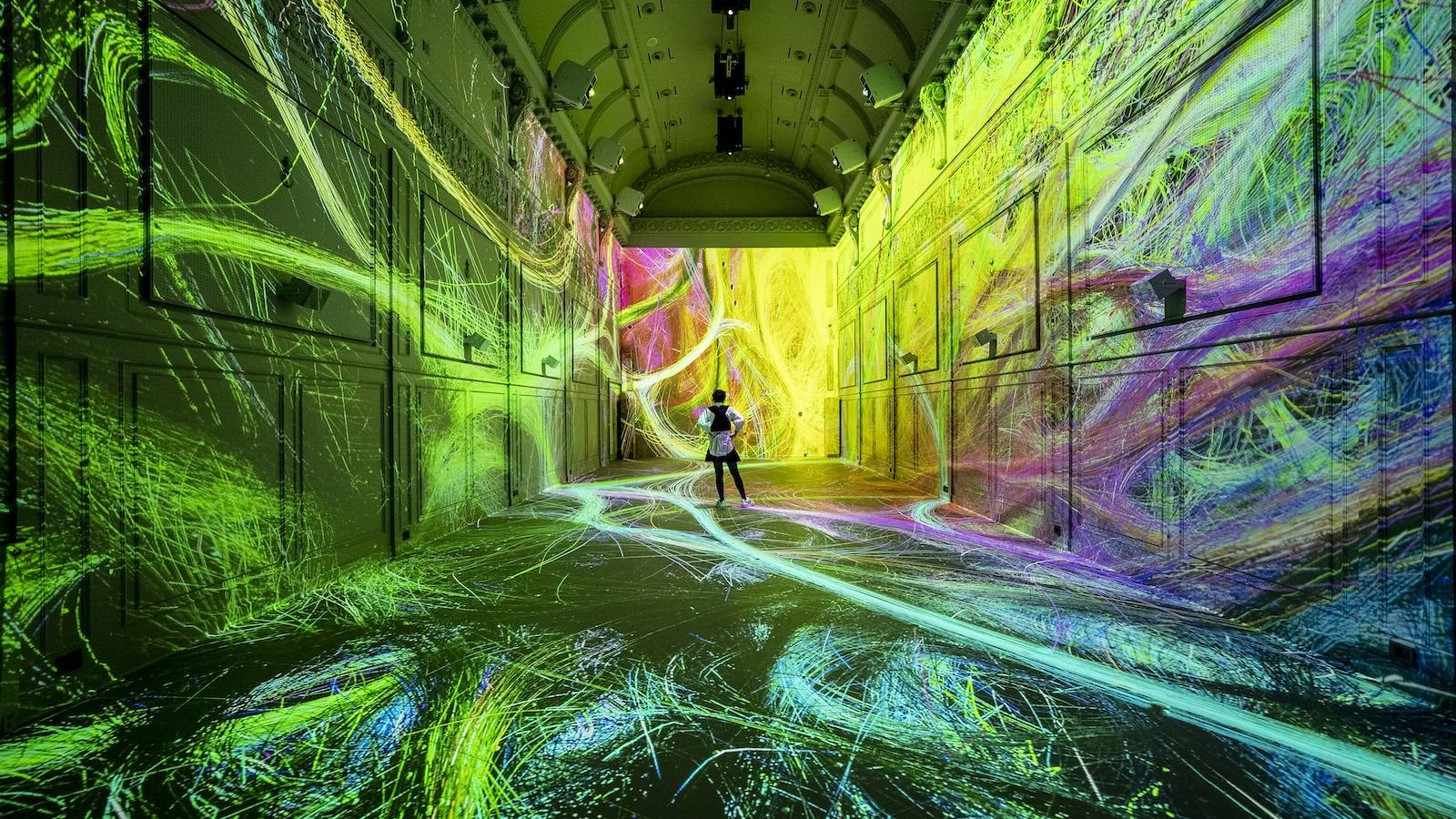
Alkazar’s Dream, a digital installation at the Alkazar movie theater in Istanbul.

It has been roughly 10 years since data artist Refik Anadol opened his studio in Los Angeles, leaving an indelible mark on the city. His WDCH Dreams celebrated 100 years of the LA Phil (Los Angeles Philharmonic) and, since last fall, his massive data paintingLiving Arena, has been welcoming visitors to the Intuit Dome. This fall, he introduces his most ambitious project yet—Dataland, the world’s first AI art museum, opening at The Grand LA. Built by “starchitect” Frank Gehry, it sits across the street from the Disney Concert Hall, the only two facing Gehry sites on the planet.

“Antoni Gaudí, Zaha Hadid, and Norman Foster—these are some amazing people that really shaped the buildings of humanity, so I have a huge respect,” the Turkish-American artist tells Art & Object at his studio in Frogtown by the L.A. River. But the master builder he holds dearest is his friend and fellow Angeleno Gehry. 

On view through October 12 at the celebrated architect’s landmark Guggenheim Bilbao, Anadol’s Living Architecture: Gehry uses a Large Architecture Model (LAM), to translate 35 million images into an AI-generated visual stream. This installation inaugurates “In Situ,” the museum’s new series of site-specific artworks.

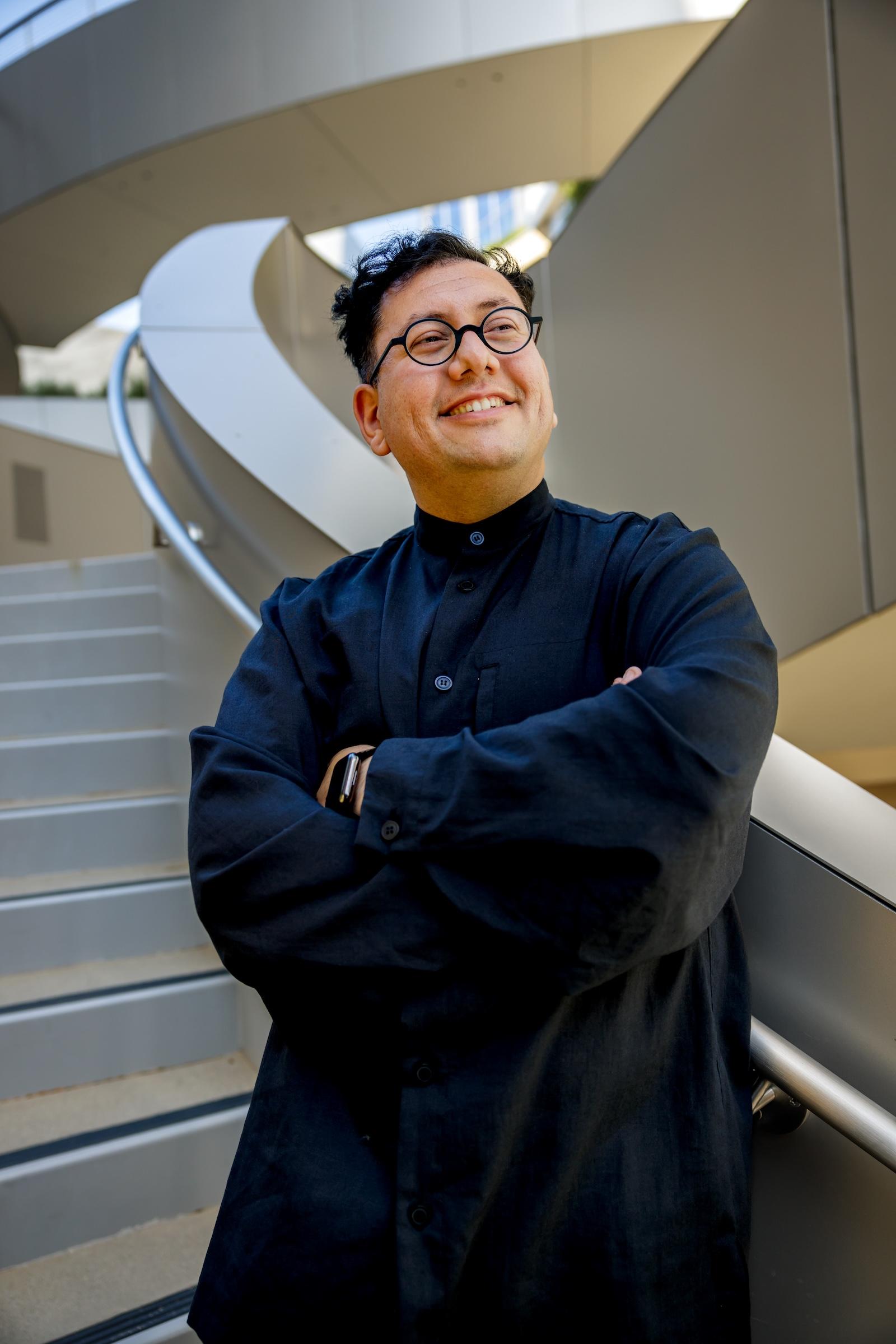
Photo by Dustin Downing

Refik Anadol

“It’s a Large Architecture Model that learns from incredible architects and their body of work,” says Anadol. “We transformed his entire archives, every building that’s been captured. We focused on how the public views his work, how it’s captured across the world. So we looked at the buildings and tried to project back to the building what the building may dream of Gehry.”

Since its inception, Refik Anadol Studios has been ethically amassing its own data bank to train its models. “We have to understand what type of data, which conditions, which AI. This teaches us to appreciate data so much.”

As ethically mindful about energy consumption as it is about procuring data, the studio is working with Google on access to an energy park in Oregon to power its AI tools without the use of fossil fuels, even if it means slowing down the process. “There’s no way to have zero energy AI, though it’s very possible to use less energy,” says Anadol. “How can we do something for nature with AI that doesn’t harm nature?”

The answer is the Large Nature Model, an open-source generative tool built on a data bank of over 100 million images, mainly from the Smithsonian and the UK’s Natural History Museum. Like last year’s Echoes of the Earth: Living Archive at London’s Serpentine Gallery, Glacier Dreams, which showed at Art Basel 2023, uses data which Anadol and his team collected in Iceland’s wilderness as well as its public libraries, in addition to libraries in Argentina and Switzerland.

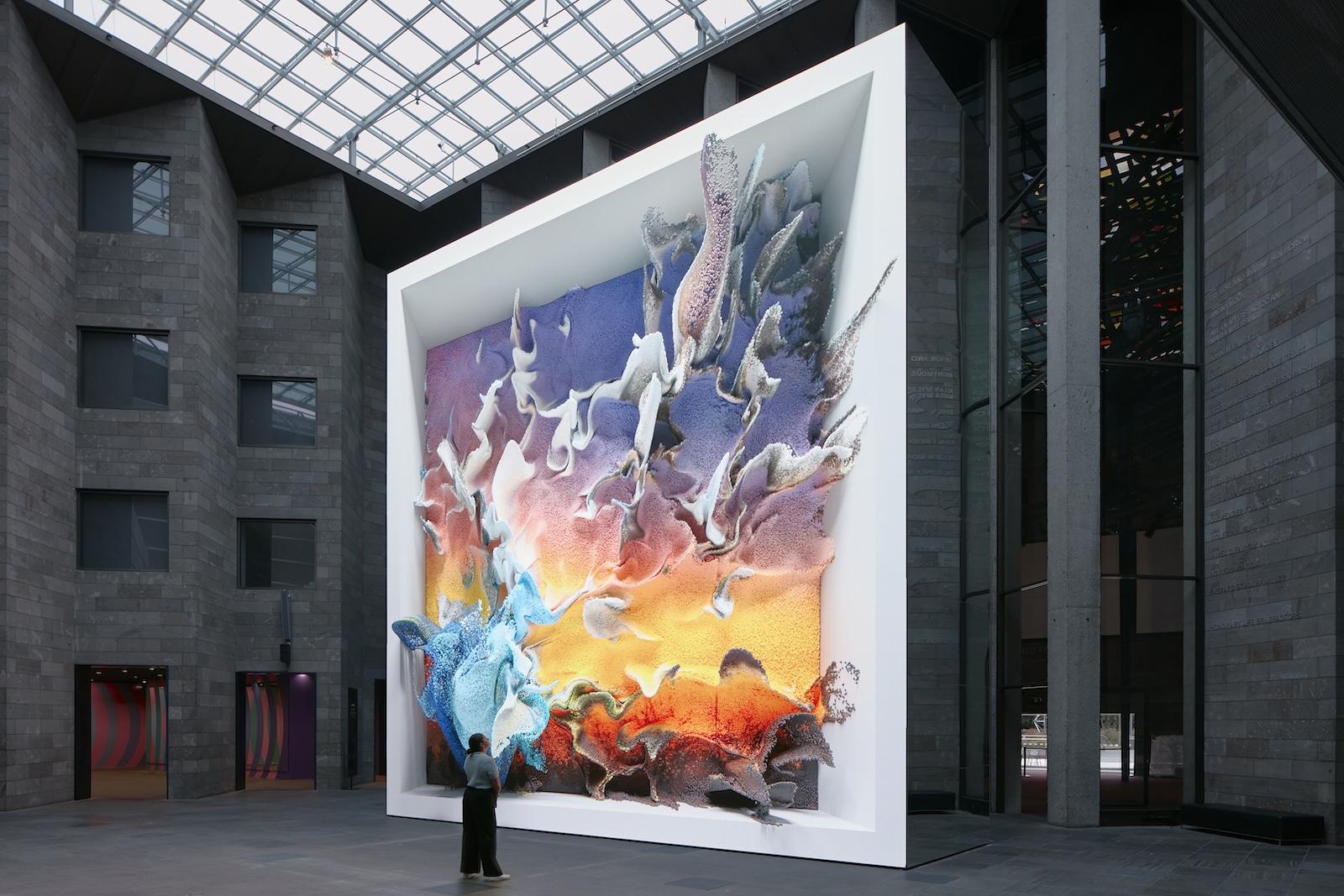
Unsupervised was realized through a similar process. A giant digital canvas, it generates constantly shifting imagery based on 200 years of MoMA’s collection. From November 2022 to March 2023, it mesmerized viewers for an average of 38 minutes. “It’s an amazingly long time,” says Anadol who, with his team, collected data on viewers. “Even with van Gogh they never saw anything like this. Even as it got viral, it jumped from 38 to 42 minutes.”

The studio worked with a neuroscientist at the University of California San Francisco on a survey of 32 people, half having experienced Unsupervised, half having not. “We recorded heartbeat and skin sensors and other information. And we learned that actually the artwork is activating a part of the brain that is more similar to flow state—imagination, wonder, inspiration. The first 10 years of the studio, we created artwork. And maybe in the next 10 years, I can turn art into medicine that truly heals the mind, heals the soul. It’s very ambitious research, but I believe we can do that.”

Half the country is concerned that AI will end humanity—or at least careers, especially for artists, but Anadol is hopeful. “I don’t think we are changing the context for artists. It’s just another very, very intelligent tool. But it is a tool. It doesn’t have its own consciousness. It means we are not really in that doomsday scenario with AI. It empowers artists with another brush, another pigment.” 

Raised in a family of teachers in Istanbul, Anadol taught himself computer programming at the age of eight, around the time he saw the film Blade Runner and wondered what a machine might do with a human’s memories. He received a B.A. in photography and video in 2009, followed by an MFA in visual communication from Istanbul’s Bilgi University. At UCLA, he earned a second MFA, in design media arts.
Refik Anadol Studio

Quantum Memories, LED screen projection. Anadol’s site-specific works are carefully situated within an architectural context.

For his thesis project, Anadol created a piece titled Quadrature, which transformed the outside of the Santral Istanbul Museum of Contemporary Art. Projected monochromatic images mimicked the building’s facade with patterns that responded to ambient audio from the neighborhood. It made him the hottest digital artist in Europe.

Since WDCH Dreams (2018), in which the LA Phil’s archives were processed through an AI model and projected onto the swooping panels of Gehry’s Walt Disney Concert Hall, Anadol’s schedule has been nonstop. To inaugurate ARTECHOUSE at Chelsea Market in New York in 2019, his Machine Hallucination focused on the city’s architecture, producing an AI-based interpretation of the city’s evolving face.

“Humans, machines, and environments is a beautiful triangular concept and a relationship I find very inspiring,” says Anadol, who has collaborated with Nvidia, among other major tech players. “In physical and virtual worlds, that’s where they can happen.” 

Dataland’s 20,000-square-foot space will highlight the work of fellow digital artists, who work in a medium commonly viewed with skepticism by the art establishment. The museum’s inaugural exhibition will be dedicated to art generated by the Large Nature Model, trained on algorithms based on what Anadol calls “nature’s inherent intelligence” rather than human intellect.

“What we do is part of the history, like when MoMA acquired our piece; that message is historic. At the end of the day, when there is innovation and discovery we’ve never seen before, people try to simplify it. People like myself, using code, software and AI, we don’t listen to detractors. My team really tries to push the boundaries of not only the medium, but the process,” he says, noting that in many ways his artwork is the process.

“It’s so exciting—it’s like creating a paint brush, the pigments, redefining the canvas. We are programming chance and control, control of materials, textures, colors,” says Anadol, whose next step is introducing elements that might manipulate what AI dreams. “This is a whole new renaissance happening in front of us.”

*This article originally appeared in Art & Object Magazine's Fall 2025 issue.

About the Author

Jordan Riefe

Jordan Riefe has been covering the film business since the late 90s for outlets like Reuters, THR.com, and The Wrap. He wrote a movie that was produced in China in 2007. Riefe currently serves as West Coast theatre critic for The Hollywood Reporter, while also covering art and culture for The Guardian, Cultured Magazine, LA Weekly and KCET Artbound.

Subscribe to our free art newsletter!

Webform
Art and Object Marketplace - A Curated Art Marketplace