
The artists were born a year apart, making this exhibition a 250th anniversary celebration of their intertwined lives and complex relationship. Born in a gritty, working-class neighborhood of inner-city London, Joseph Mallord William Turner was a child prodigy whose artistic ability was recognized early in his career. As his talent became known, he made no attempt to hide his Cockney accent, embracing his modest background in defiance of niceties that were practiced in social circles frequented by his peer, John Constable, whose father was a wealthy merchant. Constable was sent to an elite boarding school and was expected to run the family business, while Turner was accepted to the Royal Academy of Arts at the tender age of 14, exhibiting his first work there at age 15. It wasn’t until 1803, when Constable was 27, that he began exhibiting at the Royal Academy. By then, his family had accepted the idea that he would pursue a career as an artist.
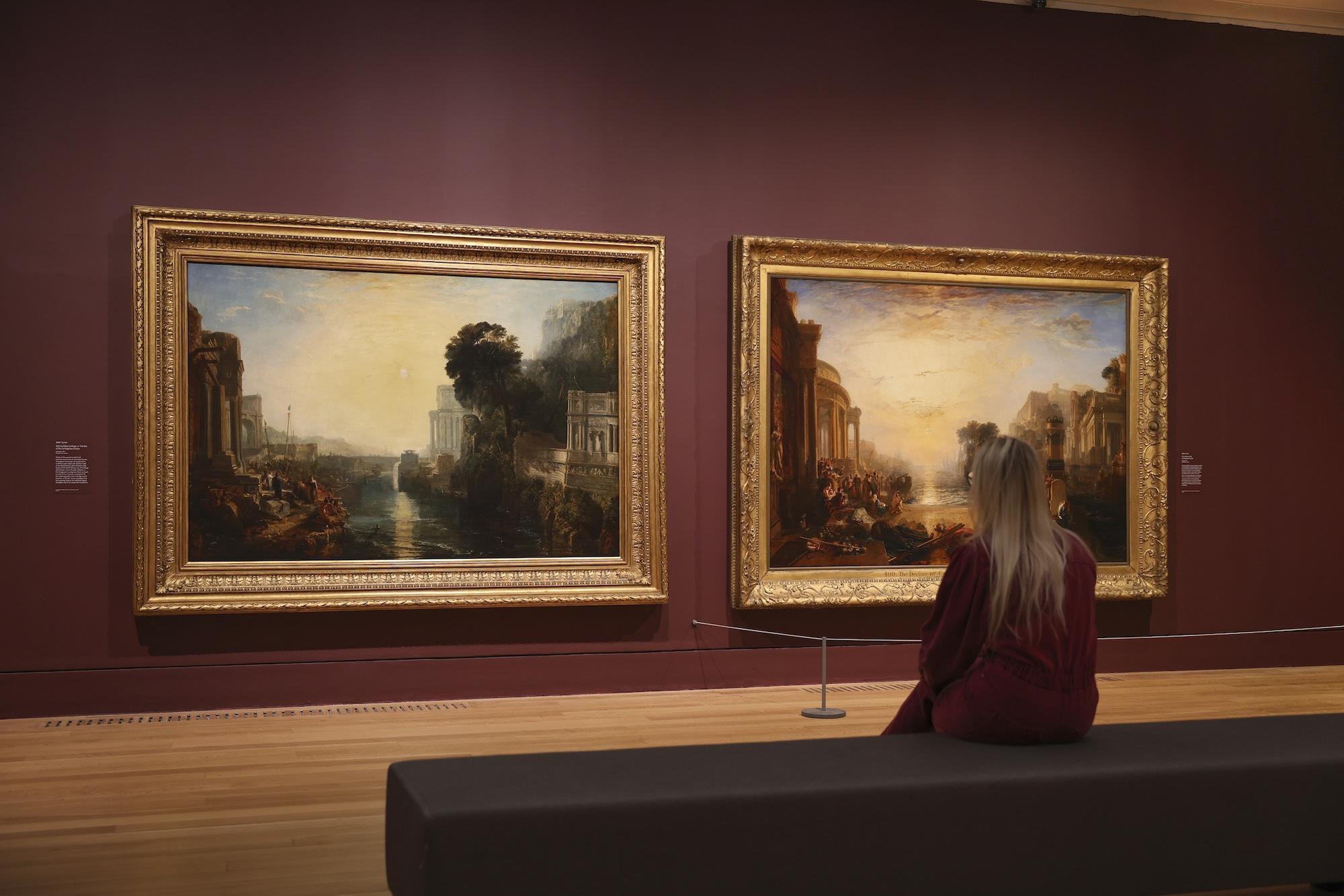
11th Willesden Scout Group visit Turner and Constable: Rivals and Originals at Tate Britain.
The idea that 18th and 19th century landscape painting could be the setting for one of art history’s fiercest rivalries may seem unlikely, but Turner & Constable: Rivals and Originals, the current exhibition at Tate Britain, explores the competitive relationship between two giants of British landscape painting, J.M.W. Turner (1775-1851) and John Constable (1776-1837).
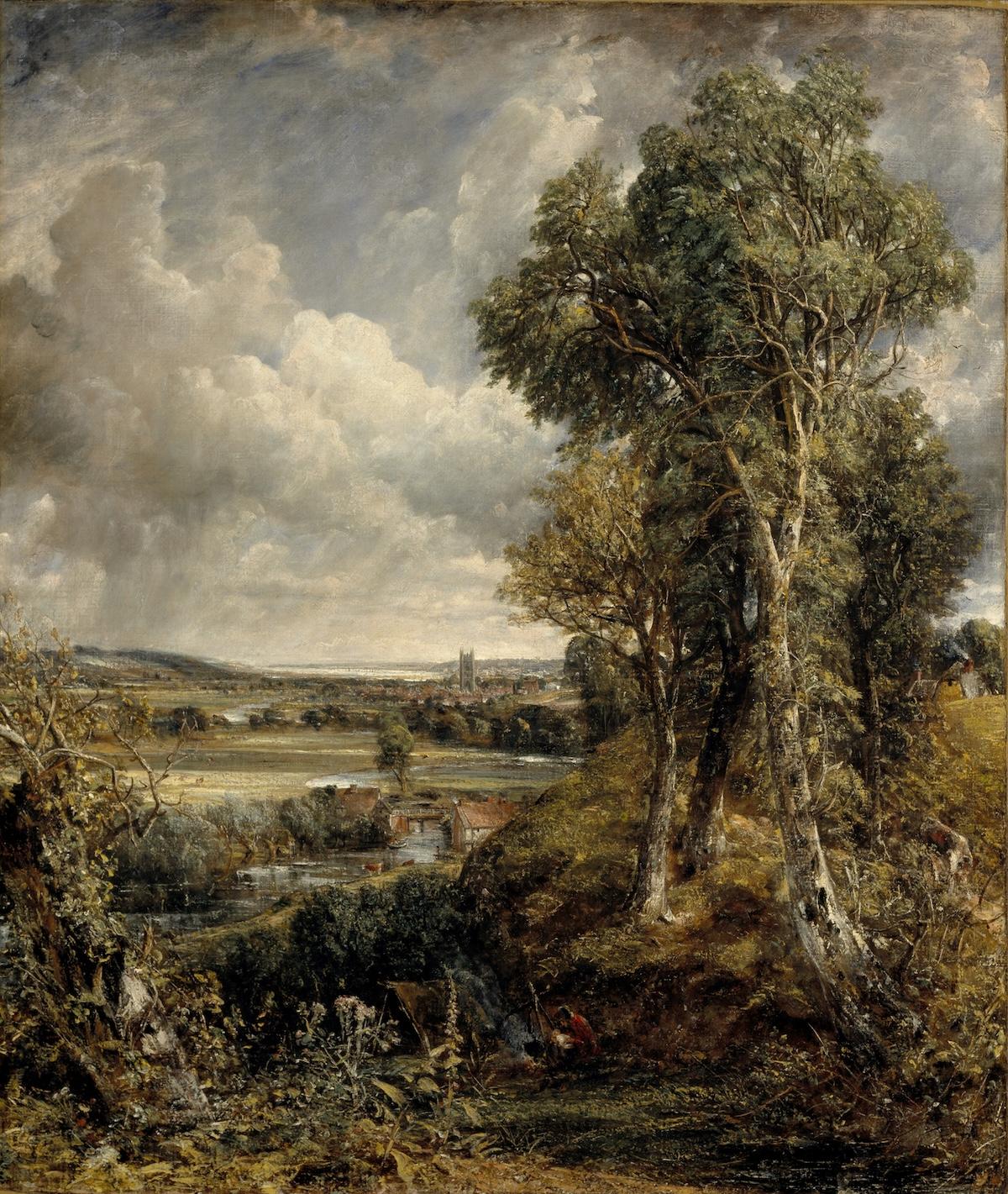
John Constable, Dedham Vale, 1828.
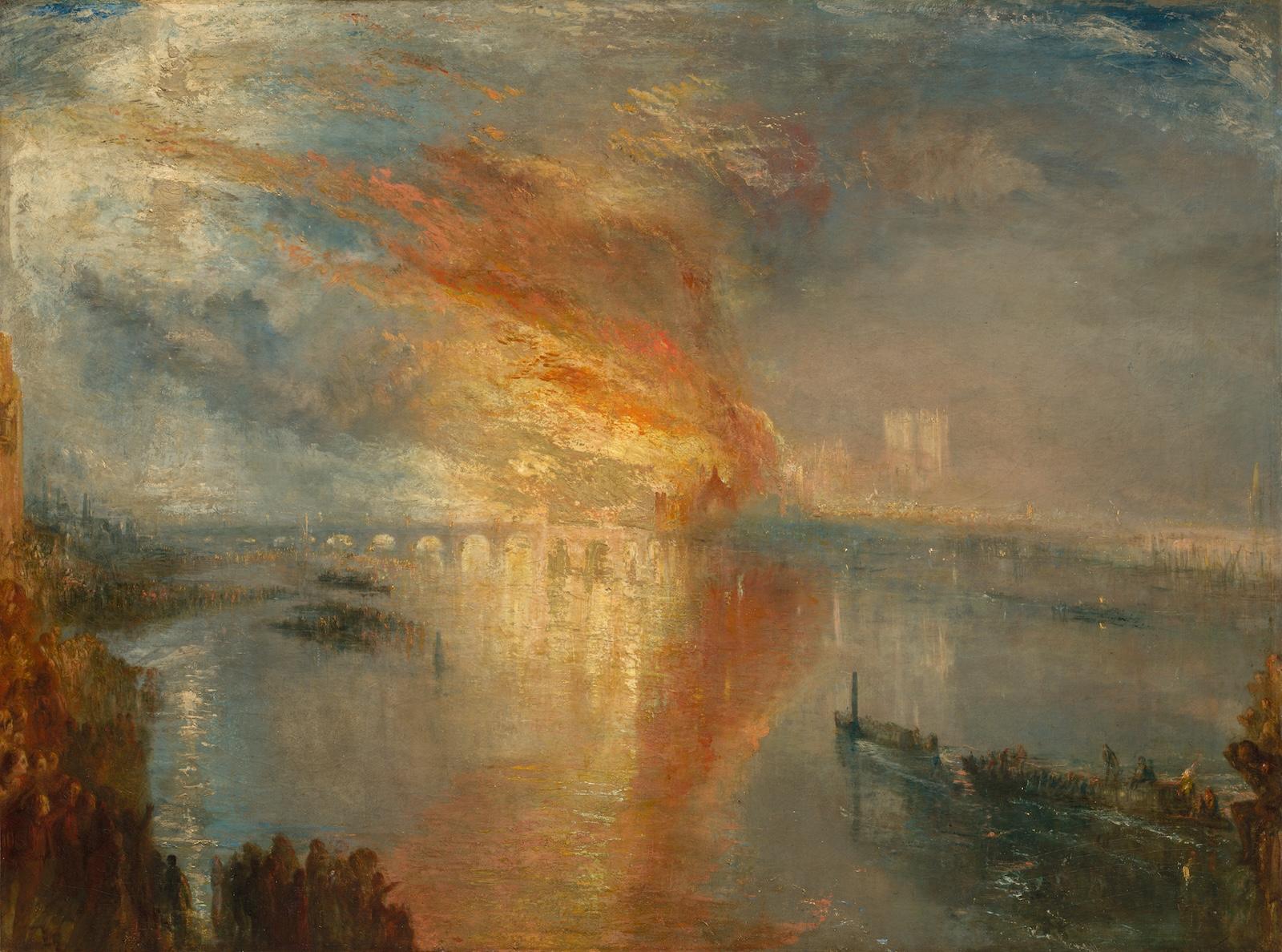
JMW Turner, The Burning of the Houses of Lords and Commons, 16 October 1834, 1835.
In his youth, despite his parent’s initial resistance to his interest in working in the arts, Constable went on plein air sketching trips in the Essex countryside. It was there where he formed a connection to the flora and fauna that became the heart of his subject matter in the years to come. He’s quoted as saying, “These scenes made me a painter, and I am grateful… the sound of water escaping from mill dams, etc., willows, old rotten planks, slimy posts, and brickwork, I love such things.” In a series of lectures in 1836 at the Royal Institution, an educational organization based on scientific knowledge, Constable proposed a three-fold thesis: firstly, painting "is scientific as well as poetic"; secondly, "imagination never did, and never can" produce art to bear comparison with reality; and thirdly, "no great painter was ever self-taught.” Constable completed numerous observational studies of landscapes and clouds in order to be more scientific, more “real” in his recording of atmospheric conditions.
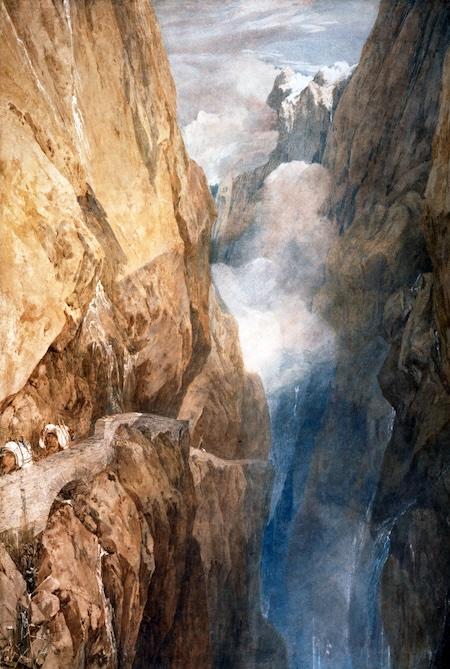
JMW Turner, The Passage of Mount St Gothard from the centre of Teufels Broch (Devil’s Bridge), 1804.
We have come to think that inflaming conflict and rivalry is a product of our current media-saturated world. This show reveals that 18th and 19th century critics pitted these two artists against each other—not for “clicks” or “likes” —but to call attention to their authority as gatekeepers and defend a particular worldview either in support of Turner’s imaginative, atmospheric, almost abstract approach or aligned with Constable’s grounded, “truthful” vision of a particular time and place. Amy Concannon, curator of Rivals & Originals, explained, “The art press at the time cooked up this idea of rivalry.”
Both artists were prolific. Turner was a devotee of water media, having created over 2,000 works in watercolor and 30,000 works on paper, along with more than 500 oil paintings. Constable also produced many watercolors, but he became known for sketching outdoors in oil on paper. One of Constable’s most expressionistic studies is Seascape Study with Rain Cloud from 1824, which could be mistaken for a Turner with its slashing dark brushstrokes capturing the immediacy of an exploding cumulus shower at sea.
The exhibition includes over 190 paintings and works on paper. Some of their most revered works are showcased, like Turner’s devastating 1835 The Burning of the Houses of Lords and Commons, not seen in Britain for over a century, and The White Horse (1819), considered one of Constable’s greatest artistic achievements. On a superficial level, Turner’s focus on the drama of atmospheric events tied to changes brought on by the encroaching Industrial Revolution seems more radical, but Constable’s deeply felt connection to rural life has its own sense of urgency.
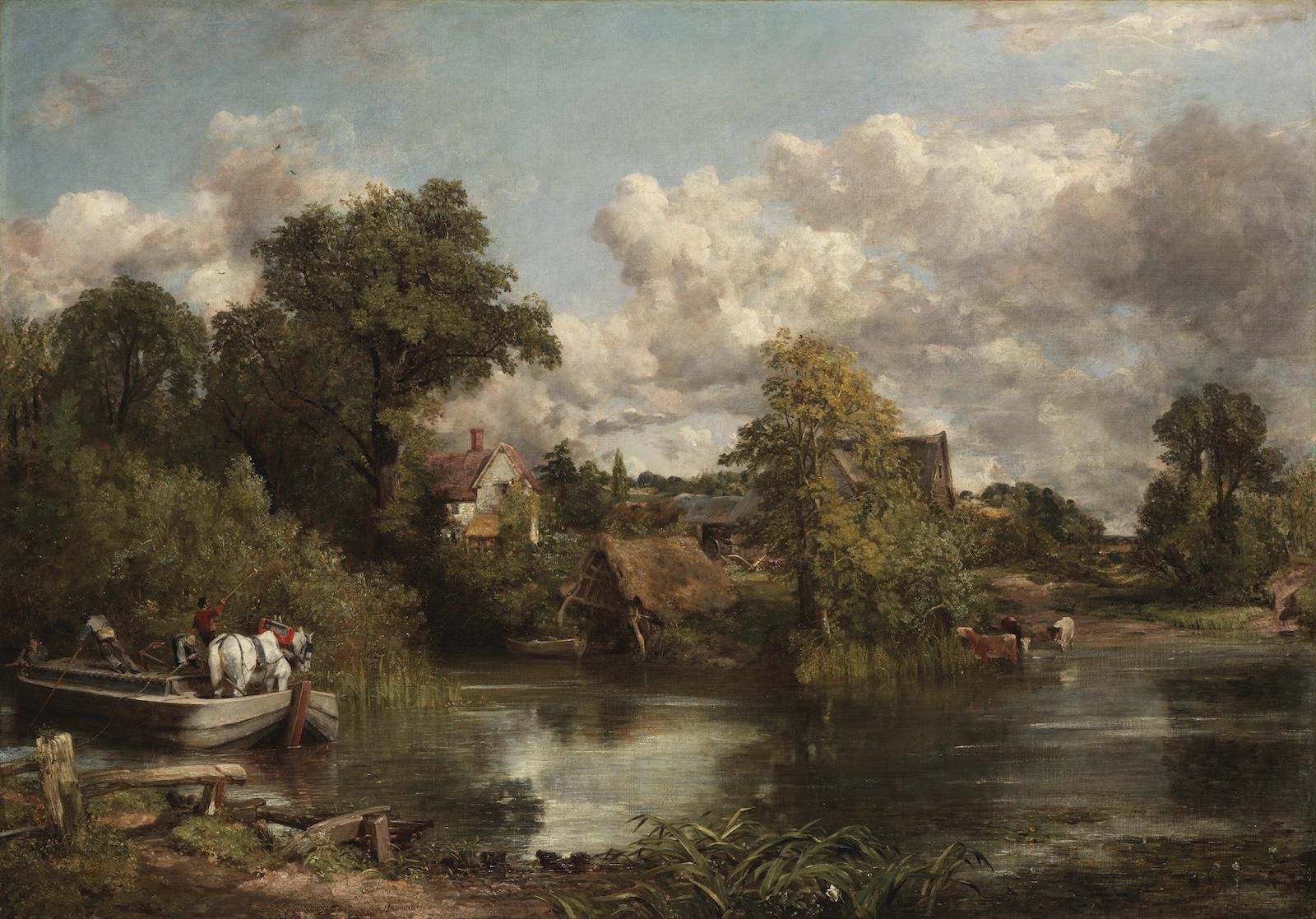
John Constable, The White Horse, 1819.
Despite their differences, both men are seen as highly original painters who challenged artistic norms. Their innovations raised the bar for landscape painting, inspiring their contemporaries Géricault (1791-1824) and Delacroix (1798-1863), as well as the entire Barbizon School and the French Impressionists. This exhibition clarifies how their impact is still felt by artists today.