At Large  July 13, 2026  Cynthia Close

Restoration, Conservation, Preservation: Who’s Doing it Best?

Courtesy of the Shelburne Museum. Photography by Andy Duback.

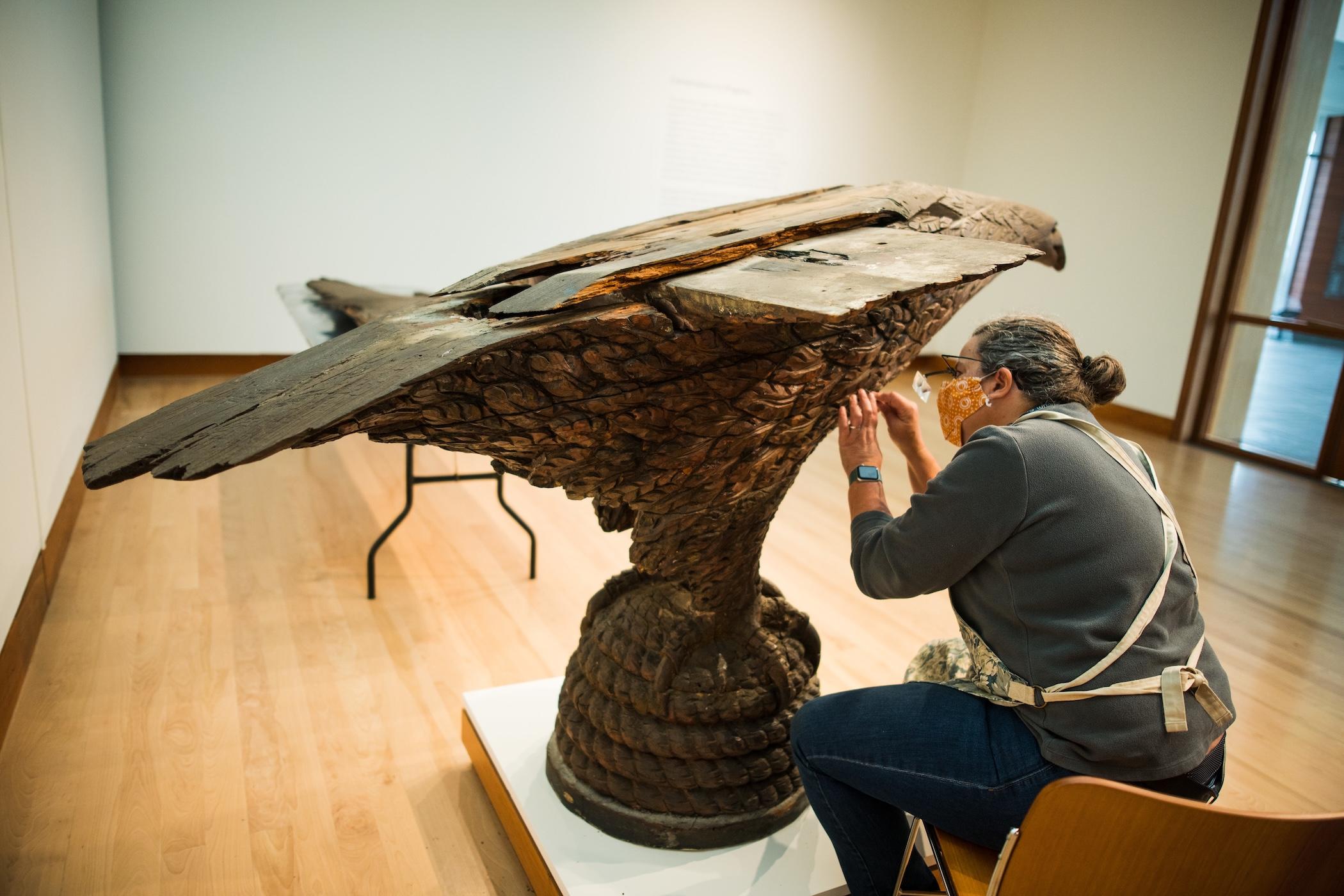
Pizzagalli Director of Conservation Nancie Ravenel at work conserving folk art sculpture by Laban Smith Beecher from the mid-19th century. 

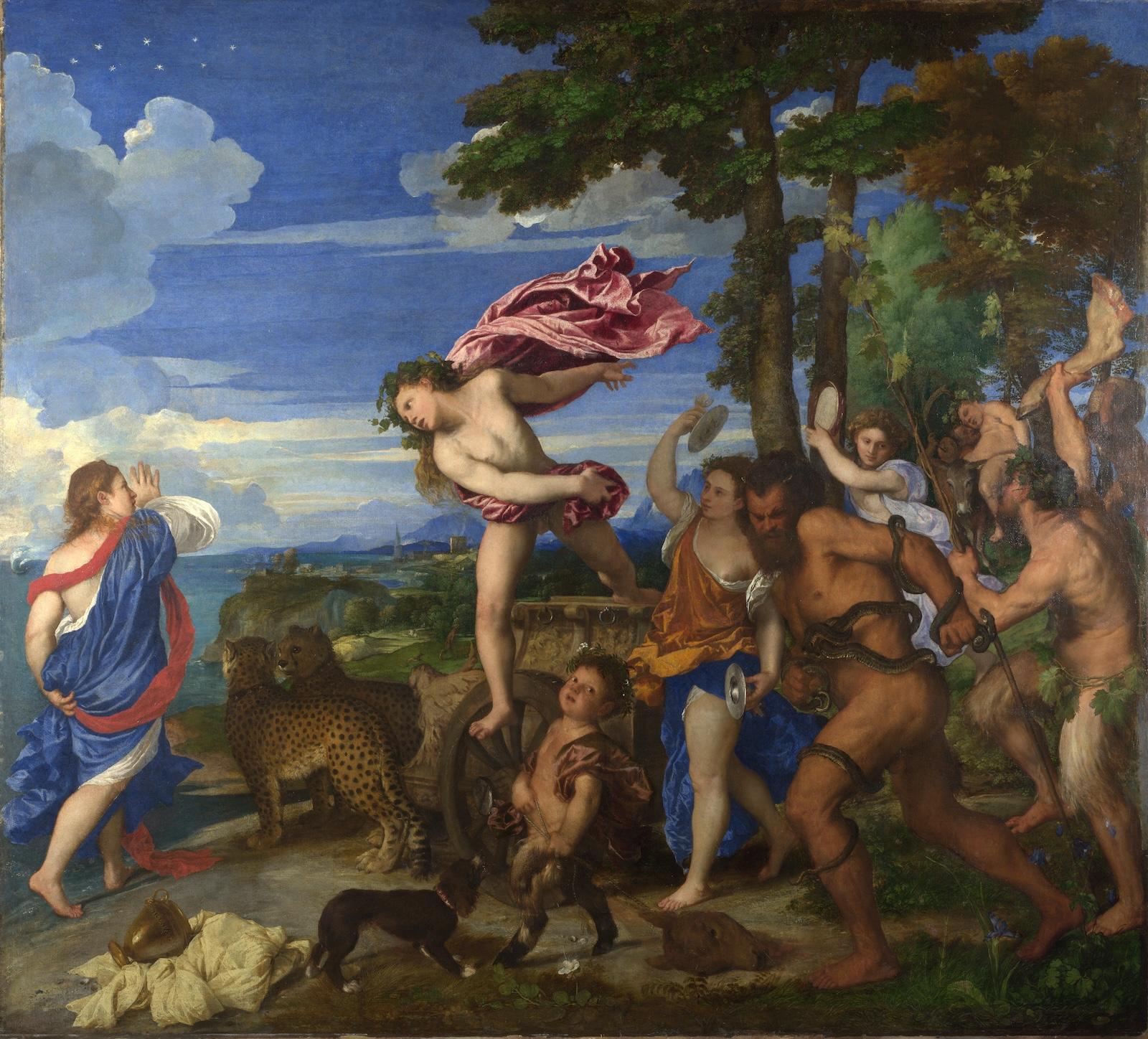
A High Renaissance masterpiece, Bacchus and Ariadne (1520-23), by the great Italian painter Titian (c. 1488-1576), is getting a touch-up thanks to Bank of America’s (BOA) extensive art conservation program, which has helped save more than 15,000 objects in 40 countries since its launch in 2010. This is the second time under the microscope for this work. Hopefully, the results won’t be as controversial as the restoration done in 1967-1968 that revealed a brighter palette, shocking audiences.

WikiCommons

Titian, Bacchus and Ariadne, between 1520 and 1523. License

Historic paintings have passionate admirers, and any attempt to restore a work to its original state is met with a combination of fear and resistance, as well as an obsessive fascination with the process. Given the level of public concern, preservationists move with great caution. To remove the veil of mystery around the necessity of preservation, museums are inviting the public into their laboratories to watch professional conservationists do their work in real time, turning this most important but tedious task into performance. 

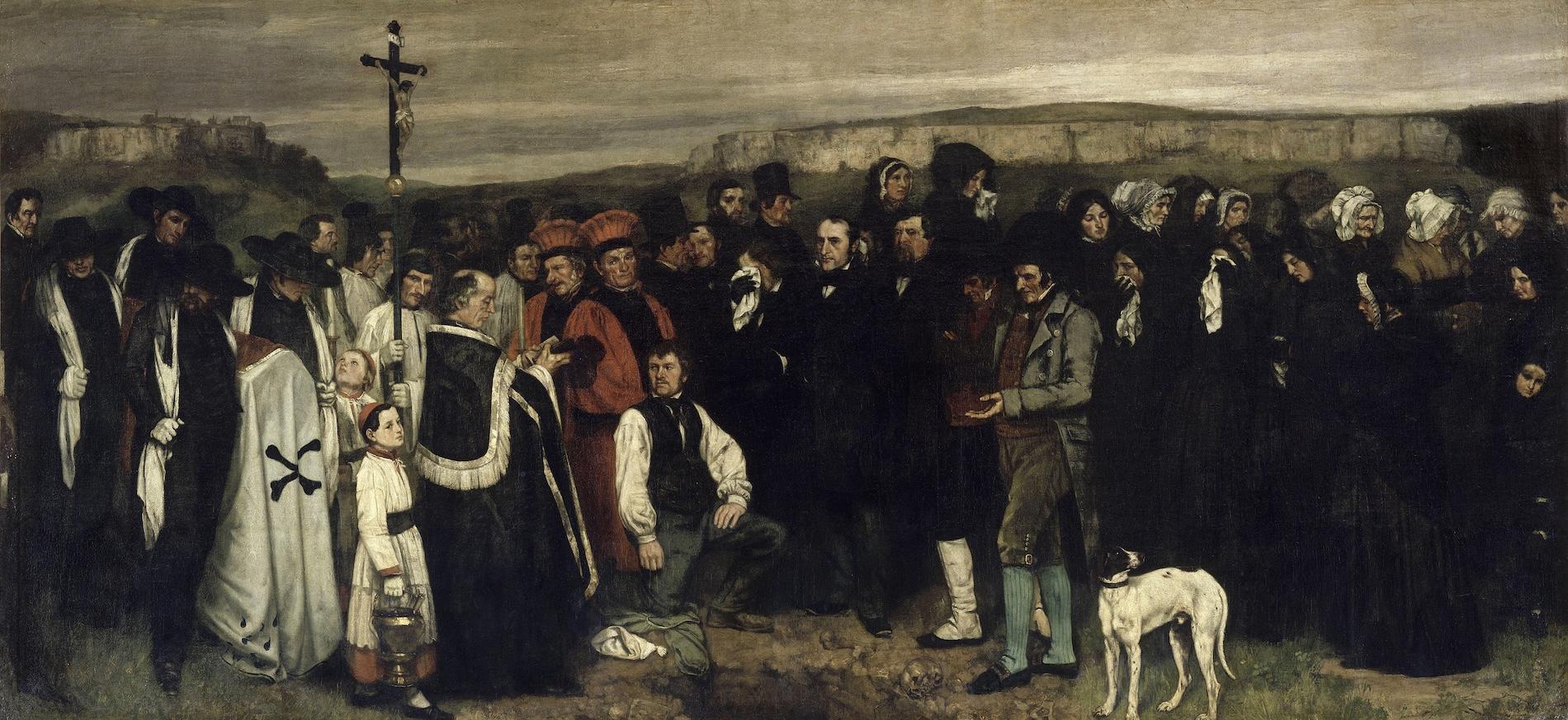
This year, the Musée d’Orsay welcomes visitors to view a team of restorers as they transform one of its largest and most important paintings, the 10 by 22 foot A Burial at Ornans (1849) by Gustave Courbet (1819-1877). Italian-born, Rome-trained conservationist Cinzia Pasquali, who runs her own art restoration company in Paris, leads the project. In a New York Times interview, Pasquali clarified her role. “There’s no creativity in being a restorer,” she said. “The light shines on the painter, and only on the painter. If you ask me to do something original, I don’t know how.”
WikiCommons

Gustave Courbet, A Burial At Ornans (1849–50). Oil on canvas, 314 × 663 cm (124 × 261 in). Musée d'Orsay, Paris. License

In museum work, three terms define the level of intervention on an artifact: preservation prevents future damage, conservation actively stabilizes materials, and restoration alters an object to recreate its original appearance. To better understand the decision-making process, Art & Object visited Nancie Ravenel, Director of Collections and Conservation at Vermont’s Shelburne Museum. Ravenel bears primary responsibility as the only museum-employed conservator in the entire state of Vermont. She oversees the Shelburne’s unique collection of over 150,000 objects including paintings, textiles, pottery, sculpture, furniture, decoys, and other ephemera—a rich but challenging responsibility for anyone in her position. 

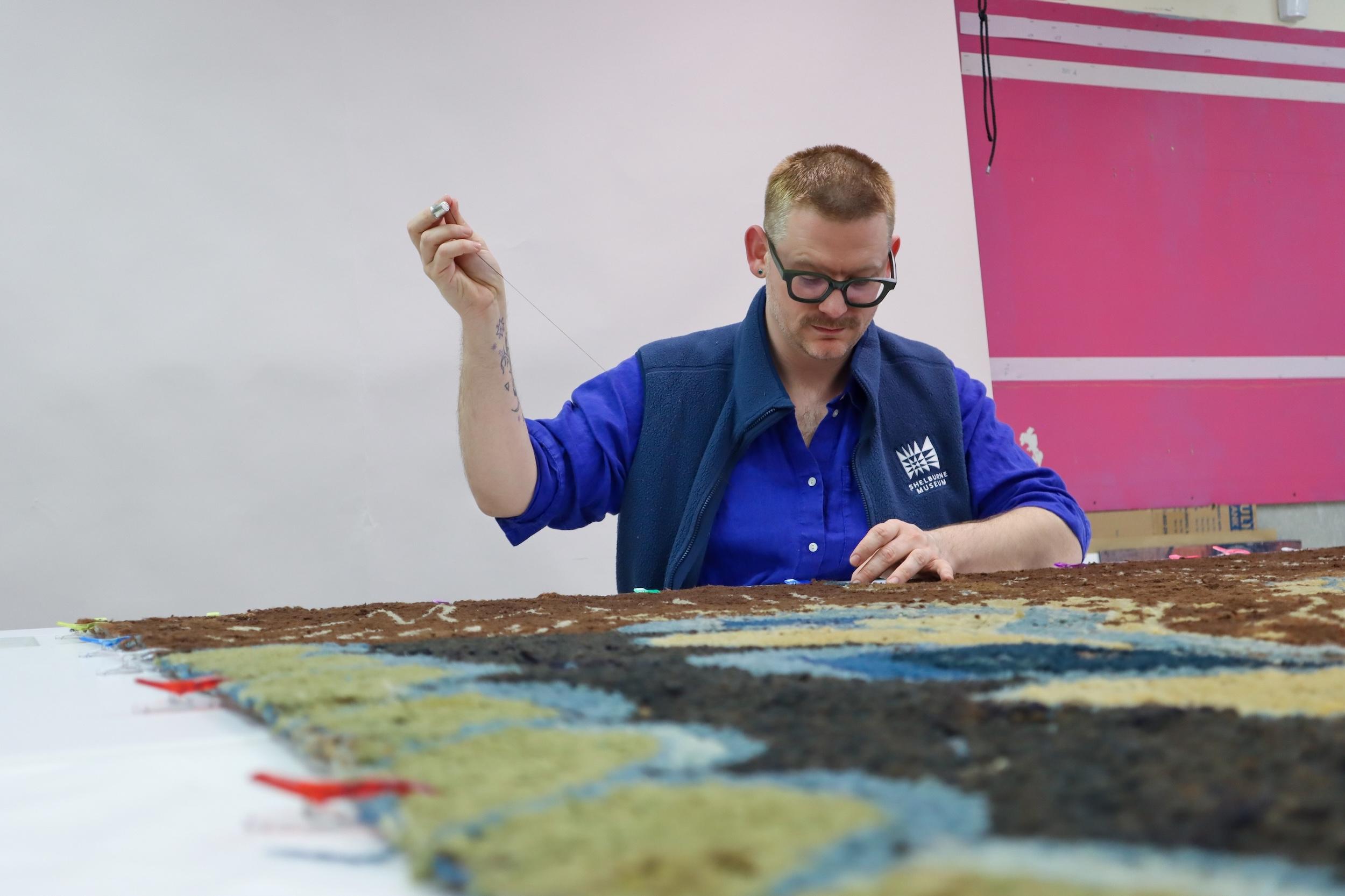
Courtesy of the Shelburne Museum

Awyn Rileybird, Associate Conservator, sewing a Velcro mount onto a bed rug made by Mary Comstock in Shelburne, Vermont, in 1810. The bed rug is currently on view in the exhibition Varied and Alive: New and Rarely Seen Treasures from the Collection.

Located in an unimposing one-story wood-frame building across the street from the museum, the exterior belied the brilliantly lit lab housing some of the most advanced technology currently available to assess the condition, not only of the objects in the collection, but also of the environment in which they are stored and displayed. Ravenel’s experience goes back decades. She explained, “In 1996, a Collection Care Endowment was established to support ongoing remedial and preventative conservation, storage, and management of the collection…The condition and maintenance info for each object is recorded in our collections management database.” 

While chatting with Ravenel, an assistant was working intently, seated at a long white table at the far end of the lab. She was stitching a backing on a large textile and stood to show us the mirror strapped to her thigh, allowing her to work on the underside of the piece through a hole in the table while the textile lay face-up. Such is the practicality of using both high- and low-tech solutions in museum work.

Ravenel continued, “I’m an object conservator by training with a specialty in gilded surfaces, and although I enjoy hands-on work, it can be repetitive. I get joy in the problem-solving side, coming up with the treatment plan. I love collaborating.” She understands public curiosity about conservation and has done work in public view. Sometimes, there is tension between the desires of the curatorial staff to provide public access and the need to protect the condition of the object in question. This is where Ravenel’s problem-solving experience becomes most useful. In addition, she has been evaluating items in the Native American collection, working with culture bearers to understand best practices for ethical and proper conservation and stewardship of Indigenous items.

Courtesy of the Shelburne Museum

Johanna Pinney, Assistant Project Conservator, working on the treatment of a book from the Electra Havemeyer Webb Memorial Building. 

Although the need is great, Ravenel said, “The conservation field is rather small. Our annual meetings are familial. There are only a few, competitive graduate programs.” The top museum conservation departments globally recognized for excellence, research, and technical expertise include the Smithsonian’s Museum Conservation Institute, the Getty Conservation Institute, and the Straus Center for Conservation and Technical Studies at Harvard. Other top-tier institutions include the Opificio delle Pietre Dure in Florence and the Guggenheim’s conservation laboratories. Most recently, Canyon—the new media arts venue in NYC—launched a media-focused conservation center in 2026, indicating that the field is prepared to meet the challenges of artists who embrace new technologies.

About the Author

Cynthia Close

Cynthia Close holds a MFA from Boston University, was an instructor in drawing and painting, Dean of Admissions at The Art Institute of Boston, founder of ARTWORKS Consulting, and former executive director/president of Documentary Educational Resources, a film company. She was the inaugural art editor for the literary and art journal Mud Season Review. She now writes about art and culture for several publications.

Subscribe to our free art newsletter!

Webform
Art and Object Marketplace - A Curated Art Marketplace