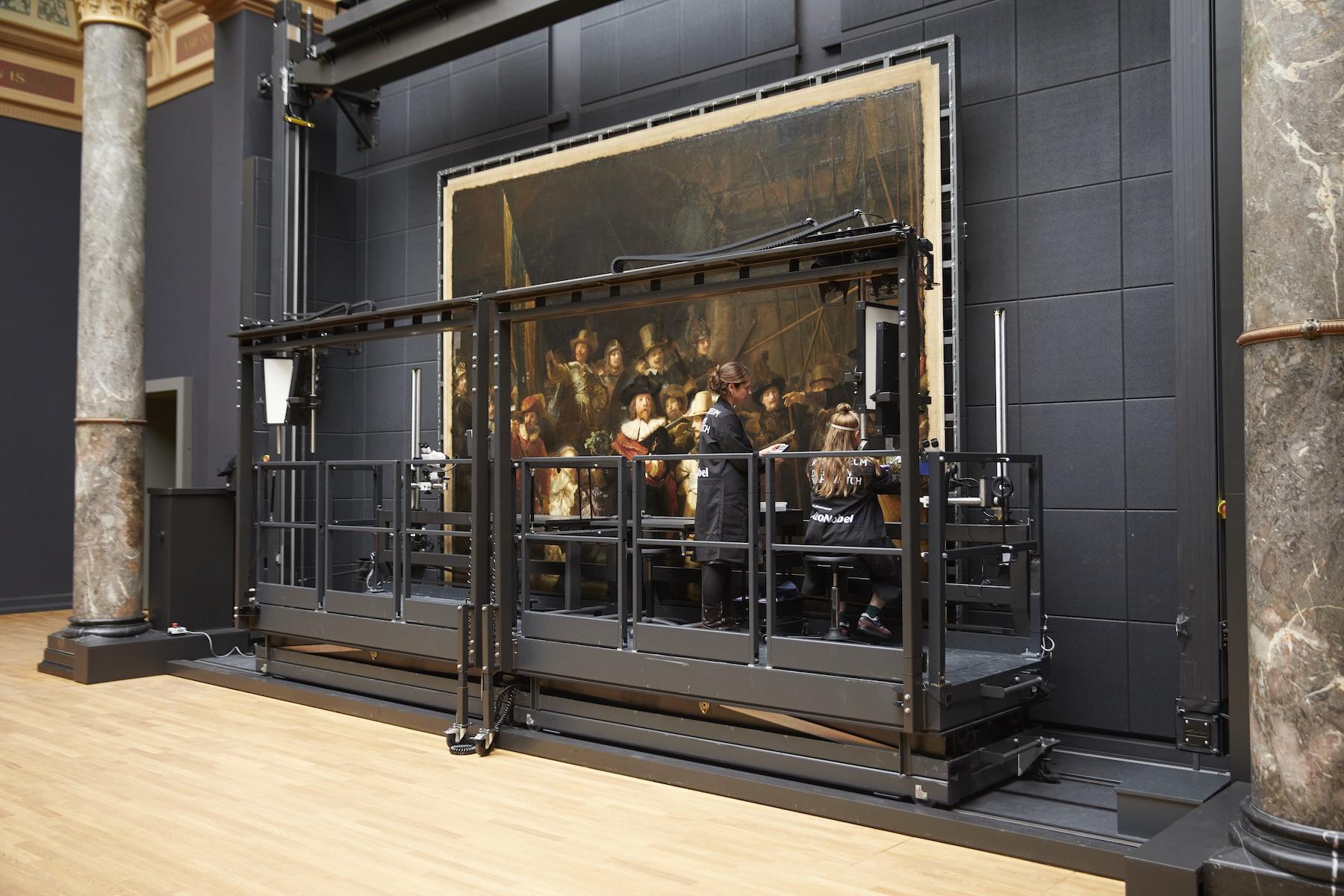


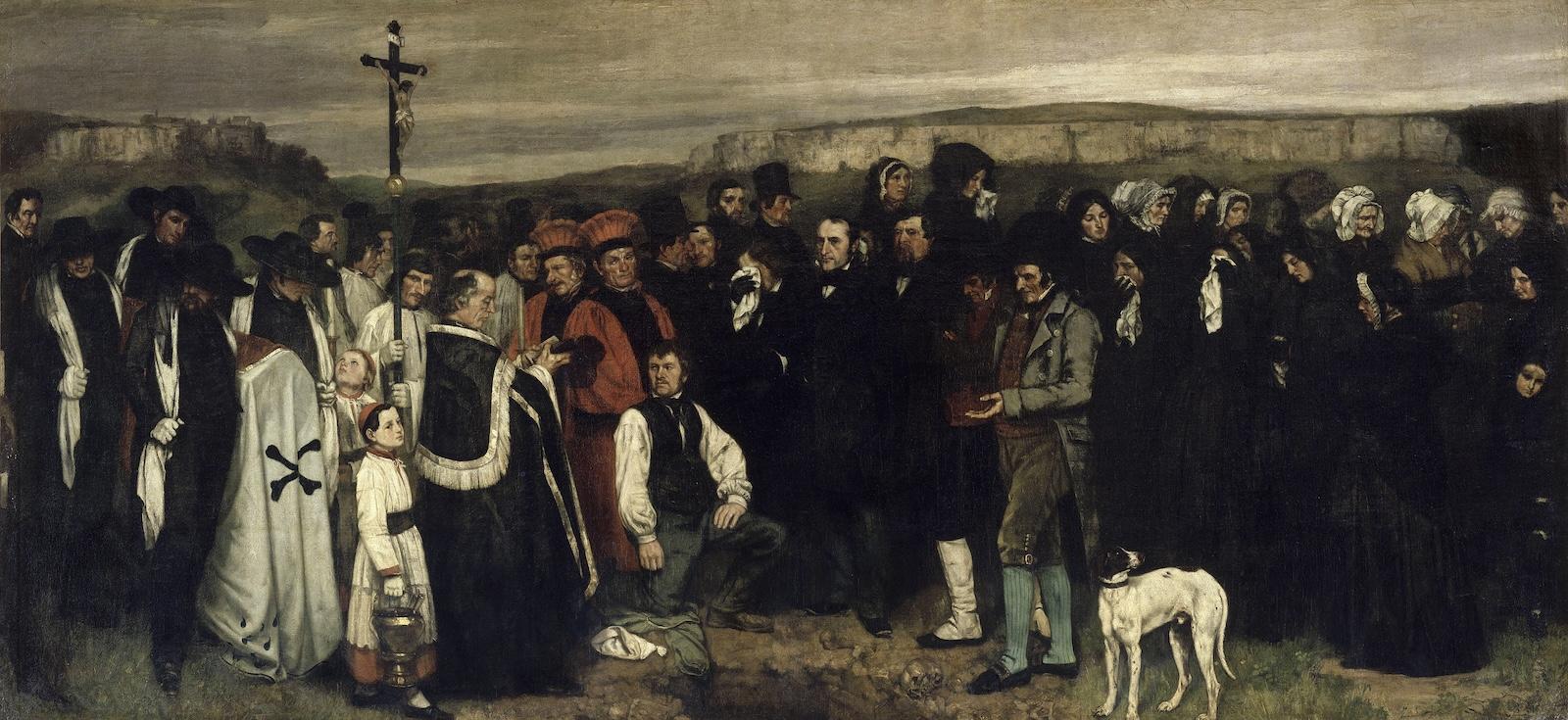
Under the public’s watchful eye and layers of time-darkened varnish, restorers discovered that Courbet’s scene of funeral goers was altered several times by the artist before it was finished. Figures and a large signature in orange letters were painted and then covered over. The conservation team was also able to bring more clarity and detail to several key elements of the piece: the burial pit is more visible; the handle of a pickax is legible; and pieces of bone have been revealed. An undisclosed sum from the Bank of America is being used to pay for the project.
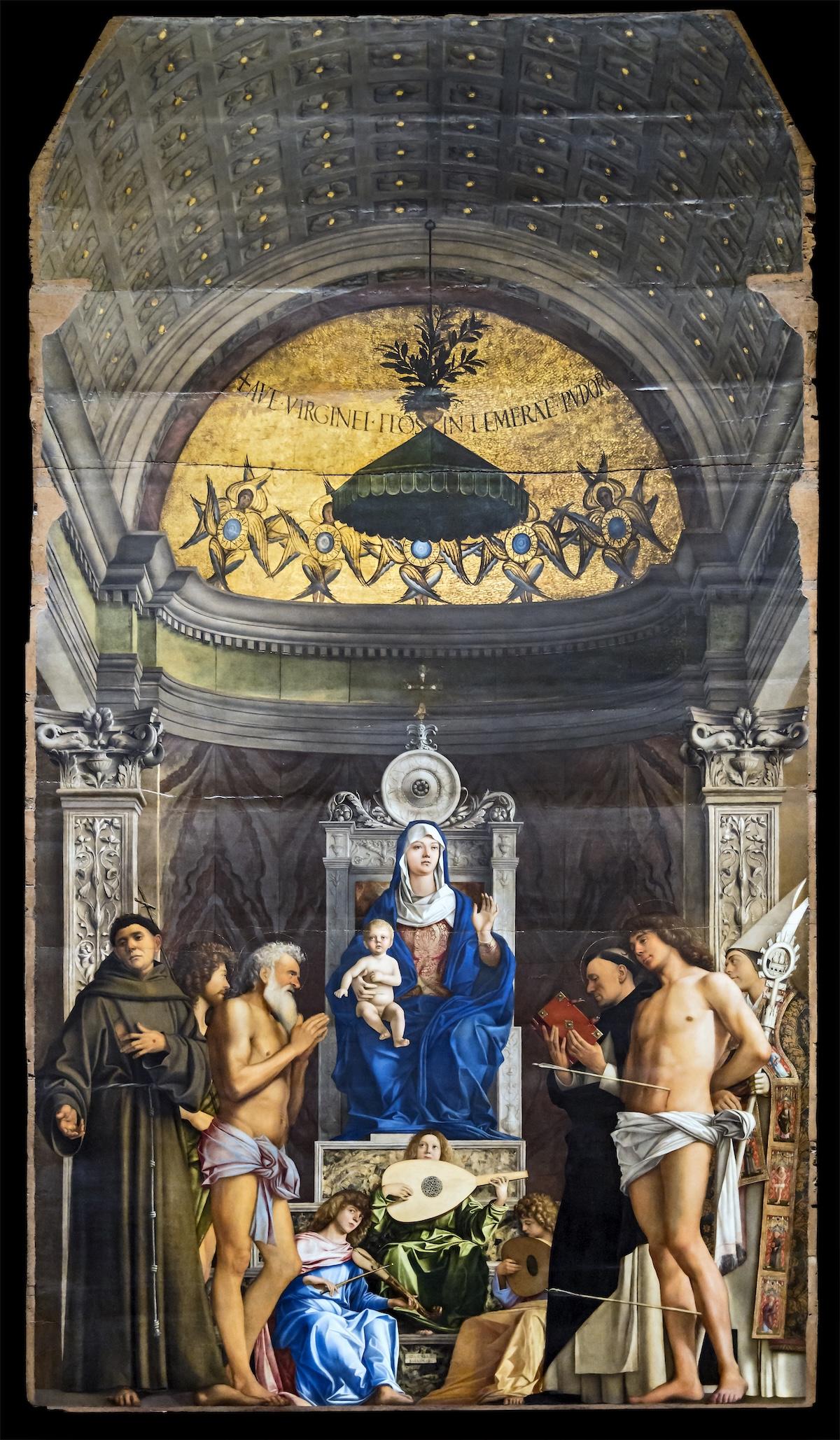
At the Gallerie dell’Accademia in Venice, Giovanni Bellini’s 15-foot San Giobbe Altarpiece is likewise being restored behind glass where it hangs, as it was deemed too fragile to move. This is the painting’s latest of more than half a dozen restorations since the early 19th century and will take two years to complete. More than half of the €500,000 project is being funded by Venetian Heritage, a nonprofit dedicated to preserving Venice’s art and architecture.
Last year, the Royal Museum of Fine Arts Antwerp offered visitors the chance to see six conservators work on Peter Paul Rubens’ Enthroned Madonna Adored by Saints. Some observers voiced concerns that the painting was being ruined rather than saved as restorers stripped away yellowed varnish and reapplied paint in a process that can look like destruction without the appropriate context. Extensive non-invasive research is conducted with ultraviolet fluorescence, infrared imaging, and other tools before any restoration is attempted. And when conservators do end up painting over select sections, they do so with paints that can be easily removed, so everything can be reversed if needed.