
Dumas was born in Cape Town, where she studied at the Michaelis School of Fine Art. Her painting career began in 1973 and initially explored her identity as a white Afrikaner woman in South Africa during the apartheid years. In 1976, she relocated to the Netherlands, where she attended Atelier ’63, an independent art school, and also studied psychology at the University of Amsterdam. Dumas is known for her emotional and psychologically layered works and is widely considered one of the most influential painters of the contemporary era.
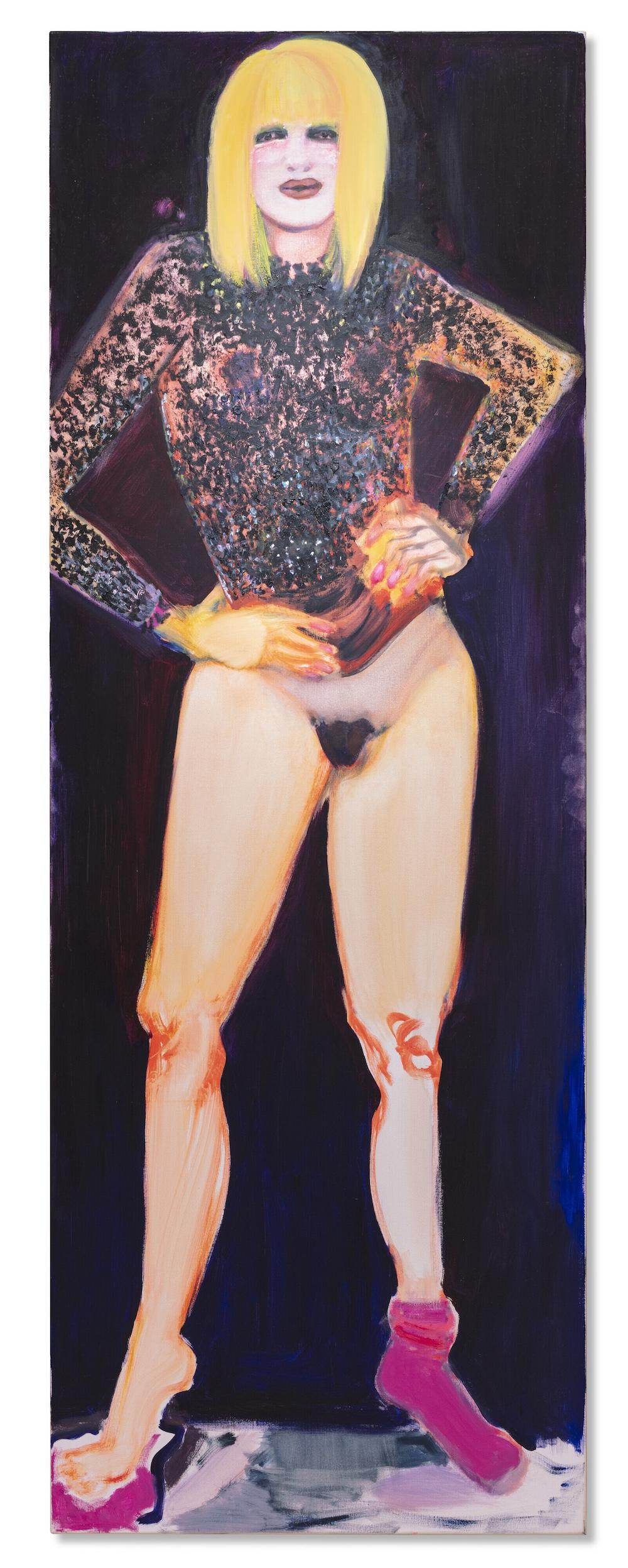
Photographs of friends, lovers, and family members, as well as images cut from art books, explicit magazines, and newspapers, are the raw material for Dumas’s art. These images are then stripped to their essence and imbued with meaning. Dumas explores sexuality, femininity, the male gaze, love, death, the aging process, and contemporary political issues through her use of vibrant colors in contrast with muted, flat backgrounds. “At the moment my art is situ ated between the pornographic tendency to reveal everything,” Dumas has written, “and the erotic inclination to hide what it’s all about.” While viewers might feel an initial discomfort or rejection in front of Miss January, the painting manages to repeatedly draw one in and inspire empathy. Dumas’ ability to reveal through concealment is her artistic strength and allows her to create portraits that represent not just people but emotional and psychological states that are the cornerstones of human life.
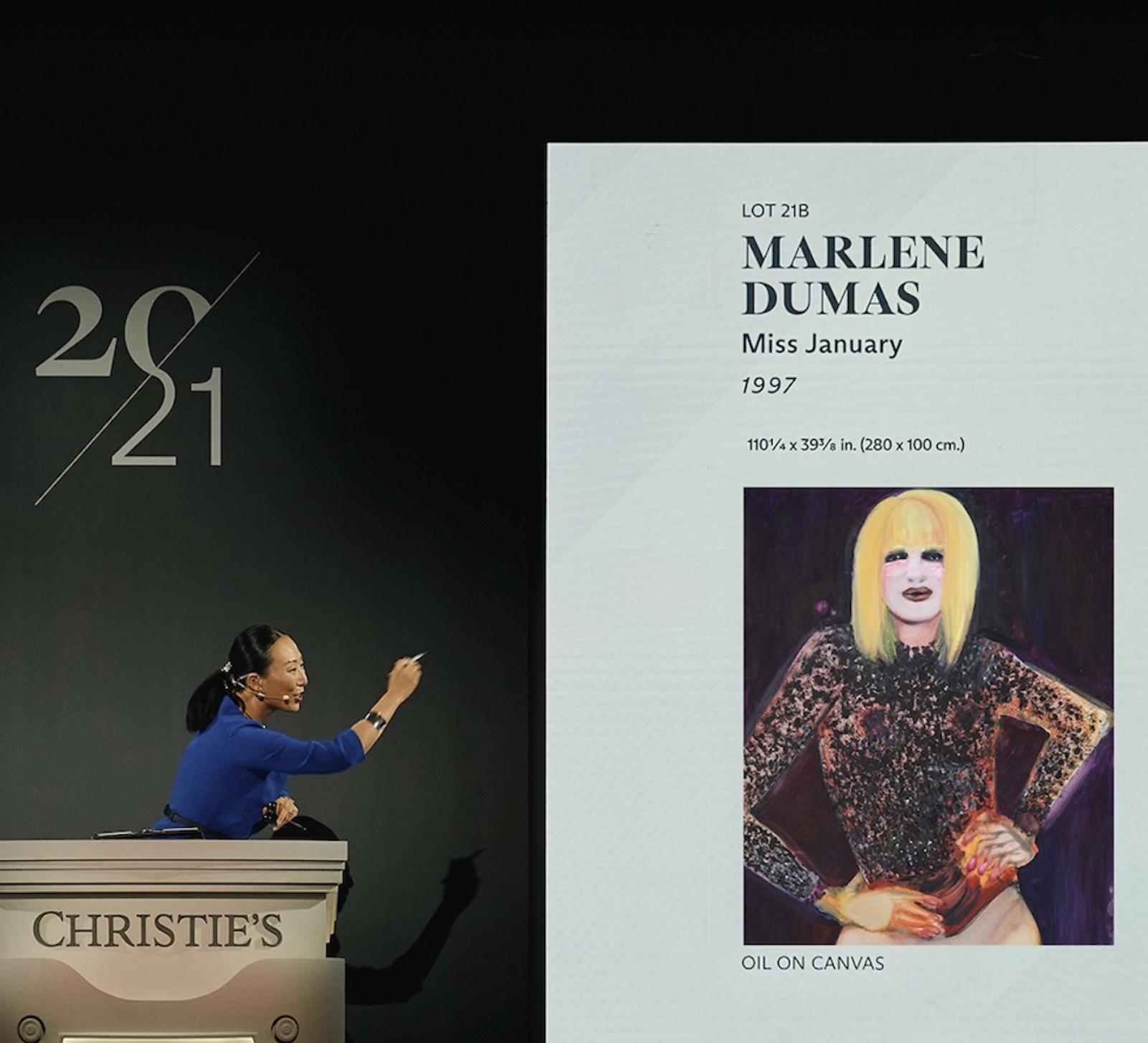
Christie’s sale is relevant not only because of Miss January’s memorable price, but also because three out of four records that night were set by female artists—Cecily Brown, Simone Leigh, and Emma McIntyre. Although sales are still male-dominated, Dumas’ achievement indicates that female artists have been making steady progress in the art market. The widespread hope is that higher auction prices will boost visibility for female artists and broaden their recognition and interest among museums and commercial galleries.
*This article originally appeared in Art & Object Magazine's Fall 2025 issue.