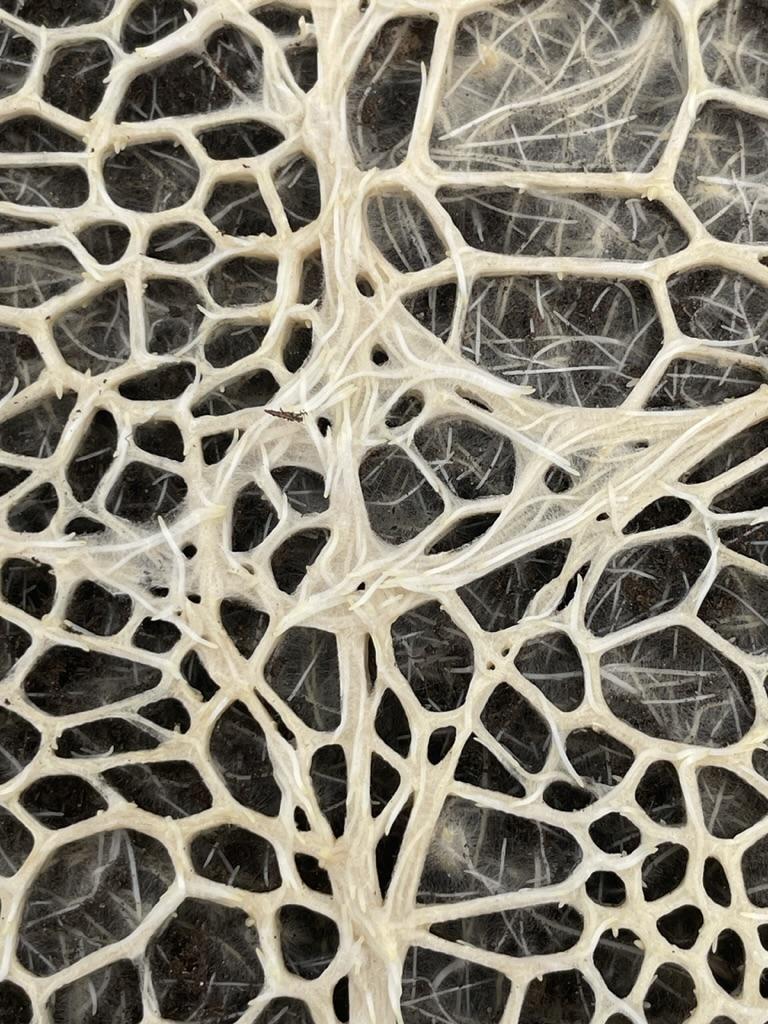

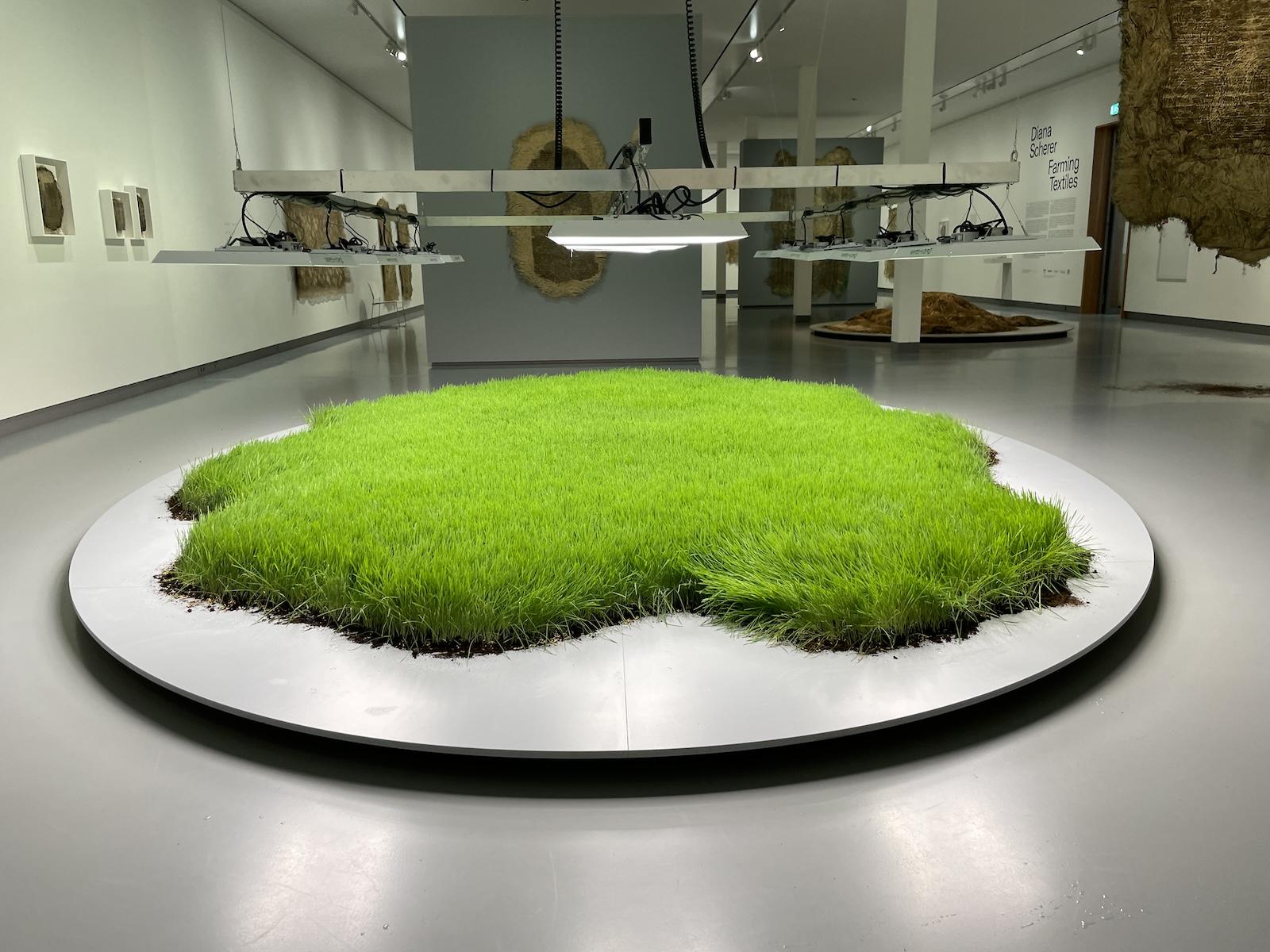
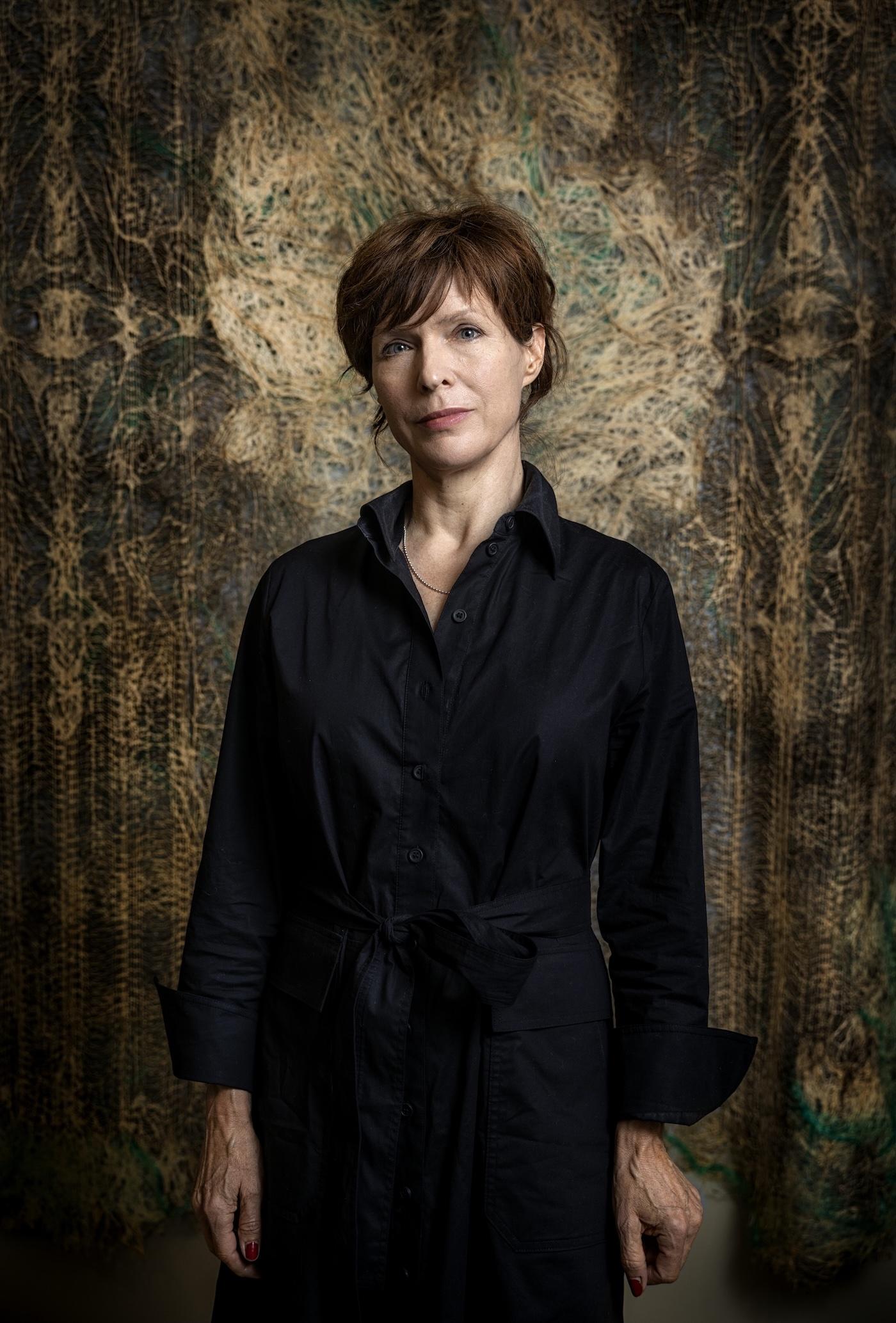
One of the most compelling artists to keep a traditional craft like weaving at the core of their practice is Diana Scherer. German-born but based in Amsterdam, Scherer has developed an innovative creative process that blends weaving with botanics and science. This all began in 2012, when Scherer started exploring the “rootbound” phenomenon of plants growing in constricted spaces. After growing from seed for six months in vases, the plants were freed from their containers and photographed. Their bare roots revealed the shape forced onto them by the now-removed vase.
This series of photographs, titled Nurture Studies, inspired Scherer to see plant roots as fibers and investigate their malleability. Her ongoing project, Interwoven, explores this potential by training the roots to find water and nutrients through a template. “Through this process, the plant itself becomes both medium and collaborator; the growth of the root system is guided by a technique I devised in which the act of weaving is not imposed but emerges through the plant’s own development,” explains Scherer. “Here, cultivation is simultaneously artistic gesture, biological process, and craft practice.”
The different techniques employed result in two outcomes: a thick rug of intertwined roots in which soil is still a visible part of the design, and a thinner, drier material that resembles and behaves like fabric. Scherer predominantly uses grass seed for its strength, density, and wool-like appearance, but she also experiments with poppies, dandelions, nettles, and verbena. The designs are inspired by natural geometric patterns, such as a hexagonal honeycomb. Scherer clearly wants to remain rooted in nature for her patterns: “Nature’s principles of construction and arrangement is the theory that assumes the same elements and patterns recur again and again in every plant. I use microscopic images of plants that show cell tissues affected by climate change—for example, structures of burnt wood or plant structures mutated by flooding. I combine these structures with universal man-made signs or art forms, from bubble plastic or traces of car tires in the mud.”