



Auction  November 26, 2025  Annah Otis

When Everyday Objects Are Treated as Fine Art at Auction

Wikimedia Commons

Sotheby's New Bond Street London Christmas 2016. License

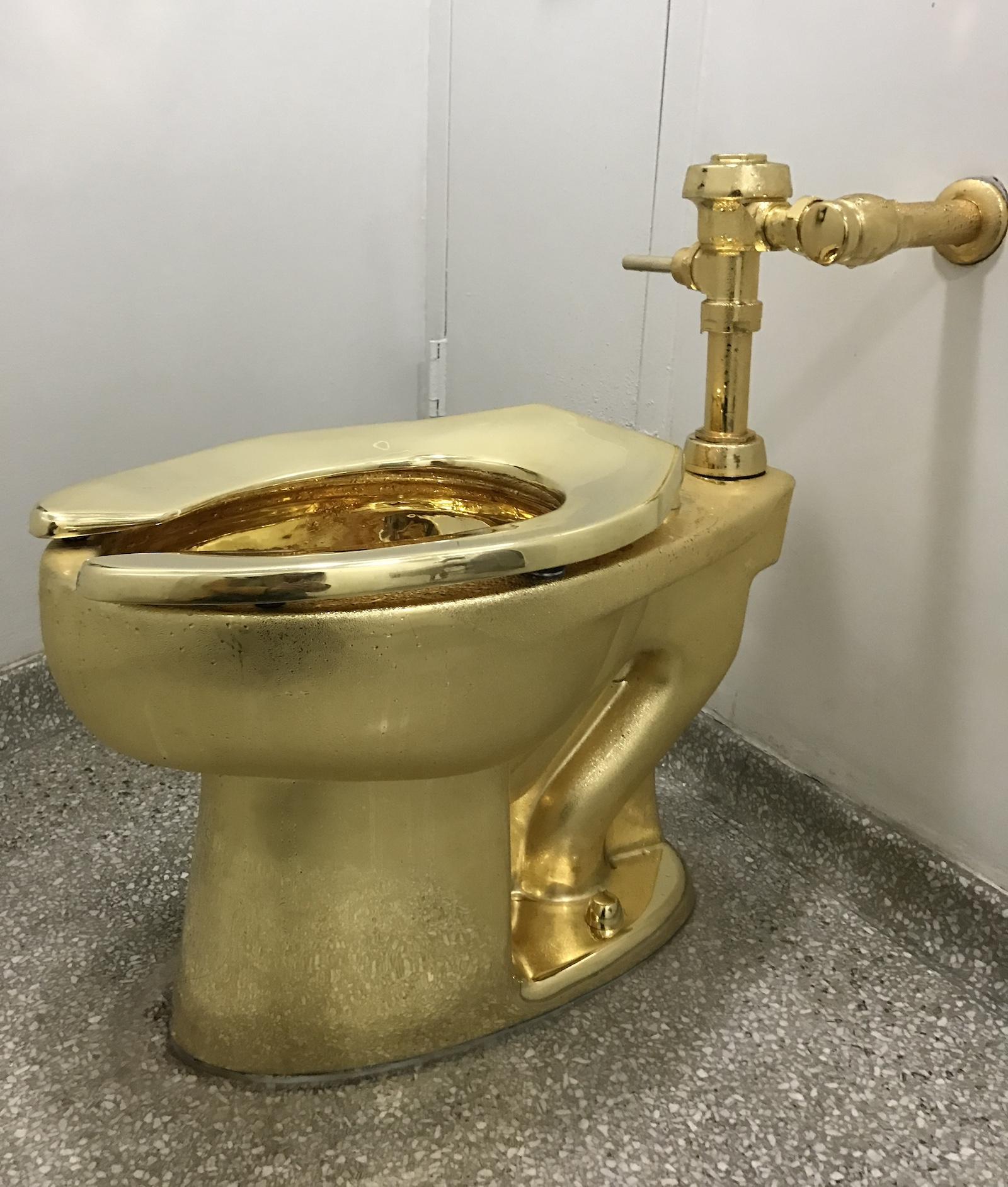
While Gustav Klimt’s Portrait of Elizabeth Lederer was sold for a record-breaking $236.4 million after a 20 minute bidding war, a solid gold toilet, titled America by Italian artist Maurizio Cattelan, drew far less fanfare at Sotheby’s recent auction. The 223-pound piece was sold for $12.1 million, including taxes and fees, to Ripley’s Believe It or Not! at exactly the price of its weight in gold. This conflation of material and artistic value underscores its conceptual foundation as a commentary on American consumerism and classism, but also raises questions about how such objects are priced at auction.

Wikimedia Commons

Maurizio Cattelan, America, 2016, Fully functioning toilet made of 18-karat solid gold. License.

Similar questions have been raised multiple times over the last century as the idea of what is art and what is not changes. Marcel Duchamp famously presented a porcelain urinal, signed “R. Mutt”, to a non-juried exhibition in New York where it was rejected by the show organizers in 1917. And thus, “readymade” art was born. A 1964 replica of Fountain sold for $1.76 million in 1999, demonstrating just how far the concept of an everyday object imbued with meaning by an artist had come.

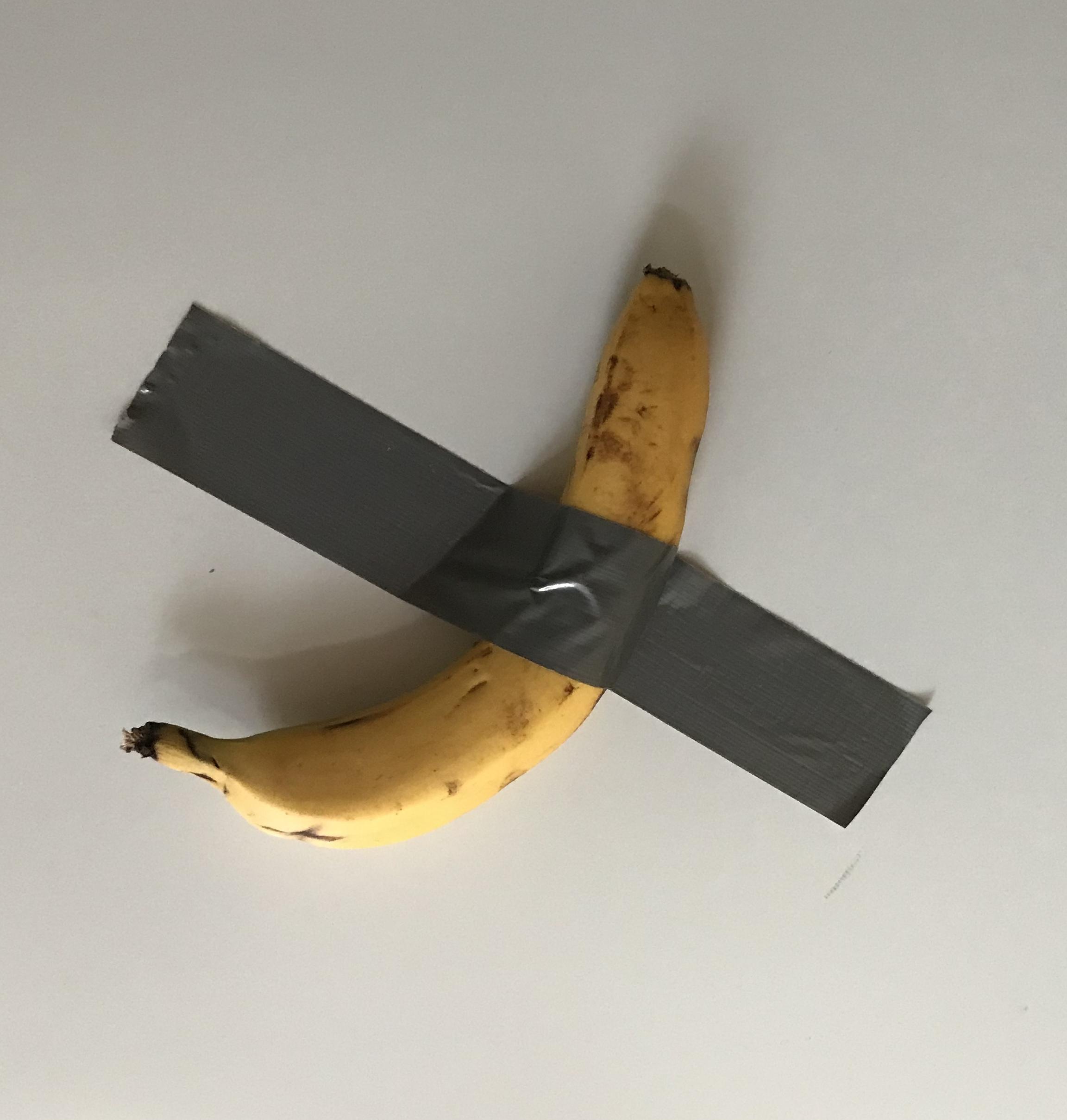
An even wider gap between material and artistic value was evident in the sale of Cattelan’s duct-taped bananaComedian was sold at Sotheby’s for $6.24 million in 2024 to a cryptocurrency entrepreneur who ate it in the following days. And, this was not a one-off phenomenon. Earlier versions sold for up to $150,000 after the piece was introduced at Art Basel Miami Beach in 2019. All were accompanied by a certificate of authenticity and instructions for how to replace the banana when it rotted. Mundanity very quickly collided with materialism.

Wikimedia Commons

Maurizio Cattelan, Comedian, 2019. License.

However, while Cattelan’s bananas were purchased for a matter of cents, creating his gold commode came at a much higher fiscal cost. It is therefore surprising that America was one of two produced almost a decade ago. The second was displayed at the Guggenheim Museum in New York where visitors were able to test its functionality. Three years later, the piece was stolen while on display at Blenheim Palace in England, never to be seen again. It was most likely broken up and melted down to be sold for the sum of its (very valuable) parts– much like the surviving toilet.

Sotheby’s decision not to assign artistic value to America on top of its material value only substantiates the piece’s criticism of a country overly concerned with reducing art to a number. There is also a certain irony that the physical embodiment of Cattelan’s commentary on capitalism will now be displayed by a franchise dependent on that system. It is just a matter of waiting to see whether Ripley’s visitors will have a chance to “interact” with the toilet. In the meantime, we can keep asking, “What qualifies as art?”

About the Author

Subscribe to our free e-letter!

Webform
Art and Object Marketplace - A Curated Art Marketplace