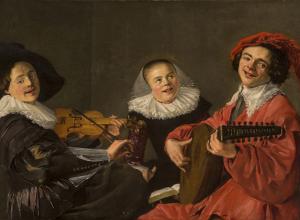


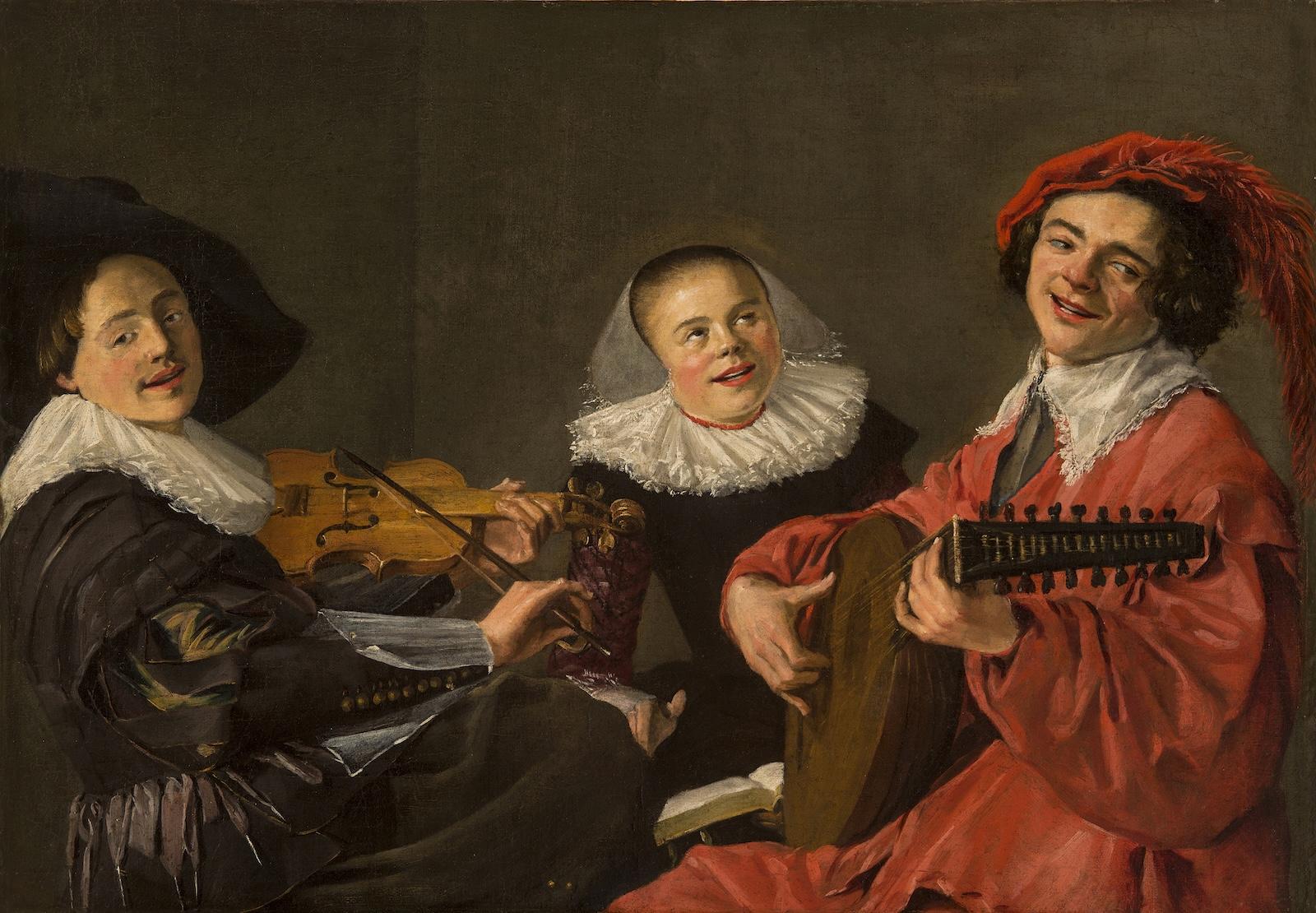
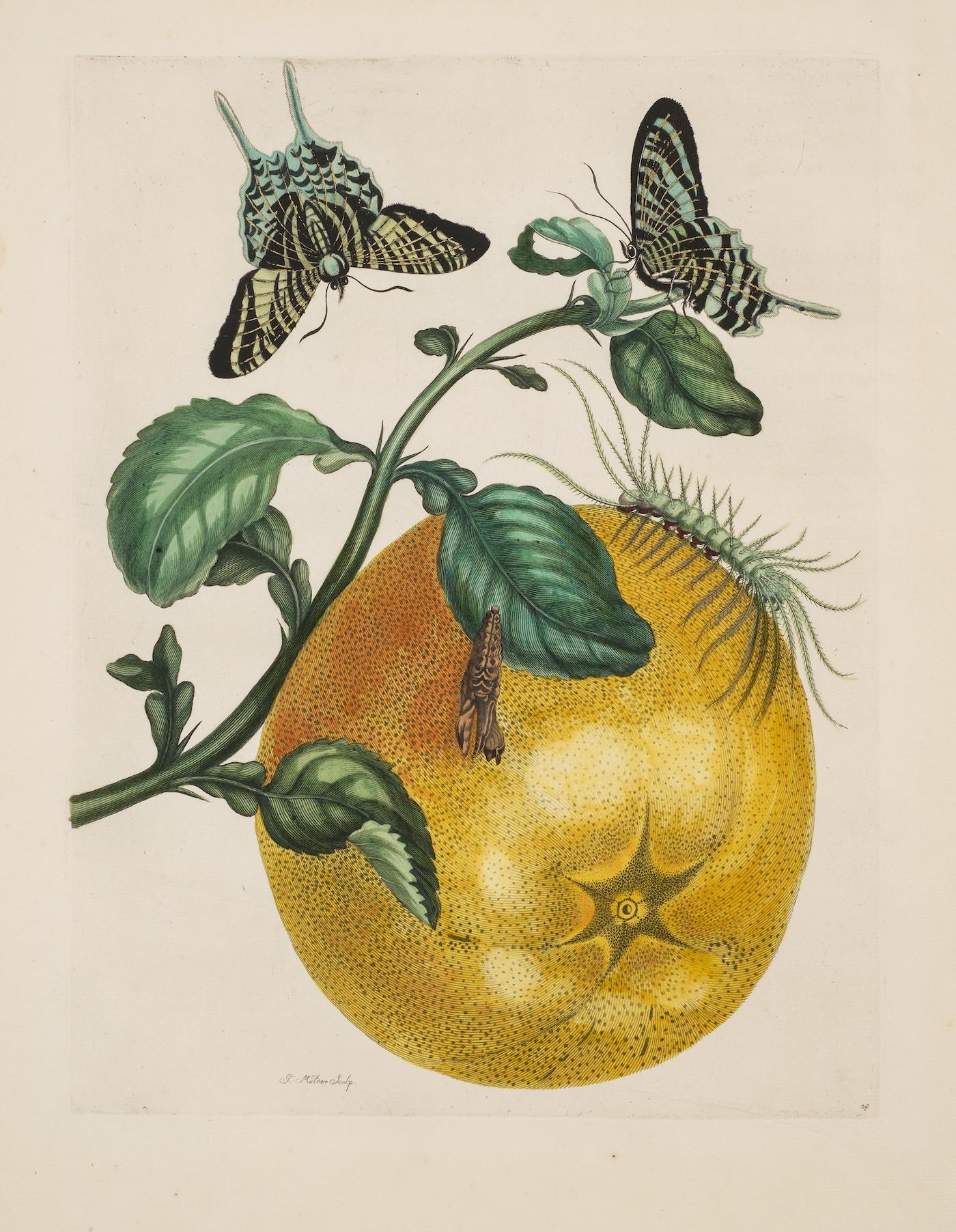
In more conventional media, Leyster hung out a shingle as a professional painter in the city of Haarlem, not far from Frans Hals’ studio (ironically, in later years, her paintings were misattributed to Hals). Leyster felt empowered enough to paint a self-portrait that depicts her as a successful artist, tools of the trade in hand, an expression of delighted pride on her face. Ruysch, a master of floral still life, commanded high prices for her lush, incredibly detailed works, which were considered by connoisseurs to be the best of the genre. Merian’s art was more scientific in nature; she carefully documented the natural objects found by Dutch explorers in the New World, a task carried on by her two daughters, Johanna and Dorothea.
Houbraken titled his massive biographical book The Great Theatre of Dutch Painters and Paintresses. “Paintresses” –just think of it! What was it that made this place and time so special in terms of acknowledgment of women’s artistic achievement? What made it an exception to the sorry rule that women must be marginalized and their work diminished? In her famous 1971 Art News essay, Why Have There Been No Great Women Artists?, Linda Nochlin wrote that the three main reasons “why” were (1) the definition of “greatness” favored men; (2) socio-economic conditions made it nearly impossible for women to gain the expertise and free time needed to launch and maintain an art career; and (3) the writers of art history chose to exclude or minimize those few women who did manage to succeed.
In Golden Age Holland, reason 2 (and to some extent 3) somehow didn’t obtain. It’s difficult to know for sure at a remove of four centuries, but it seems that family played a role, since many women artists were the daughters of painters (a factor noted by Nochlin in her essay over 50 years ago), and the Dutch took a guild-like, family-business approach to art. Dutch women were also bolstered by an anomalously equitable legal code relative to other European states at that time. Koerten, although self-taught and not helped by an artistic family, was loyally supported in her work by her husband, Adrian Blok. After her death, at his own expense, he published a book of poems by various writers in her honor, as a fitting memorial.
*This article originally appeared in Art & Object Magazine's Winter 2026 issue.