Fair  October 22, 2026  Paul Laster

Highlights from Frieze London and Frieze Masters 2026

Created:
Author: abby
Image: Hugo Glendinning. Courtesy Frieze.

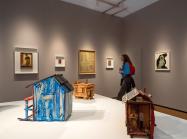
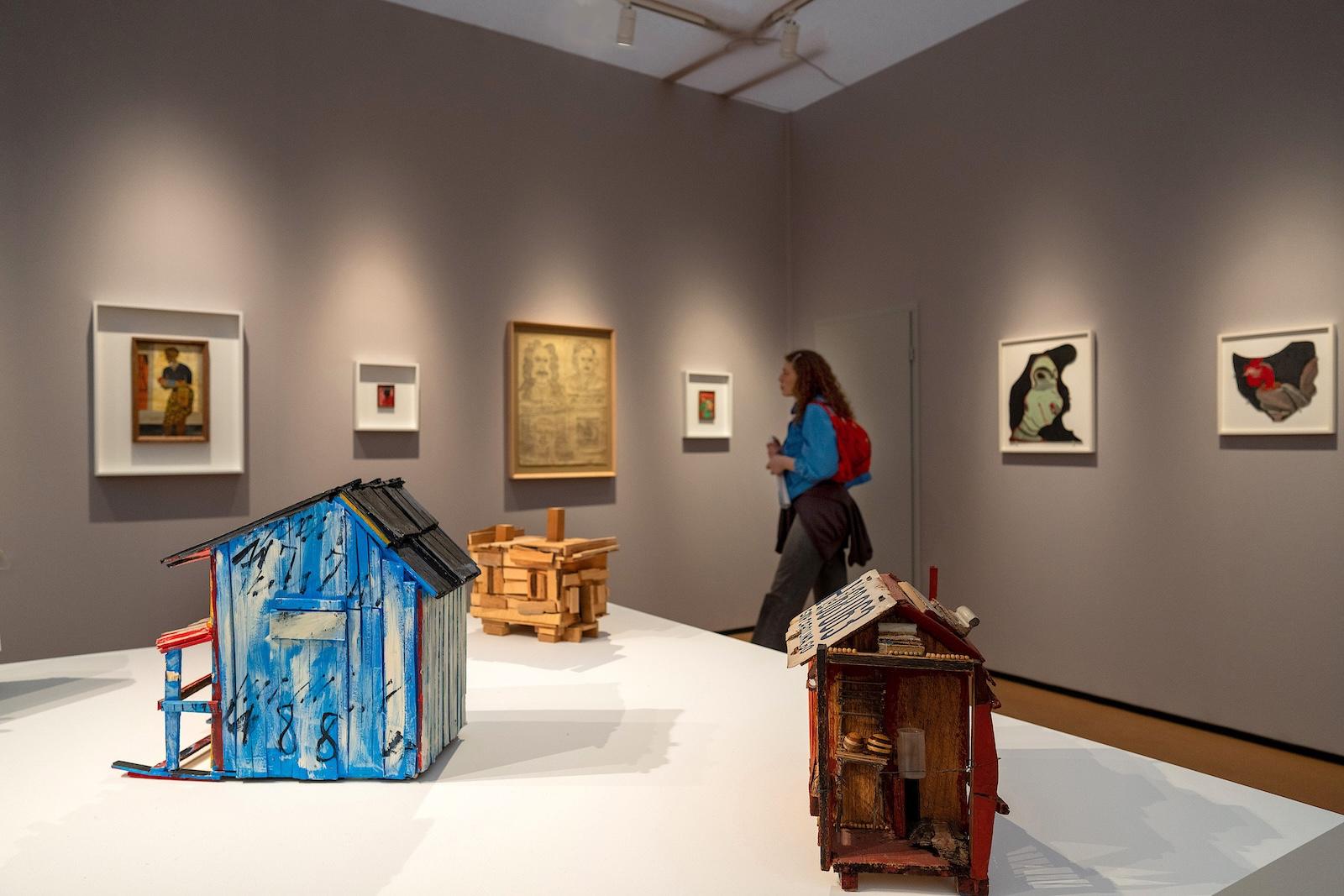
Installation view, Andrew Edlin Gallery, Frieze Masters 2026. 

Among the world’s best art fairs, Frieze London and Frieze Masters brought collectors, curators, critics, and artists from around the world to Regent's Park from October 14 to 18, 2026. The 24th edition of Frieze London featured 176 galleries from 43 countries and regions, while the 14th edition of Frieze Masters welcomed 142 galleries from 33 countries and territories. The lively fairs drew 95,000 visitors from 108 countries and regions, including a record number of representatives from 426 institutions across 51 countries and constituencies.

“We have seen strong sales at every level of the market across both Frieze London and Frieze Masters,” said Kristell Chadé, Executive Director of Fairs, at the fairs’ close. “Collectors have responded to the extraordinary range of work, from emerging artists in the Focus section to exemplary works spanning thousands of years at Frieze Masters; that breadth is what makes these two fairs so special. London at its best makes you feel that anything is possible. This has been one of those weeks.”

Scroll through to see our favorite artworks from Frieze London and Frieze Masters 2026.
1 of 8
Courtesy Jane Lombard Gallery.
Lucy + Jorge Orta at Jane Lombard Gallery

Paris-based artist duo Lucy + Jorge Orta have worked collaboratively since 1991, creating multidisciplinary, socially engaged installations, sculptures, and community performances that address urgent global ecological and social challenges. Composed of British visual artist Lucy Orta and Argentine artist and architect Jorge Orta, their work bridges art, fashion, architecture, and activism, sparking discussion and proposing solutions to societal challenges. 

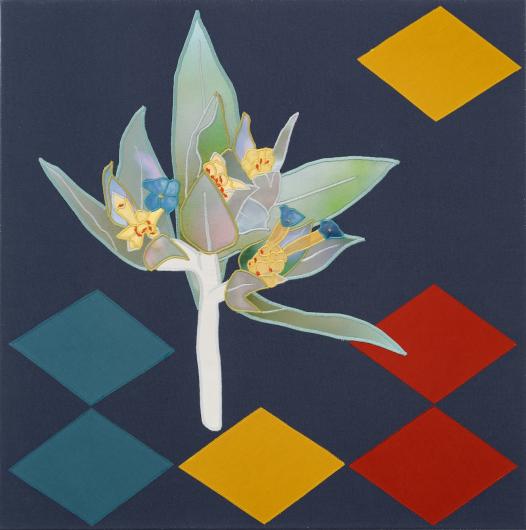
The duo’s Wadi Hanifah Embroidery Landscapes explore place-based histories and cultural heritage. The series brings together botanical specimens native to Saudi Arabia’s Wadi Hanifah valley and geometric motifs drawn from Al Sadu, the traditional weaving practice of Bedouin women. By combining ecological observation, textile traditions, and cultural heritage, the works serve as both a scientific archive and a textile map, reflecting on adaptation, resilience, and environmental change.

Image: Lucy + Jorge Orta, Wadi Hanifah Embroidery Landscape (1), 2024. Cotton canvas, digitally printed silk satin, and embroidery, 27 1/2 x 27 1/2 x 1 5/8 in, 70 x 70 x 4 cm. 

2 of 8
© Sun Yitian. Courtesy the artist and Esther Schipper.
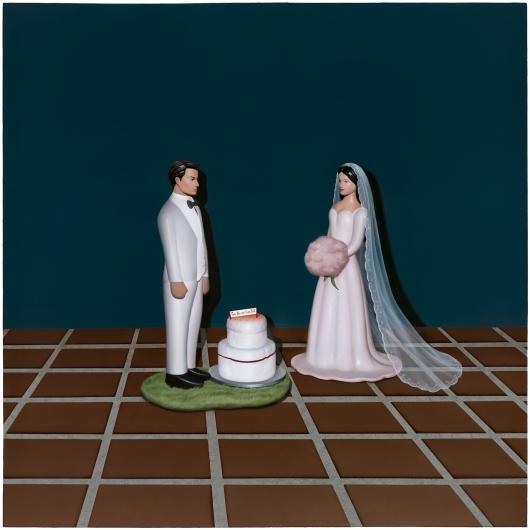
Sun Yitian, You Never Can Tell, 2026. Acrylic on canvas, 183 x 183 cm. © Sun Yitian. Courtesy the artist and Esther Schipper.
Sun Yitian at Esther Schipper

Widely exhibited and collected, particularly in Asia and more recently in Europe, Sun Yitian creates hyper-realistic paintings of toys and mannequin-like figures, inspired by the colorful consumer goods that surrounded her in her hometown, where they were mass-produced. Working from staged photographs she usually takes herself, the Beijing-based Chinese artist paints inflatable toys, animals, and comic book characters with photorealistic detail and reflective studio lighting, making commonplace objects seem more precious than they are.

Featuring a bride-and-groom figurine gathered around a tiered wedding cake and styled like a commercial wedding cake topper, her painting You Never Can Tell perfectly exemplifies the artist’s signature style: hyper-realistic yet cartoonish renderings of mass-produced consumer goods and childhood nostalgia, while exploring the boundaries between realism and artifice within global commodity culture. 

Image: Sun Yitian, You Never Can Tell, 2026. Acrylic on canvas, 183 x 183 cm. 

3 of 8
Courtesy the artist and Pace Gallery.
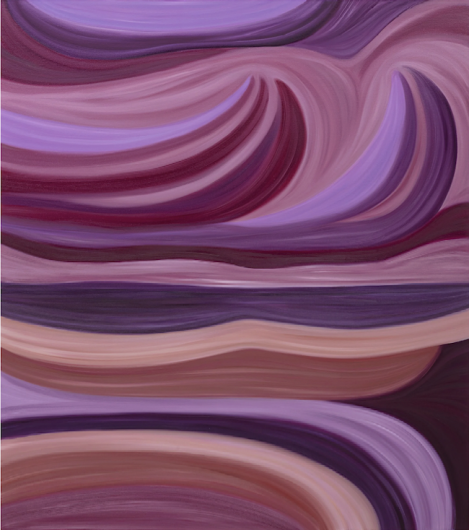
Marina Perez Simão, Untitled, 2026. Oil on linen, 180 cm × 160 cm, 70 7/8 × 63 in. Courtesy the artist and Pace Gallery.
Marina Perez Simão at Pace Gallery

Brazilian artist Marina Perez Simão is celebrated for her dreamlike, abstract, transcendental landscapes. Her work bridges figuration and pure abstraction, evoking nature and geological forms without depicting them directly. Her best-known work comprises large-scale, voluptuous oil paintings defined by fluid shapes, organic curves, and multiple horizon lines. 

At home, she carefully plans each composition through fluid watercolor studies and drawings before enlarging it onto a large canvas in her studio. At the fair, she presented 11 new paintings in a solo booth designed as an architectural environment. As layered, undulating explorations of light and shifting topography, monochrome paintings like this untitled canvas mark a departure from her usual chromatic practice—marvelously narrowing her typically multihued compositions to three unicolor families consisting of grays, blues, or magentas.

Image: Marina Perez Simão, Untitled, 2026. Oil on linen, 180 cm × 160 cm, 70 7/8 × 63 in.

4 of 8
Courtesy Contemporary Fine Arts.
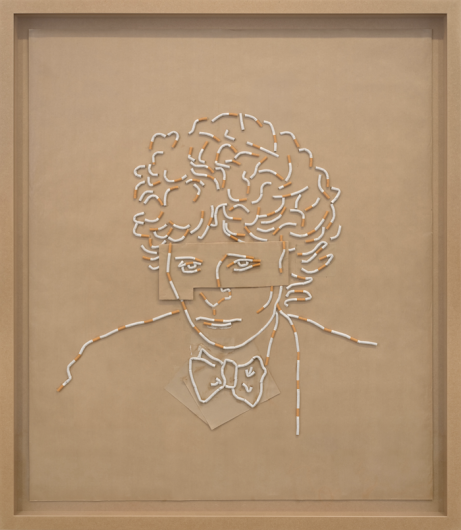
Sarah Lucas, Maggi the Magi, 2026. Brown paper, cigarettes, MDF frame,  133.7 x 119.7 x 2 cm / 52 5/8 x 47 1/8 x 3/4 in. Courtesy Contemporary Fine Arts.
Sarah Lucas at Contemporary Fine Arts

A prominent British artist and a leading figure in the Young British Artists (YBA) movement, which emerged in London in the late 1980s, Sarah Lucas is known for her provocative, confrontational, and darkly humorous approach to art. Working across sculpture, photography, and large-scale installation, her art has a distinct punk, DIY aesthetic. It subverts social norms, challenges the patriarchal gaze, and explores the raw, often grotesque realities of the human body, gender roles, class, and sexuality. 

The portrait assemblage, Maggi the Magi, strikingly depicts Lucas’ longtime friend and fellow artist, Maggi Hambling. It highlights a central theme in both artists' lives: their decades-long friendship, creative dialogue, and shared habit of smoking. Using cigarettes, or fags, to capture Hambling's unruly curls, expressive eyes, and stylish bow tie, Lucas transforms a commonplace, charged material into a deeply personal, humorous tribute.

Image: Sarah Lucas, Maggi the Magi, 2026. Brown paper, cigarettes, MDF frame,  133.7 x 119.7 x 2 cm / 52 5/8 x 47 1/8 x 3/4 in. 

5 of 8
Photo: Nicolas Brasseur. Courtesy the artist, Casa Triângulo and Foundry Seoul.
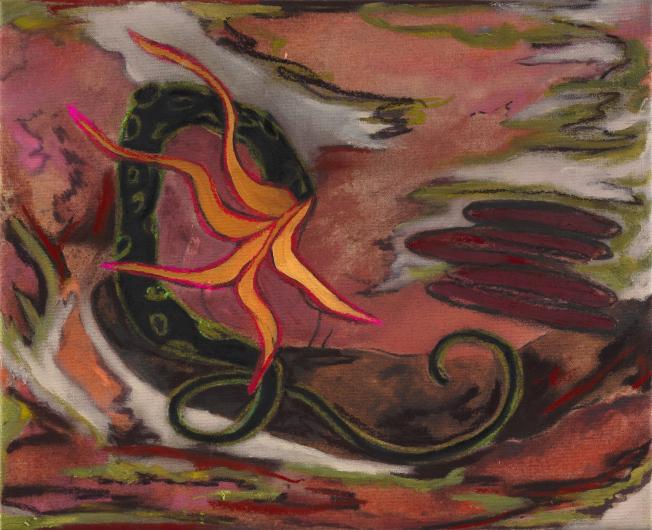
Fernanda Galvão, Mãozita-Snake-Head, 2026. Charcoal, dry pastel, oil stick and oil on linen, 43.5 x 54 cm. Photo: Nicolas Brasseur. Courtesy the artist, Casa Triângulo and Foundry Seoul.
Fernanda Galvão at Casa Triângulo and FOUNDRY SEOUL

Brazilian artist Fernanda Galvão creates surreal, biomorphic paintings, installations, sculptures, and films depicting fictional, otherworldly ecosystems without humans. Based in Paris, she constructs vivid, abstract environments reminiscent of alien landscapes, deep-ocean ecosystems, or galactic scenes. These worlds operate by their own rules of time and space, populated by mysterious membranes, cellular structures, and undulating, plant-like entities. 

The painting Mãozita-snake-head was featured in her solo booth exhibition, Shell Winds. The dual-gallery exhibition presented a new body of work, primarily vibrant, biomorphic paintings. For this showcase, her practice drew deeply on biology, science fiction, and her personal research into cancer cells and pathological pigments. 

Image: Fernanda Galvão, Mãozita-Snake-Head, 2026. Charcoal, dry pastel, oil stick and oil on linen, 43.5 x 54 cm. 

6 of 8
Photo: © Eva Herzog. Courtesy the artist and Perrotin.
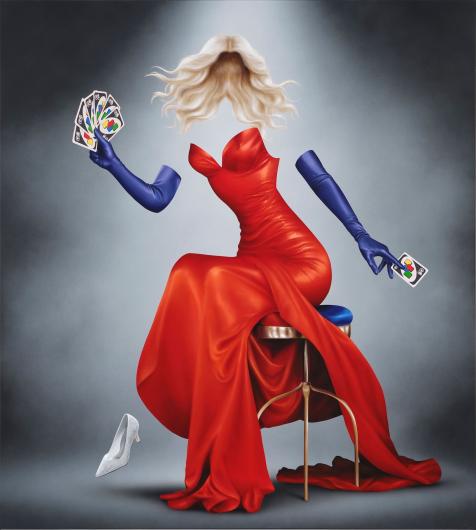
Oli Epp, Wild Card, 2025. Oil and acrylic on canvas, 200 x 180 x 4 cm, 78 3/4 x 70 7/8 x 1 9/16 in. Photo: © Eva Herzog. Courtesy the artist and Perrotin.
Oli Epp at PERROTIN

A British-Canadian painter, Oli Epp creates vivid, stylized, large-scale works that blend Pop Art and surrealism to critique 21st-century digital culture. With their graphic sharpness, his paintings explore the anxieties, consumerism, and isolating rituals of modern internet life. Widely recognized for coining the term Post Digital Pop, he paints exaggerated, faceless human silhouettes—anonymous, empty avatars onto which viewers can project their own inner complexities. 

His large-scale, pop-surreal painting Wild Card depicts a deconstructed, backlit, gender-neutral blonde bombshell holding Wild Draw Four Cards from the popular game Uno, which lets players change colors or, in this case, identities. The white high heel, a symbolic shoe drop, further emphasizes the transition between the real and fictional worlds.


Image: Oli Epp, Wild Card, 2025. Oil and acrylic on canvas, 200 x 180 x 4 cm, 78 3/4 x 70 7/8 x 1 9/16 in. 

7 of 8
Courtesy Bukia Vakhania.
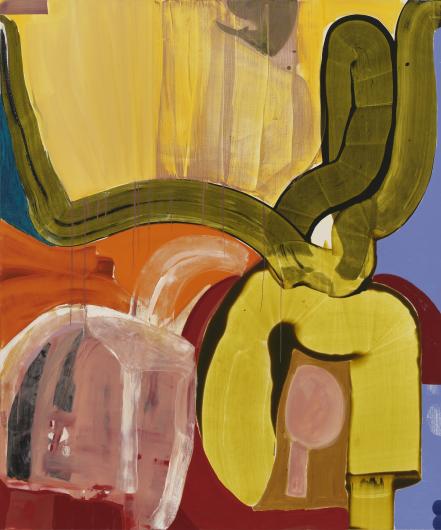
Tamo Jugeli, Autumn Garden, 2026. Oil, Oil Stick on Linen, 72 x 60 in, 182.88 cm x 152.4 cm. Courtesy Bukia Vakhania.
Tamo Jugeli at Bukia Vakhania

Tamo Jugeli is a self-taught Georgian painter born in Tbilisi. After studying journalism and working as a television editor, she devoted herself to art in her early twenties. Her large-scale, expressive oil paintings blend raw abstraction with subtle suggestions of figures, landscapes, and architecture. Based in New York, she has quickly gained international prominence and was recently chosen to lead Frieze London 2026’s official marketing campaign. 

In the fair’s Focus section, she transformed her gallery stand into an intimate room with William Morris wallpaper and lighting sculptures by Georgian designer Lado Lomitashvili. The solo exhibition featured new, large-scale oil and oil-stick canvases on linen, including Autumn Garden, which blends abstraction and figuration through layered paint, bold contours, and sweeping gestures that evoke organic, bodily forms.

Image: Tamo Jugeli, Autumn Garden, 2026. Oil, Oil Stick on Linen, 72 x 60 in, 182.88 cm x 152.4 cm. 

8 of 8
Courtesy Andrew Edlin Gallery.
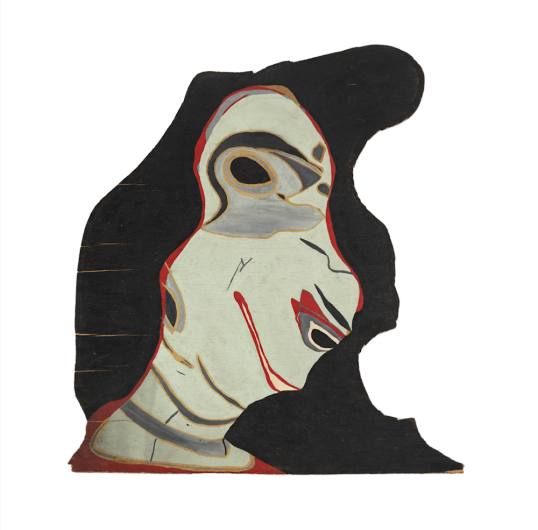
Frank Walter, Untitled (Abstracted Face), no date. Oil on wood, 20.5 x 17.5 inches. Courtesy Andrew Edlin Gallery.
Frank Walter at Andrew Edlin Gallery

A self-taught Caribbean artist who worked largely in isolation and used whatever everyday materials he could find, Frank Walter was descended from enslaved Africans and Scottish plantation owners. Born on the island of Antigua in 1926, he was highly educated and ambitious, becoming the first person of color on the island to manage a sugar plantation. He traveled to England to learn methods for modernizing the sugar industry and research his family history, but he faced racism while working odd jobs in Europe over the next decade—experiences that would greatly influence his future creative work. Later in life, he became a reclusive visionary, living in an isolated, self-built home and studio, completely devoted to his creative output.

Before his death in 2009 at age 82, Walter produced thousands of soulful paintings and drawings, hundreds of hand-carved wood sculptures, tens of thousands of pages of arresting writing, audio recordings, and photographs. His undated Untitled (Abstracted Face) painting, rendered on a found scrap of wood, is part of the Cowles-Hoard Collection, which comprises pieces acquired by the Cowles-Hoard family—close personal friends and the primary patrons during Walter’s lifetime. At Frieze Masters, the gallery presented selections from the collection in a two-person exhibition alongside sculptural shack structures by Beverly Buchanan, another notable self-taught artist and the subject of a newly published monograph.

Image: Frank Walter, Untitled (Abstracted Face), no date. Oil on wood, 20.5 x 17.5 inches. 

About the Author

Paul Laster

Paul Laster is a writer, editor, curator, advisor, artist, and lecturer. New York Desk Editor for ArtAsiaPacific, Laster is also a Contributing Editor at Raw Vision and Whitehot Magazine of Contemporary Art and a contributing writer for Art & Object, Galerie, Artforum, Artsy, Ocula, Family Style, Sculpture, and Conceptual Fine Arts. Formerly the Founding Editor of Artkrush, he began The Daily Beast’s art section and was Art Editor at Russell Simmons’ OneWorld Magazine. Laster has also been a Curatorial Advisor for Intersect Art & Design and Unique Design, as well as an Adjunct Curator at P.S.1 Contemporary Art Center, now MoMA PS1.

Art and Object Marketplace - A Curated Art Marketplace
Loading categories...