
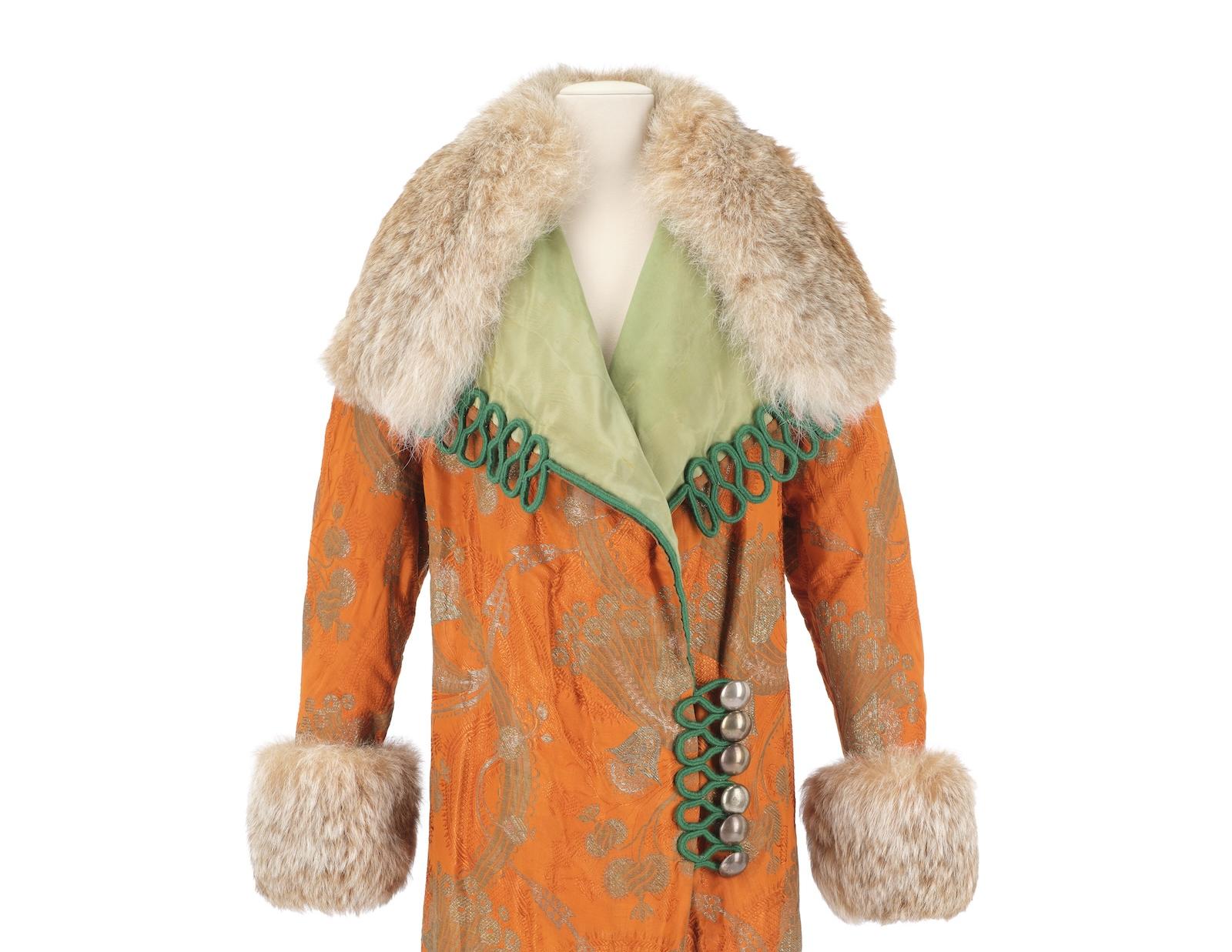
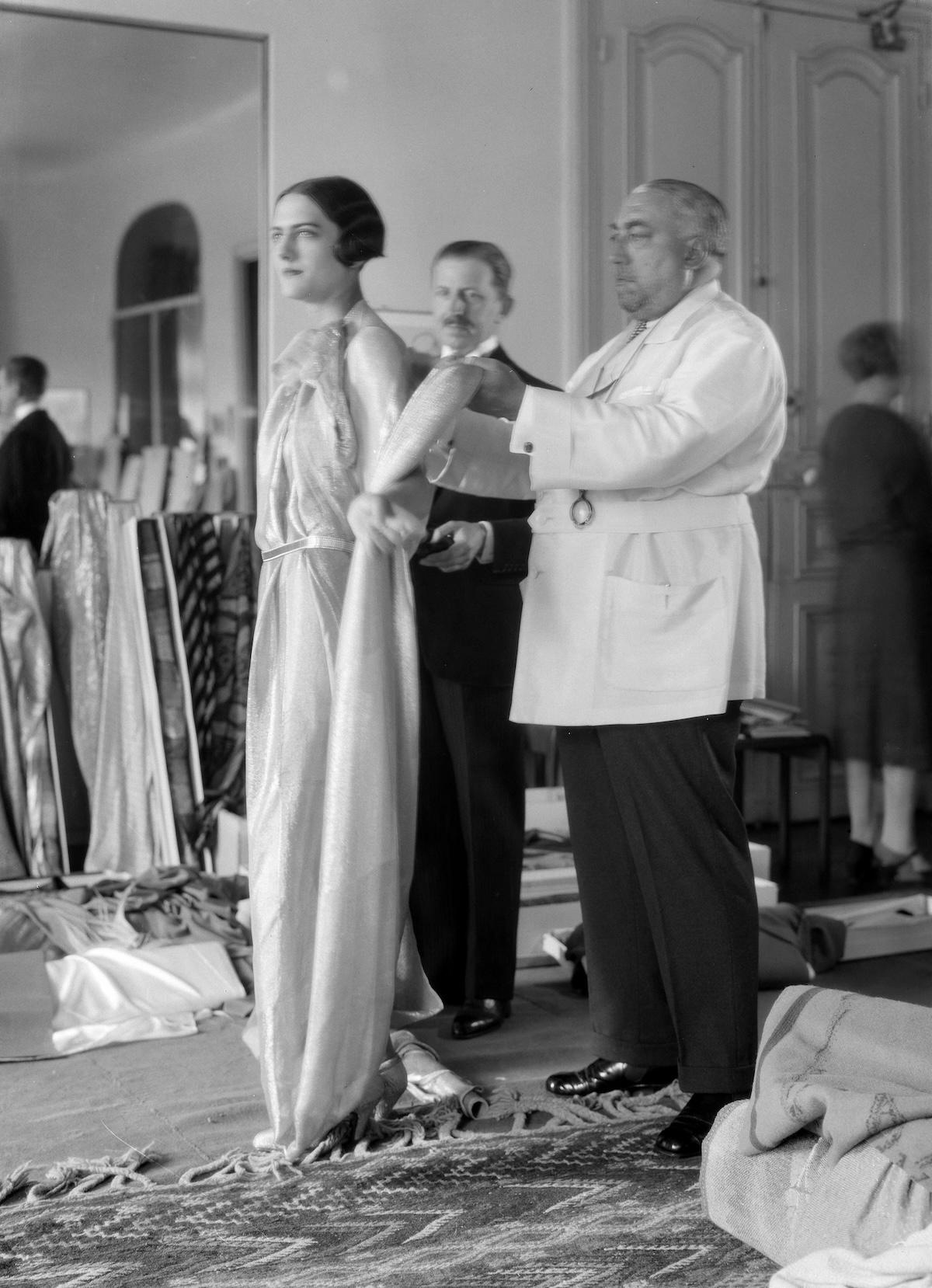
Poiret had an unlikely rise to fame. The son of poor cloth merchants, he apprenticed at a young age to an umbrella maker and used stray bits of cloth as inspiration for his first designs—which were for his sister’s dolls. Later, he worked with the Parisian designer Jacques Doucet and then with the House of Worth, where his designs were controversial for their modernity. In 1903, he founded his own house, Martine, and later introduced “Parfums de Rosine,” named after his daughter.
He was the first Paris couturier to branch into scent and lifestyle, designing three barges for the 1925 International Exhibition of Modern Decorative and Industrial Arts (the show that kicked off the Art Deco movement and gave it its name): one barge for his fashion designs, one containing a high-end restaurant, and the last featuring his interiors. The lavishly painted boats were appointed in rich upholstery. Poiret’s penchant for self-promotion and living the high life was perhaps most in evidence during his June 1911 party, which he titled “The Thousand and Two Nights.” The fête marked the debut of his famous harem pants and showcased his love of exoticism and the East. Guests were greeted by a Persian orchestra and parrots, and the press spread tales of the party across the globe. Poiret socialized with many of the most famous figures of the day, including the dancer Isadora Duncan, and with artists of the time such as Fauvist painter Raoul Dufy.
Alas, in keeping with the dissipated spirit of the Roaring Twenties, Poiret outpartied—and outspent—himself. His barges at the 1925 exhibition were constructed at his own expense and, though remarkable, caused his financial ruin. He had to sell his fashion house in 1924, and, at the end of 1929, as the world around him collapsed into financial chaos, he left the house entirely. In his later years, he lived in poverty and obscurity, but the free lines of his designs and the brilliance of his lifestyle brand would be re-created in the postwar years, first by Dior and later by countless other brands that fall short of his artistry and daring.
*This article originally appeared in Art & Object Magazine's Fall 2025 issue.