

The Vienna Secession, founded in 1897 by Klimt, Hoffmann, Moser, Joseph Maria Olbrich, Max Kurzweil, and other Austrian innovators, aimed to launch an art epoch that was revolutionary, accessible, and liberated from constraints. These creators’ interests were diverse, combining influences of French Art Nouveau, German Jugendstil, English Arts and Crafts, and Japanese printmaking. What united the avant-garde group was a shared rejection of the conservative tastes of the Austrian art academies. Their new aesthetic celebrated repeating geometric patterns, nature motifs, eroticism, fantasy, and the harmonious integration of art and life in a Gesamtkunstwerk, or total work of art. They sought to merge the fine arts of painting and sculpture with architecture, interior design, furniture, printed matter, fashion, music, drama, and dance. Their manifesto: “To every age its art, to art its freedom.”
The Wiener Werkstätte, established in 1903 by Hoffmann, Moser, and others after the Secessionists split over whether or not they should commercialize, took the Secessionist principles further, emphasizing high-quality craftsmanship and utilitarian beauty. Making everything from furniture and serviceware to textiles and graphic design, these innovators wanted to raise the status of the applied arts. Although the Werkstätte’s ambitious vision led to financial struggles and its eventual closure in 1932, its influence endures.
Nowadays, Klimt’s paintings fetch astronomical sums at auction—five of his canvases have sold for more than $100 million each—while Hoffmann’s furnishings and patternmaker Dagobert Peche’s intricate wallpapers are in high demand. On 1stDibs, searches for Vienna Secession and Wiener Werkstätte designs have risen by 35 percent in the past year, with Wiener Werkstätte alone increasing 55 percent.
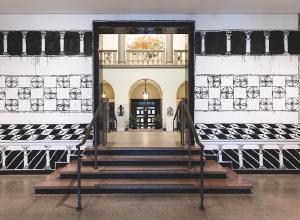
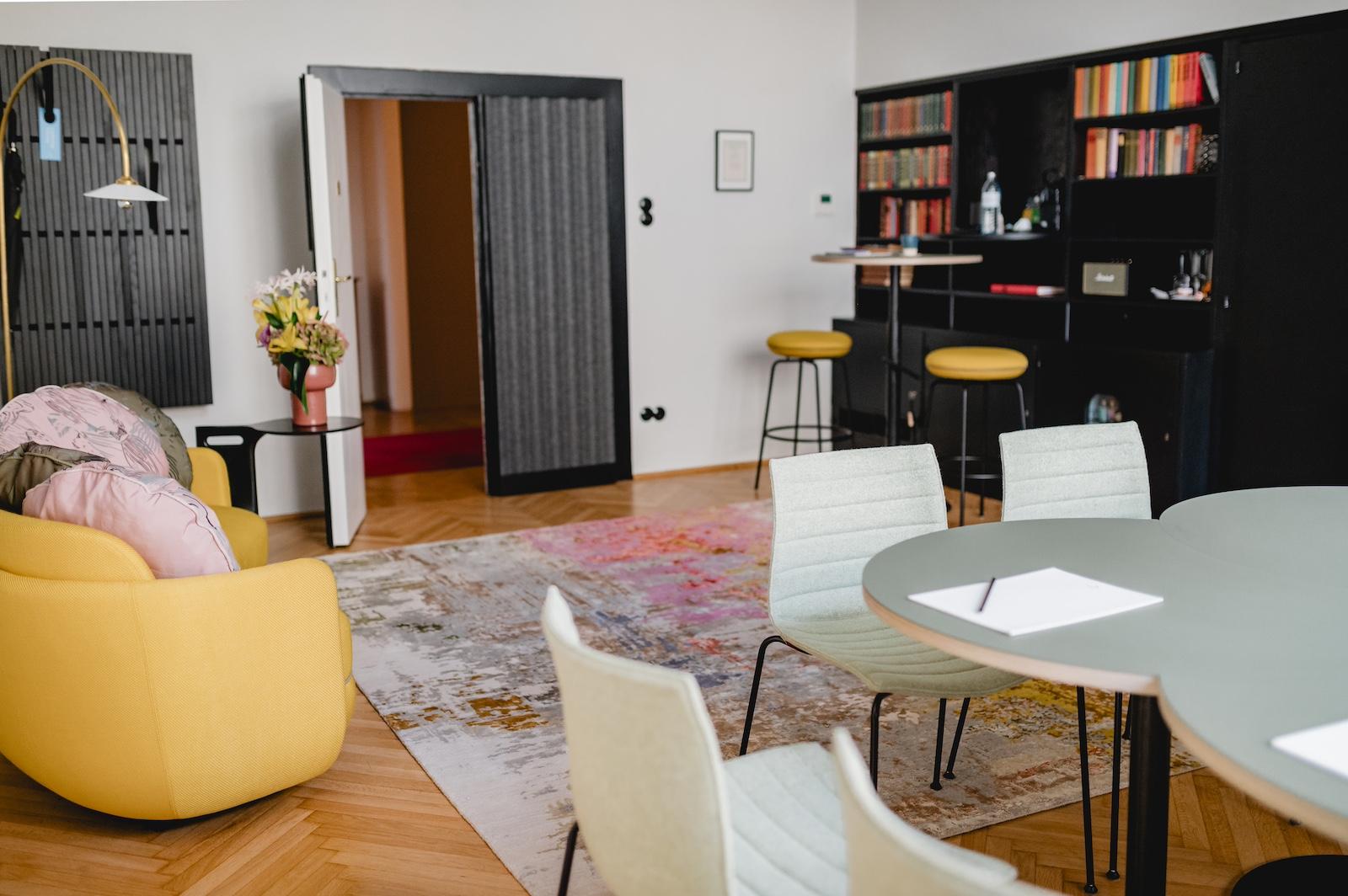
Naturally, the integration of such pieces is most evident in the city where they were conceived. AIME Studios’ interiors of the Hoxton Hotel in Vienna, for instance, marry Wiener Werkstätte influences with Carl Appel’s sleek midcentury furniture. For Vienna-based architect and interior designer Hana Salley-Potisk, moving home after a stint in London meant diving headfirst into the legacy of the Vienna Secession and Wiener Werkstätte. “The principles of prioritizing quality over quantity and emphasizing craftsmanship are fundamental to my design approach,” she says. “I find particular inspiration in the Wiener Werkstätte. The movement breathed personality and vibrancy into simplified geometric forms.”
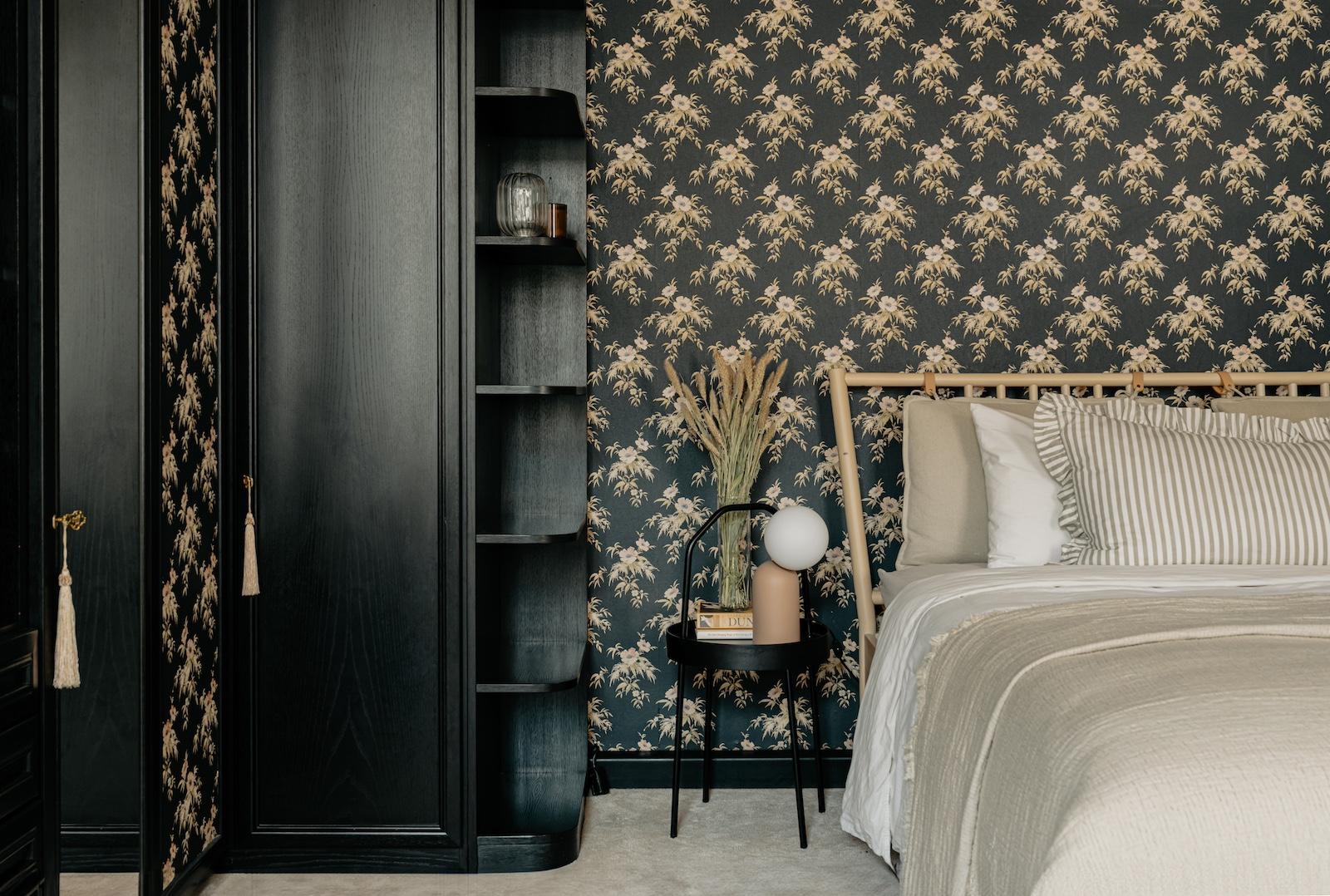
Her own apartment in a 19th-century building, recently featured in Architectural Digest, exemplifies her approach: a minimalist gray kitchen contrasts with patterned wallpaper and wardrobes in the bedroom. “I also incorporated classic bentwood furniture as a subtle nod to Thonet and to Josef Hoffmann’s designs from that era,” she says.
Salley-Potisk emphasizes the role of women, including Jutta Sika and Therese Trethan, in the Wiener Werkstätte. Architect Antonella Amesberger, likewise, found inspiration in Wiener Werkstätte women when devising a one-of-a-kind suite for Vienna’s Altstadt hotel. The room is dedicated to modern-dance pioneer Grete Wiesenthal, who wore Wiener Werkstätte costumes in performances. Amesberger incorporated line drawings of Wiesenthal’s movements, hand-printed on textiles for the curtains and upholstery. “Grete continues to dance on the fabrics through the suite dedicated to her,” she says.
In the United States, the Vienna Secession has similarly captivated interior designers producing style-traversing spaces. At the Brooklyn Heights Designer Showhouse last fall, Joe McGuier and Megan Prime, co-principals of the firm JAM, designed the Midnight Study, combining Vienna Secessionist, Arts and Crafts, and contemporary forms. “We loved working with the original Wiener Werkstätte wallpaper by Dagobert Peche,” says McGuier. “The botanical print and the warm colors were the perfect jumping-off point to design the rest of the room.”
Elsewhere in the showhouse, Lynn Kloythanomsup, of Landed Interiors, installed a Vienna Secession pendant light attributed to Hoffmann in a bedroom evoking a bucolic drive through the English Cotswolds. Even Queer Eye star Jeremiah Brent has embraced the style. “The works of art that changed everything for me were part of the Vienna Secession — the height of luxury, innovation, and creativity,” he mused in a recent interview with the Financial Times. “There’s a hint of something unexpected in every piece.” He admires the Secession era so much that he held his book launch for The Space That Keeps You at New York City’s Neue Galerie, a museum specializing in early-20th-century Austrian and German art and design.
Given Brent’s high profile, his vocal embrace could signal that Vienna Secession and Wiener Werkstätte designs will increasingly trickle into the mainstream. After all, it happened with Art Deco, Arts and Crafts, and Art Nouveau in the last decade. Perhaps now is the time for these Viennese visions to lunge out of the past and into our 21st-century homes.
*This article originally appeared in Art & Object Magazine's Spring 2025 issue