At Large  November 24, 2026  John Dorfman

A Look into the Collections at The Lucas Museum of Narrative Art

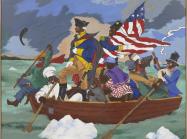
© 2025 The Robert H. Colescott Separate Property Trust / Artists Rights Society (ARS), New York.

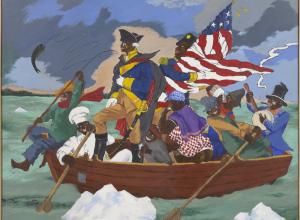
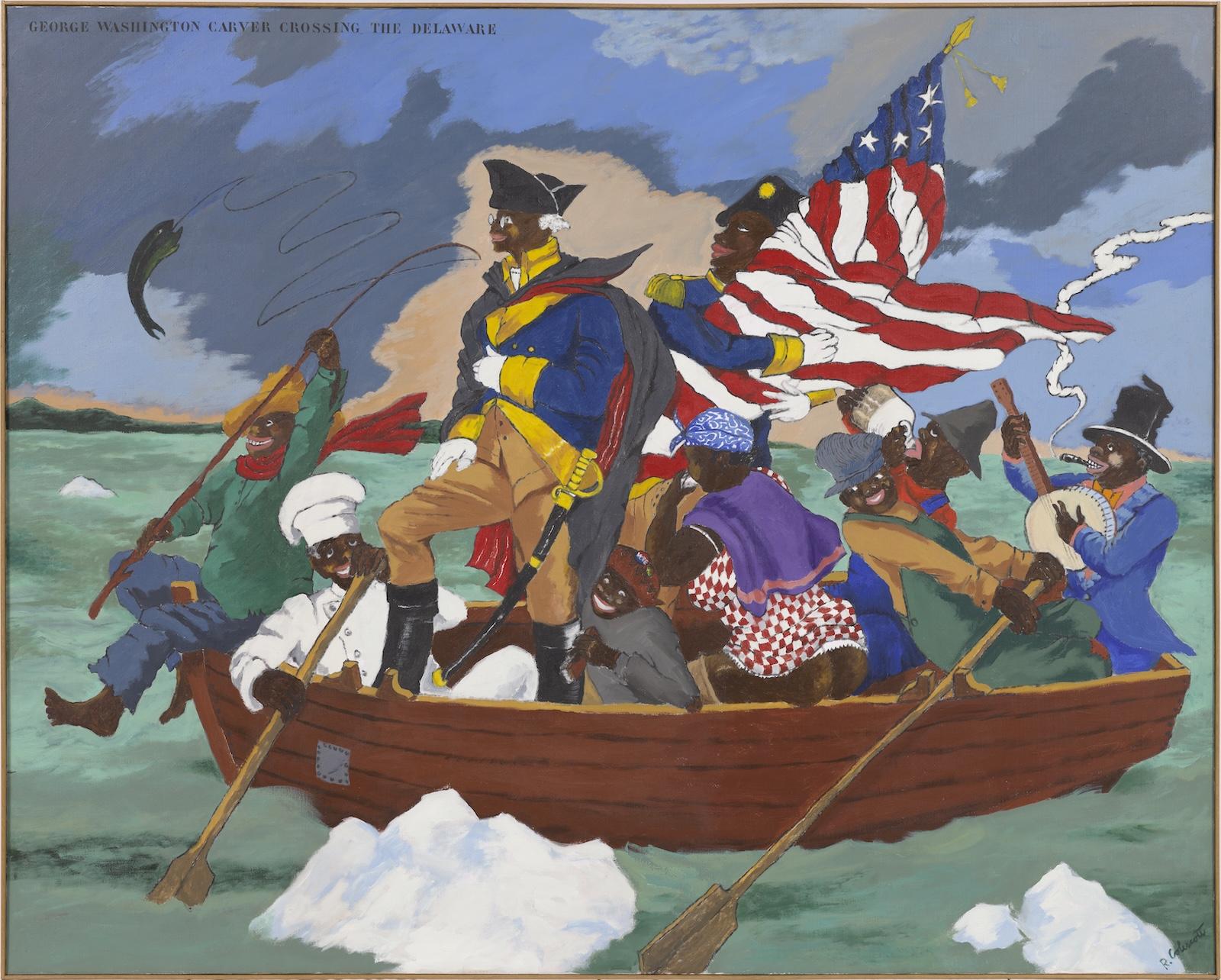
Robert Colescott, George Washington Carver Crossing the Delaware: Page from an American History Textbook, 1975, acrylic on canvas, 78 1/2 x 98 1/4 in. (198.1 x 248.9 cm), Lucas Museum of Narrative Art, Los Angeles, 2021.45.1. 

After years of false starts and venue changes, the Lucas Museum of Narrative Art is set to open in September. Originally announced in 2013 for San Francisco, the project shifted to Chicago, then to Los Angeles, where groundbreaking took place in 2018. Before long, the pandemic hit the pause button, causing the opening date to be pushed back from 2021 to 2023, then 2025, and finally 2026.

As for the peripatetic wandering, the reasons were architectural rather than artistic; the museum’s design was considered overly grandiose and intrusive by city officials and architecture critics until LA finally offered land in Exposition Park, near USC. Considering that the “Lucas” in question is George Lucas, Los Angeles would seem to be the most appropriate location for a one-man passion project founded on the film director’s personal collection, said to be worth $1 billion and rich in movie-related paintings, comic-book art, and American popular illustration, as well as classic fine art.

But, what about the other part of the soon-to-be museum’s name? What is “narrative art,” anyway? On the most basic level, it is art that tells a story. In the words of the museum’s press release, “Narrative art is created to represent stories through images. Much of the world’s artistic expression has been motivated by storytelling, transmitting narratives rooted in religion, myth, history, literature, or events.” In fact, in pre-modern times, most art was narrative art. Before mass literacy, the vast majority of people absorbed information visually, and without painters and printmakers, they would have had little ability to imagine past events, whether legendary or historical. And of course, visual art has always given vivid life and form to the symbolic narratives of religious myth.

© & TM Lucasfilm Ltd. All rights reserved. Used under authorization.

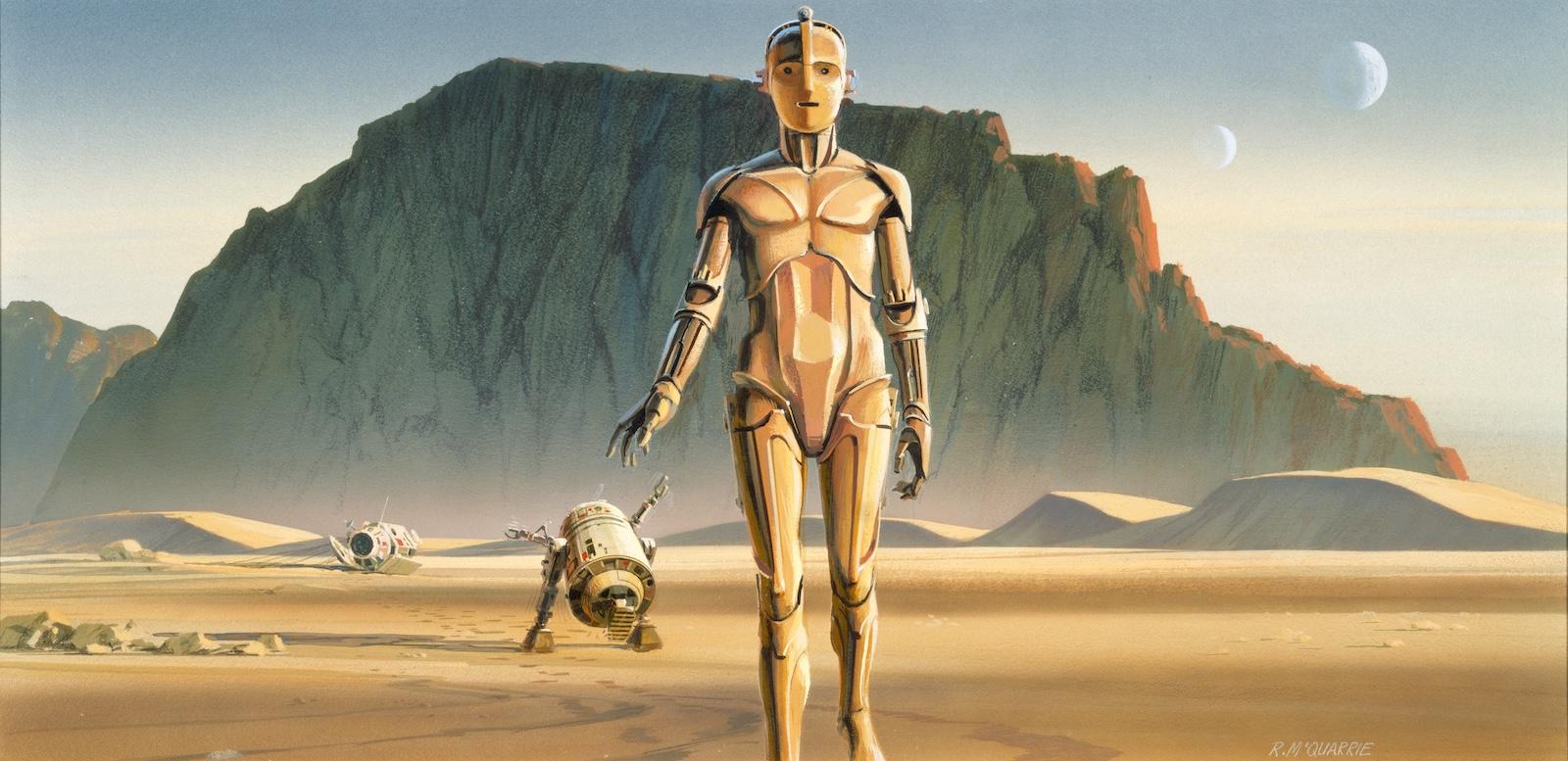
Ralph McQuarrie, Artoo and Threepio Leave the Pod in the Desert, production art for Star Wars: Episode IV– A New Hope, 1975, gouache on board, 13 1/4 x 20 in. (33.6 x 50.8 cm), Lucas Museum of Narrative Art, Los Angeles, 2013.005241. 

However, with the advent of photography in the middle of the 19th century, painting’s documentary role gradually faded, and artists began exploring other aspects of visual experience as they focused less on representation. “Art for art’s sake” and abstraction, among other aspects of Modernism, developed directly out of the shift away from narrative. But, that’s not to say that narrative went away. Far from it. In the 20th century, storytelling energy flowed into the new visual media of motion pictures, popular illustration, and comics. In these areas, unsurprisingly, the Lucas collection is especially rich. For example, among its holdings is a 1975 gouache on board by Lucasfilm concept artist Ralph McQuarrie, Artoo and Threepio Leave the Pod in the Desert, imagining a scene from Star Wars two years before it appeared on the screen.

Among the works of classic illustration art in the collection is an N.C. Wyeth oil on canvas made to accompany a story that ran in the Ladies’ Home Journal in 1926. In this image, two swashbuckling swordsmen in 17th-century garb duel on a beach against a background of heightened color, but to know the full meaning of the scene, one must read the story. On the other hand, in the comic-strip format, story and illustration are fully integrated, as in an ink-on- graphite Flash Gordon sequence from 1934 by Alex Raymond. The extreme density of image and text in the comics of that era reflects the increasingly frenetic pace of narrative in the 20th century.
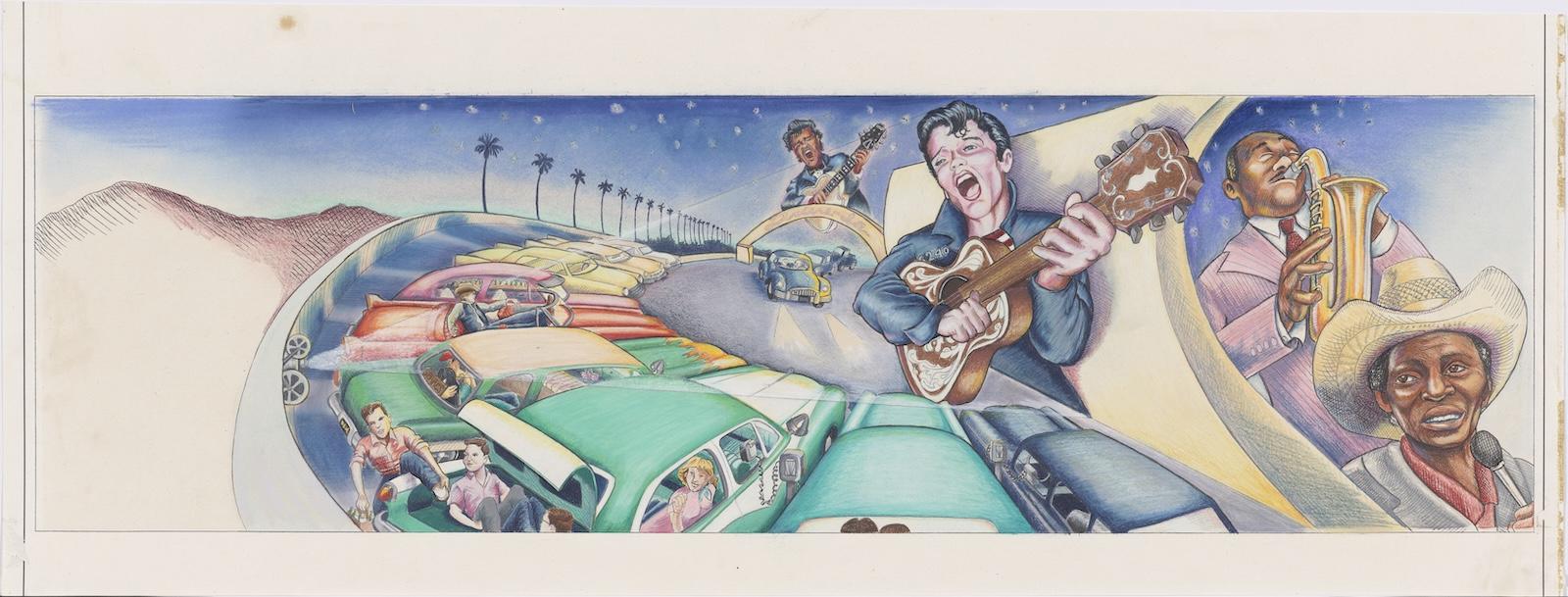
© 1980 Judith F. Baca.

Judith F. Baca, final coloration for The Birth of Rock and Roll, from The Great Wall of Los Angeles 1950, mural in Los Angeles, California, 1983, colored pencil and pastel on print, 19 1/8 x 43 1/8 in. (48.6 x 109.5 cm), Lucas Museum of Narrative Art, Los Angeles, 2018.34.6.5.20. 

Mural painting is another area of strength in the collection. The Lucas Museum acquired an archive of material pertaining to Judith F. Baca’s half-mile-long collaborative mural, The History of California (1976-1984), also known as The Great Wall of Los Angeles. Among the concept drawings for it is The Birth of Rock and Roll (1983), a colored pencil and pastel on print that uses a narrative technique that feels vibrant and modern despite being almost as old as art itself—laying different scenes occurring at different times and places all together in the same composition. Here, the story is told in a non-linear way.

As Pop Art displaced Abstract Expressionism in the 1960s, narrative returned to fine art, but frequently with a large dose of irony. One of the most famous pieces in the Lucas collection, Robert Colescott’s acrylic on canvas George Washington Carver Crossing the Delaware: Page from an American History Textbook (1975), mischievously reimagines Emanuel Leutze’s iconic George Washington Crossing the Delaware (1851). In Colescott’s version, the elderly African-American scientist replaces the general at the bow of the boat, which is filled with figures that exemplify derogatory 19th-century depictions of Black Americans. The satire here is rich and complex, driving home the point that whoever controls the narrative controls the discussion.

*This article originally appeared in Art & Object Magazine's March/April 2026 issue.

About the Author

Subscribe to our free art newsletter!

Webform
Art and Object Marketplace - A Curated Art Marketplace