



The awards have also acknowledged emerging talents poised to make significant impacts. In 2005, Yves Béhar was recognized for Product Design, later becoming a leader in sustainable innovation through his firm, fuseproject. Pinterest’s Evan Sharp received the award in 2016, just as his social media platform was redefining how millions interact with visual inspiration online.
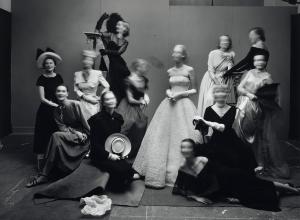
Sisters Kate and Laura Mulleavy, the duo behind Rodarte, were spotlighted in 2009 for their conceptual approach to fashion, when they were just 30 and 29 years old respectively. Their pieces have since appeared on Hollywood red carpets and in museum collections.
Furniture designer Stephen Burks, honored in 2015, stands out for his studio, Stephen Burks Man Made, which draws on global craft traditions while pushing design in new collaborative directions while conceiving pieces for major brands like B&B Italia and Dedon. Hodkowski points out that Burks’s most recent work—a U.S. pavilion project for the Venice Biennale titled “Porch: An Architecture of Generosity”—continues to blur the lines between community, art, and design.
Honorees like Janette Sadik-Khan, former commissioner of the New York City Department of Transportation and winner of the 2013 Design Patron award, have expanded our understanding of design’s scope. Her recognition for transforming New York’s streets and public spaces reflected growing awareness of urban infrastructure as a design challenge equal to any product or building.
Hodkowski notes that the categories themselves have evolved. “We added Emerging Designer in 2019 and Climate Action in 2020,” she says. “We want to spotlight newer practices and also recognize systemic efforts that are reshaping design from the ground up.”
Also in 2020, the Lifetime Achievement category was rechristened Design Visionary. That year, it went to Kickstarter, famous for making online crowdfunding a mainstream activity, where anyone could be a philanthropist or venture capitalist for a couple of bucks, and jumpstarting the careers of innumerable inventors, creators, and entrepreneurs.
These additions reflect a broader reimagining of how design is valued—not only as a discipline of creation but one of societal connection and care. “Design isn’t just about objects—it’s about processes and people,” says Hodkowski. “That shift is central to how we think about innovation today.”
The 2025 honorees reflect this metamorphosis. Biodesigner Jules Sherman is being recognized for making medical devices that merge engineering with empathy. “Beyond furniture and tech gadgets,” Hodkowski explains, “product design is solving real problems with smart, human-centered tools.”
Equally compelling is how the awards are increasingly recognizing alternative design paths. This year’s Design Visionary honoree, Kim Hastreiter, co-founder of Paper magazine, built her career outside the typical design studio. She’s created pop-ups, books, podcasts, retail collaborations, and memorable events. “She’s a connector,” says Hodkowski. “She’s helped expand the idea of who gets to call themselves a designer.”
Interior designer and cultural strategist Little Wing Lee, founder of Black Folks in Design, was honored this year for her work at the intersection of interiors, storytelling, and human relations. Her practice emphasizes spatial equity and celebrates overlooked histories within design.
Another recipient, Nu Goteh, co-founded Deem Journal, a design magazine that has expanded into an international symposium. “A lot of our winners,” Hodkowski says, “are building platforms, communities, and conversations. Design is expanding.”
Looking back at 25 years of honorees reveals waves of innovation that track with broader cultural currents. The early 2000s saw recognition of Web 2.0 pioneers and sustainable design leaders. The 2010s brought attention to inclusive design, accessibility, and adaptive reuse. The most recent decade has seen a tilt toward systems design, which operates within institutions, supply chains, and civic life.
In March, President Trump issued Executive Order 14253, titled “Restoring Truth and Sanity to American History,” in which he called on Vice President J.D. Vance, a member of the Smithsonian’s Board of Regents, to eliminate what the administration deems “improper, divisive, or remake the design field, the National Design Awards stand poised to evolve again. “We don’t know what the next 25 years will bring,” Hodkowski says, “but we know that design will keep playing a role in how we adapt—and thrive.”
For aspiring designers, the expanding archive of honorees serves as a living textbook on 21st-century design. For the public, the awards illuminate how design intersects with technology, culture, health, and the built environment. And for the design world itself, they remain a reliable divining rod for finding the next unfolding of creative consciousness.
“It’s not about who’s the most famous,” says Hodkowski. “It’s about who’s creating impact, and who’s inviting us to rethink what design can be.”
*This article originally appeared in Art & Object Magazine's Summer 2025 issue.