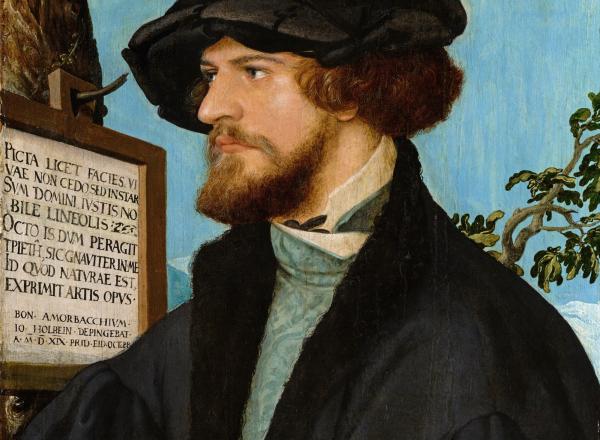
“A Holbein portrait is a very precise object,” says curator Anne Wollett. “It’s telling that when it comes to identity and the process of finding the right elements to include in the portrait some items were really significant. And I don't think this was a common process amongst other artists in the period.”
Art News

Robert Doisneau, born in 1912 in Gentilly, became an amateur photographer at the age of sixteen. Throughout life, he was able to create and record a world full of wonder and possibilities, a state of being that is usually lost in adulthood. His work is on view at Palazzo Roverella in Rovigo.

Like politics, all art is local until it isn’t anymore, a point driven home by Surrealism Beyond Borders, the Met’s tour d’horizon of the global, half-century-long spread of Surrealism from its birthplace in 1920s Paris. The City of Lights wasn’t technically Surrealism’s cradle, however.
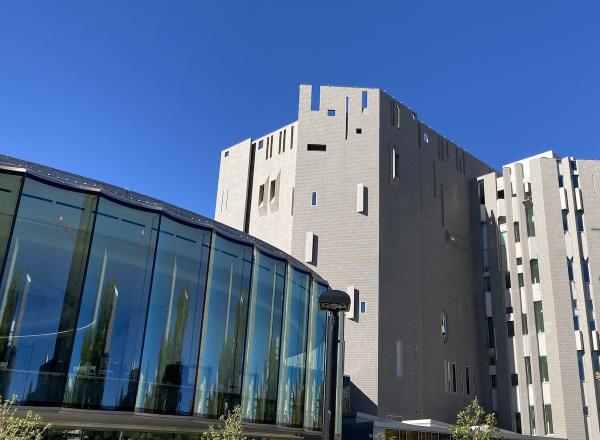
The largest, most prevalent treasures of the Denver Art Museum are the DAM’s buildings designed by renowned architects: Gio Ponti and Daniel Libeskind. Ponti’s tile-covered high-rise with unusually placed and shaped windows brings to mind a castle. Libeskind’s titanium-clad triangulations evoke gargantuan origami.

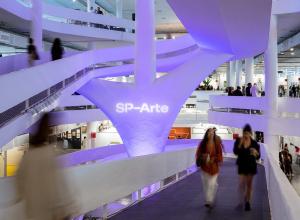
By layering Bo Bardi’s own words with images of her buildings and artist interacting with them, Julien creates a non-linear biography, one that eschews straight facts in favor of feeling, allowing us to experience her creations and life viscerally rather than academically.
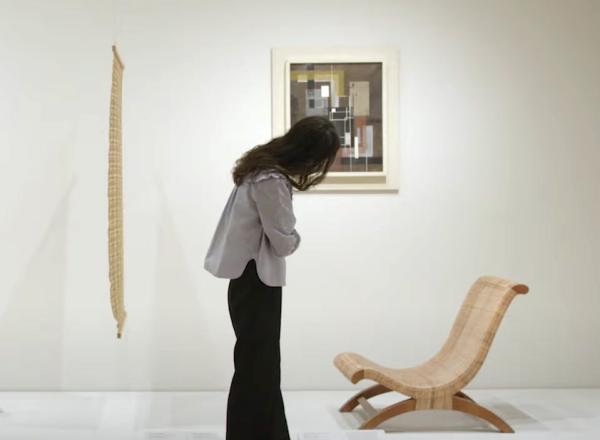
MoMA's Anna Burkhardt looks at Clara Porset’s Butaque (c. 1957) and sees both a pivotal Latin American design object and a window into the Mexican craft traditions that inspired it.

In a perfectly paired yin-yang juxtaposition of exhibitions, two artists—Ana María Hernando and Yoshitomo Saito—show works inspired by nature, yet rendered in extremely different media. Coincidentally, both attended the California College of Arts and Crafts in Oakland, CA. The creative energy evident in these exhibitions is nonconformist, particularly in the artists’ use of media.
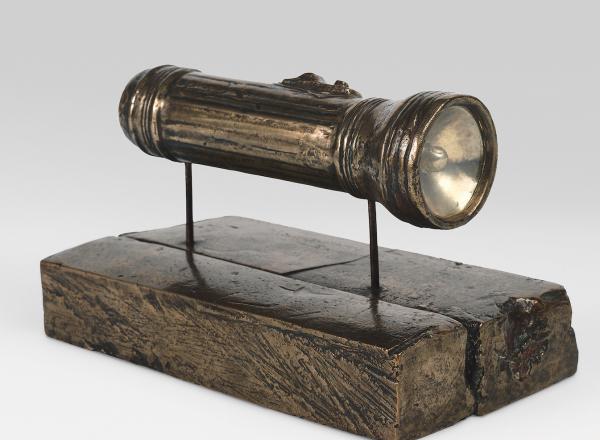
Halfway through the sixth decade of his career, Jasper Johns’s output has been prodigious enough to demand a retrospective hosted by not one, but two institutions: The Whitney and The Philadelphia Museum of Art. While Johns’s insistent self-reflexiveness is more likely to make you go “Hmm” than send a thrill down your leg—unlocking his puzzles has its pleasures.
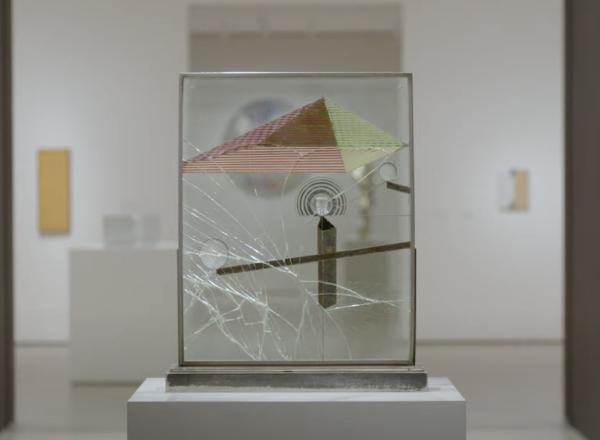
Emily Bahret, production assistant on MoMA's Creative Team, talks about her first encounter with Marcel Duchamp’s "To Be Looked at (from the Other Side of the Glass) with One Eye, Close to, for Almost an Hour" (1918), and how randomness and chance can bring beauty and unexpected delights.