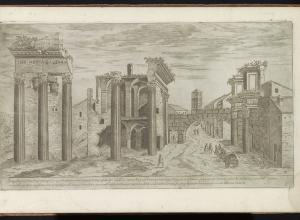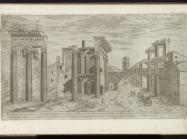

This includes the Septizodium, an enigmatic, multistory structure built by the emperor Septimus Severus (reigned A.D. 193-211). Over 300 feet long, it formed a monumental decorative façade to the Imperial palace on the Palatine Hill. The central section of the building had collapsed by the 8th century, and its remains were subsequently utilized as a fortress in the Middle Ages. Dupérac’s print of one corner shows the monument comprising three tiers of free-standing columns, with the dedicatory inscription running the length of the lower frieze, and the remains of the emperor’s residence rising out of the hill behind. Admiration by 16th-century artists did not save Septizodium from being dismantled on the orders of Pope Sixtus V shortly after Dupérac drew it, with its architectural elements ending up in the walls and foundations of other buildings across Rome. Its location is marked today by modern paving stones laid out in the grass, but knowledge of its appearance and any sense of its imposing grandeur rely largely on Dupérac’s rendering.
Not all the damage done to ancient monuments was confined to the distant past. In 1830, archaeologists restored a large 4th-century A.D. arch in the area of the Forum Boarium, removing what they believed were Medieval additions to its upper part. It is fortunate that these features were documented by Dupérac among others, as it is now thought that they actually belonged to the original attic of the monument. Indeed, beyond just reconstructing the appearance of the buildings in their ancient state, Dupérac’s prints are a record of important later changes to the monuments which have also now vanished, such as the use of the Mausoleum of the emperor Augustus as a garden.
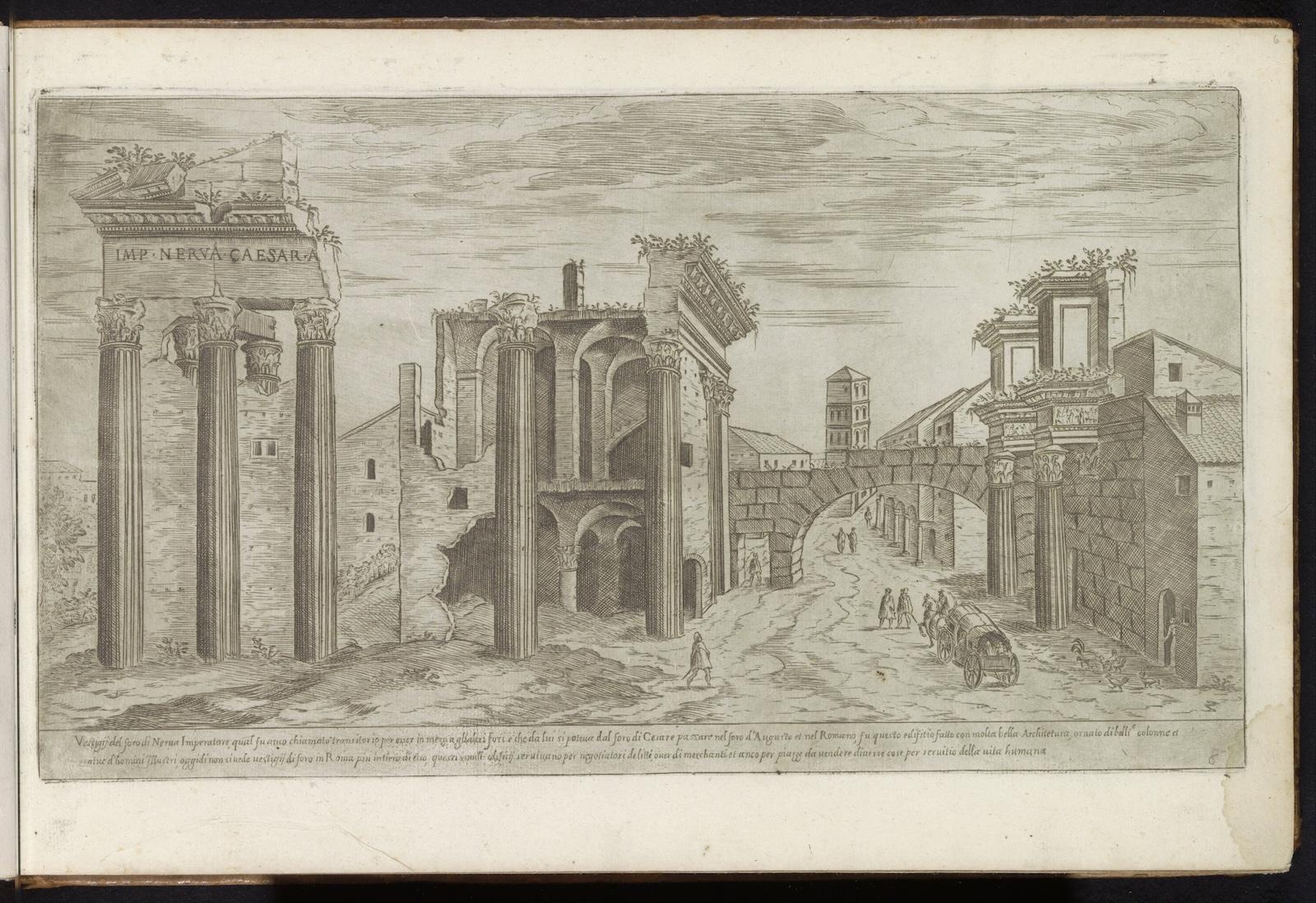
Dupérac’s are by no means the only images of the ruins of Rome from this period which help reconstruct lost or altered antiquities. An engraving and etching after the Flemish painter Hieronymus Cock shows the state of the enormous ancient Baths of Diocletian before their conversion to a church by Pope Pius IV and Michelangelo in 1561. An anonymous print published by Antonio Lafreri in 1546 vividly renders the two statues of the Dioscuri (still standing on the Quirinal Hill today) prior to their restoration of 1589.
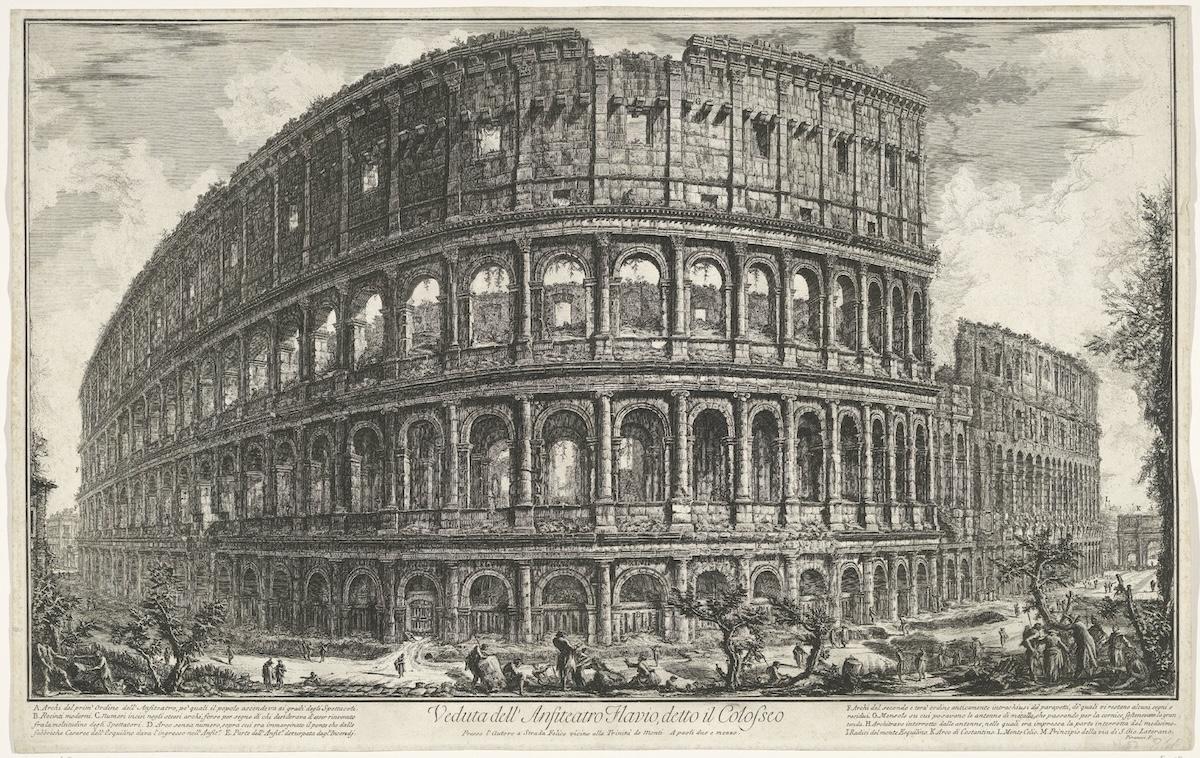
However, caution should be exercised when studying these images as historical documents. Sets of prints were commercial ventures and made to sell, which could lead to dramatic exaggeration or omission to enhance their appeal. Nowhere is this more apparent than in the Vedute di Roma and Antichità Romane series of the most accomplished and creative printmaker of the 18th century, Giovanni Battista Piranesi. Capable of producing extraordinarily accurate depictions of antiquities, Piranesi also chose to reduce the size of human figures to render the monuments of Rome even more monumental and to alter the proportions of structure for artistic ends. Invaluable as they are as a source for lost details about the ruins of Rome, prints are not photographs, and their creators did not design them for the benefit of future historians.
*This article originally appeared in Art & Object Magazine's Winter 2026 issue.