


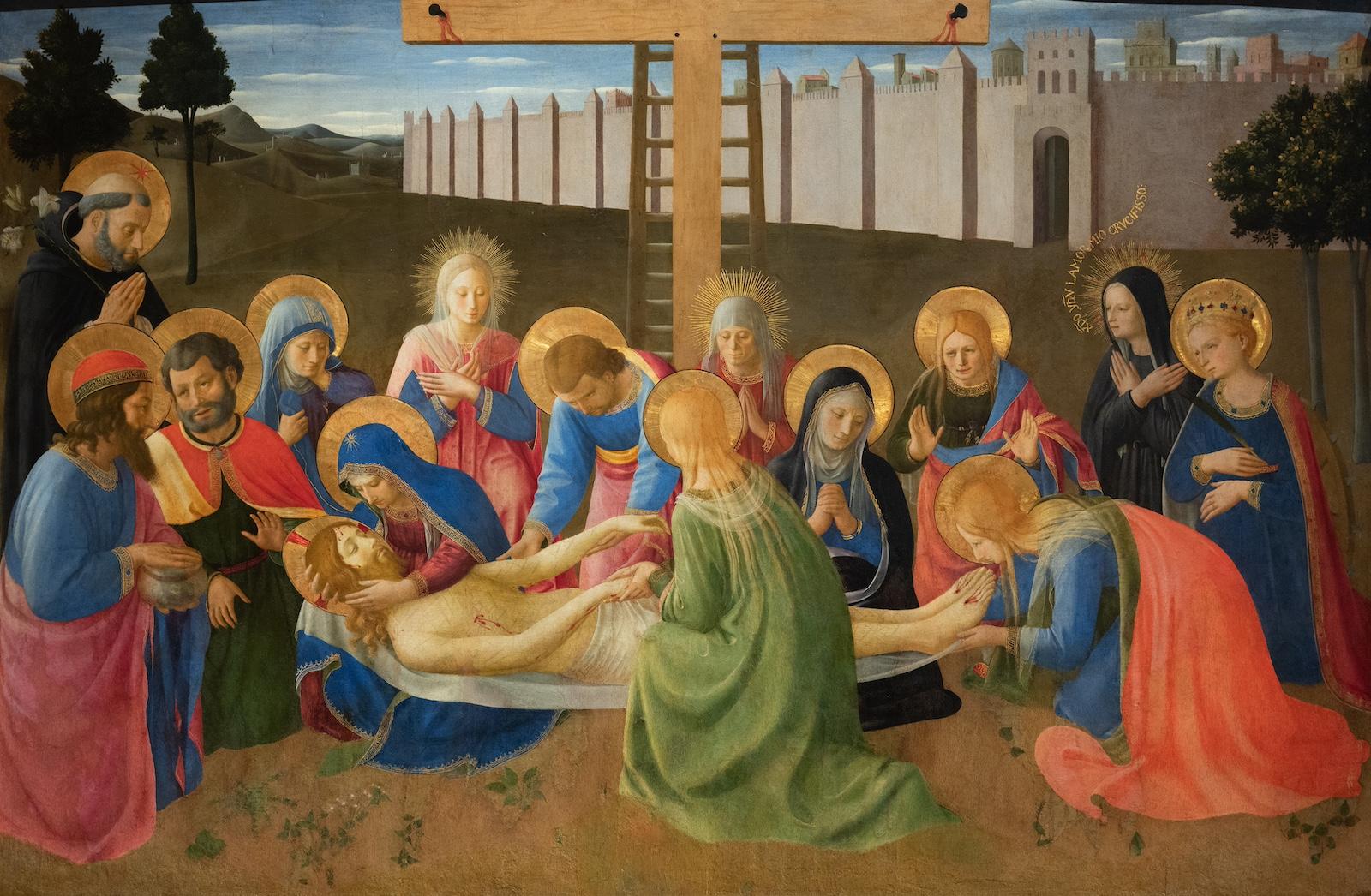
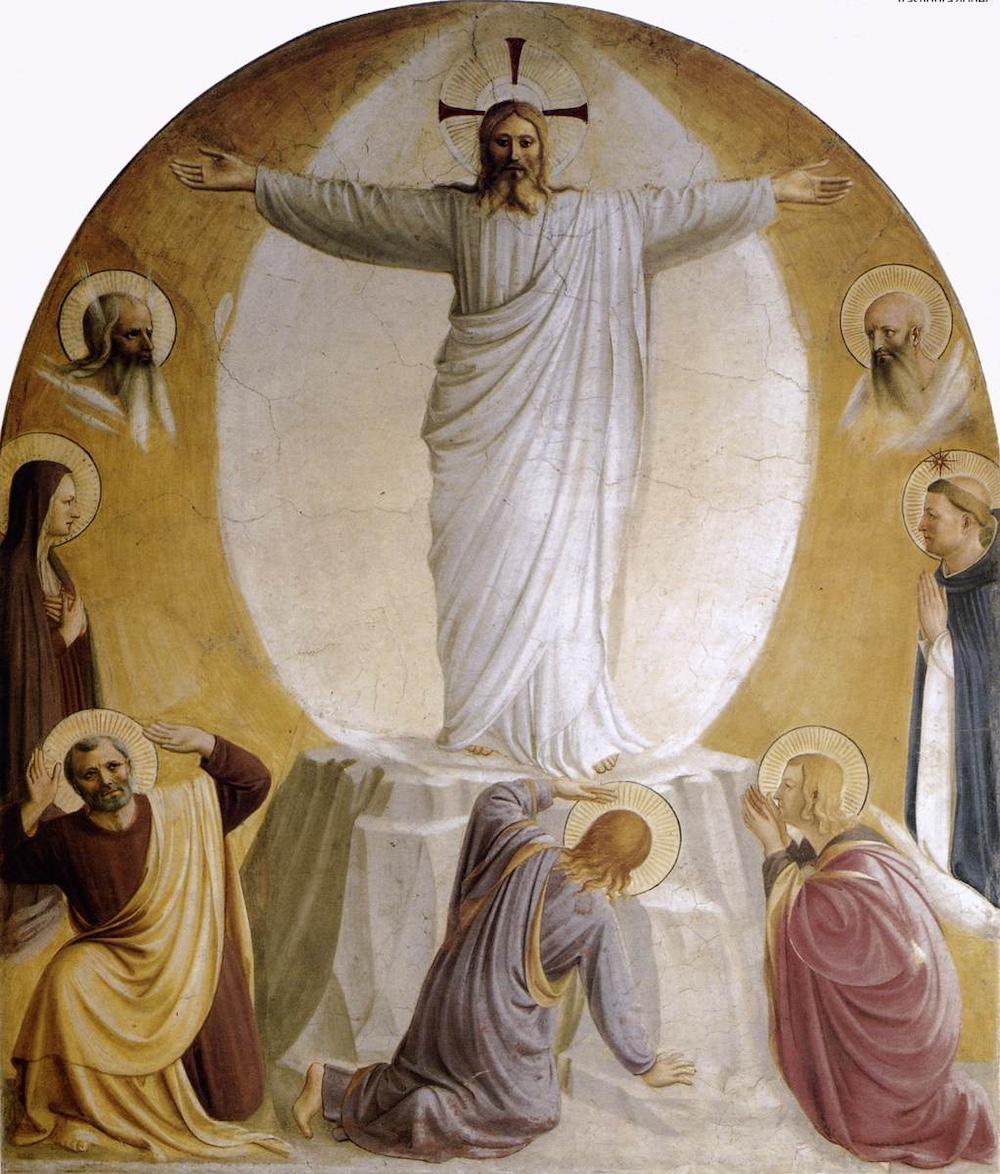
Evolving out of a late Gothic legacy, the works exemplify a mastery of spatial organization via perspective and light allowing for an innovative juxtaposition between the volume of fully rendered figures often placed within an architectural framework or landscape. His mediums were primarily fresco, done directly on the wall, or tempera and gold leaf on wooden panels in the case of altarpieces, many of which were separated and sold, winding up scattered in institutions and collections around the world.
The occasion of this new exhibition has reunited the central panel of the San Marco Altarpiece featuring the Virgin and Child with 17 of 18 side panels of the angels and saints that comprised the complete work. Museum conservators utilized cutting-edge technologies, like X-radiographic analysis and infrared reflectography, to complete restorations, 28 in all, including the so-called Franciscan Triptych, which originally hung in the Franciscan convent of Santa Croce in Florence.
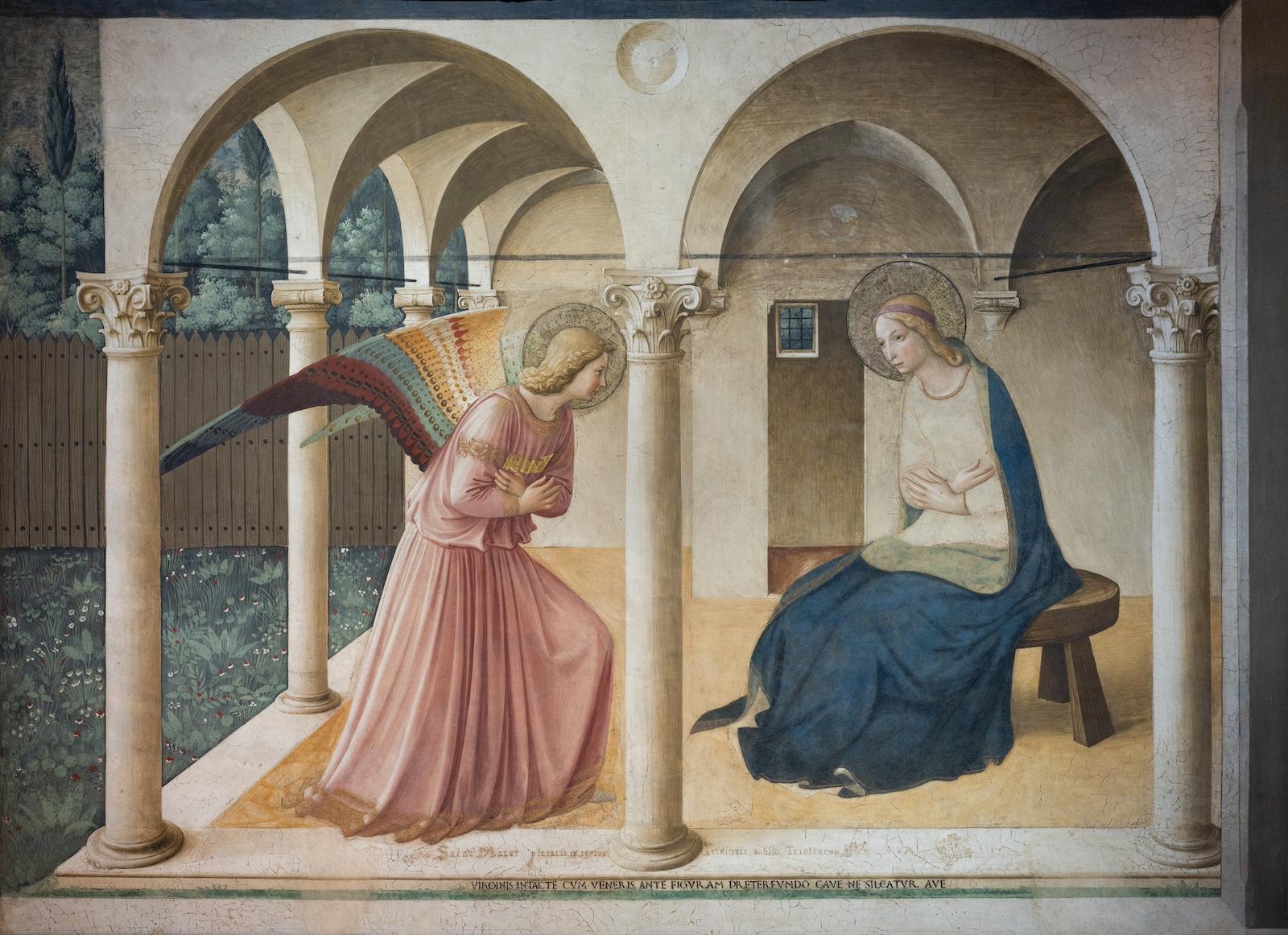
The Annunciation (1440-1445), a fresco and perhaps Angelico’s most recognized painting, has also been one of his most impactful works on later generations of artists. A parallel complementary exhibition at the Officina Profumo-Farmaceutica di Santa Maria Novella (Via della Scala 16, Florence) of a monumental 2017 painting, Annunciation II, After Fra Angelico, reimagined in reverse perspective by David Hockney (b.1937), highlighted the relevance of Angelico’s innovations to artists working today.






.jpg)
