Gallery  January 15, 2026  Cynthia Close

An Exploration of Fra Angelico’s Artistic Development and Impact

WikiCommons

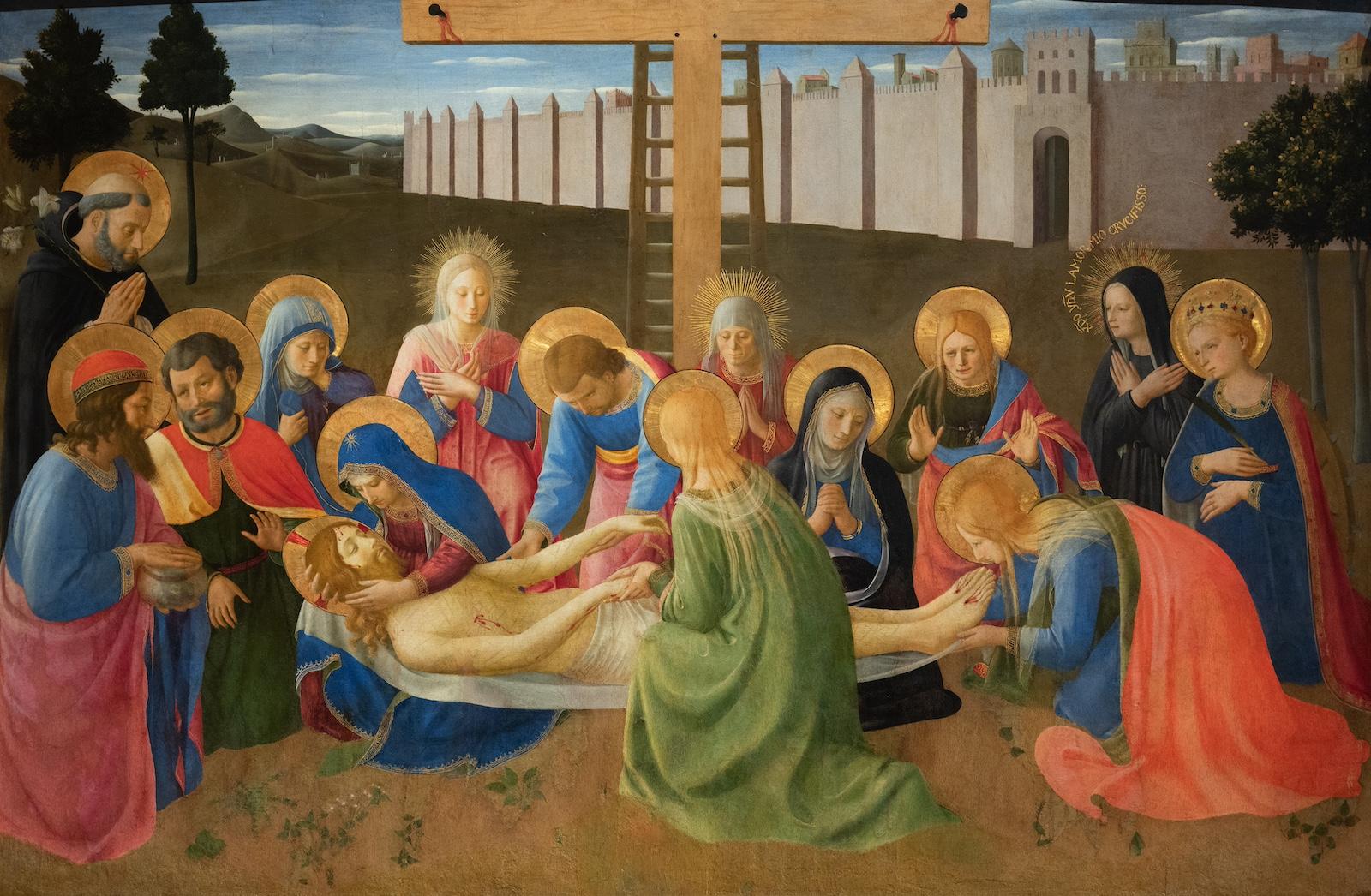
Fra Angelico, Lamentation over the dead Christ, 1436-1440. License

The first major exhibition since 1955 of over 140 works by the great Florentine master Fra Angelico (1395-1455) was featured during the past year at the Fondazione Palazzo Strozzi and the Museo di San Marco, a Medici-commissioned Dominican convent in Florence where Angelico lived and worked. The event has created an opportunity for a unique dialogue between institutions and the region. Although the show closes on January 25, 2026, the impact of the restoration and historical research made possible during the four years leading up to it will add to what we know about this foundational artist for decades to come.

Fra Angelico is curated in part by Carl Brandon Strehlke, Curator Emeritus of the Philadelphia Museum of Art, with contributions of paintings, drawingssculptures, and illuminated manuscripts from leading institutions such as the Louvre in Paris, the Gemäldegalerie in Berlin, the Metropolitan Museum of Art in New York, the National Gallery of Art in Washington, D.C., and the Vatican Museums. The show also provides an opportunity to explore Angelico’s development and his relationship to other Renaissance artists, such as Lorenzo Monaco (1370-1425), Masaccio (1401-1428), and Filippo Lippi (1406-1469)as well as sculptors like Lorenzo Ghiberti (1378-1455), Michelozzo (1396-1472), and Luca della Robbia (1400-1481). Placing him in context affirms why Angelico remains influential in our own time.

WikiCommons

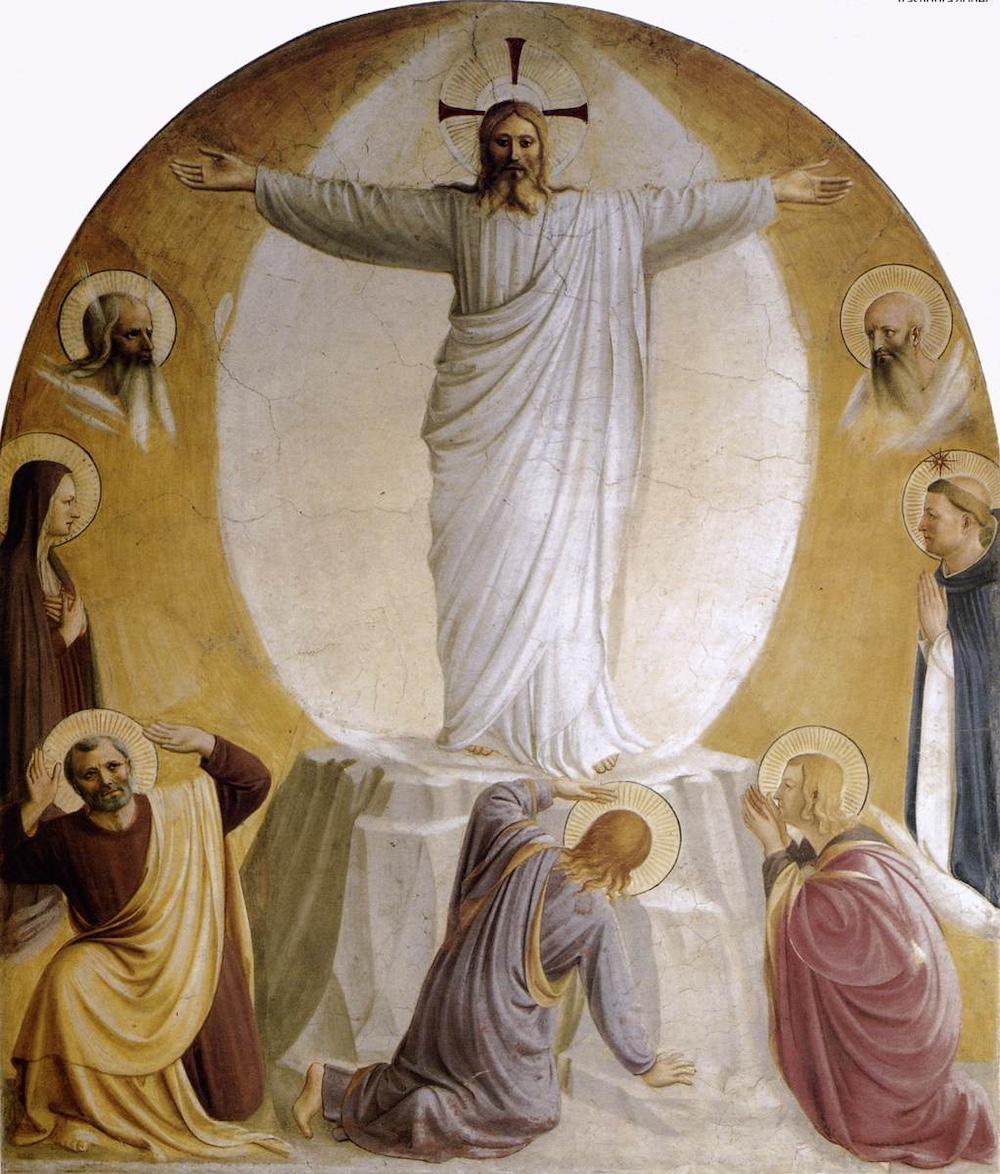
Fra Angelico, Transfiguration (Cell 6), between 1440 and 1442. License

Evolving out of a late Gothic legacy, the works exemplify a mastery of spatial organization via perspective and light allowing for an innovative juxtaposition between the volume of fully rendered figures often placed within an architectural framework or landscape. His mediums were primarily fresco, done directly on the wall, or tempera and gold leaf on wooden panels in the case of altarpieces, many of which were separated and sold, winding up scattered in institutions and collections around the world. 

The occasion of this new exhibition has reunited the central panel of the San Marco Altarpiece featuring the Virgin and Child with 17 of 18 side panels of the angels and saints that comprised the complete work. Museum conservators utilized cutting-edge technologies, like X-radiographic analysis and infrared reflectography, to complete restorations, 28 in all, including the so-called Franciscan Triptych, which originally hung in the Franciscan convent of Santa Croce in Florence.

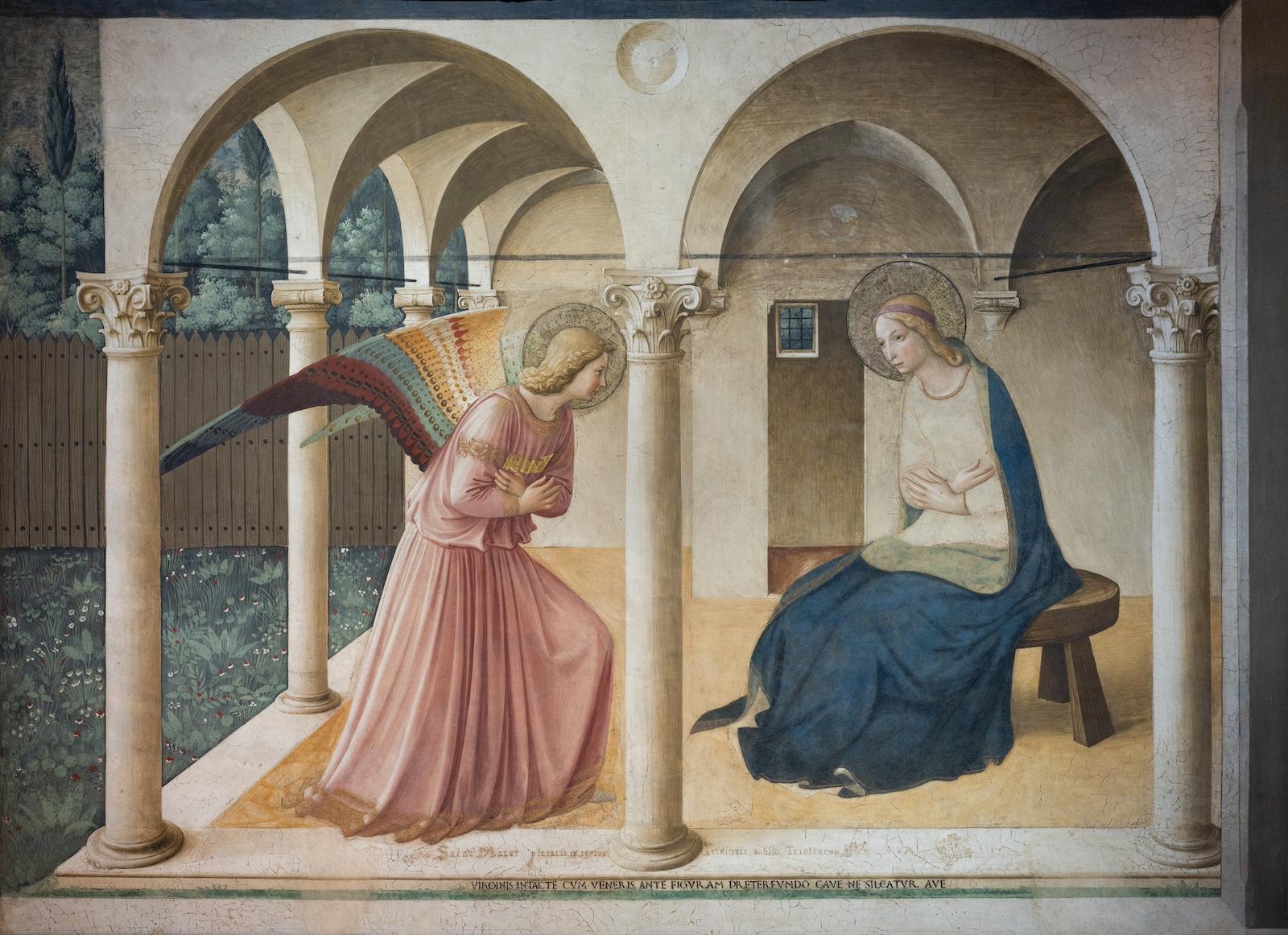
The Annunciation (1440-1445), a fresco and perhaps Angelico’s most recognized painting, has also been one of his most impactful works on later generations of artists. A parallel complementary exhibition at the Officina Profumo-Farmaceutica di Santa Maria Novella (Via della Scala 16, Florence) of a monumental 2017 painting, Annunciation II, After Fra Angelico, reimagined in reverse perspective by David Hockney (b.1937), highlighted the relevance of Angelico’s innovations to artists working today.
WikiCommons

Fra Angelico, Fra Angelico - Annunciation, from 1438 until 1450. License

Giorgio Vasari (1511-1574), the 16th-century biographer of the greatest artists from the 13th century to his own time, summed up his feelings about Angelico by saying, “I am sometimes in astonishment and am at a loss to comprehend how one man could so perfectly execute all that he has performed.” In an interview prior to the opening, chief curator Strehlke explained, “Despite the fact that the exhibition is full of new scholarly material and insights about his works, this exhibition is really for the public to better appreciate Angelico’s voluminous output.” Given the worldwide applause and coverage, the goals of this Angelico reassessment have been fully realized.  

43.771386165213, 11.25177065

Fra Angelico
Start Date:
September 26, 2025
End Date:
January 25, 2026
Venue:
Fondazione Palazzo Strozzi and the Museo di San Marco
About the Author

Cynthia Close

Cynthia Close holds a MFA from Boston University, was an instructor in drawing and painting, Dean of Admissions at The Art Institute of Boston, founder of ARTWORKS Consulting, and former executive director/president of Documentary Educational Resources, a film company. She was the inaugural art editor for the literary and art journal Mud Season Review. She now writes about art and culture for several publications.

Subscribe to our free e-letter!

Webform
Art and Object Marketplace - A Curated Art Marketplace