

At Large  April 20, 2026  Katy Diamond Hamer

A Critique of the Dialogue Surrounding the Whitney Biennial

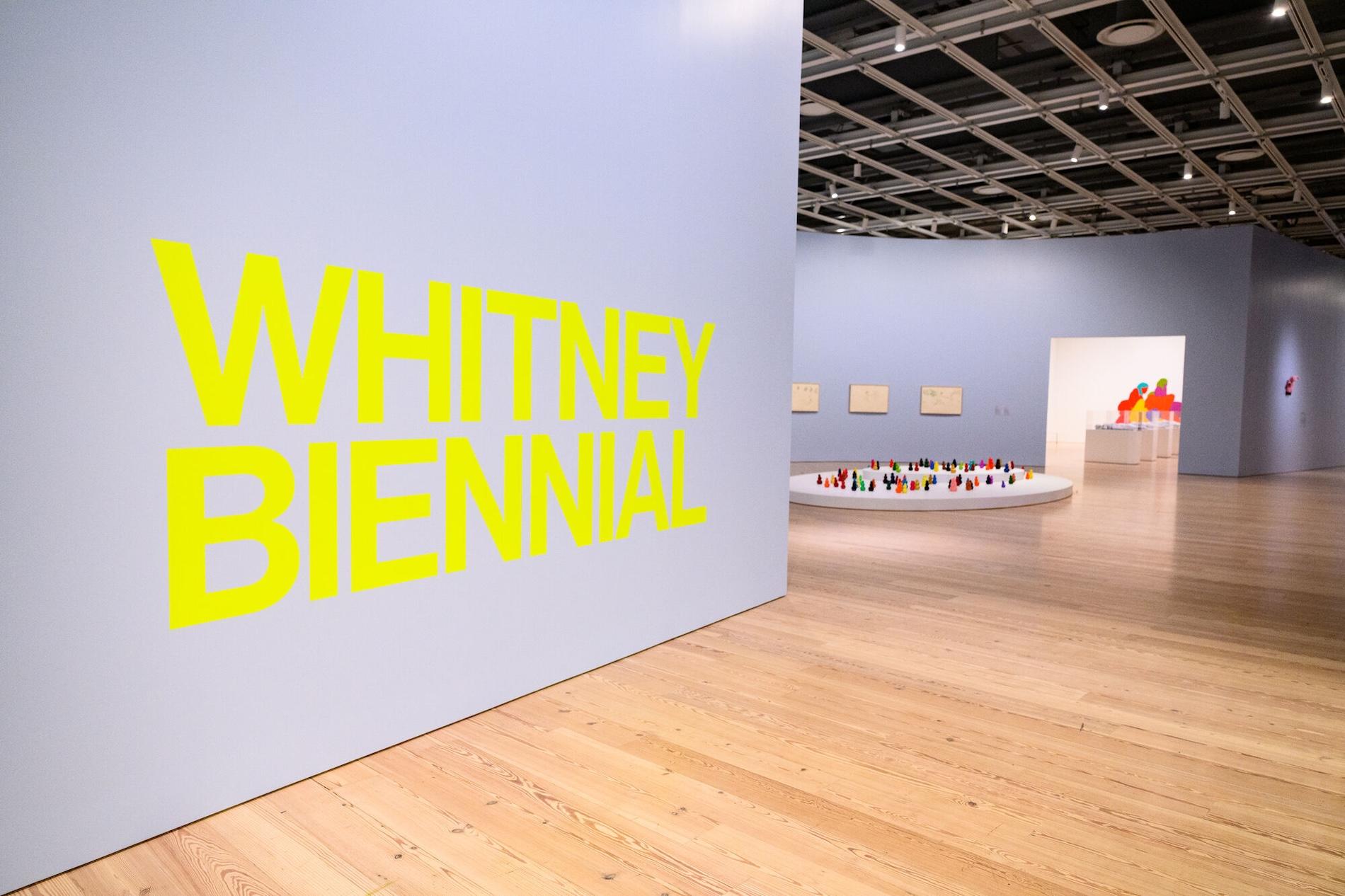
Photograph by Darian DiCanno/BFA.com. © BFA 2026

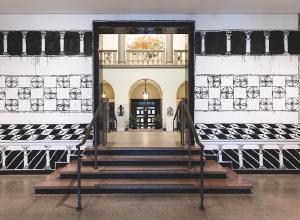
Installation view of Whitney Biennial 2026.

The 82nd edition of the Whitney Biennial opened to the public on March 8, 2026. Curated by Marcela Guerrero and Drew Sawyer, Sawyer comes to the Whitney after several years at the Brooklyn Museum, and Guerrero took on her role in 2022—the first Latina to co-curate the Biennial. With press and VIP previews starting as early as March 3, the arts media was flooded with wildly varied opinions on this iteration, most leaning towards the negative. 

After celebrated writer Aruna D’Souza posted on Instagram commenting on “Under the Influence at the Whitney Biennial,” an article written by Hilton Als for The New Yorker, the discourse became further piqued. In the post, D’Souza highlighted a text by Als stating that the Biennial “introduced viewers to what I call ChatGPT art—facsimiles of facsimiles by makers who have little if any relationship to what they’re putting out there, aside from its being a product in service of a career.” A strong statement indeed, D’Souza responded in her caption with, “To call the work in this show timid or too pretty or twee or whatever you want to call it—fine. But to write it off as ChatGPT art because some things bear superficial resemblance to things that came before—not for me, thanks.” Als’ reaction references the artists in the biennial and their lack of art historical knowledge, while D’Souza counters his argument considering the artists’ agency as makers.

Photograph by Jason Lowrie/BFA.com. © BFA 2026

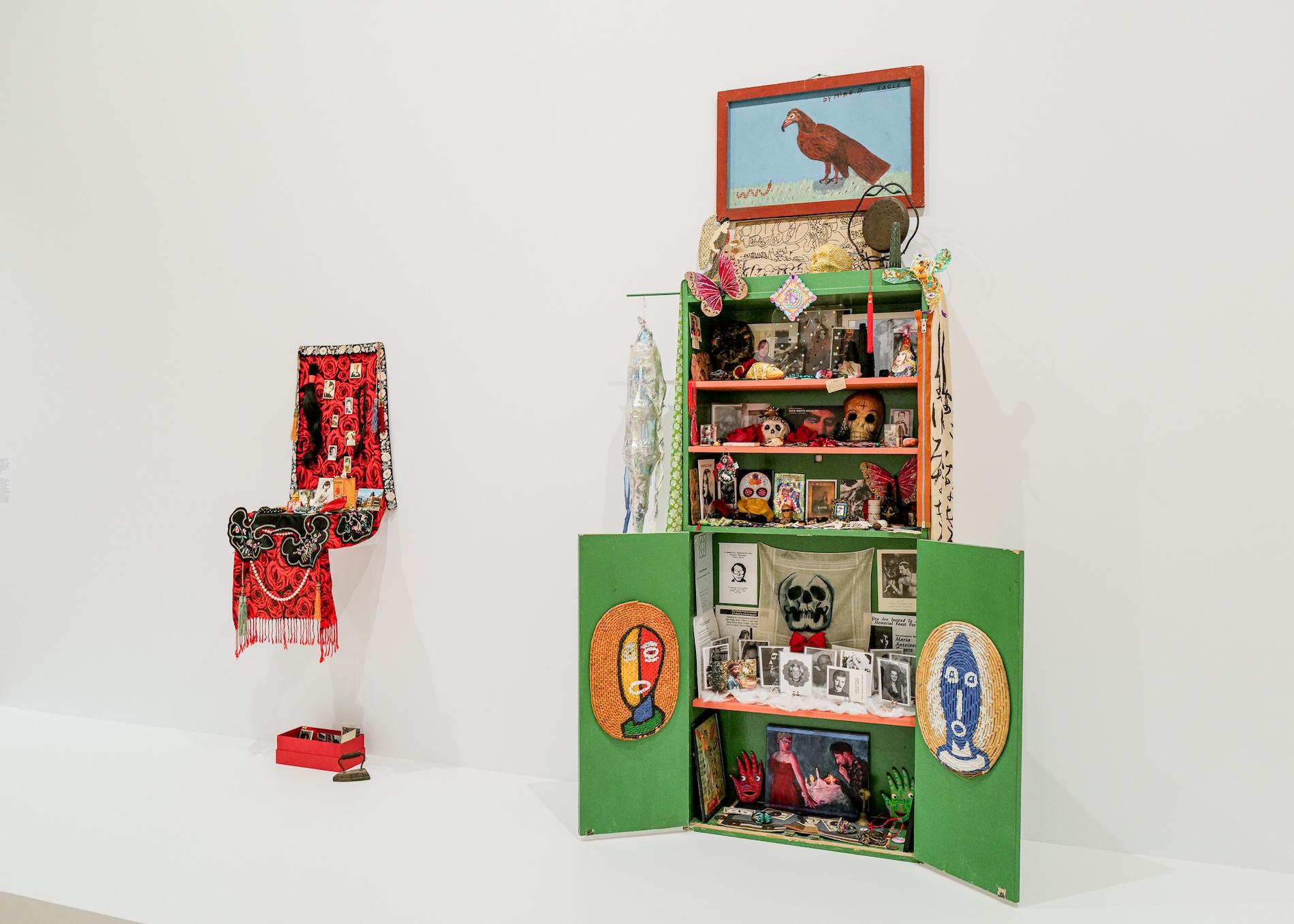
Installation view of work by Agosto Machado, Shine (Green), 2022 and Anna May Wong (Altar), 2025, Whitney Museum of American Art.

In one of two responses that art critic Ben Davis wrote for Artnet, he closes his text with, “At this time, in this show, art doesn’t want to promise that it’s an instrument to change the world. It also doesn’t want to promise an escape from the weight of the world. What it offers is more like a longing to feel whatever can be felt when you don’t believe in either.” In this instance, art is looked at through the filter that it is a source for change or escape, but is rather an excuse to feel.

Artnet has published many voices on the subject of this year’s exhibition. In addition to Davis, writers William Van Meter, Sarah Cascone, and Eileen Kinsella shared their thoughts as well. Van Meter offers, “The heart is the point. An unabashed emotional current runs through this biennial. It is not armored in irony or buffered by theory [...] More than once, I found myself holding back tears. In a world that often feels on fire, detachment feels untenable. Connection is the point.” Indeed, connection is the invisible elastic thread that people sought in post-COVID times and still desperately crave today in the face of global and domestic political strife

Every two years the biennial occupies several floors of the Whitney Museum—but is it a reflection of the current times, or something more? A juggernaut prepared to siphon emotion? A collection of artists whose vision is derivative? Or, a mirror that first presents itself in the guise of pleasantry and play, only to reveal something more painful? It is all of these things.
Photograph by Jason Lowrie/BFA.com. © BFA 2026

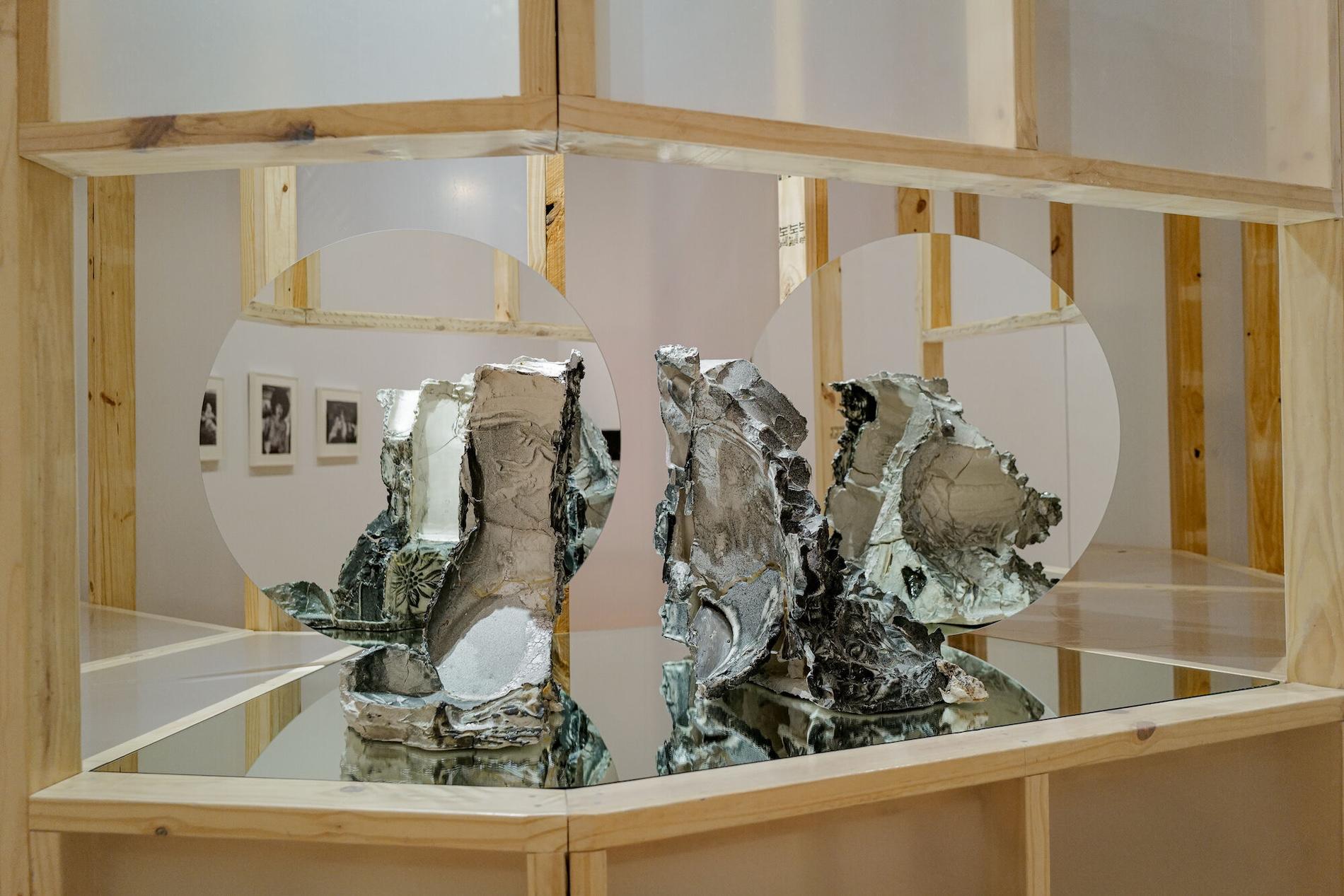
Installation view of work by CFGNY, Daniel Chew, Ten Izu, Kirsten Kilponen, and Tin Nguyen, Whitney Museum of American Art.

To address Als, there are young artists working today who are not aware of the art from our recent past; this is often evident in higher education. However, exposure to the art world begets knowledge, and thus, this can be a pedagogical moment in which writers and historians offer constructive criticism and context. That said, there are Gen Zers and young millennials who are encyclopedic in their literacy, having had digital resources and research tools from a young age.

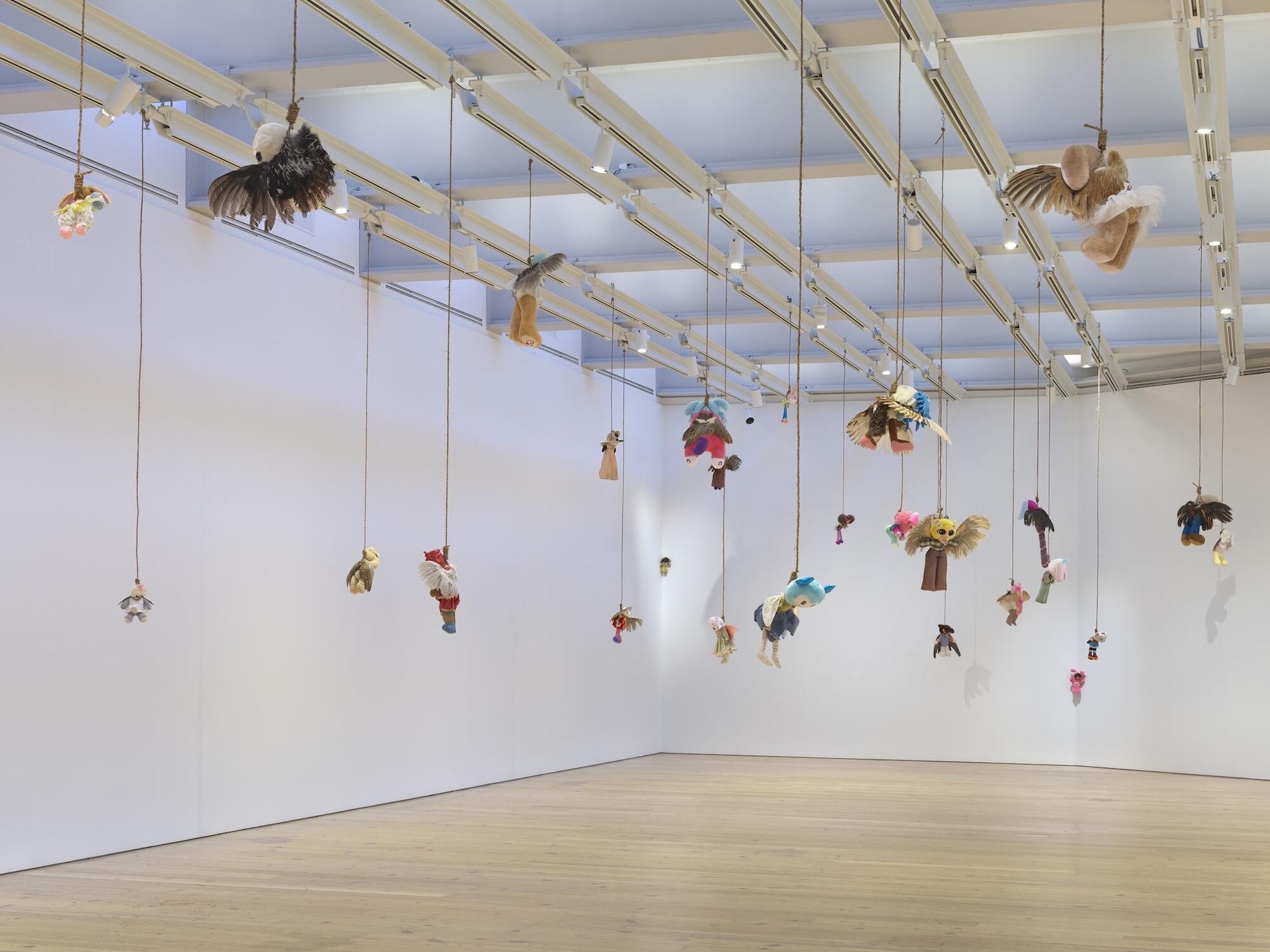
The Whitney Museum’s downtown building—its stacked terraces and exposed industrial framing—functions less as a neutral container than as an active curatorial force shaping how the biennial is read. Taking the elevator to the 6th floor, visitors emerge into Precious Okoyomon’s Everything wants to kill you and you should be afraid, 2026, an installation of toys that have been taken apart and reconstructed, each with a set of taxidermied bird wings. Her dolls hang from the ceiling suspended with nooses. 

Recent criticism has suggested that the exhibition is too “cute,” yet this work resists that simplification. The artist acquires used stuffed animals and dolls and reassembles them in a Frankenstein-like fashion. These objects are a talisman of sorts—charged and cosmically resurrected only to once again meet their demise. The installation fills the gallery and is airy, while also being metaphorically dense, and aligns with Van Meter’s take. It is fantastic. 

Photograph by Ron Amstutz

Installation view Precious Okoyomon, Everything wants to kill you and you should be afraid, 2026, Whitney Museum of American Art.

In an indirect way, this biennial is highly political in that it is largely showing and not telling. It is less didactic than previous exhibitions and perhaps also the most connected to the presence of those who are visiting the museum. This couldn’t be more true than through the work of Maia Chao, who was born in Providence, Rhode Island in 1991 and currently lives in Philadelphia. The artist has issued Scores for the Museum Visitor, 2026. The scores appear as written texts that beg for movement and interaction. The work includes prompts such as: “DISLOCATION: Score for an urge, Touch the rectangle as if you are touching an artwork that you aren’t allowed to touch. Imagine getting away with it.” and “DISTORTION: Score for making contact, Lean forward over the stanchions until your forehead rests against this wall. Lean as long as you like.” 

The gestures feel immediately intimate, outrageous, and sensual. It is rare that someone is able to interact with a museum wall in such a physical way, let alone as part of an artwork. These gestures are not necessarily reliant on those who may or may not perform them, but connect to a deeper institutional fear of touch, archive, and conservation. The work disarms the concept of “look, do not touch.”

Photograph by Jason Lowrie/BFA.com. © BFA 2026

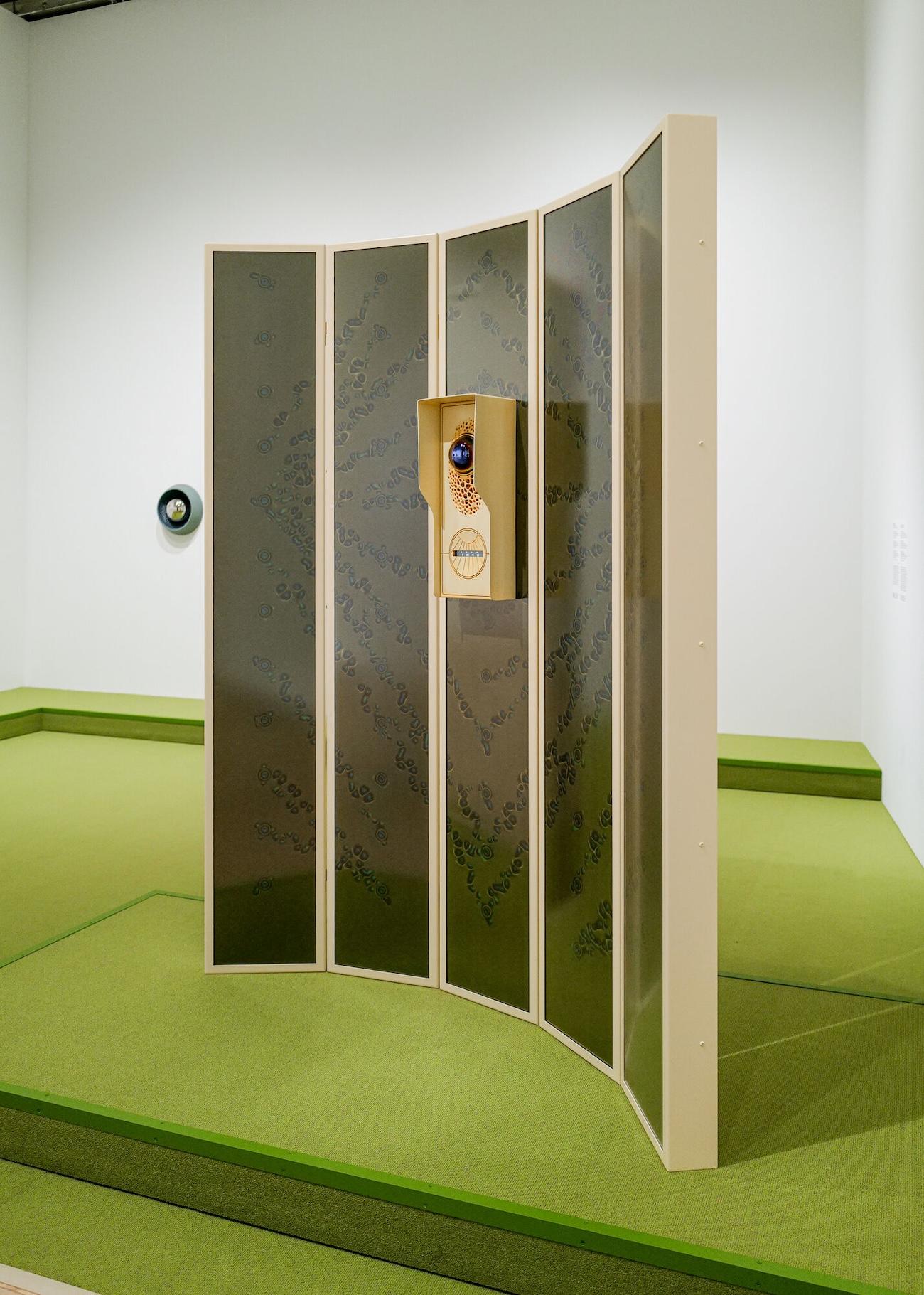
Installation view of work by Cooper Jacoby, Whitney Museum of American Art.

Cooper Jacoby’s Estate (January 21, 2016), 2024, is constructed of thermoplastic and includes a fish eye camera, LCD screen, and speaker, amongst other materials. It looks like a security camera, stripped of its duty, encased in an arched, cream-colored case rotating from left to right. An automated voice occasionally erupts from the object. The artist used an AI model to speak from “simulated memories” of “creatives” who have passed away. Jacoby accessed social media posts to create these memories exploring the space between estate—physical property and intellectual property. 

Questions arise around the ethical use of these likenesses and the cost of (or lack of) privacy once this type of AI-infused cloning is employed. There are no identifying names of these unlikely participants, and it is unclear if the voices are those of the deceased or purely machine. At one moment, a voice shares the bittersweet sentiment, “All I wanted was to be loved. All I wanted was to be loved. I kept telling myself this but maybe I actually wanted more.” Hollywood has been fighting the use of AI in cinema, specifically the use of AI actors, and Jacoby’s Estate comments on the ease of access of personhood through the digital paper trail most of us will leave behind.

Holland Cotter of The New York Times states in his Critics’ Picks introduction, “Hating on the Whitney Museum of American Art’s Biennial has been an art world sport since the early 1970s [...] when the art world was small and confined to Manhattan, Biennial criticism was an insider game: Why was this artist picked and not that one? Why do the same few galleries have a lock on the show?” He goes on to share that the current biennial is “something broader and looser… that in the hands of inventive curators, warrants neither quick dismissal nor easy embrace.” This tension between dismissal and embrace perfectly sums up much of what has been written thus far. Maybe, as he surmises, negative discourse is a sport—and why not? At a time when criticism itself is less pervasive, the biennial as a catalyst for critical conversations is actually quite refreshing. 

But, critics aside, Guerrero and Sawyer are showing viewers an honest interpretation of time, and all that remains is to see it for yourself. Because while journalists create channels through which art can be accessed, historically placed, and theorized, there is value in seeing something for oneself and deciding on your own. 

About the Author

Katy Diamond Hamer

Katy Diamond Hamer is an art writer with a focus on contemporary art and culture. Writing reviews, profiles, interviews and previews, she started the online platform Eyes Towards the Dove in 2007 and was first published in print in 2011 with Flash Art International. Interview highlights include Robert Storr, Helmut Lang, Courtney Love, and Takashi Murakami. Taking a cue from art writers such as Jerry Saltz and movements such as Arte Povera (Italy, 1962-1972), Hamer believes that the language used to describe contemporary art should be both accessible to a large audience as well as informed regarding art historical references. Clients include Almine Rech, Hauser & Wirth, Grand Life, The Creative Independent, Art & Object, Artnet, Cool Hunting, BOMB, Cultured Magazine, Galerie Magazine, Flash Art International, W Magazine, New York Magazine (Vulture), The Brooklyn Rail and others.  Hamer is an Adjunct Faculty member at New York University, Steinhardt School of Education, and Sotheby's Institute of Art. Previously she taught Continuing Education at the New York School of Interior Design.

Subscribe to our free e-letter!

Webform
Art and Object Marketplace - A Curated Art Marketplace