Museum  May 5, 2026  Camille Kirk

Healing From the Burns: How The Getty Recovered From the LA Fires

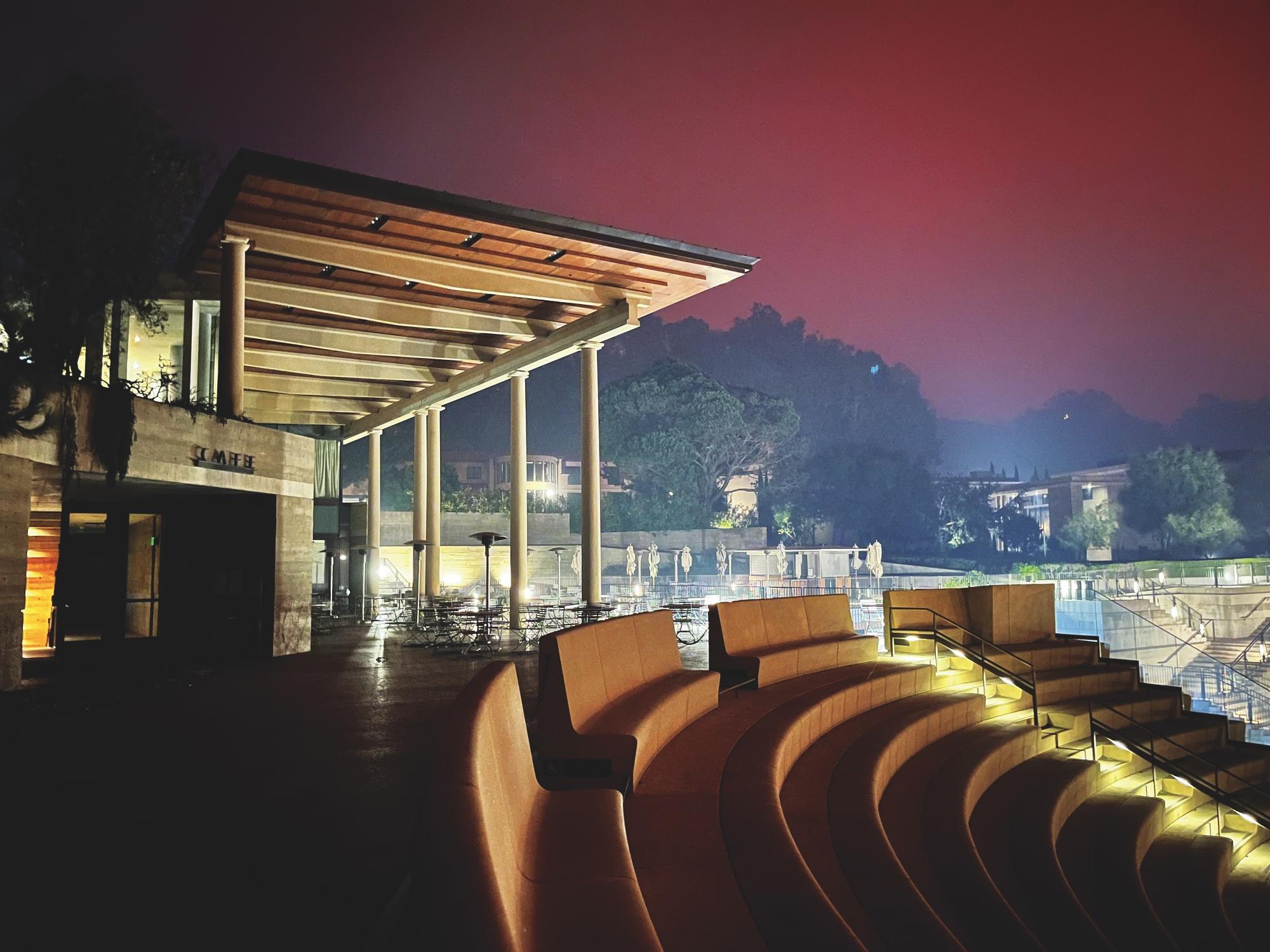
Photo by Les Borsay © 2025 J. Paul Getty Trust

The Palisades fire at the Getty Villa’s Cafe. The museum’s buildings escaped damage but the landscape did not.

Mid-morning January 7, 2025, a fire broke out in the Santa Monica Mountains. By the noon hour, fanned by intense winds with gusts up to 100 miles an hour, the fire had reached the perimeter of the Getty Villa property. Thus began a new odyssey for Getty, as we defended the Villa from the flames.

With a combination of years of preparation to protect our site in a fire-prone area, hard work by brave staff, invaluable support from firefighters, and lots of luck, we prevailed. Our museum buildings and collection survived unscathed, but our landscape suffered significant damage. While our fate was far different than our namesake model, Villa dei Papiri, which was smothered by volcanic ash in ancient Herculaneum, we nonetheless have a long journey ahead of us to restore our landscape, to mourn with our Los Angeles neighbors who lost homes and loved ones, and to find a path to our next chapter.

The Getty Villa was closed for roughly six months after the fire. In that time, many hard-working staff and contractors undertook extensive cleanup and preparation to reopen, including inventorying and removing about 1,400 burned trees, cleaning the soot and ash that coated nearly every surface (as well as mud from landslides that occurred shortly after the fire ended), restoring clean water service, conducting after-action analyses and debriefings, and more. We deinstalled the special exhibition that was on view when the fires started and installed a new special exhibition for our reopening. Upon reopening in late June, it was joyous and wonderful to see people back in the Villa—walking through the Inner and Outer Peristyles, visiting the galleries, and celebrating with food and wine. Buildings are lonely without people, and so is art. We humans are symbiotic with our cultural productions, and so it was deeply meaningful to all of us at Getty to be able to reopen and once again share our collections.

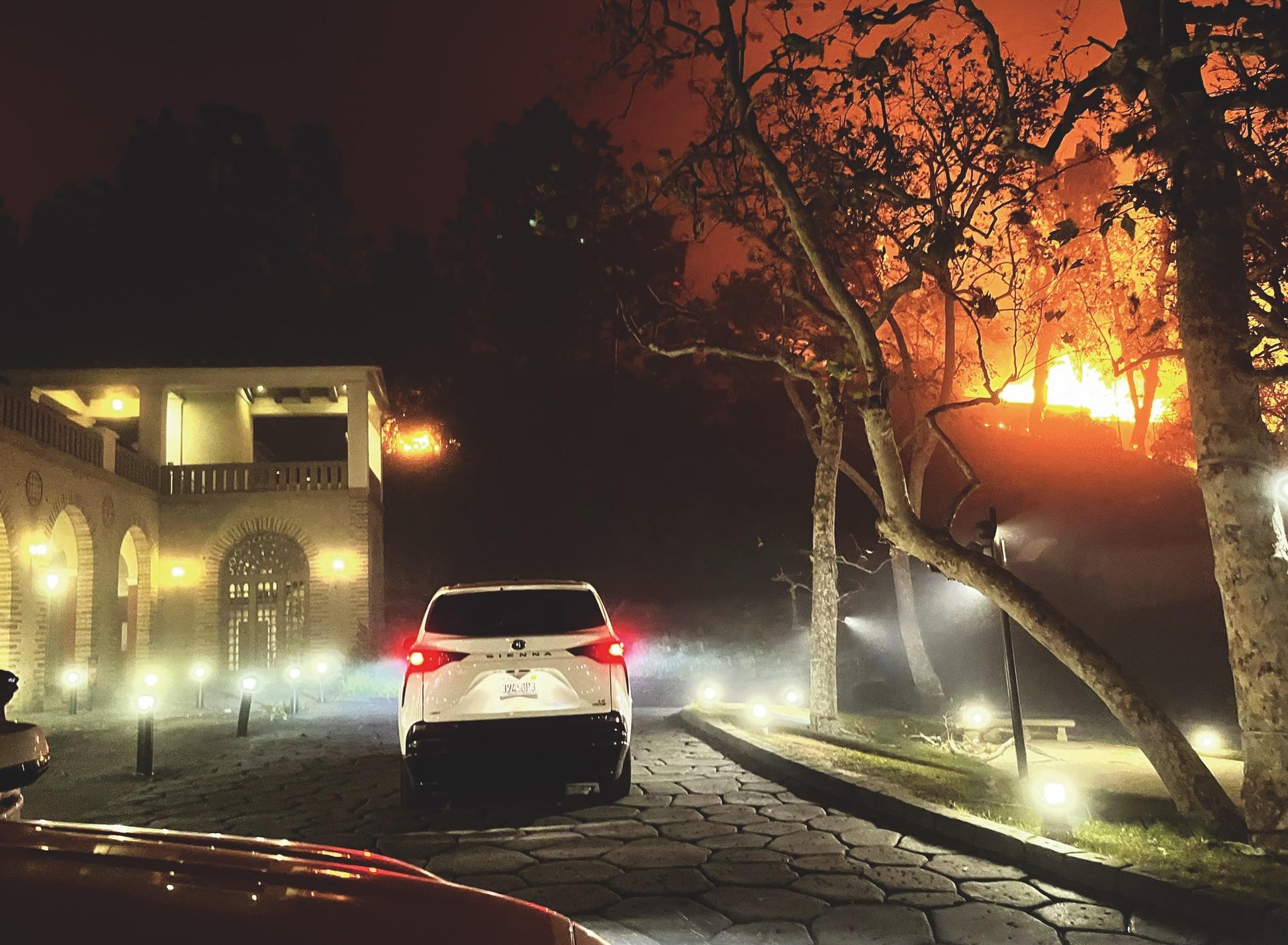
Photo by Les Borsay © 2025 J. Paul Getty Trust

A view of the Palisades fire at the Getty Villa.

While museums are vulnerable places in the face of global warming, they are also hubs of resilience and inspiration. It is important to openly discuss and find ways to address our vulnerabilities. It is equally important to address our roles as supporters of the community.

For Getty, we understand clearly our vulnerability to many types of disasters—wildfire, landslides, earthquakes, and more. At the Villa, we are not obscuring the impact of the fire: We have left high-cut tree stumps and salvaged burned trees as a visual record of what happened. We are developing interpretive materials for our visitors that document the fire, explain our preparation and response, and tell what to expect over the coming months and years as we help our landscape recover. We will be planting native oak trees and other species to support our local habitat and increase our resilience. Our irrigation and steam-based humidification infrastructure will also be replaced by more durable systems, and we will continue to perform targeted brush clearance.

We also understand our ability to be a source of inspiration and connection, which we activated in response to the Palisades and Eaton Fires, which devastated so many in the Los Angeles area arts community. In partnership, we rapidly and collaboratively developed the LA Arts Community Fire Relief Fund [CCIarts.org/relief.html] to get much-needed assistance to artists and arts workers who suffered losses in the fires. We quickly organized a special half-day convening on resilient recovery to coincide with the Alliance of American Museums (AAM) conference in Los Angeles in early May. For that convening, we asked colleagues from institutions around the country to join us in sharing lessons learned from disasters and how we can build more resilience into our institutions and our communities.
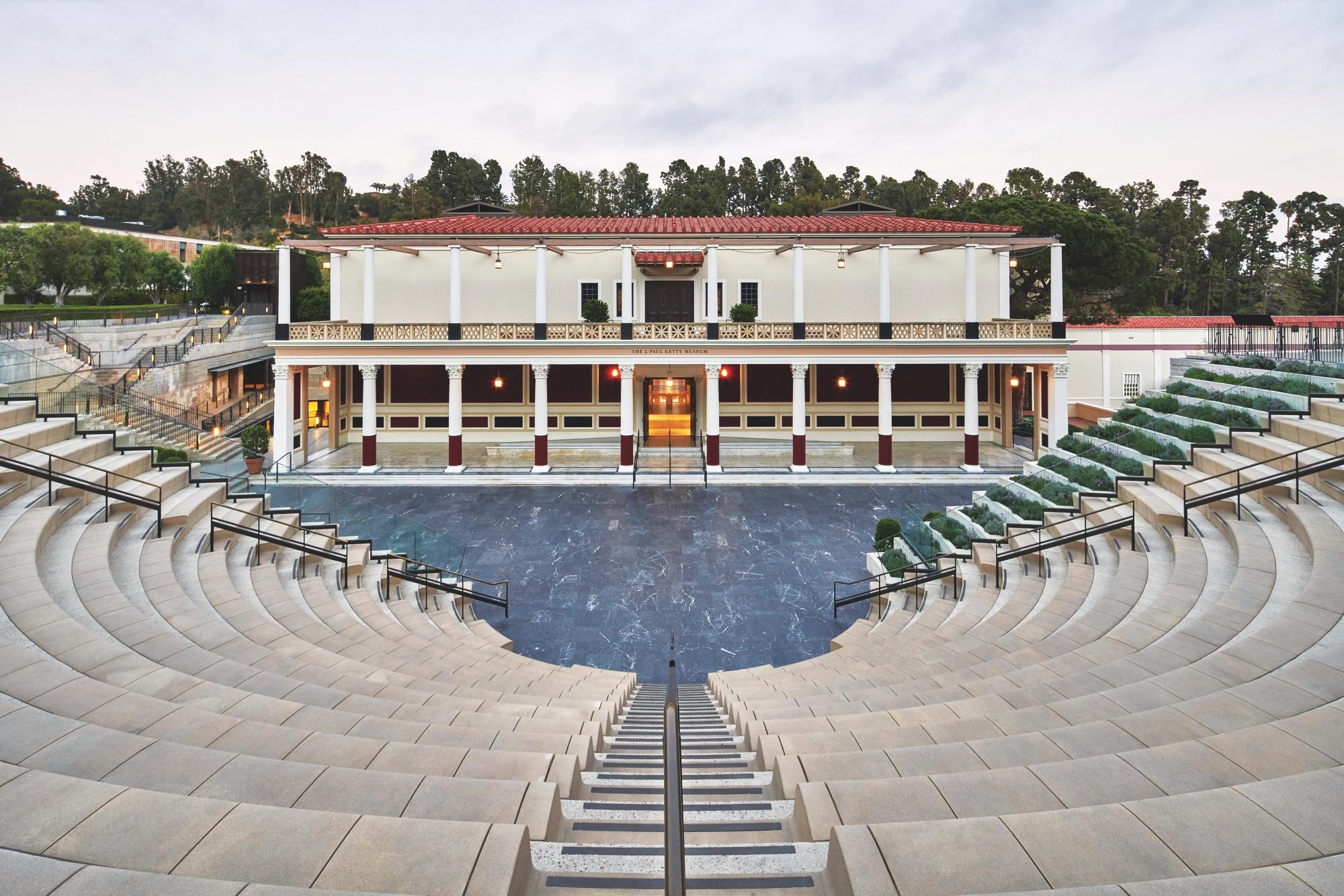
Photo by Elon Scho Enholz © 2018 J. Paul Getty Trust

Outdoor Theater at the Getty Villa. The museum reopened in late June after six
months of cleanup and preparation.

In June, Getty launched the Art and Sustainability Fellowship program to advance the sector’s knowledge and build a network of professionals who can help address sustainability challenges within the cultural sector. And, in July, we hosted the third Changing Climate Management Strategies workshop for museum professionals, which leverages the decade-plus research by the Getty Conservation Institute on sustainable collection environments. At that workshop, the Getty Museum and LACMA both shared case study details of how each institution is implementing the Bizot Green Protocol (laid out by an international museum directors’ organization called the Bizot Group). We continue to seriously consider and address the risks that confront us from climate change and other challenges.

A key role of the arts and humanities is to interpret and make sense of our human condition and the challenges we face and to help us imagine possible futures. Without the ability to conceptualize the future, we would not be able to plan or to adapt our behavior intentionally—crucial ingredients in confronting climate change. Museums should steward and protect our shared cultural and natural heritage, and that heritage is imperiled by disasters that are fast, like fire, and slower, like climate  change. The best way to remain rele- vant and viable institutions capable of preserving and sharing our heritage is to act cooperatively and build resilience together.

*This article originally appeared in Art & Object Magazine's Fall 2025 issue.

About the Author

Subscribe to our free e-letter!

Webform
Art and Object Marketplace - A Curated Art Marketplace
Loading categories...