Museum  July 1, 2026  Annah Otis

Two Institutions Show What Democracy Looks Like on Gallery Walls

WikiCommons

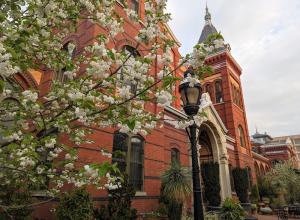
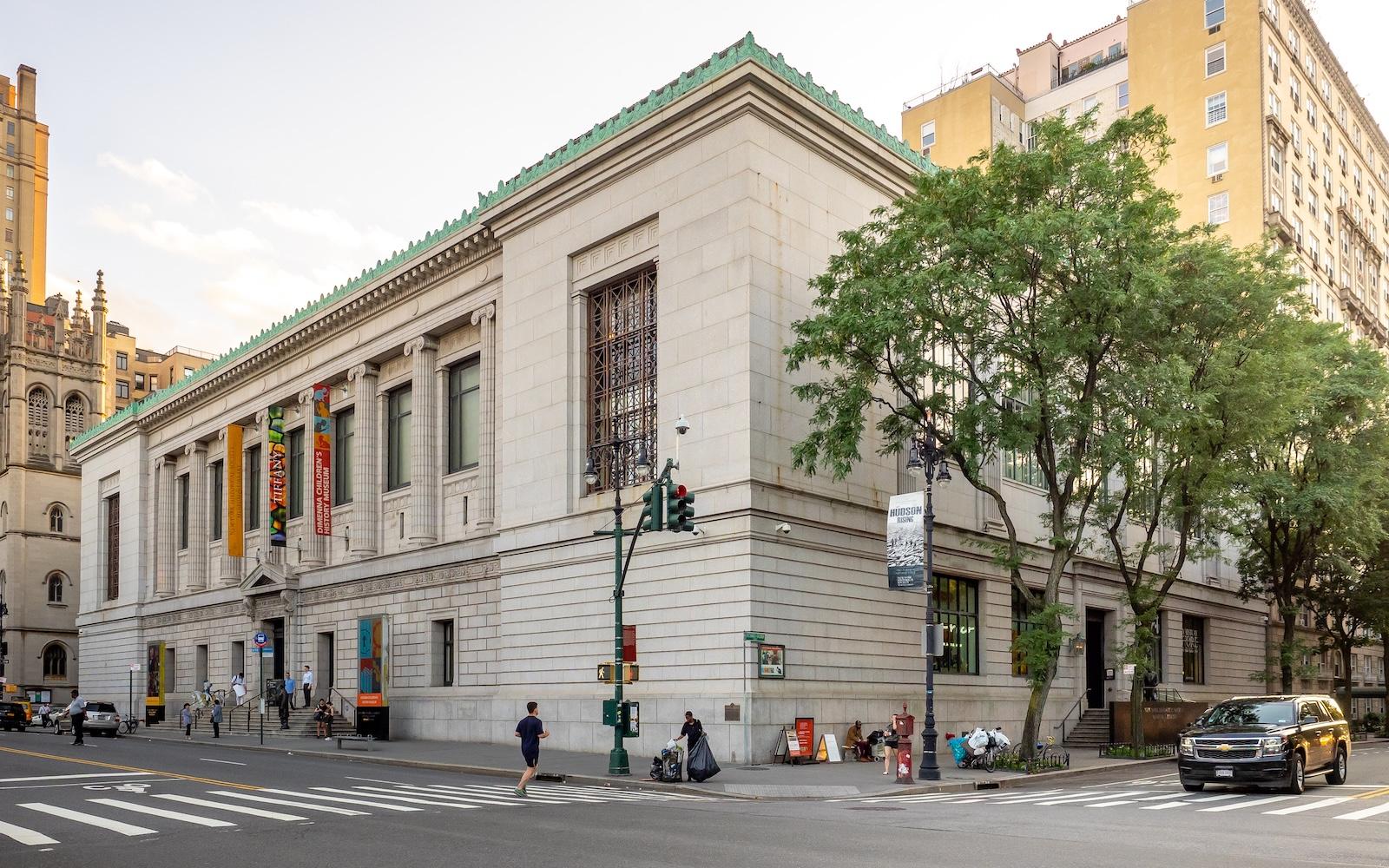
The New York Historical, 2019. License.

Two major additions to American culture opened their doors within days of each other after multi-year projects strategically planned to culminate during the country’s 250th anniversary: the Obama Presidential Center in Chicago and the Tang Wing for American Democracy at the New York Historical in Manhattan. Both are organized around the theme of democracy at a time when it seems to be coming under fire. Together, they offer a study in translating civic ideals into physical space and what gets lost or gained in that translation.

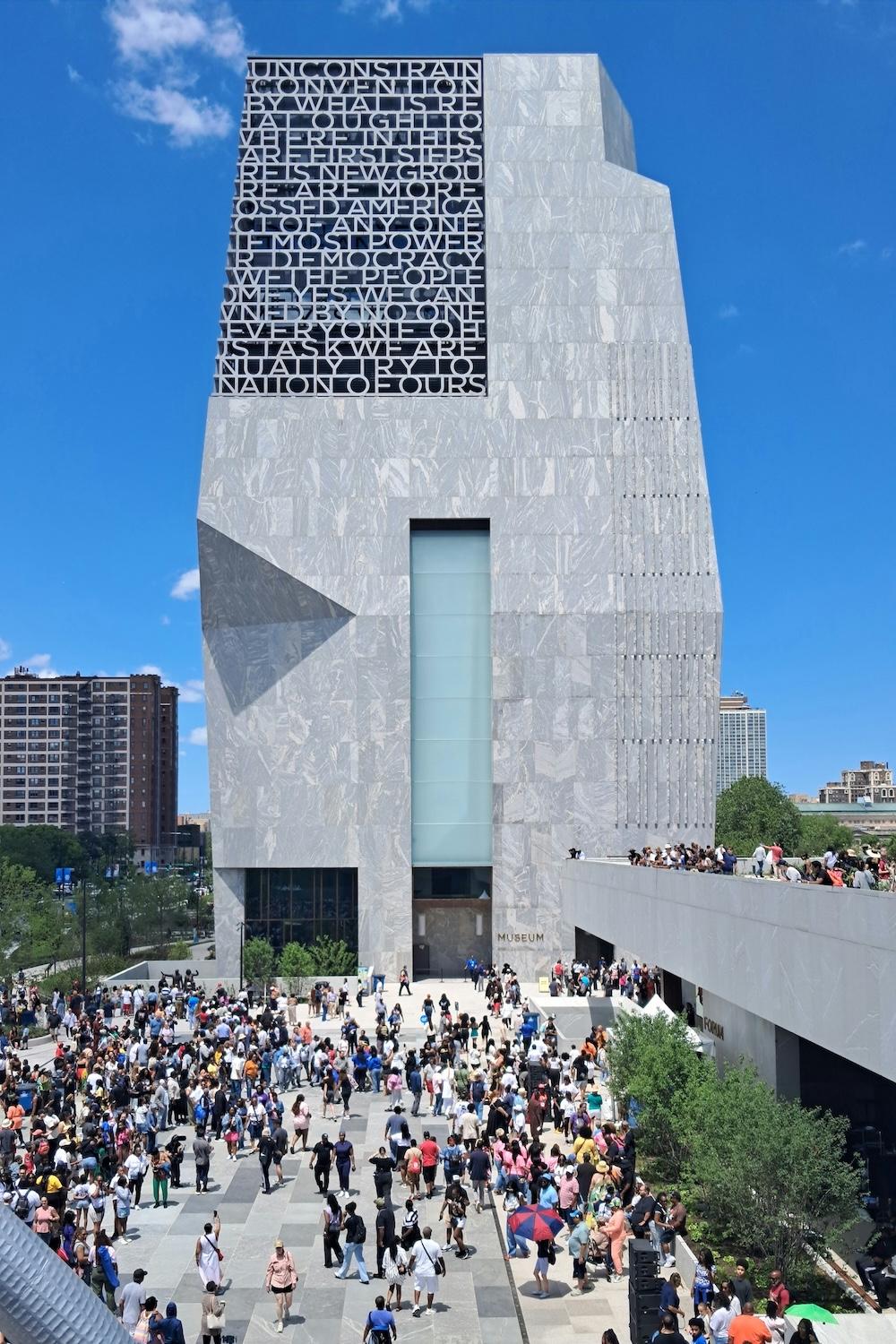
The Obama Presidential Center opened over Juneteenth weekend on a nearly 20-acre plot in Hyde Park with speeches from the former First Family and celebrity appearances. But, inside the neobrutalist building, exhibitions and gathering spaces are much more low-key. Gallery placards refer to the 44th president simply as “Barack” as they lead visitors through his trajectory from community organizer in the 1990s to the White House.

WikiCommons

The museum at the Obama Presidential Center on opening day, 2026. License.

Leadership is likewise careful to position the center as something more community-inclusive than as a stuffy presidential library. An NBA-sized basketball court, gardens, and open lawns invite the surrounding neighborhoods to convene on the sprawling campus. Scattered throughout it are 28 commissioned art installations. A new branch of the Chicago Public Library and a full-scale replica of the Oval Office donated by Chicago-born television writer-producer Shonda Rhimes are also key features.

As with any quasi-political project, however, the center has had its critics. Obama and center leadership have declined to sign a community benefits agreement that would help address displacement concerns in the South Side area, which has already seen an increase in housing costs and an influx of new families. Admission to the museum requires a hefty fee, even for residents. These are not inconsequential frictions for an institution organizing itself around access and equity.

Meanwhile, the Tang Wing for American Democracy opened on June 18 as a 71,000-square-foot addition to the New York Historical’s original 1908 building. The four-story expansion includes an open air sculpture court, roof garden, classrooms, conservation lab, and future space for the American LGBTQ+ Museum when it opens in 2028. One permanent gallery is devoted to the Stuart and Jane Weitzman Shoe Museum. Another is currently home to a group show titled Democracy Matters that runs through November 1.

WikiCommons

Thomas Cole, The Course of Empire: The Savage State, 1834. License.

Drawing entirely from the museum’s own collection, Democracy Matters includes historical artifacts and contributions from contemporary artists. Thomas Cole’s five-part painting cycle, The Course of Empire, occupies one corner of the exhibit with its depiction of civilization’s rise and fall. Fragments of a bronze King George III equestrian statue that was pulled down in 1776 by patriots are displayed not far away. The exhibition does not argue a thesis so much as arrange evidence and step back, allowing visitors to sit with the positives and negatives of a shared history still in the making.

The Obama Center and the Tang Wing share an understanding that democracy resists triumphalism and simplification. Themes and values explored within their walls give visitors the opportunity to grapple with exactly what democracy means to them at this tumultuous moment in time.

About the Author

Annah Otis

Annah Otis is a New York City-based contributor to Art & Object with a master’s degree in art history. She is also a marketing communications executive.

Subscribe to our free art newsletter!

Webform
Art and Object Marketplace - A Curated Art Marketplace