
Gallery  September 21, 2026  Cynthia Close

Mariko Mori’s Exploration of Posthumanism at Mori Art Museum

Photo: Richard Learoyd

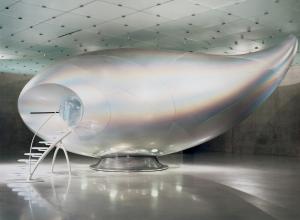
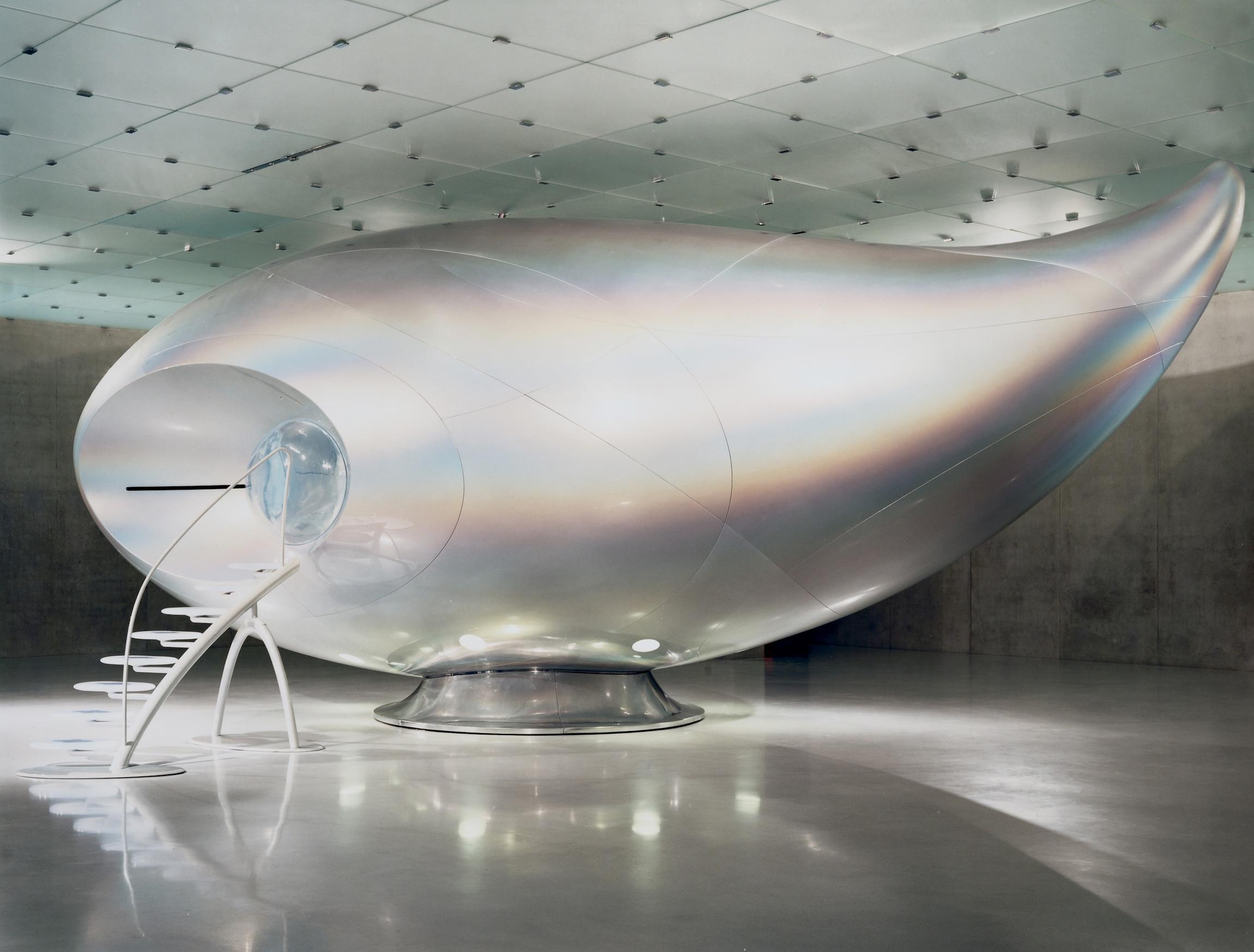
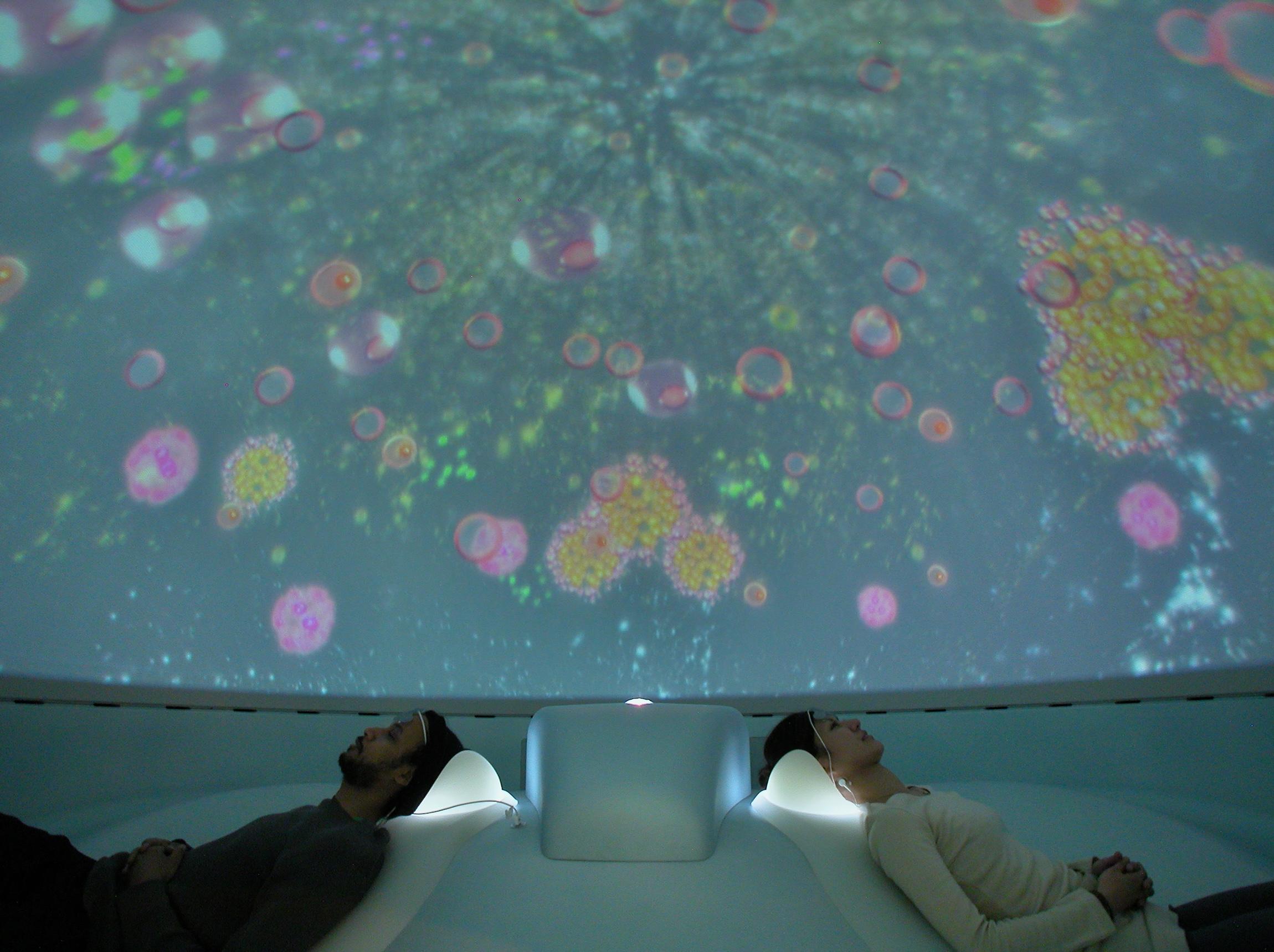
Mariko Mori, Wave UFO, 1999-2002, Brainwave interface, vision dome, projector, computer system, fiberglass, Technogel, acrylic, carbon fiber, aluminum, and magnesium, 528 x 1134 x 493 cm. Installation view: Mariko Mori: Wave UFO, Kunsthaus Bregenz, Austria, 2003.

When Irish poet William Butler Yeats wrote the line, "Things fall apart; the center cannot hold," in his 1919 poem “The Second Coming” shortly after WWI, it reflected a sense of global chaos, societal breakdown, and the end of an era. For many, the present moment feels the same. History demonstrates that artists often forge a path out of the present into a future that could not be imagined otherwise. 

Courtesy of Mori Art Museum

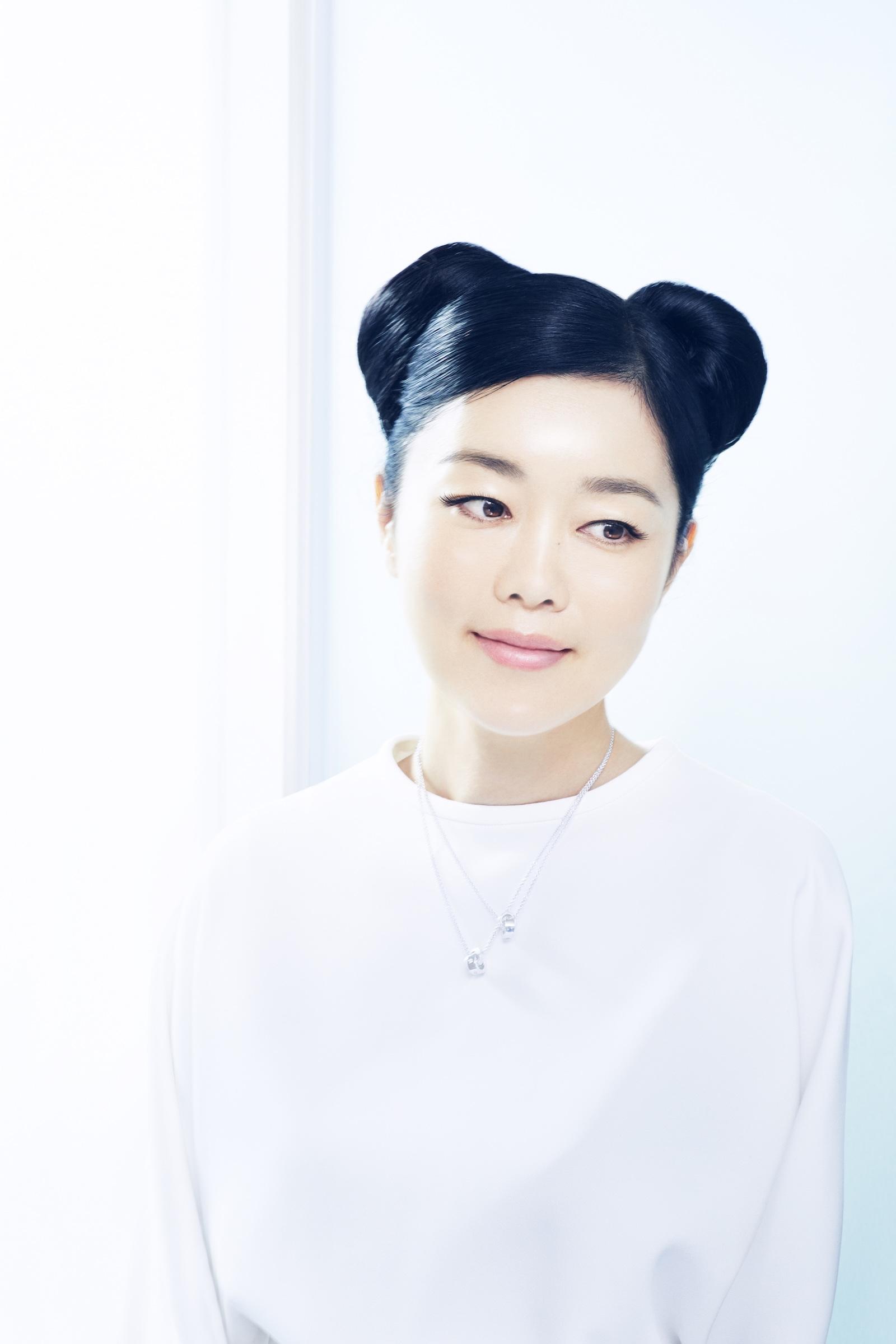
Portrait of Mariko Mori

Japanese artist Mariko Mori (b.1967) is one of those artists whose Buddhist-informed practice of “Oneness”—a concept advocating for the interconnectedness of all life, from deep geological time to the infinite universe—seems not only relevant, but urgent.

From October 31, 2026–March 28, 2027, Tokyo’s Mori Art Museum in collaboration with the Asian Art Initiative at the Guggenheim Museum in New York will present Mariko Mori: All That Shines, a retrospective of 40 works tracing Mori’s explorations of posthumanism from the 1990s to the present. It is the first exhibition in Japan dedicated to the artist since Mariko Mori: Pure Land in 2002. Born in Tokyo in 1967 to a well-known Japanese family—her father is an inventor, and her mother is a historian of European art—Mori was educated in the arts in London. 

After graduation, she moved to New York City and participated in the Independent Study Program at the Whitney Museum of American Art, an experience that contributed to her global sensibility. She is also the niece of Minoru Mori, the real estate tycoon whose family name is found on many built environments in Japan, including the Roppongi Hills development in Tokyo, opened in 2003, home to the Mori Art Museum's building.
Courtesy of Mori Art Museum

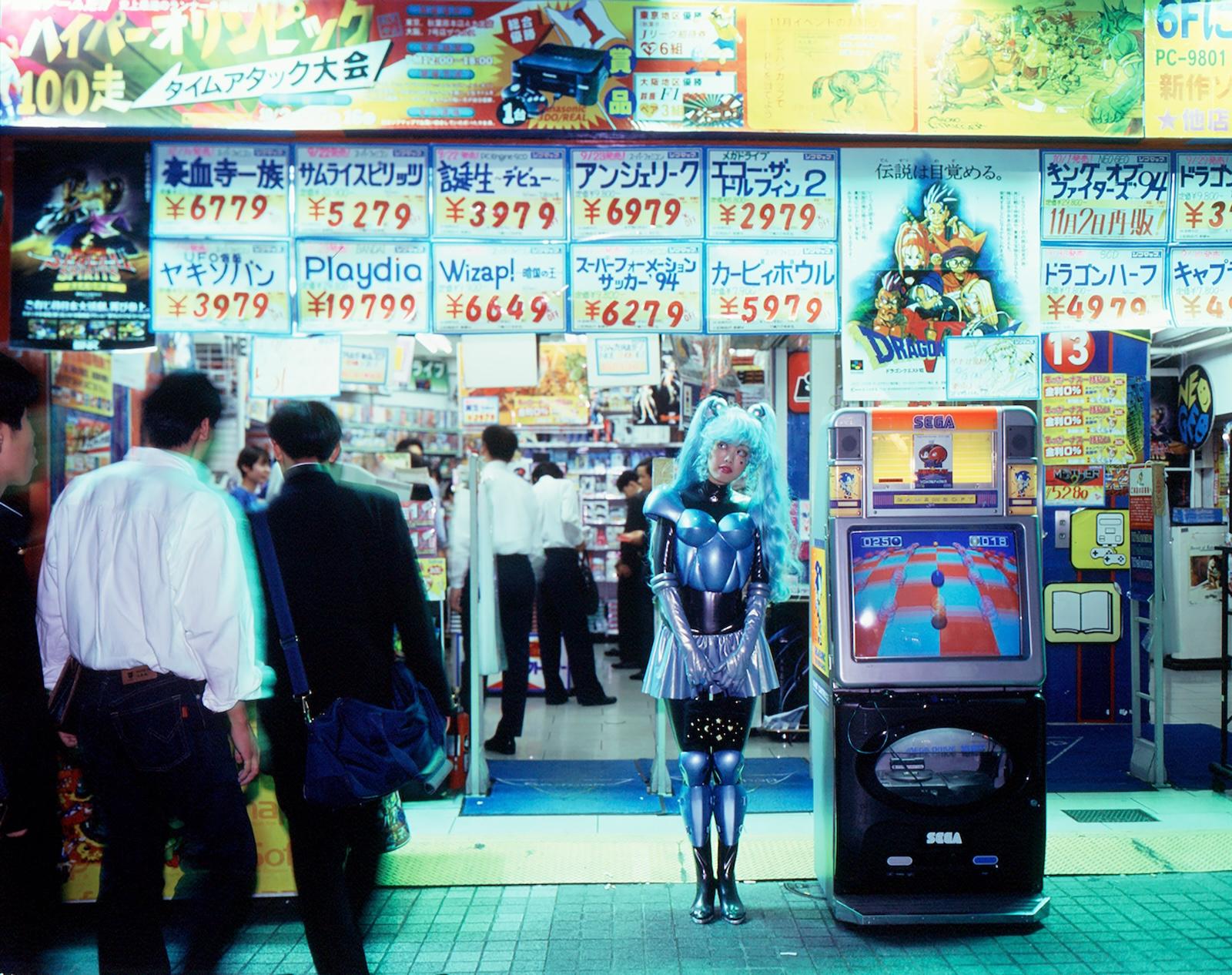
Mariko Mori, Play with Me, 1994, Fuji Super-Gloss print, wood, aluminum, and pewter frame, 304.8 x 365.8 x 7.6 cm

In the mid to late 1990s, Japanese-based anime first reached mainstream popularity in the United States. It was then that Mori rose to prominence with her “Cyborg” series of performance-based photography and video works where the artist inserted herself into mundane urban and corporate settings dressed as an anime-inspired, pop-futuristic cyborg. The series was a blending of reality with science fiction and an exploration of the cultural construction of identity, an equal part cosplay and performance art. She was an early adopter of sci-fi-inspired imagery utilizing advanced computer graphics. 

Photo: Tom Powel

Mariko Mori, Wave UFO (interior), 1999-2002, Brainwave interface, vision dome, projector, computer system, fiberglass, Technogel, acrylic, carbon fiber, aluminum, and magnesium, 528 x 1134 x 493 cm

Since the beginning, Mori’s practice has been grounded in research and collaboration with scholars and scientists around the world. Her early adaptation of cutting-edge technology is exemplified by Wave UFO (1999-2002), widely regarded as the first artwork ever to use brainwave biofeedback. This interactivity with the general public takes place inside a shimmering, metallic water droplet-shaped structure that measures roughly 14 feet tall, 17 feet wide, and 34 feet long. 

Photo: Richard Learoyd; Courtesy: SCAI THE BATHHOUSE, Tokyo

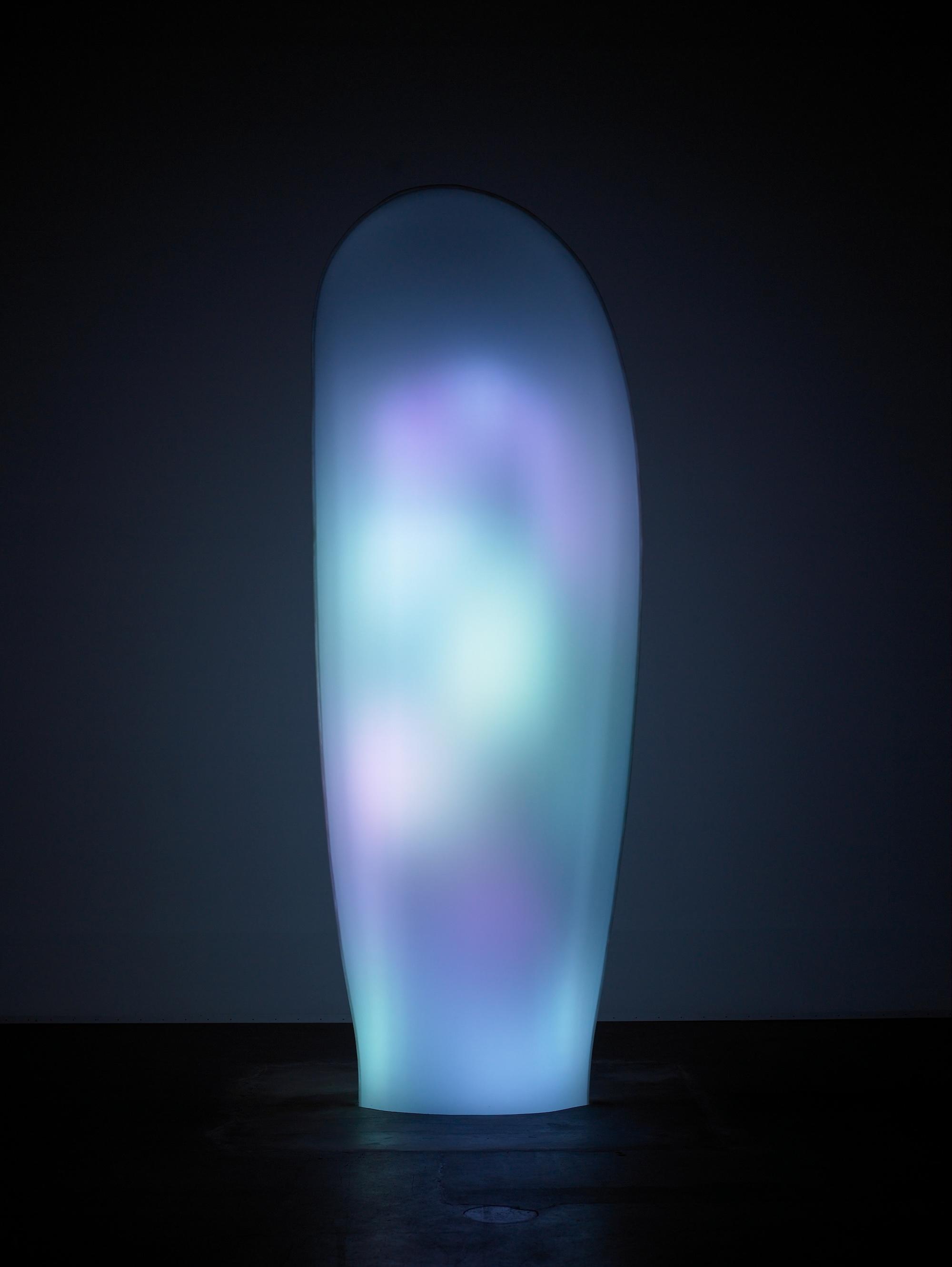
Mariko Mori, Tom Na H-iu, 2006, Glass, stainless steel, LED, and real-time control system, 327.4 x 115.3 x 39.6 cm

Like a futuristic spaceship, built using fiberglass, carbon fiber, aluminum, magnesium, acrylic, and Technogel®, visitors were invited to enter a tranquil, womb-like interior where they wore EEG-style electrode headsets that monitored their brain activity in real time. The results were translated into computer graphics screened on the dome overhead. In other works, such as Tom Na H-iu (2006), neutrinos emitted by supernova explosions become perceptible as flashes of light.

Being born into wealth and privilege presents particular challenges for an artist. Public sympathy is responsive to the myth of the starving artist who succeeds against all odds. In Mori’s case, financial stability facilitated her agile mind and supported the realization of some of her most daring and monumental projects. In 2010, she created the nonprofit Faou Foundation. Coined by Mori, the term Faou means ‘creative force.’ Broadly conceived to establish six monumental, permanent installations in remote areas of the world, one each in North America, Australia, Europe, Asia, Africa, and South America, the works are intended to call attention to the preservation of the environment and to nurture conservation and creativity. So far, three sites have been partially or fully realized. 

Photo: Stephanie Leal; Courtesy: Faou Foundation, New York

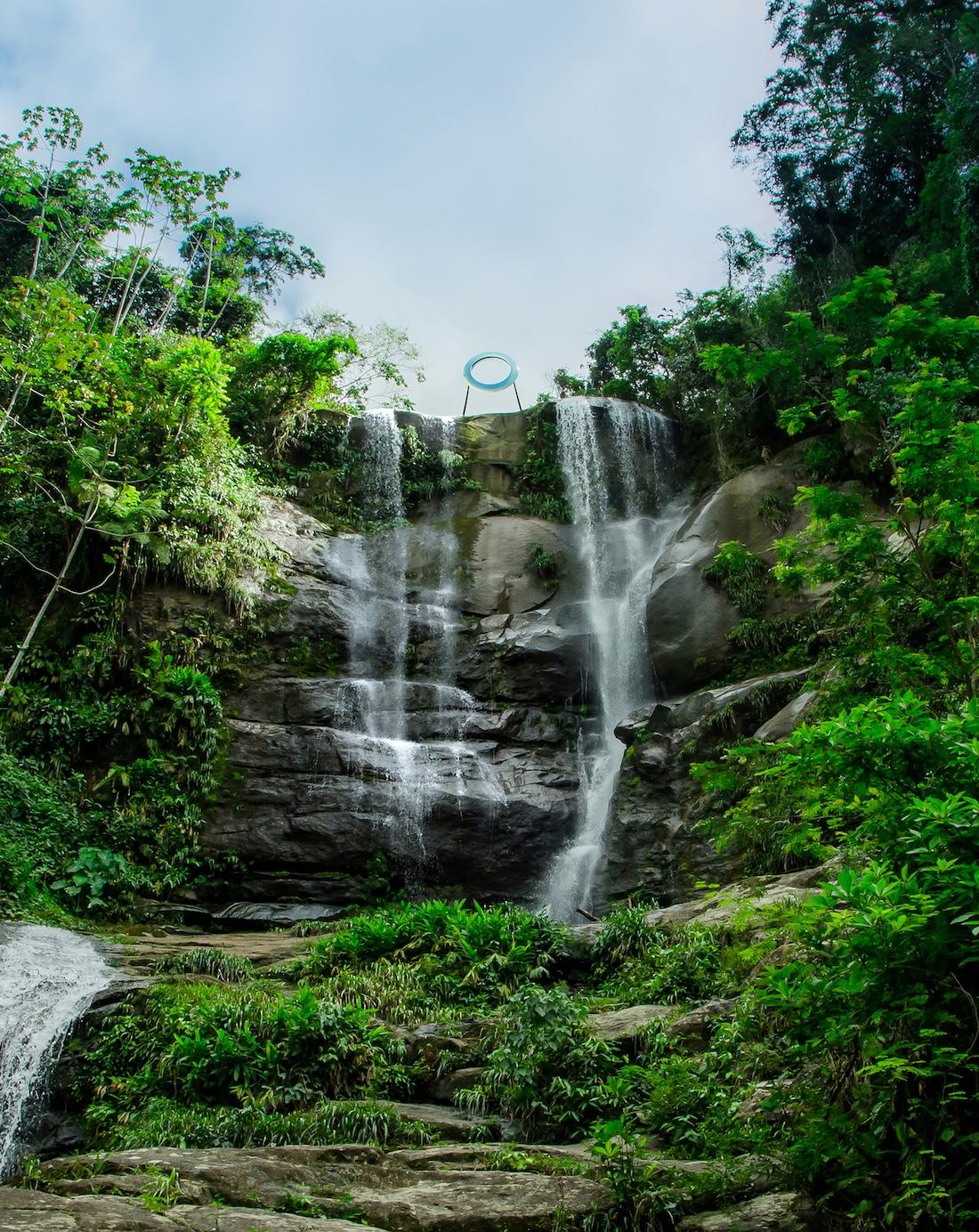
Mariko Mori, Ring: One with Nature, 2016, Layered acrylic, stainless steel, and concrete, 618 x φ300 cm, Installation view: Cunhambebe State Park, Rio de Janeiro, Brazil

Closest to her home base is the two-part Primal Rhythm: Sun Pillar and Moon Stone on Miyako Island, Okinawa, Japan. Conceived in 2007, the Sun Pillar was erected in 2011, with Moon Stone still in the works. Sited on top of a 190-foot cascading waterfall in the Brazilian jungle is Ring: One with Nature. Realized in 2016, the piece coincided with the Celebra cultural program of the Rio Olympic and Paralympic Games. The human-scale sculpture Peace Crystal (2016-2024) premiered at the Venice Biennale in 2024 and is scheduled to be on its way to a permanent site in Ethiopia. Mori offers these installations as gifts to the country that presents them in hopes that they will inspire people far into the future.

The exhibition is co-curated by Alexandra Munroe, Senior Curator at Large, Global Arts, Solomon R. Guggenheim Museum and Foundation, and Kataoka Mami, Director, Mori Art Museum.

35.660767211395, 139.72919205

Mariko Mori: All That Shines
Start Date:
October 31, 2026
End Date:
March 28, 2027
Venue:
Mori Art Museum
About the Author

Cynthia Close

Cynthia Close holds a MFA from Boston University, was an instructor in drawing and painting, Dean of Admissions at The Art Institute of Boston, founder of ARTWORKS Consulting, and former executive director/president of Documentary Educational Resources, a film company. She was the inaugural art editor for the literary and art journal Mud Season Review. She now writes about art and culture for several publications.

Subscribe to our free art newsletter!

Webform
Art and Object Marketplace - A Curated Art Marketplace