Gallery  June 29, 2026  Michael Klein

A Look at de Kooning’s Breakthrough Art at Princeton

© 2026 The Willem de Kooning Foundation / Artists Rights Society (ARS), New York.

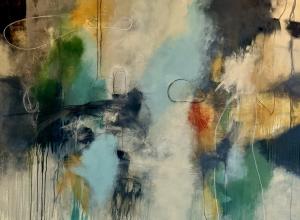
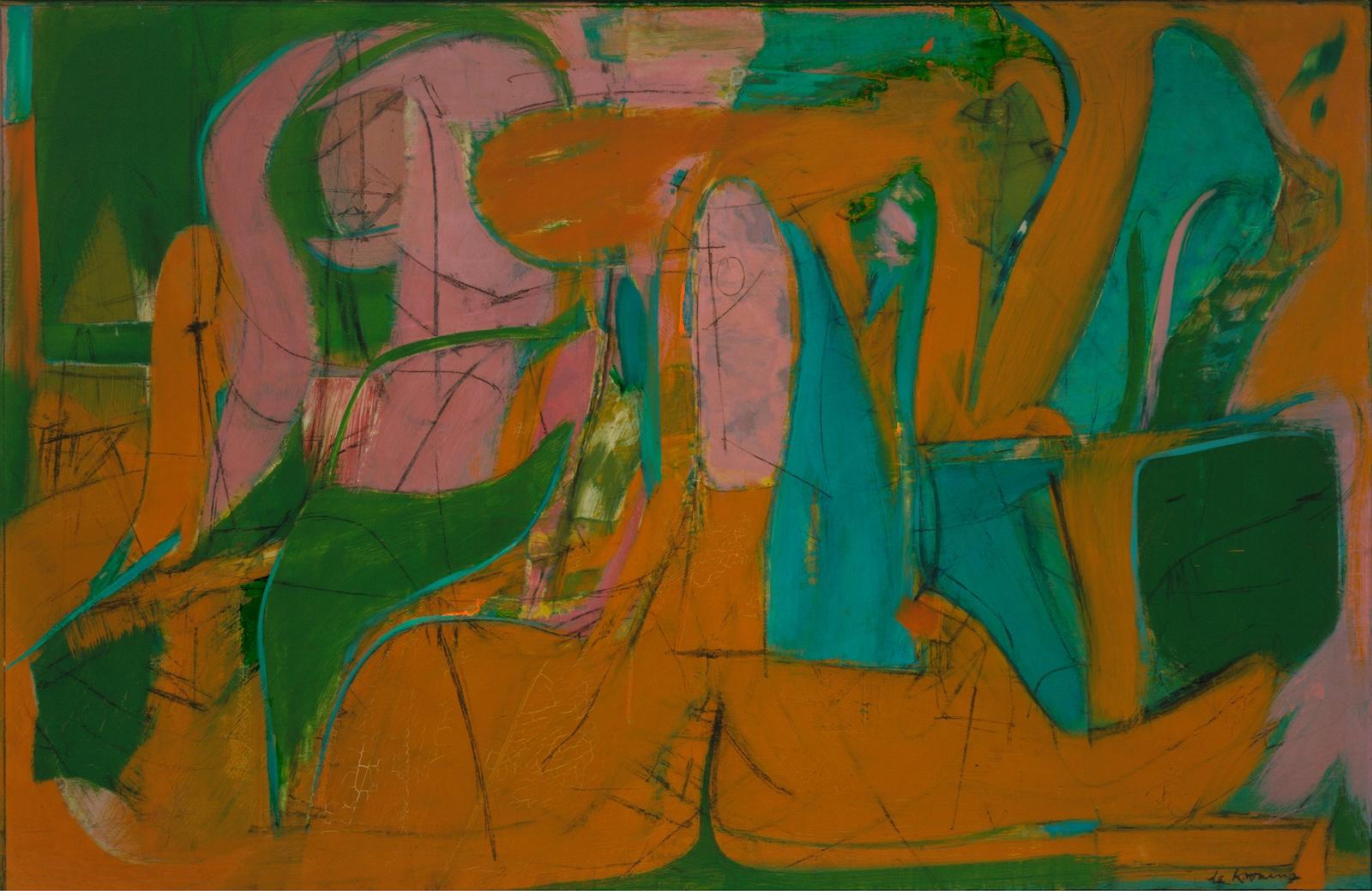
Willem de Kooning, Bill-Lee's Delight, 1946. Oil on paper mounted on composition board, Private collection. 

Willem de Kooning is a name recognized worldwide for his impact on the development and growth of Abstract Expressionism in America. However, back in his early days, he was one of a small group of struggling New York painters attempting to create work expressing new ideas in a world recovering from the calamity that was WWII.

© 2026 The Willem de Kooning Foundation / Artists Rights Society (ARS), New York.

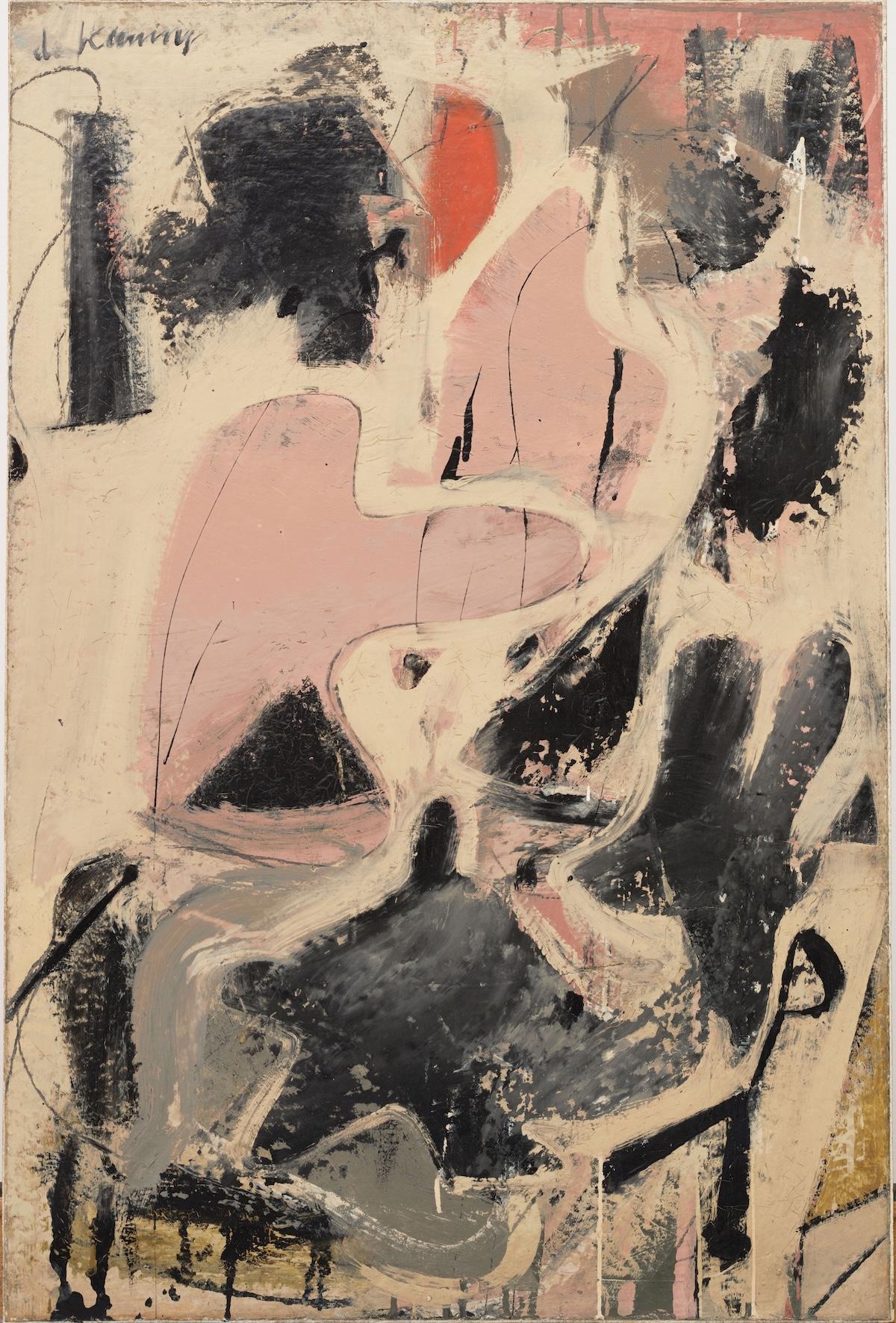
Willem de Kooning, Valentine, 1947. Oil and enamel on paper on board, The Museum of Modern Art. Gift of Mr. and Mrs. Gifford Phillips. 

A current exhibition, Willem de Kooning: The Breakthrough Years1945–50, at the Princeton University Art Museum focuses on de Kooning’s art in the formative and thereby significant years when he established his style and laid the groundwork for his future reputation. De Kooning set about to explore a new definition of painting, a focus on both color and gesture. His gesture—his signature mark—was bold, swift, and heavy. He applied paint on the canvas wet, thick, and demonstrating speed. In his earlier pieces, he worked toward this more mature style.

In the Princeton show, viewers can see de Kooning’s first steps toward thinking about assembly, the abstract image, in both color and black and white. It demonstrates a process where the canvas is a place, like a stage, where the action of painting is recorded—a very personal and highly subjective point of view for the artist.

Breaking through the boundaries of Cubism and Surrealism, he formulated a method whereby the canvas became a field in which paint lived, and action appeared through brush strokes, patches of color, and the gifted line of a well-trained draughtsman. The result is a vibrant living canvas, one that exudes energy and at the same time a sense of discovery as the eye is provoked by color and texture. De Kooning made painting a drama, not simply the act of representation, but the expression of being a painter, demonstrated by the drawn line interwoven on the canvas. The two key words used to describe his work are immediacy and improvisation, like the music of the day, both rhythmic and syncopated.
© 2026 The Willem de Kooning Foundation / Artists Rights Society (ARS), New York. Photo: Jeff Evans

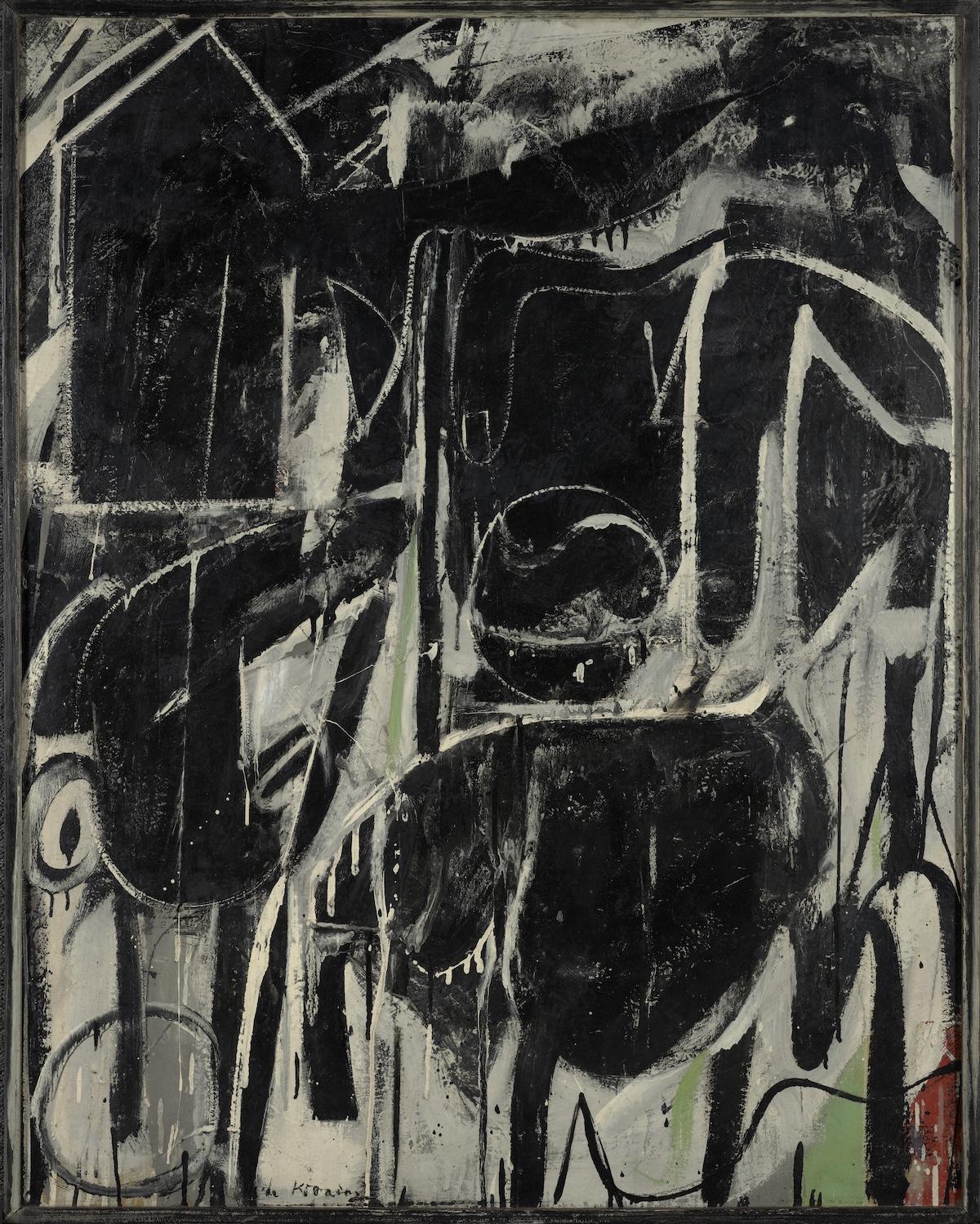
Willem de Kooning, Black Friday, 1948. Enamel and oil over paper collage on fiberboard in painted wood frame, Princeton University Art Museum. Gift of H. Gates Lloyd, Class of 1923, and Mrs. Lloyd in honor of the Class of 1923. 

Black Friday, 1948, in Princeton’s collection, was the typical de Kooning at the time. Why black and white? Black and white enamel paint is less expensive than color pigments, which, in those days, for a poor painter was simply too expensive, especially when he didn’t sell works. Collectors came later in his career.

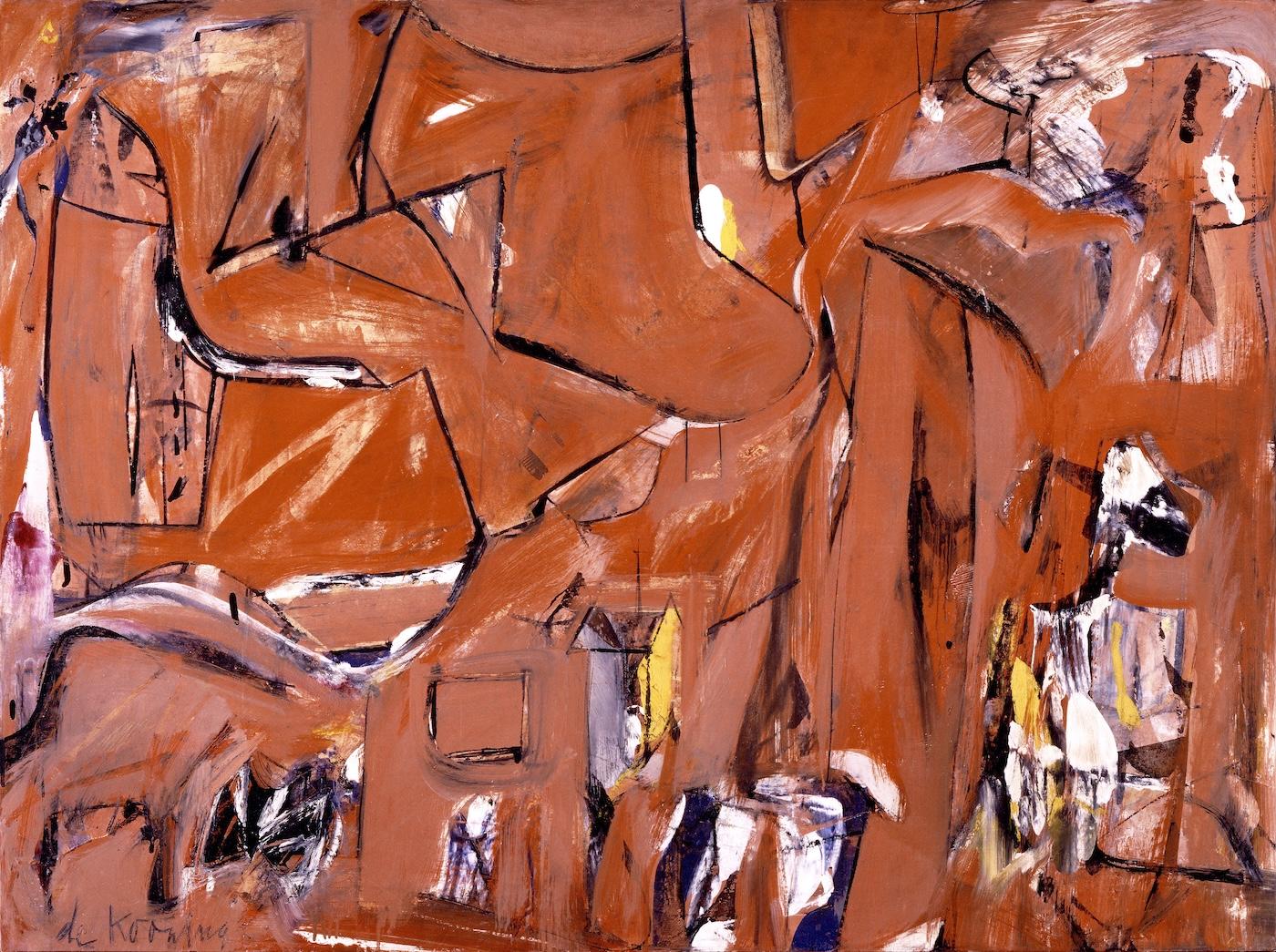
Gansevoort Street, 1949, is de Kooning at work with color, a limited palette, but nonetheless exploring the effect and expressive power of color. From the recent Getty series on artists’ materials, it was noted in the de Kooning volume that the artist utilized inexpensive enamels that were used for commercial signs, and according to his former student Pat Passlof, he often used plaster of Paris mixed in with the paint to enhance the depth and texture. As Passlof observed, the plaster was “to bulk up the paint and extend the medium.”

These early canvases tend to be modest in scale and easel size. Later, de Kooning would paint bigger, working on the floor, perhaps influenced by conversations with Franz Kline and Jackson Pollock.

© 2026 The Willem de Kooning Foundation / Artists Rights Society (ARS), New York

Willem de Kooning, Gansevoort Street, ca. 1949. Oil on cardboard, Anderson Collection at Stanford University. Gift of Mary Margaret Anderson. 

The New York scene was populated by many artists, members of what came to be called The Club, where ideas were exchanged, friendships fostered, and studio visits often occurred. So, de Kooning was not operating in isolation but part of a scene and a growing movement. Conrad Marca-Relli references this in Kline's book: “It was a constant exchange…we’d have conversations on art—it was the only food we had.”

The Princeton exhibition is a valuable tool to investigate and learn how an artist develops and how a movement is born and grows. Such a show provides a modeler with other museums to explore the early careers of many in the Abstract Expressionist movement, now some 80 years since its inception.

40.34715676349, -74.65792385

Willem de Kooning: The Breakthrough Years, 1945–50
Start Date:
March 15, 2026
End Date:
July 26, 2026
Venue:
Princeton University Art Museum
About the Author

Subscribe to our free art newsletter!

Webform
Art and Object Marketplace - A Curated Art Marketplace