


Studio  October 13, 2026  Barbara A. MacAdam

Drawing with Pottery: In The Studio with Elisabeth Kley

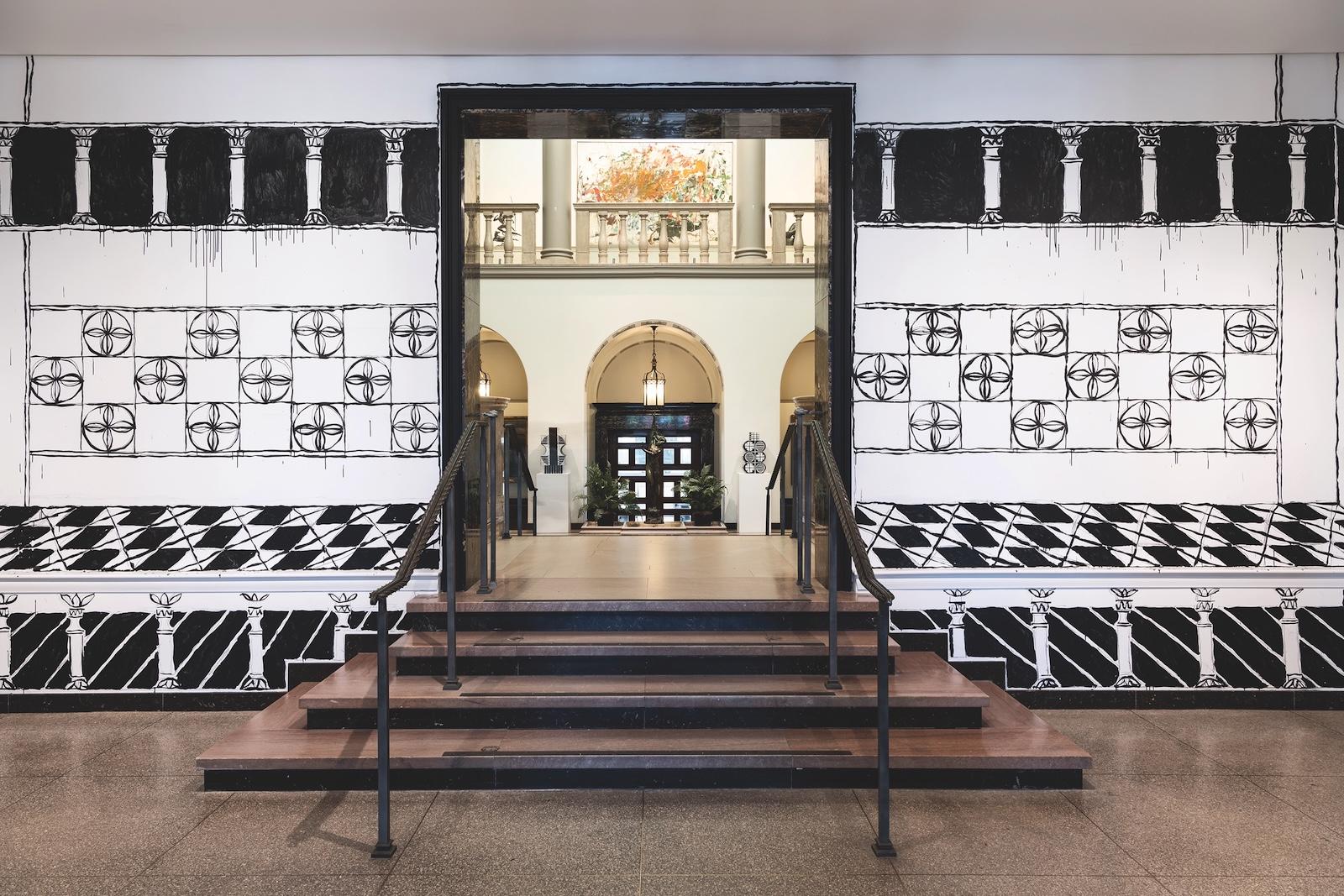
Courtesy of the artist, CANADA NYC, and the Currier Museum of Art. Photo by Morgan Karanasios.

Elisabeth Kley, installation view of Cymodocea at the Currier Museum of Art, Manchester, New Hampshire, May 16-August 18, 2024.

Way out in Brooklyn, New York, in the hip reaches of Bushwick, amid endless warehouses and construction companies festooned with boisterous graffitied gates, Elisabeth Kley’s straightforward studio is quietly ensconced in a long, dark-halled building. Filled with artists’ workspaces, as well as small funky businesses—a tattoo parlor, a shop for dried flowers and cheese, a nondescript gift shop—the artist’s own studio space is a simple one featuring modest tools of the trade, including pieces of dark charcoal and a simple manual extruder for squeezing out coils of ordinary orange-ish clay, which she presses into shape with her fingers.

Lined up flat on the floor are small black and white drawings in charcoal that Kley says she “copies” from the website of the Vienna Museum of Applied Art (MAK). She then sketches the patterns with pencil. On the wall behind them are translations of these images into objects, like individual pieces set nearby. 

Kley explains, “I do some rough sketching before I construct the ceramic pieces by assembling them from slabs.” She adds, “Once they’ve had their first firing and are no longer fragile, I cut out matching shaped pieces of paper, painting them in ink, and then tape them directly on the sculpture.” She then uses a white underglaze with wax. “It is easier for me to work that way than by using a pottery wheel,” she says. Traces of her drawings affixed to the outside of her pottery reveal touches of her hand on the material, maintaining a link with the works’ manufacture.

Kley achieves the rare ability in her work to successfully unite craft and fine art. We can see her enjoying herself in the process. She is also an eloquent writer. She uses ordinary materials masquerading as extraordinary ones—just paper and pencil to evoke plinths and pillars, decorated with Byzantine-style designs. Her drawings in pencil and sumi ink assume the curious stature of solid sculptures and walls. Architecture, design, and gestural drawing are all embedded in the work, in which relatively small objects loom large.

“I feel constant tension and frustration,” Kley explains in the catalogue for her 2021 exhibition at the Fabric Workshop in Philadelphia, Minutes of Sand, “about wanting to make the kind of complete environment created by artists, architects and designers including Josef Hofmann, Dagobert Peche, Gio Ponti, Carlos Scarpa, and Carlo Bugatti.” They are all here.

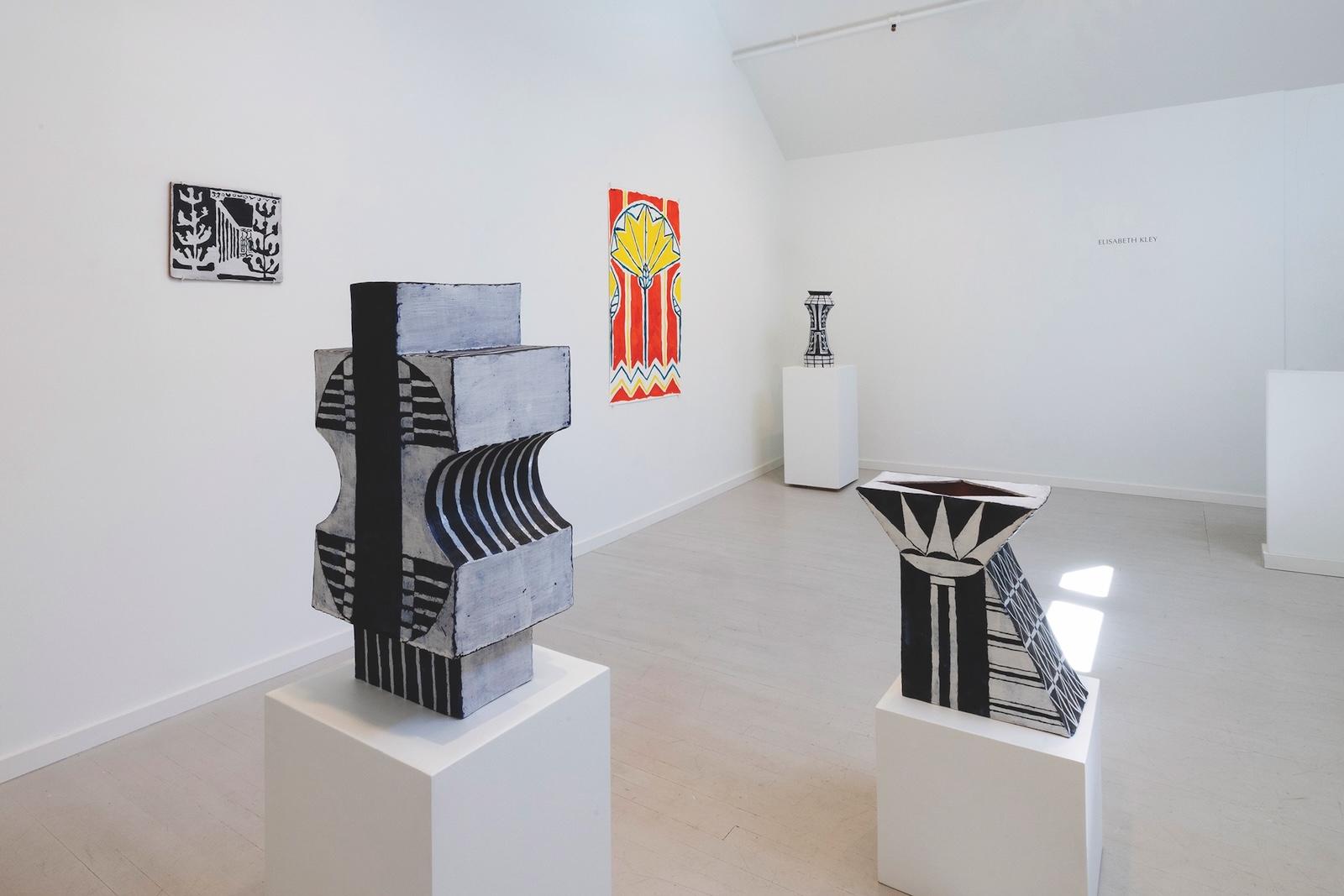
Courtesy of the artist, CANADA NYC, and The Drawing Room.

Installation view of Pattern Is a Habit, at The Drawing Room, East Hampton, New York, August 23-September 29, 2025.

Figuring importantly in her work is the French playwright, fantasist, and Dadaist Alfred Jarry—author of the absurdist play Ubu Roi and propounder of ’Pataphysics, “belief in the science of imaginary solutions,” as defined by Kley in the catalogue for the Minutes of Sand. In that exhibition, we expected to become entangled in the sensual gyrations of characters from Tales of the Thousand and One Nights. We could detect nature and geometry collaborating in the architecture of Kley’s elaborate compositions, which enmesh us in their subtle mixing of structural support and gestural flamboyance, in flower-strewn patios where we expect to see dancers.

In the catalogue, Kley points to an underlying current running through her many projects. Speaking of her drawings, she says, “I’m aiming for a feeling that the marks are a kind of fluid net that floats across the surface or support.” The zig-zags in her drawings refer to the “Egyptian way of rendering water,” taking us alongside a “meandering river.”

Also inspired by Jarry’s shenanigans and gestural ramblings is the South African story-telling, mind-expanding, animator-draftsman William Kentridge, who leads the line through its many potential perambulations. As Kentridge does in his compelling, somehow very moving series of drawings “Self-Portrait as a Coffee Pot,” Kley respectfully acknowledges the quotidian. 

Through her interaction with humble, useful household objects, such as clay pots and tile walls, she suggests a dialogue between the ordinary and the higher reaches of art and the mind. Of course, one is aware of the absurdity of such observations, but we are also at liberty to also create our own dramatic settings for them in Kley’s theatrical world. The rooms and the stage designs and the costumed objects are prepared for our imagination of personal and contemporary scenarios.

We are aware of time and rhythm, the art of story telling as lines swirl and guide us through space. Ultimately, who needs nature when you can have a garden inside a courtyard imagined by Elisabeth Kley in a gallery like the Drawing Room off bustling Main Street in East Hampton or a New York studio amid the gruff stretches of Grattan Street in Bushwick?
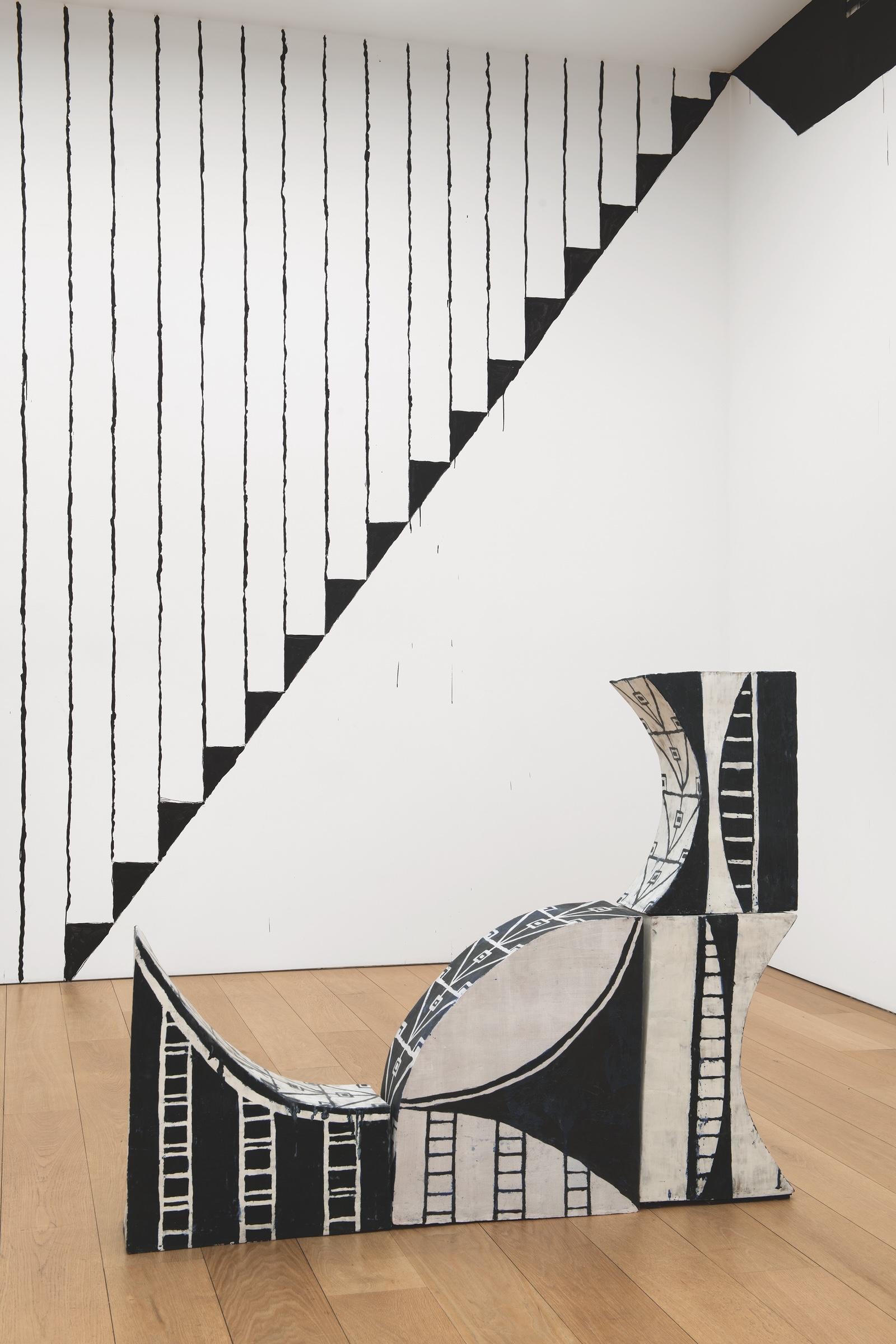
Courtesy of the artist and CANADA NYC. Photo by Joe Denardo.

Installation view of A Seat in the Boat of the Sun, at CANADA, New York, March 29-May 20, 2023.

Matisse and Picasso are prevailing undercurrents in the work, which harbors unending relationships among artists, designers, musicians, and writers. Other participants in this transhistorical dialogue include the English illustrators John Flaxman and Aubrey Beardsley, stage sets for the Ballets Russes, and the pottery and drawings of Jean Cocteau.

Hanging on her studio wall are paintings by Marc Camille Chaimowicz, a multifaceted artist-designer with whom she feels attuned. We can hear the strains of Erik Satie and Claude Debussy as Kley takes us through the reaches of art history and surrealistic dreams and perhaps, stretched out on the therapist’s couch, we can connect with Kley’s contemporaries, like painters Marina Adams and Katherine Bradford, who show with Kley at CANADA, a gallery in Tribeca.

We can easily imagine dancing figures aligning themselves with Kley’s elegant lines. The patterns speak or sing to us, invoking the fluidity of dreams and bearing titles like Incomplete Metamorphosis and, most charmingly, Cleopatra Side Pattern. The artist dresses her terra-cotta sculptures in paper, costuming them to perform in our imagination where the figures are like forms in wallpaper.

Kley remarkably creates a sense of calm together with, to quote Bob Dylan, a head full of ideas that should be driving her insane. This is modernism today.

*This article originally appeared in Art & Object Magazine's Winter 2026 issue.

About the Author

Barbara A. MacAdam

Barbara A. MacAdam is a New York-based freelance editor and writer, who worked at ARTnews for many years as well as for Art and Auction, New York Magazine, Review Magazine, and Latin American Literature and Arts. She currently reviews regularly for The Brooklyn Rail.

Subscribe to our free art newsletter!

Webform
Art and Object Marketplace - A Curated Art Marketplace