


At Large  November 25, 2026  Annah Otis

Colonial Collecting: The Market for Plymouth-Era Objects

WikiCommons

A print of the Mayflower in Plymouth Harbor from Handbook of Old Burial Hill. License.

A resurgence of interest in Americana became especially apparent when an intricately carved cabinet from 1677 sold at Sotheby’s earlier this year for $1.63 million. As the highest price paid for a piece of American furniture in 13 years and the second-highest for Pilgrim Century furniture, the sale gestures towards premiums placed on history-rich treasures with a comprehensive provenance and pride in American history during the country’s semiquincentennial.

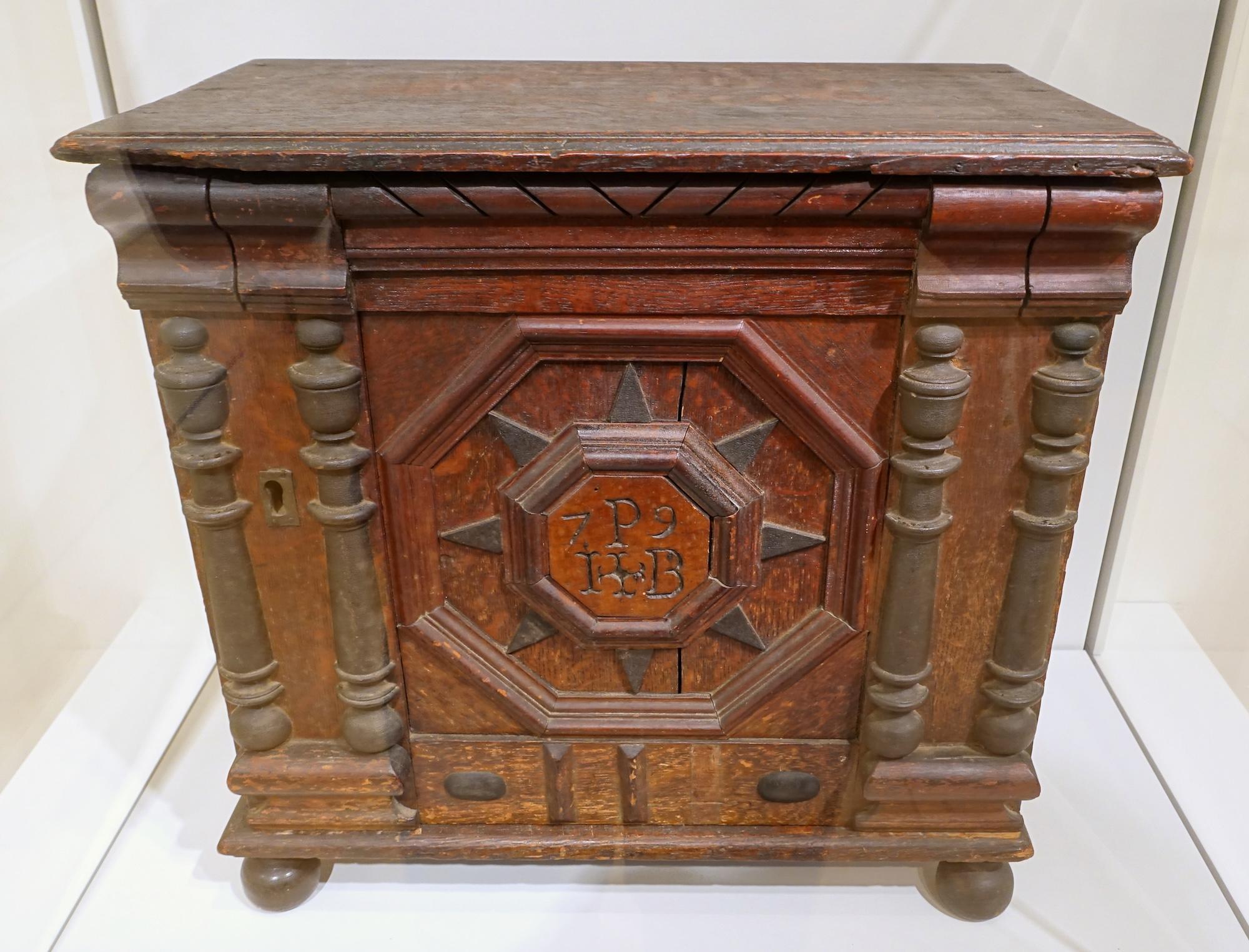
The Symon and Rebeckah Horne Pilgrim Century Valuables Cabinet, named after its original 17th-century owners, is one of just five known pieces attributed to the Symonds woodworking shops in Salem, Massachusetts. It is now the only one in a private collection. John Symonds was born around 1595 and emigrated from England in 1636 after apprenticing as a joiner and woodworker. He set up shop in Massachusetts and proceeded to pass the craft onto his two sons. Their work is known for its complex joinery, intricate carving, and decorative moldings in different types of wood. Contemporary households would have treated cabinets from the Symonds shops as prized possessions to store their valuables in.

WikiCommons

A valuables cabinet made by the Symonds shops in 1679 on display at the Peabody Essex Museum. License.

Indeed, the excellent shape in which the Symon and Rebeckah Horne cabinet remains is a testament to how cherished it was. A document compiled in the late-19th century details how it passed through families for generations. This recordkeeping helped trace an intriguing line between the cabinet and the infamous Salem Witch Trials. Rebeckah Horne’s third husband was a widower whose first wife passed away after suffering from a mysterious illness that they suspected had supernatural origins. Two women were cross-examined and sentenced to death over suspected witchcraft, but were spared as widespread witch hysteria waned.

Americana in the categories of furniture, folk art, ceramics, stoneware, silver, prints, and decorative art has historically sold for relatively modest sums. Historical documents, paintings, and presidential or political memorabilia are starting to tell a different story. Pi-eX data indicates that Americana sales at New York auction houses in January have jumped from about $40 million in 2020 to more than $160 million in 2026. Christie’s and Sotheby’s both launched recurring auctions dedicated to American art in the past five years. Meanwhile, many houses have staged sales around the 250th anniversary to cater to patriotic collectors.


WikiCommons

Reconstructed Plimoth Plantation in Plymouth, Massachusetts. License.

Institutions that currently hold objects from colonizing settlers are facing very different questions related to democracy and patriotism. Some, such as the Plimoth Patuxet Museums, do not display certain parts of their collection because the Pilgrim and Native American imagery that proliferated with the rise of Thanksgiving as a national holiday is deeply misrepresentative. The nearby Pilgrim Hall Museum is equally careful to tell the story of both English settlers and the Wampanoag people whose land was encroached upon.

Outside Massachusetts, institutions like the Brooklyn Museum and the Crystal Bridges Museum of American Art organized exhibitions in celebration of the country’s 250th anniversary, which intentionally brought the nation’s colonial past into the conversation. Repatriation of Native American human remains, funerary objects, and sacred items continues to take place across museums of all sizes under the Native American Graves Protection and Repatriation Act of 1990 (NAGPRA).

America’s complicated history of colonialism and cultural appropriation makes the collecting and display of Pilgrim-era objects particularly contentious. The Symon and Rebeckah Horne cabinet is representative of a period in time when the “other” was feared, but it is also a symbol of the beauty and craftsmanship that has existed in our country for centuries.

About the Author

Annah Otis

Annah Otis is a New York City-based contributor to Art & Object with a master’s degree in art history. She is also a marketing communications executive.

Subscribe to our free art newsletter!

Webform
Art and Object Marketplace - A Curated Art Marketplace