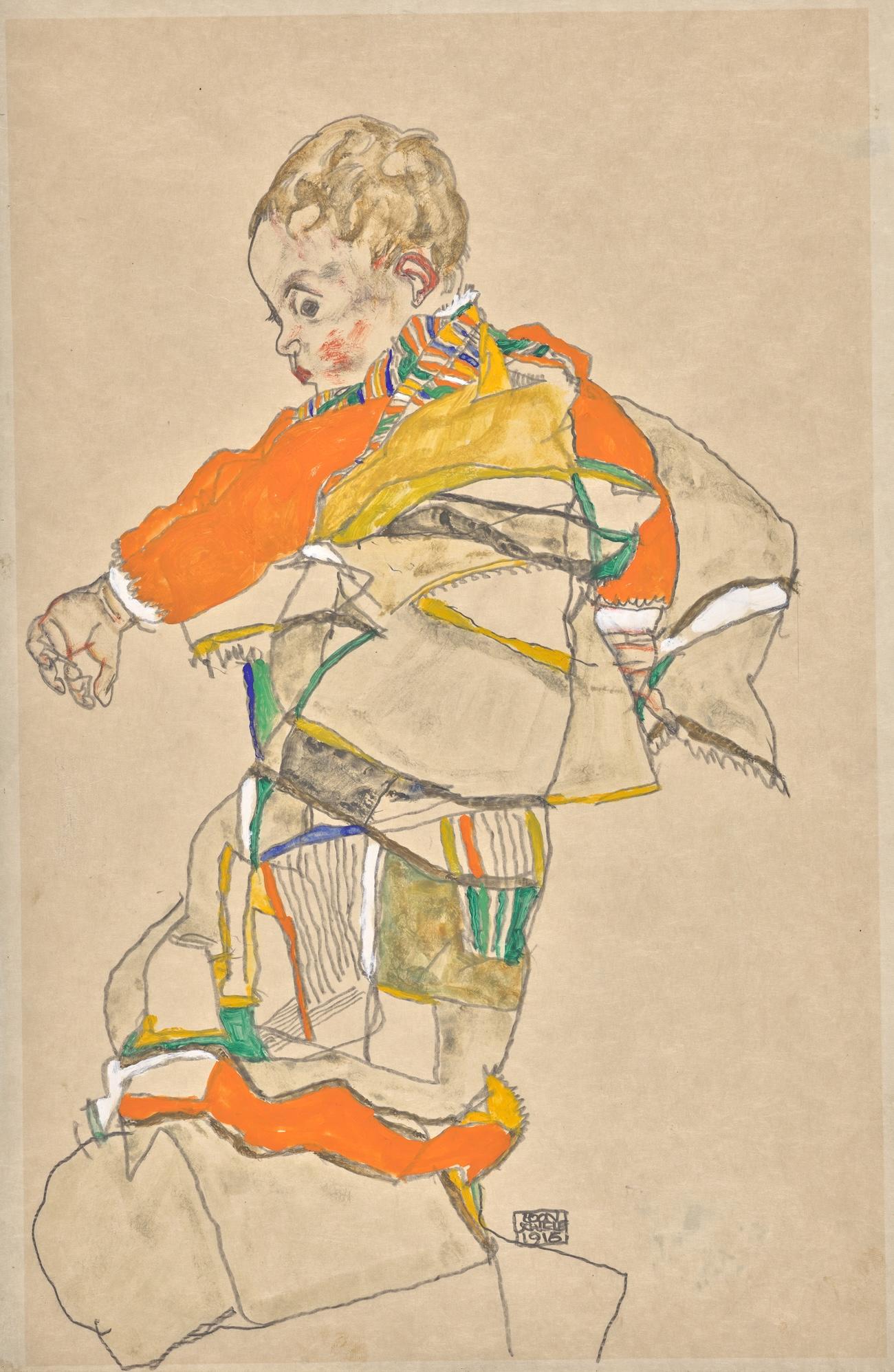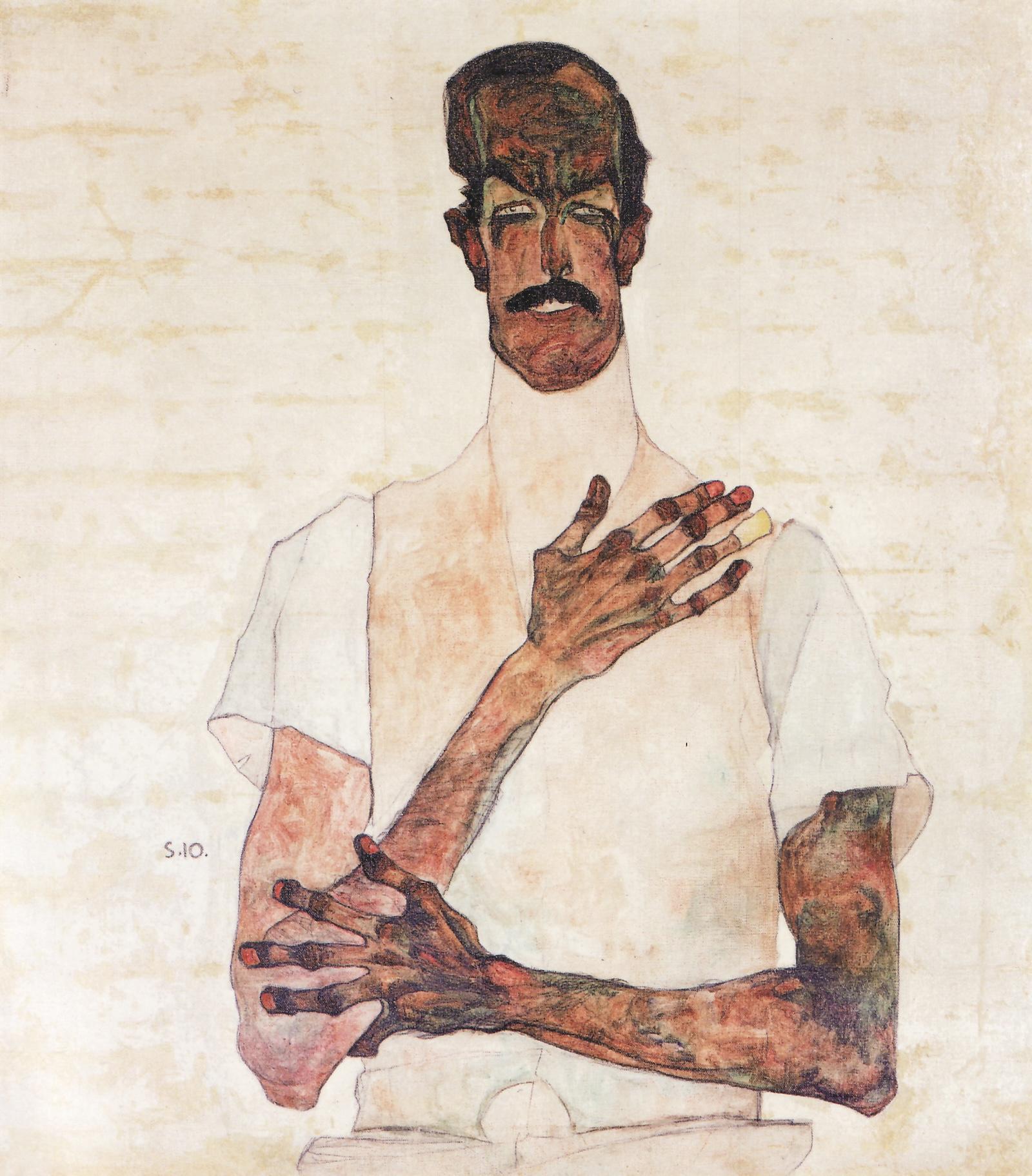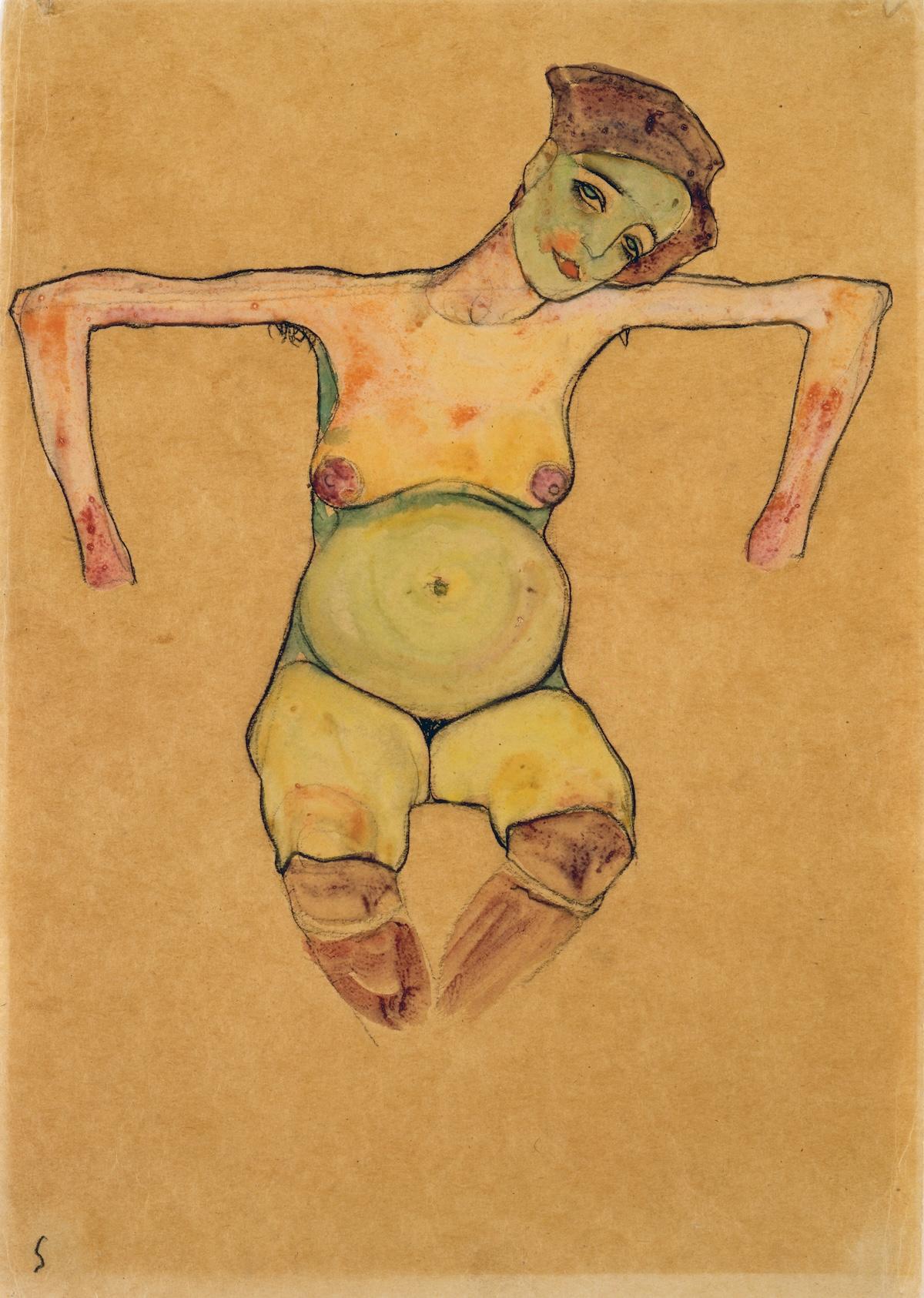


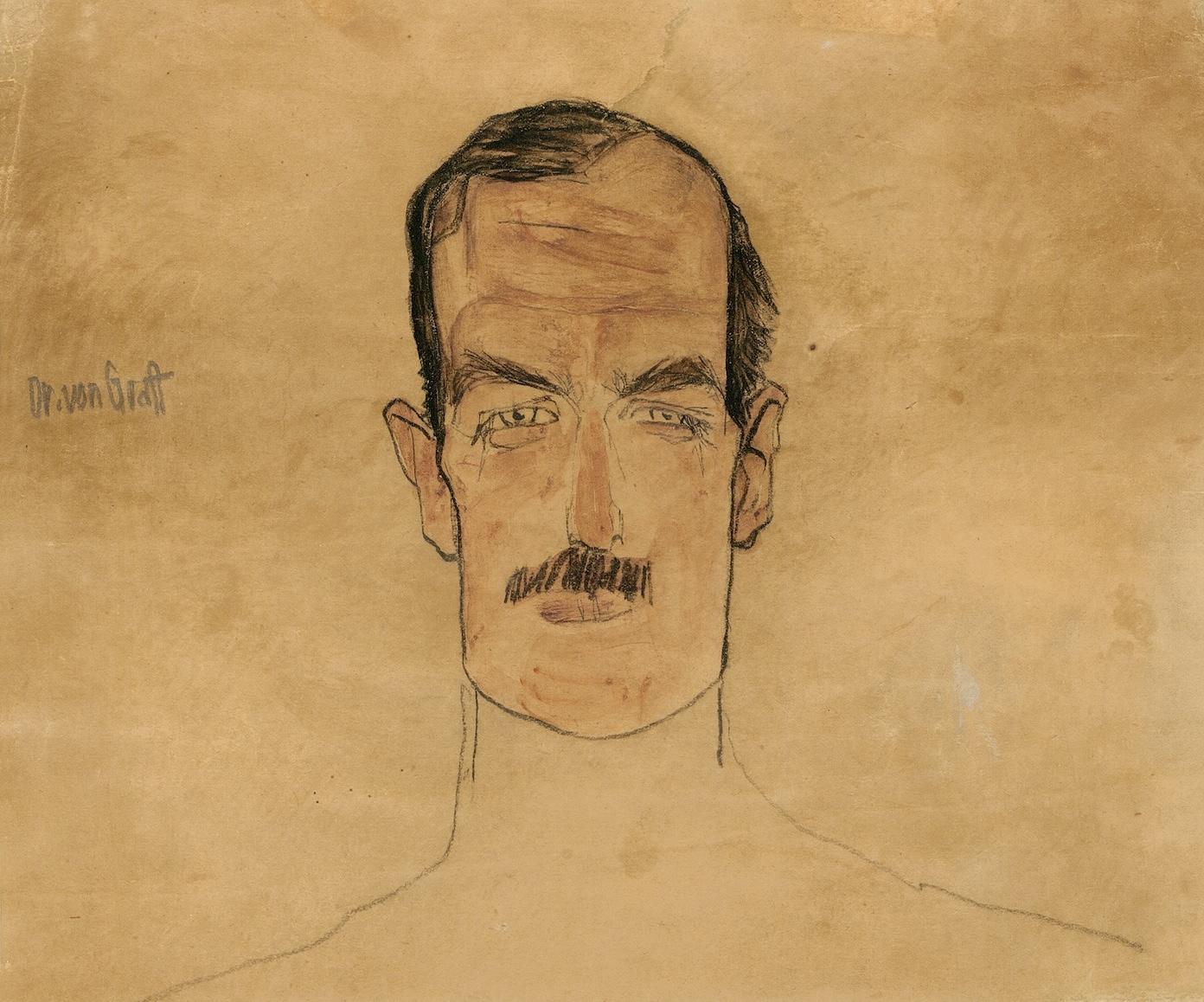
The friendship between Egon Schiele (1890–1918) and Dr. Erwin von Graff (1878–1952) lasted until Schiele’s death and proved pivotal to his career, consolidating the innervated, jittery style and focus on sexuality that became his signature. Beyond material support, Graff became a sounding board for Schiele, providing emotional ballast for the artist’s tumultuously intense personality.
Graff, a surgeon and gynecologist, met Schiele in 1910 at a salon hosted by Carl von Reininghaus, a wealthy industrialist with a passion for avant-garde art. Graff worked at the Second University Women’s Hospital in Vienna and granted Schiele the run of the place, which became the source for the pregnant women, newborns, and postpartum mothers who populate the main pieces within the exhibition. Using these subjects, Schiele found new ways to push the boundaries on depicting the human body and suffusing it with existential dread.
The same year Schiele met Graff, he painted the doctor’s portrait, though the circumstances surrounding its commission were somewhat murky. Schiele may have been thanking Graff for allowing him access to the hospital, but more likely, it was repayment for the obstetrics care Graff provided to Liliana Amon, a model who posed regularly for Schiele. Whether Schiele and Amon were lovers is unclear, but she became pregnant from another man while living with the artist, and besides tending to her, Graff paid for her hospital bills.