
Gallery  March 16, 2026  Howard Halle

Neue Galerie New York Explores Friendship in Egon Schiele’s Art

Courtesy of Neue Galerie New York

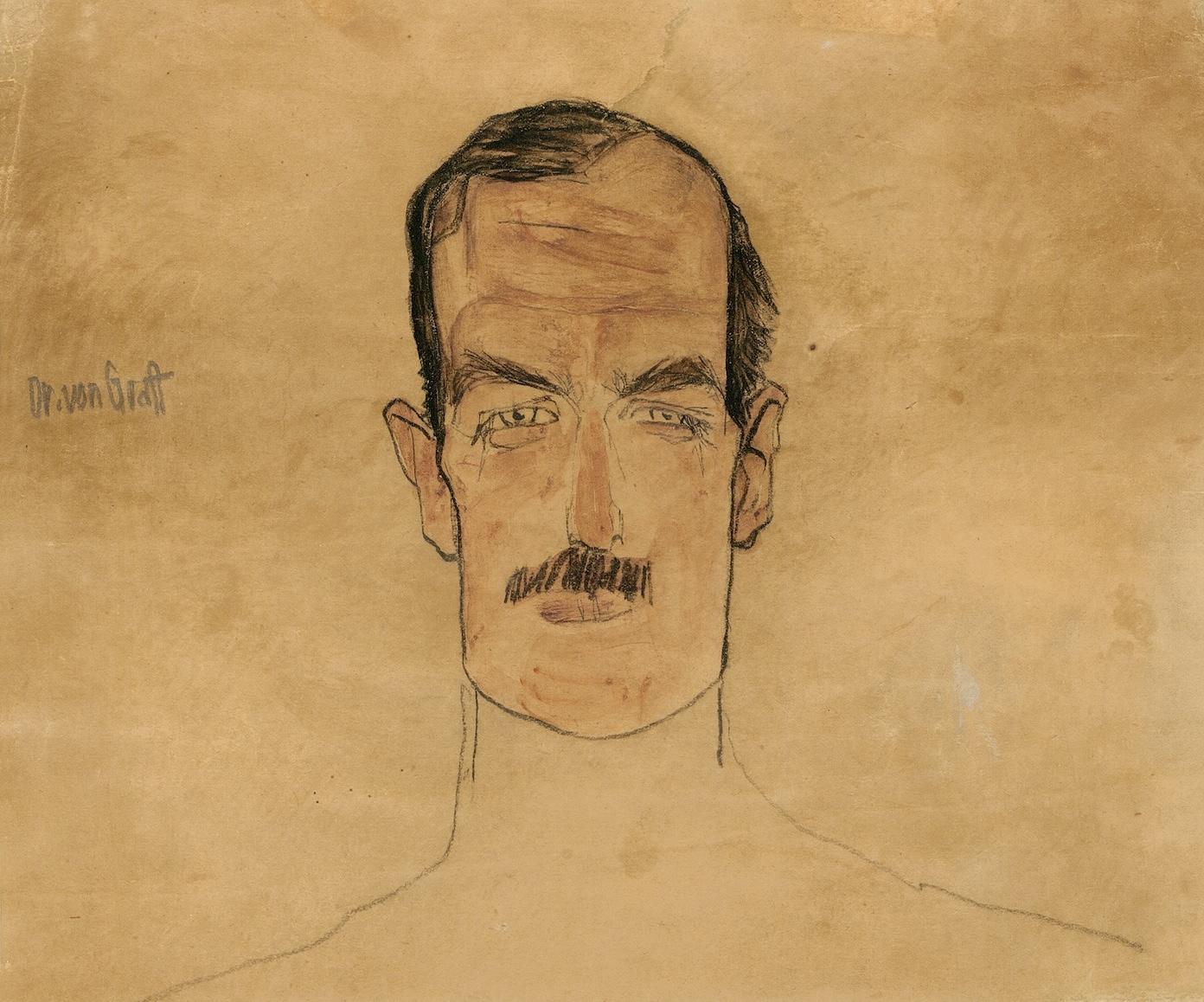
Egon Schiele, Dr. von Graff, 1910, pencil, charcoal, and wash on paper, cropped. Private Collection

A current pocket exhibition at the Neue Galerie New York hearkens back to a time when the relationship between artist and patron was more direct, intimate, and collaborative than it is now that global capitalism has transformed art into an asset to enhance the ever-dizzying fortunes of billionaires. Today, art is merely a commodity, and by extension, artists are too.

In contrast to the purely transactional nature of the contemporary art world, the protagonists of Egon Schiele: Portrait of Dr. Erwin von Graff shared a connection that was deep and abiding, a bond represented by the eponymous painting serving as centerpiece for this show—which, while small, offers a potent sampling of Schiele’s bare wire take on Expressionism. 

Courtesy of Neue Galerie New York

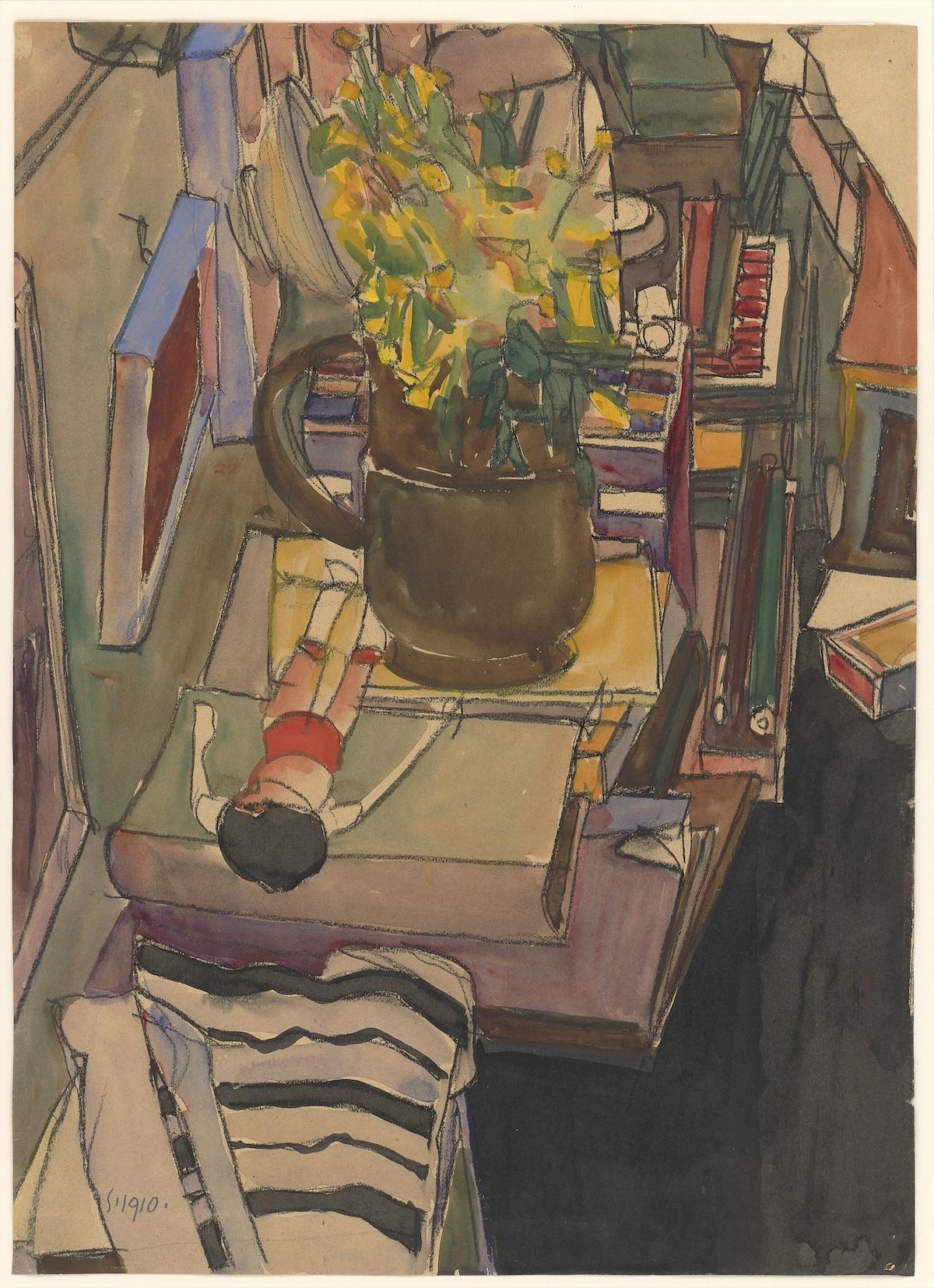
Egon Schiele, View of the Artist’s Studio, 1910, watercolor, gouache, and black crayon on paper. Private Collection

The friendship between Egon Schiele (1890–1918) and Dr. Erwin von Graff (1878–1952) lasted until Schiele’s death and proved pivotal to his career, consolidating the innervated, jittery style and focus on sexuality that became his signature. Beyond material support, Graff became a sounding board for Schiele, providing emotional ballast for the artist’s tumultuously intense personality. 

Graff, a surgeon and gynecologist, met Schiele in 1910 at a salon hosted by Carl von Reininghaus, a wealthy industrialist with a passion for avant-garde art. Graff worked at the Second University Women’s Hospital in Vienna and granted Schiele the run of the place, which became the source for the pregnant women, newborns, and postpartum mothers who populate the main pieces within the exhibition. Using these subjects, Schiele found new ways to push the boundaries on depicting the human body and suffusing it with existential dread.

The same year Schiele met Graff, he painted the doctor’s portrait, though the circumstances surrounding its commission were somewhat murky. Schiele may have been thanking Graff for allowing him access to the hospital, but more likely, it was repayment for the obstetrics care Graff provided to Liliana Amon, a model who posed regularly for Schiele. Whether Schiele and Amon were lovers is unclear, but she became pregnant from another man while living with the artist, and besides tending to her, Graff paid for her hospital bills.
Courtesy of Neue Galerie New York

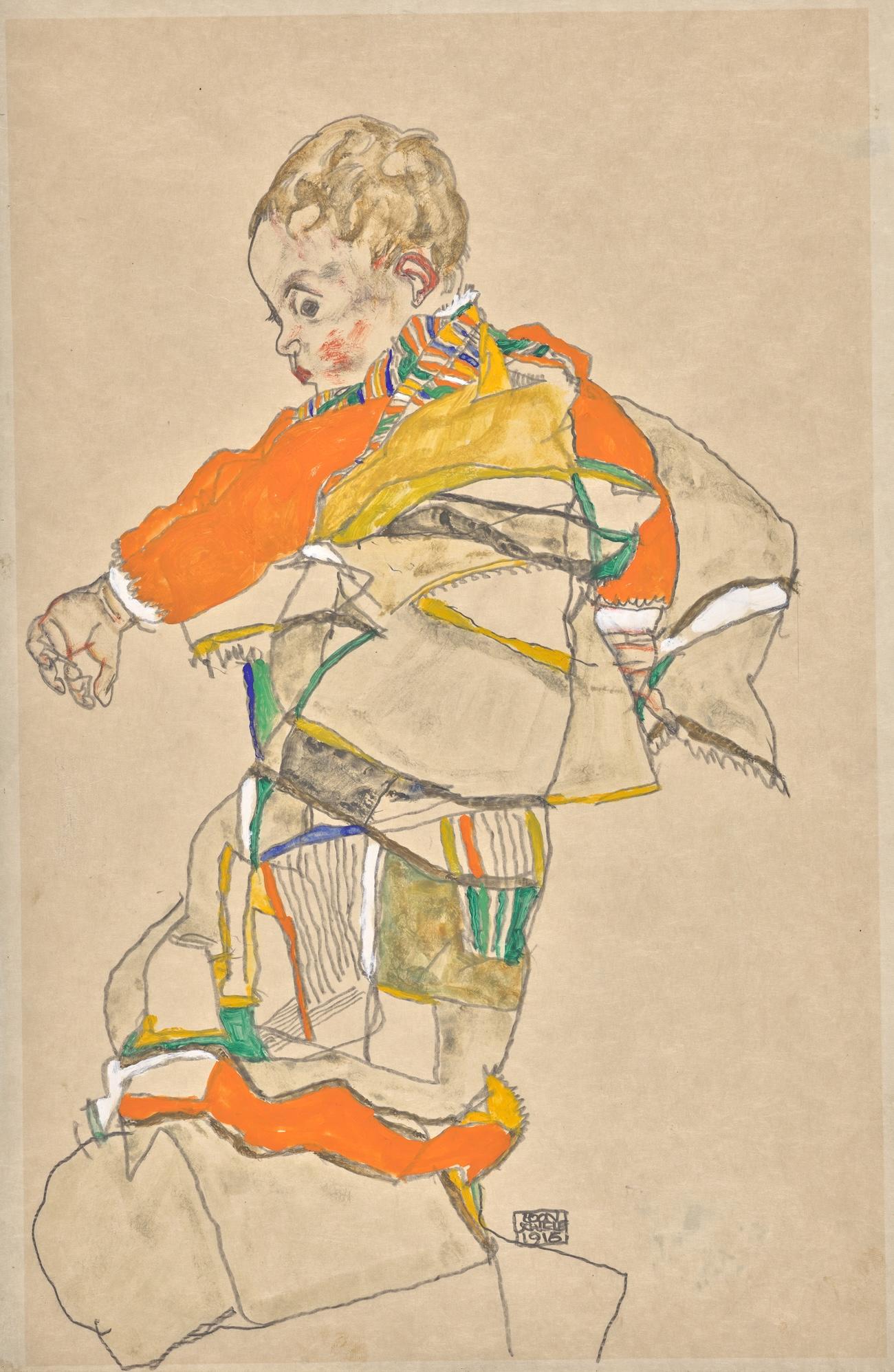
Egon Schiele, Portrait of a Child (Anton Peschka, Jr.), 1916, gouache, watercolor, and graphite on paper. The Cleveland Museum of Art, Severance and Greta Millikin Collection

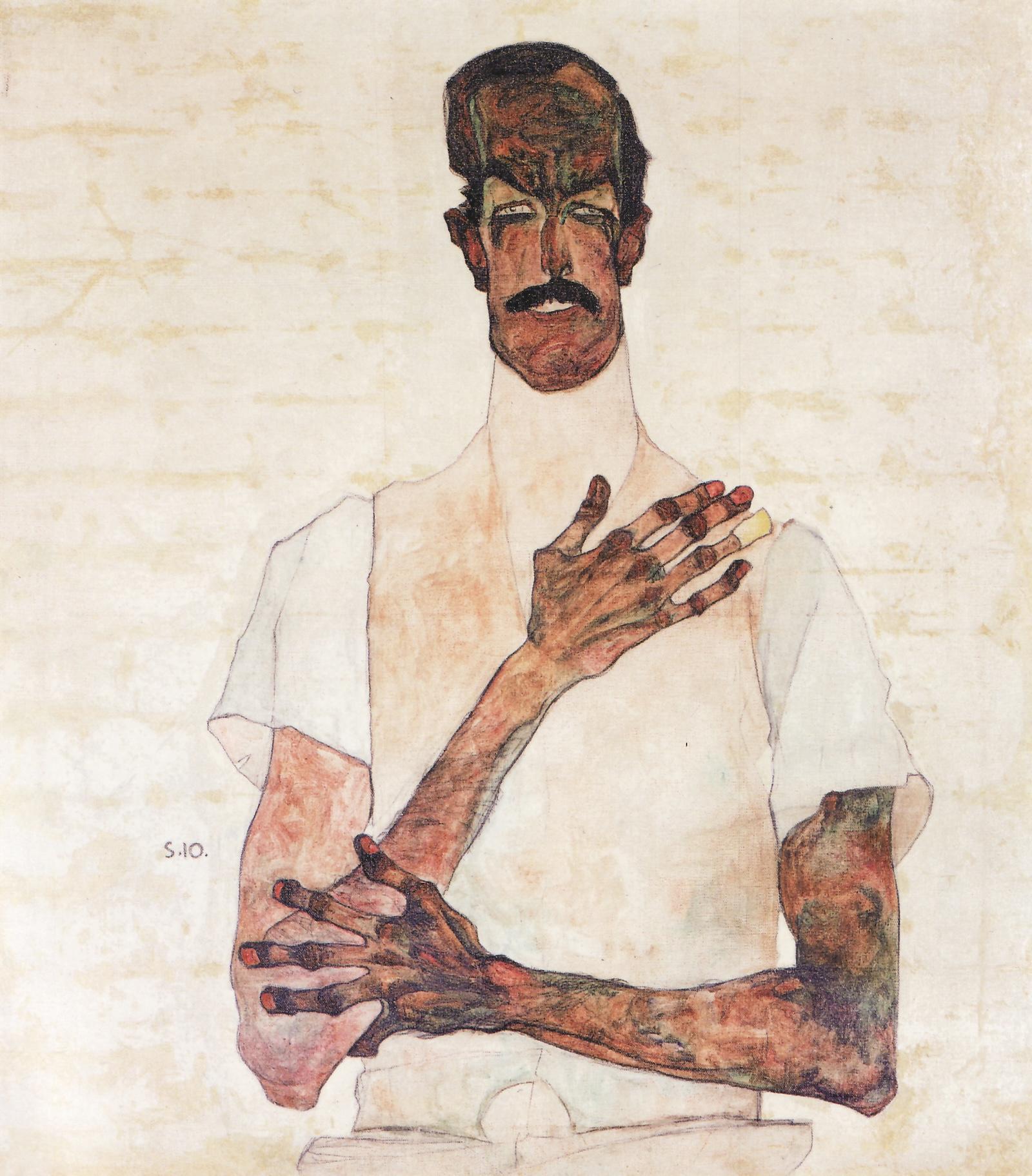
Graff’s portrait hangs opposite the gallery entrance, immediately drawing the viewer down a corridor created by a temporary wall bisecting the room. He’s pictured in a frontal half-length pose against a whitish background, one arm crossing his chest. He wears a white smock with a high collar, from which his head, dominated by an elaborately large forehead, pops out with the squashed proportions of an eggplant. His eyebrows are sharply raised, and his eyes turn down at their outside corners. Beneath a straight, attenuated nose and bushy mustache, teeth appear in a sharp smile that seems more ominous than warm.

Courtesy of Neue Galerie New York

Egon Schiele, Portrait of Dr. Erwin von Graff, 1910, oil on canvas. Private Collection

The bruised, blotchy rendering of his skin is typical of Schiele, as are the dark passages created with smeared charcoal. Here, they make it seem as if the good doctor had just come back from working on a car rather than on a patient.

The most salient feature is Graff’s bony left hand resting near his right shoulder. The tip of one finger is bandaged, but the most interesting thing about this appendage is that in real life, it had been damaged by prolonged exposure to X-rays. Graff, however, recovered from his injury and lived to the relatively ripe age of 74. 

The skeletal quality of Graff’s hand recurs as a motif in some of the other works on view, most conspicuously in a languid likeness of the painter, Karl Zakovsek, whose digits dangling on the right of the composition seem almost stripped of flesh. 

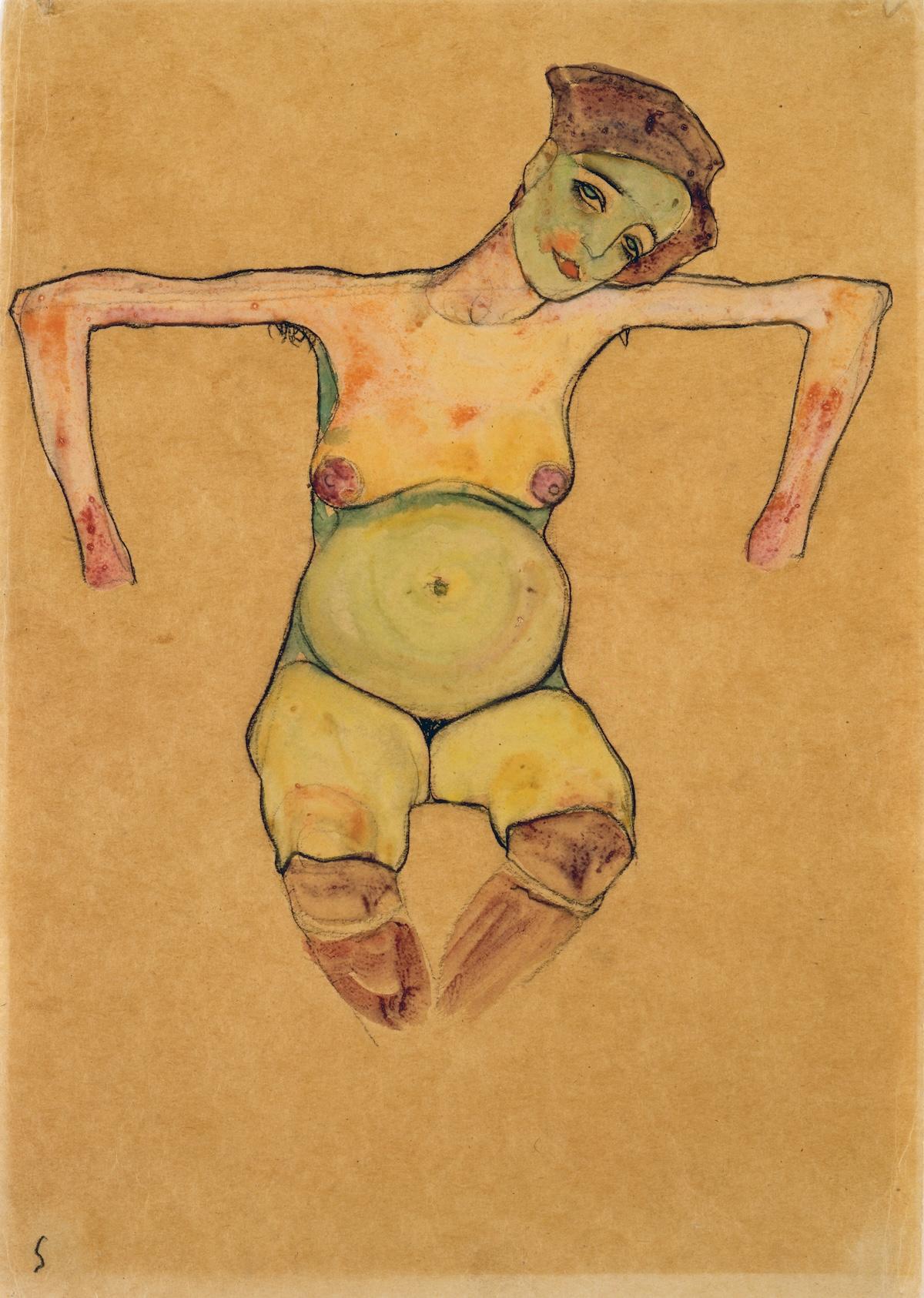
However, the surest evidence of Graff’s impact on Schiele comes via the aforementioned works on the theme of birth, which, in Schiele’s treatment, seems unable to escape the shadow of death. In Newborn Baby (1910), a freshly delivered infant has a bluish cast that makes him appear as ready for the mortuary as he is the nursery. Pregnant Woman (1910) has its subject’s arms akimbo like a broken marionette. However, there are tender moments too, such as Schiele’s images of his nephew Toni. 

Courtesy of Neue Galerie New York

Egon Schiele, Pregnant Woman, 1910, gouache, watercolor and crayon on paper. Anonymous Lender

Of course, it wouldn’t be a Schiele exhibition without some of his rampantly erotic nudes, and there are some included in which sketchy figurative outlines clash with unnervingly detailed genitalia.

Graff was there when Schiele succumbed to the Spanish Flu, and one of the show’s last entries is a photo of the artist on his deathbed, putting the viewer bedside, much as the doctor must have been. It evokes a final moment between two friends saying goodbye as one of them slips into art-historical legend.

40.781258363698, -73.9602455

Egon Schiele: Portrait of Dr. Erwin von Graff
Start Date:
February 12, 2026
End Date:
May 4, 2026
Venue:
Neue Galerie New York
About the Author

Howard Halle

Howard Halle is a writer and artist who has exhibited his work in the United States and Europe. Between 1981 and 1985, he was Curator of The Kitchen's Gallery and Performance Art series. From 1995 through 2020, he was Chief Art Critic for Time Out New York. He lives and works in Brooklyn.

Subscribe to our free e-letter!

Webform
Art and Object Marketplace - A Curated Art Marketplace