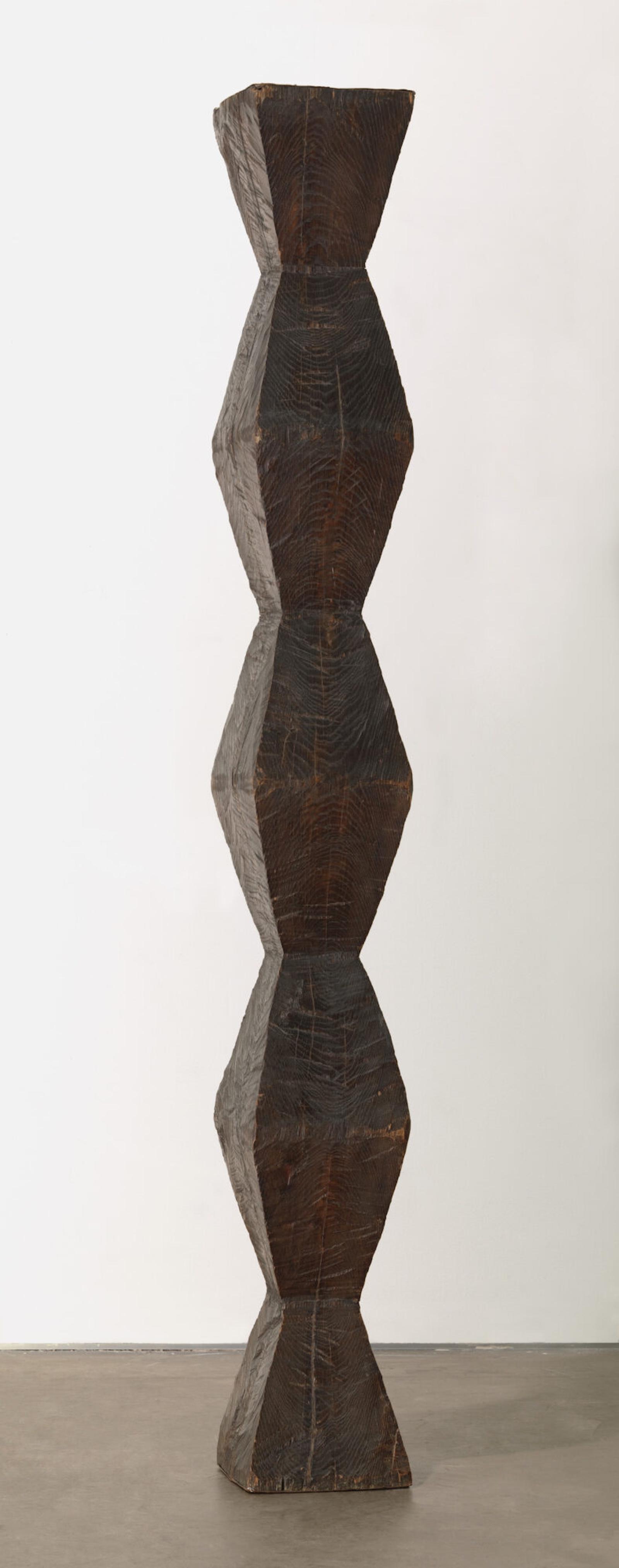
Born in rural Romania in 1876 to farming and woodworking parents, he attended the School of Fine Arts in Bucharest. After spending his first 30 years in Romania, he walked all the way to Paris where he worked for a few short weeks as Auguste Rodin’s assistant, famously saying, “Nothing can grow under the shadow of a tall tree.” Brâncuși later carved his own tall tree: The Endless Column, a reiteration now on view at MoMA.
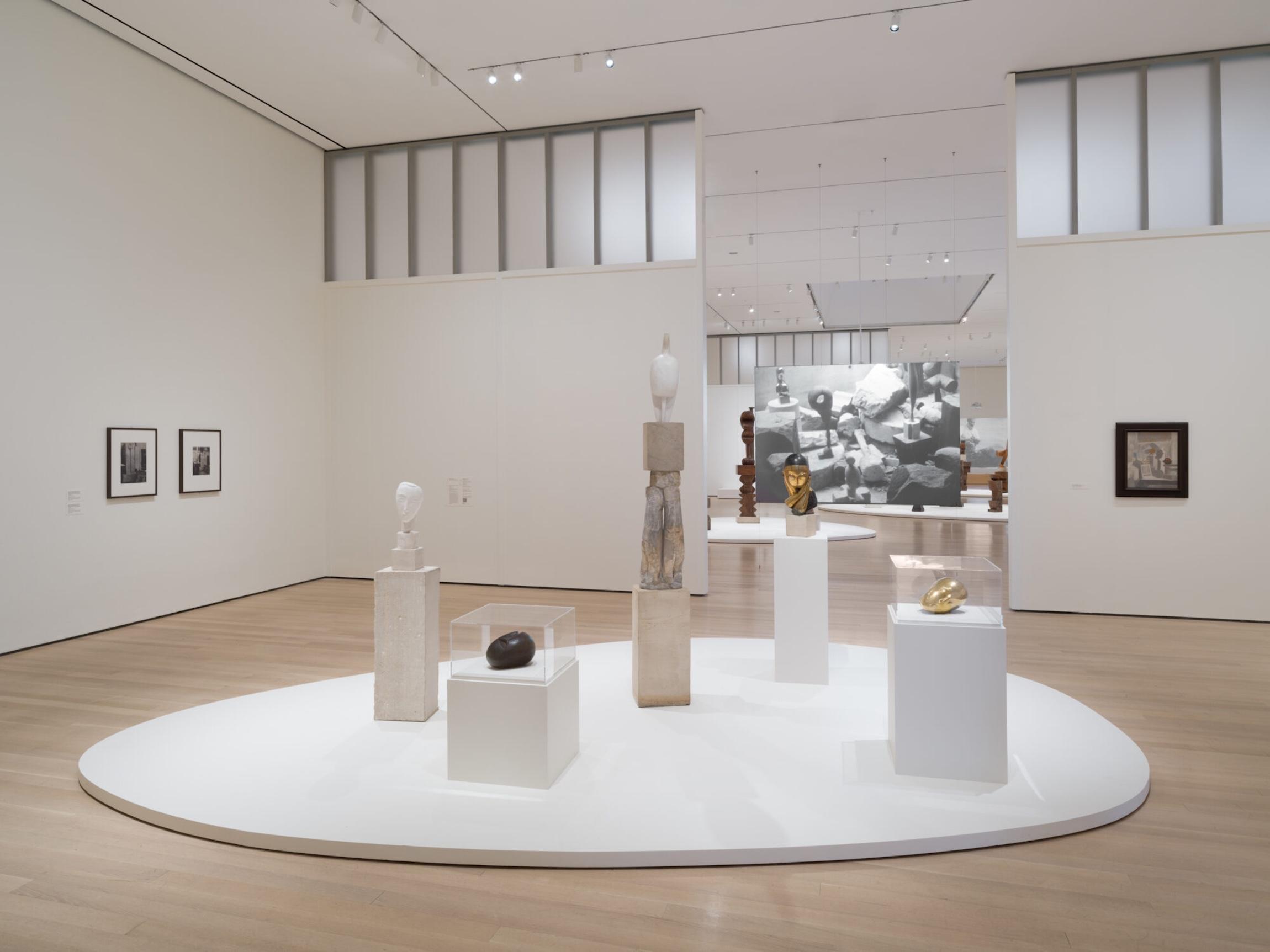
Brâncuși: The Artist and His Studio is a sprawling show, contrasting the densely packed space of his studio, as shown in 1200 photographs and 215 sculptures Brâncuși left behind. The black-and-white silver gelatin prints he developed himself cover the walls of the exhibit. In them, viewers can see the marble dust, the heavy stone bases, the towering sculptures, the changing light, and the artist himself with chisel and hammer in hand, severing the stone, carving the wood.
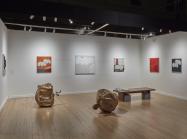
In the MoMA exhibition, the works are displayed at a distance from one another, not like in his studio. It is a sterile exhibit, clean and stately. Brâncuși was a muscular man, wearing overalls, with the proverbial lit cigarette in his mouth, moving heavy stones around with his bare hands. A powerful artist on the move, he was always creating. He often filmed himself and his many friends amongst the work in his studio. Visitors can witness this in the black-and-white films playing throughout the exhibit, some taken by his good friend, Man Ray.
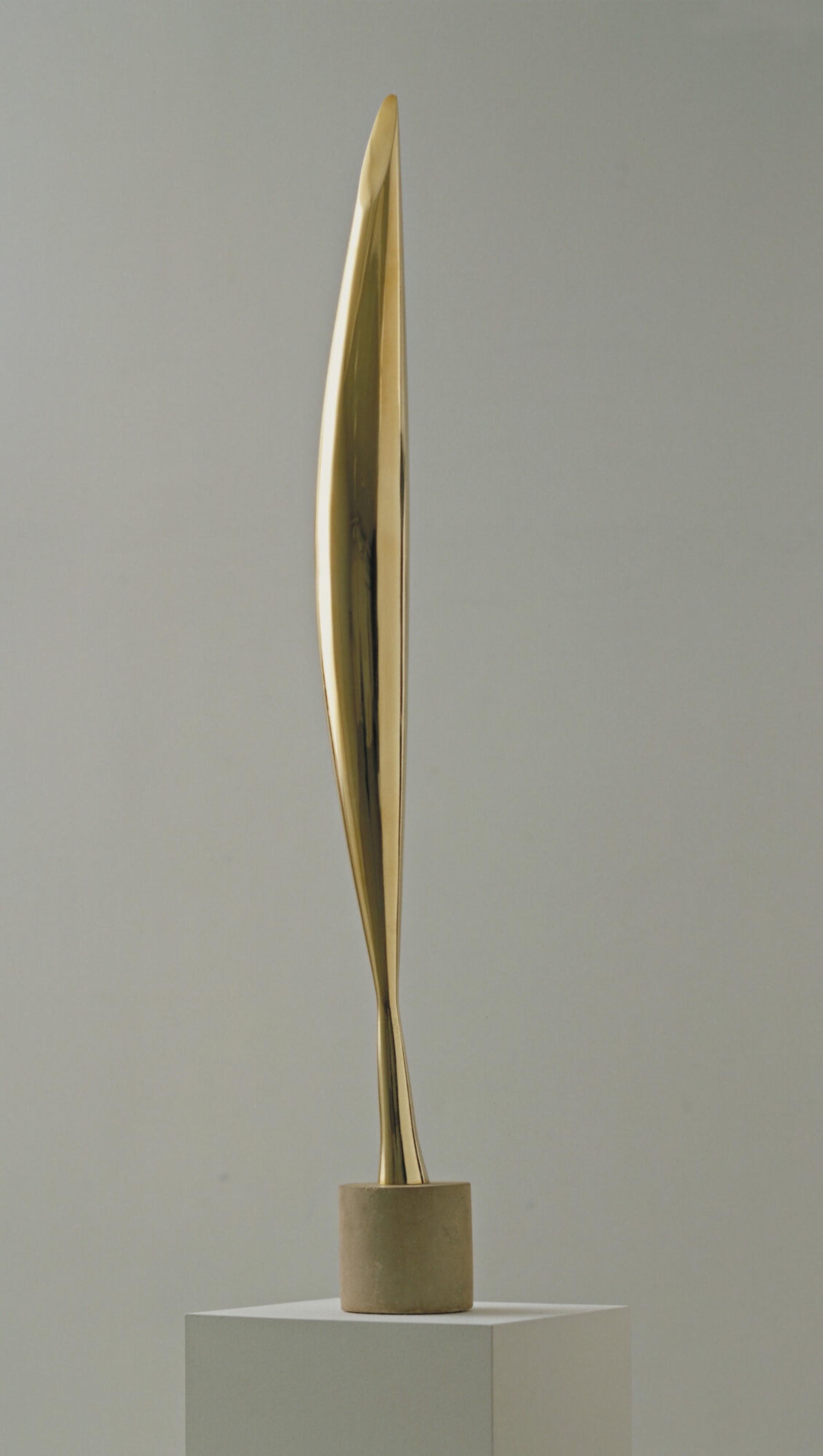
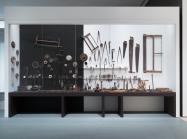
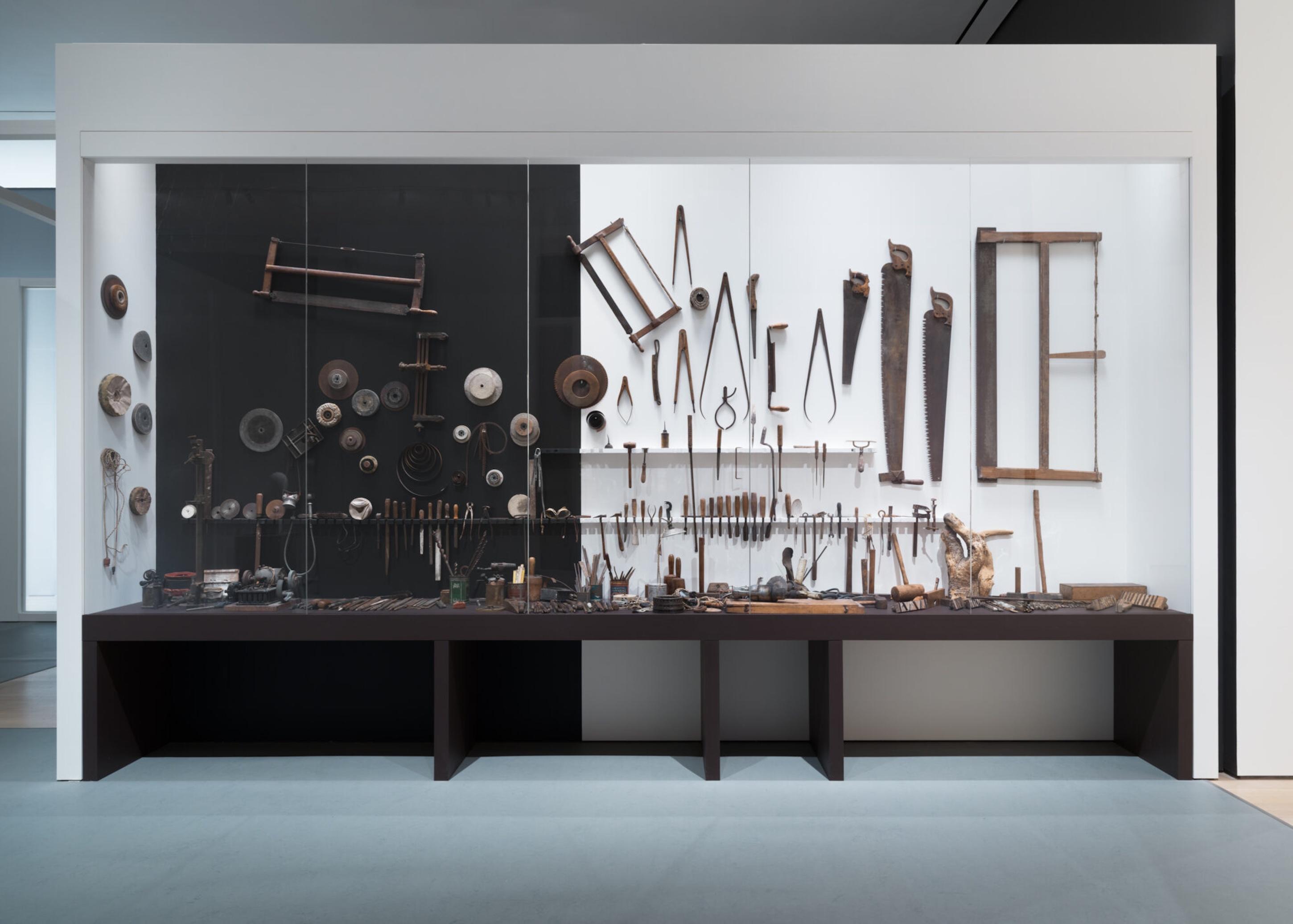
The show covers the entire sixth floor of the museum and showcases many of his iconic works, some on their original bases. There is the sleek and soaring Bird in Space (1928), towering oak Endless Column (1918), floating blue-gray marble Fish (1930), the demure bronze with black patina Mlle Pogany (1913), elegant bronze Leda (1926), and many more. There is a long display of his sculpting tools, as well as a showcase displaying album covers of the music he liked to listen to—often Romanian and Latin music.