

This film greets you upon entering the exhibit Renoir’s Drawings at the Morgan Library & Museum. Showcasing his work on paper as a draftsman, the exhibition includes some 100 drawings, pastels, watercolors, lithographs, etchings, and a few paintings related to the drawings. Many of these drawings illustrate Renoir’s love of the female form. The luscious contour of the thigh, buttock, and breast in the white and red (sanguine) chalk drawings exudes pleasure. The figures in all of his works are plump and rounded, including the sweet babies in Motherhood (1885) and Gabrielle and Jean (1895-96). Even the young girls in the portraits Madeline Adam (1887) and Julie Manet (1887) are luscious and alluring, along with the adorable cat. Madeline Adam (1887), a pastel and graphite portrait of a young girl, left one viewer to comment that it left him “with a dreamy, unsettling, and deliciously unhealthy feeling, like the heady perfume that escapes from Baudelaire’s verses.”
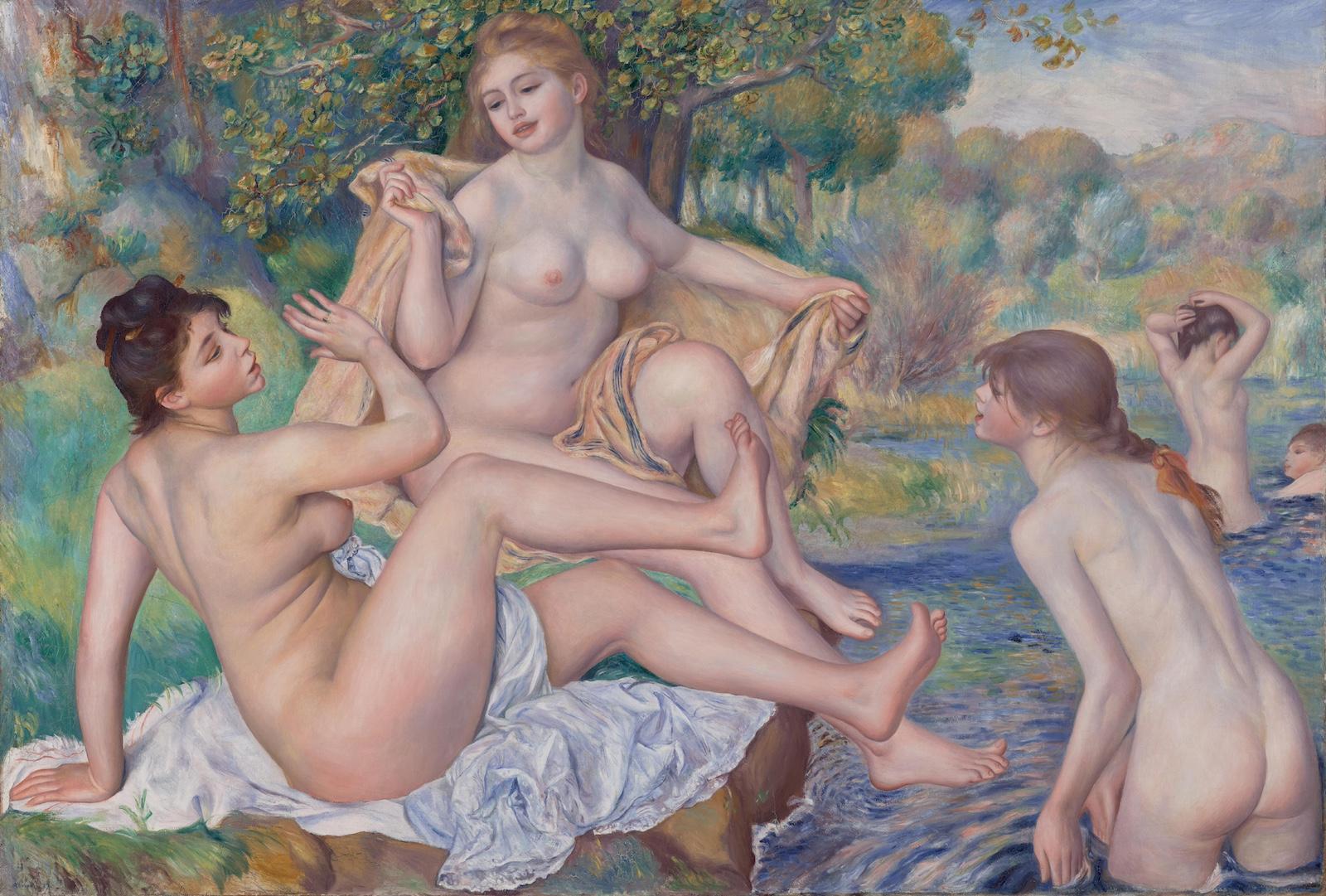
The Great Bathers, 1886–87, Oil on canvas.
“The pain passes, but the beauty remains,” said Auguste Renoir (1841-1919). In Sacha Guitry’s 1916 silent film, there is a chilling and moving excerpt of Renoir painting. The artist’s hands are severely and painfully crippled by arthritis as he holds a long paint brush and a cigarette. His son, Claude, is by his side assisting, as they carry on a lively conversation. Renoir died four years later, at the age of 68.
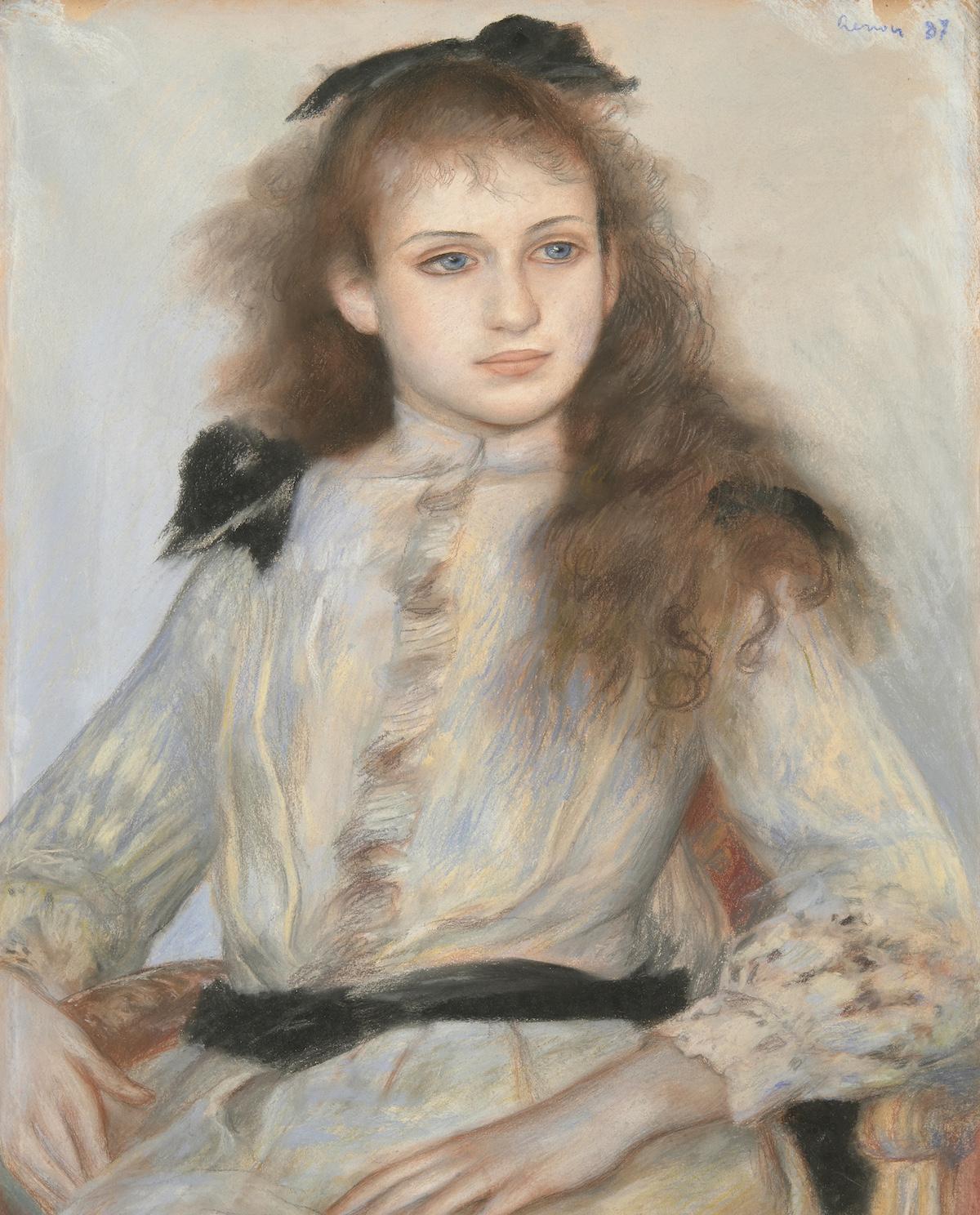
Madeleine Adam, 1887, Pastel and graphite on paper.
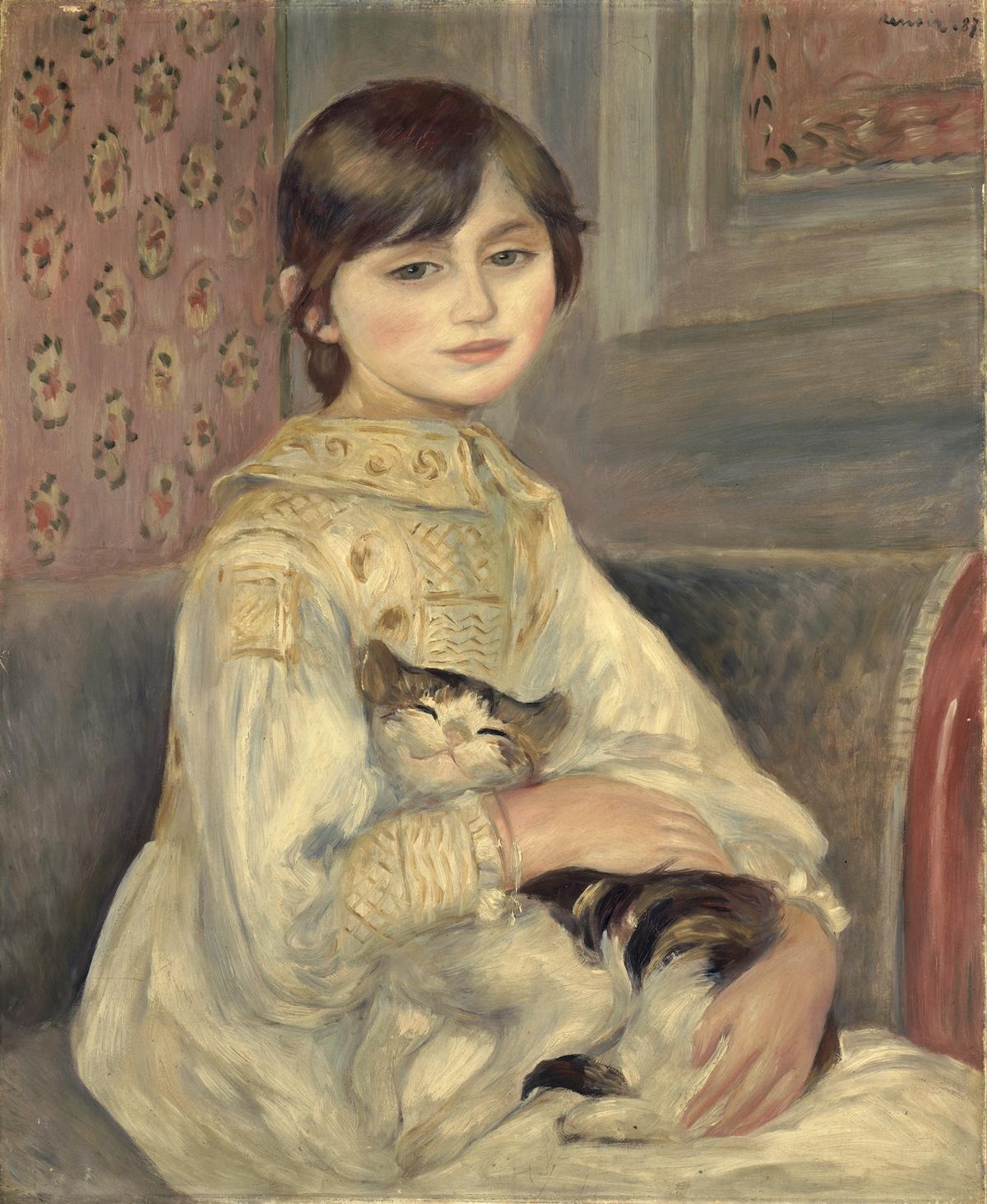
Child with a Cat or Julie Manet, 1887, Oil on canvas.
Two portraits in the exhibit move beyond pleasure: Paul Cezanne (1880) in pastel, and especially of his dear friend, Camille Pissarro (1893-94), in charcoal. These portraits reveal a soulful sense of the individual—detailed explorations deeper than a penchant for the flesh. Interestingly enough, in 1874, the year Renoir finished the Pissarro portrait, their friendship ended because of the Dreyfus affair. Renoir, along with Degas and Cezanne, denounced Monet, Zola, and Pissarro. The scandal split France as well as the close-knit artist community. True colors were shown.
The Morgan exhibit also includes Renoir’s watercolor landscapes, without figures, rendered with tiny brush strokes and the saturated color of Brittany and the Mediterranean coast. He experimented with etching, drypoint, and color lithography, but when it became difficult to hold a pen, he found charcoal and pastel softer and easier to use with his painful arthritis. His drawings feel like improvisations, sketches of impression and sensation made in the studio. To see an entire exhibition of them is to understand his delight in the female form, lush and voluptuous. The Morgan offers a thematic view of these works from a lifetime: student drawings; sketches of urban and rural landscapes; formal portraits; and in later years, portraits of his family and friends.
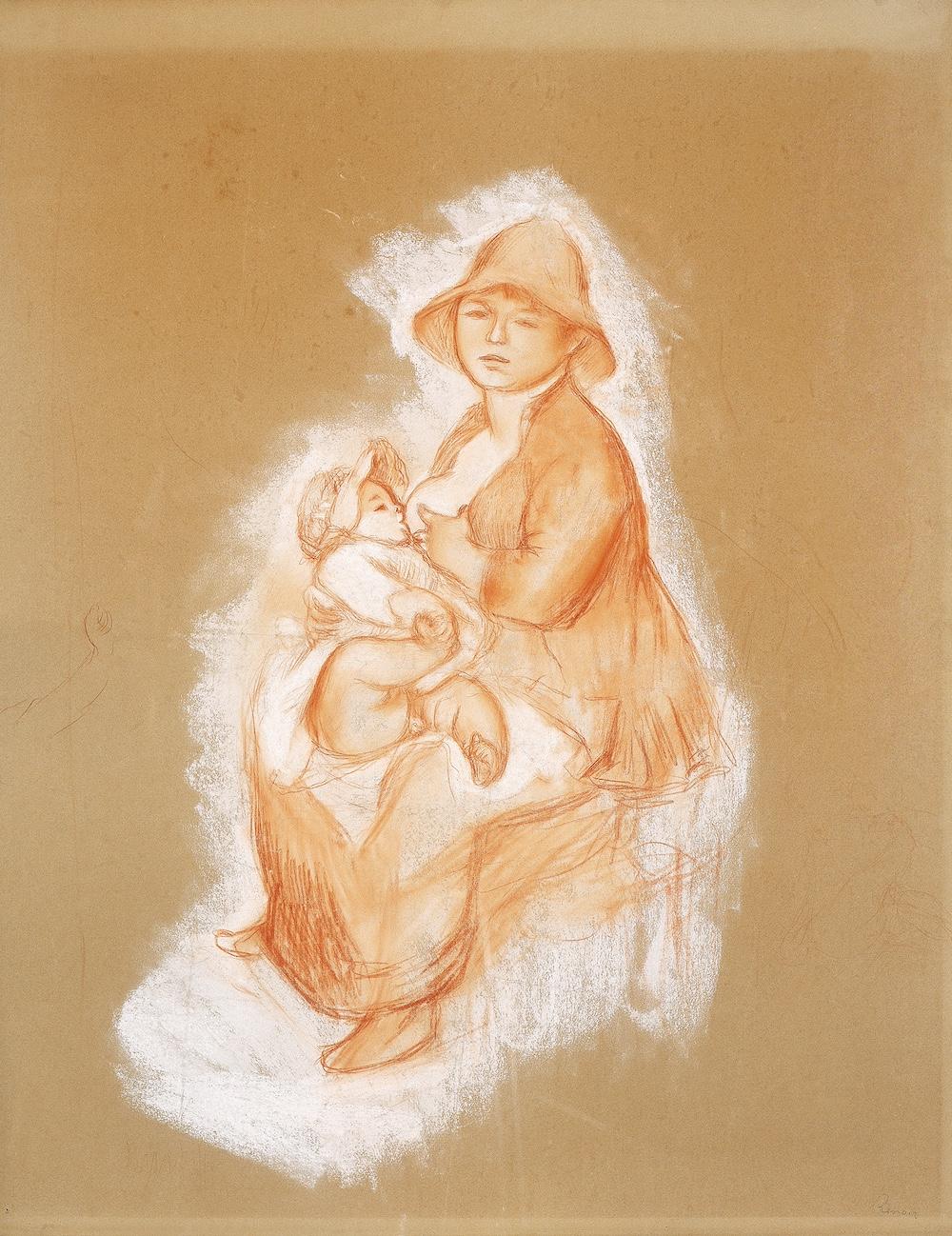
Motherhood, 1885, Red and white chalk on paper mounted to canvas
The Morgan exhibition is presented in collaboration with the Musée d’Orsay in Paris that owns the largest museum collection of Renoir’s works on paper. When the show comes down on February 8, it will move on to the Musée d’Orsay from March 17 to July 5, 2026.