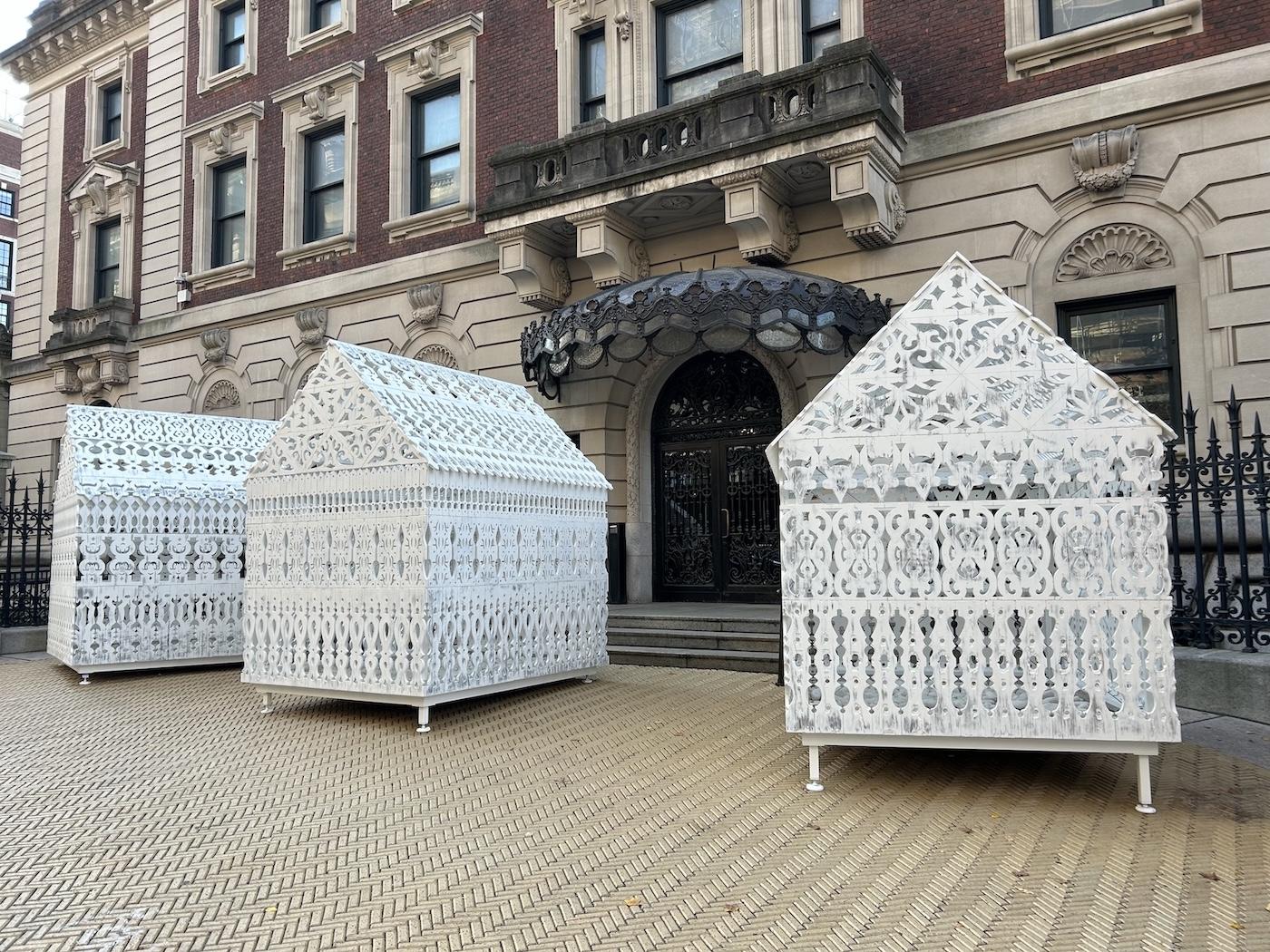

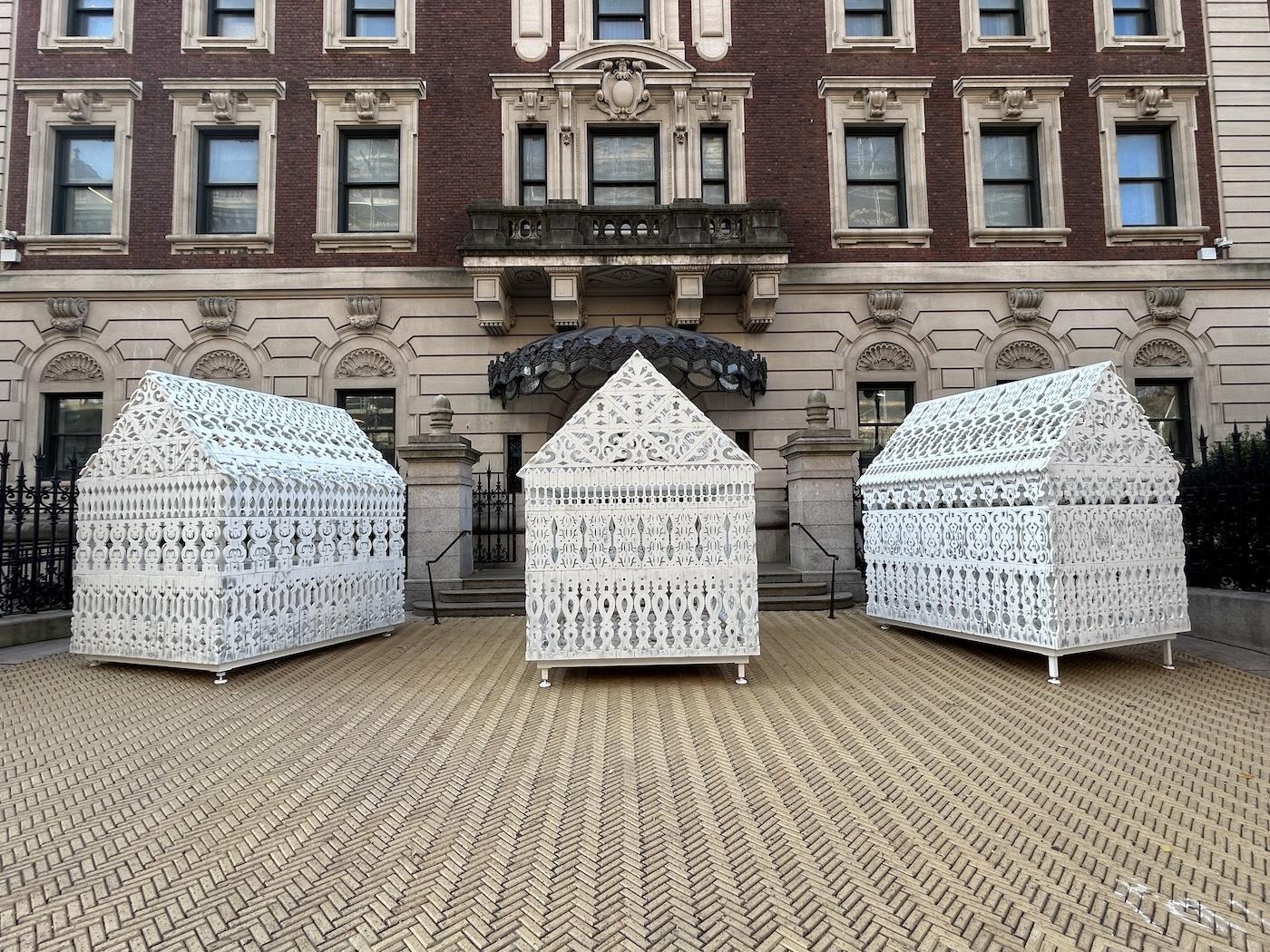

The House that Freedoms Built uses architectural forms inspired by the 18th-century houses of formerly enslaved peoples in Frederiksted and Christiansted, St. Croix. Crafted of lace-like white fretwork, three house-like structures with pitched roofs are installed in front of the museum's stone and brick entry gate. The structures initially appear empty, but their floors are covered in smooth, round white stones.
The installation grew out of historical research Belle did after purchasing and renovating two damaged houses in Christiansted. Learning about the previously enslaved residents caused Belle to view these buildings differently. In an interview, she tells Art & Object, “Their pursuit of freedom built these spaces, and I could see it reflected in the choices they made in the architecture.”
Her use of fretwork deliberately references the St. Croix Labor Riot of 1878, also known as the Fireburn Riot—an effort to establish better conditions for formerly enslaved people in the Danish West Indies. Because of extensive fire damage, large parts of Frederiksted were rebuilt using elaborate fretwork, which became Frederiksted’s characteristic architectural style.