Gustav Klimt (1862-1918) was born and died in Vienna, where he helped found the Vienna Secession, a contemporary art movement closely related to Art Nouveau. He received formal training at the Vienna School of Arts and Crafts. But Klimt’s reputation as an artist was tarnished when he revealed his commissioned ceiling paintings Philosophy (1900), Medicine (1901), and Jurisprudence (1907) to the University of Vienna.
The series of murals were criticized for being pornographic and explicit. They were rejected by the university and later destroyed by Nazi troops during World War II. Such radical pieces became central to Klimt’s artistic identity, and this series, the Faculty Paintings, are not his only work that faced some sort of backlash.
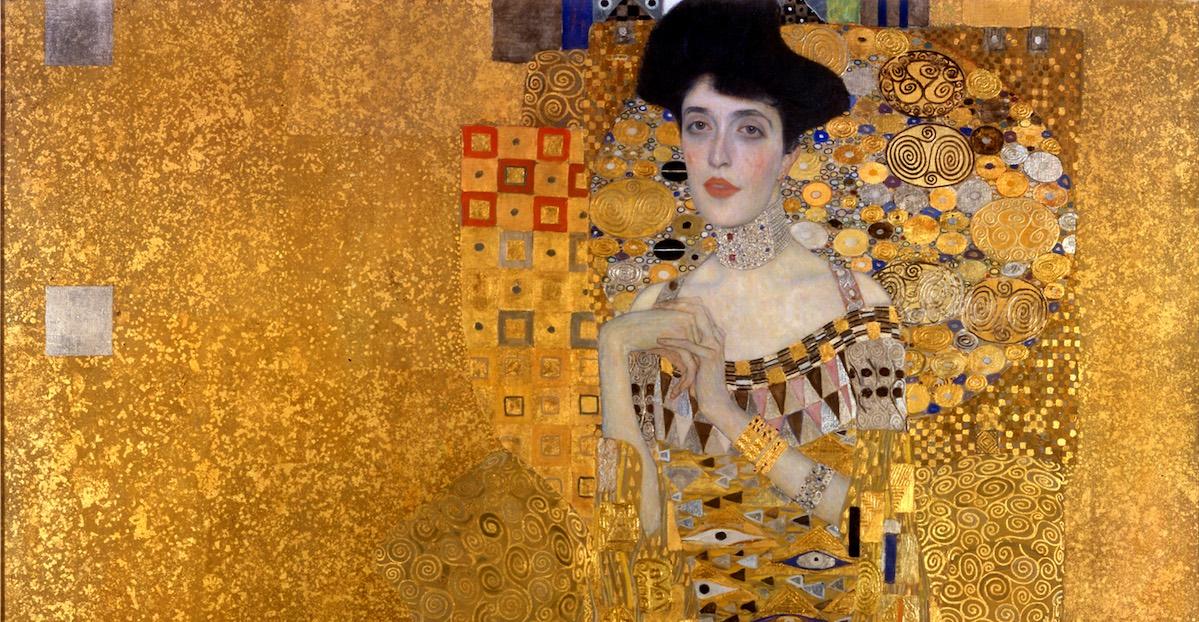
Gustav Klimt, Portrait of Adele Bloch-Bauer I, 1907. Detail. Oil, silver, and gold on canvas, 138 cm x 138 cm (54 in x 54 in), Neue Galerie, New York City, New York