
Museum  January 19, 2026  Paul Laster

Dib Bangkok Provides a Home for Contemporary Art in Thailand

Courtesy of Dib Bangkok. Photo by W Workspace.

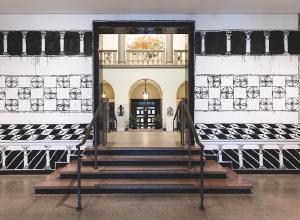
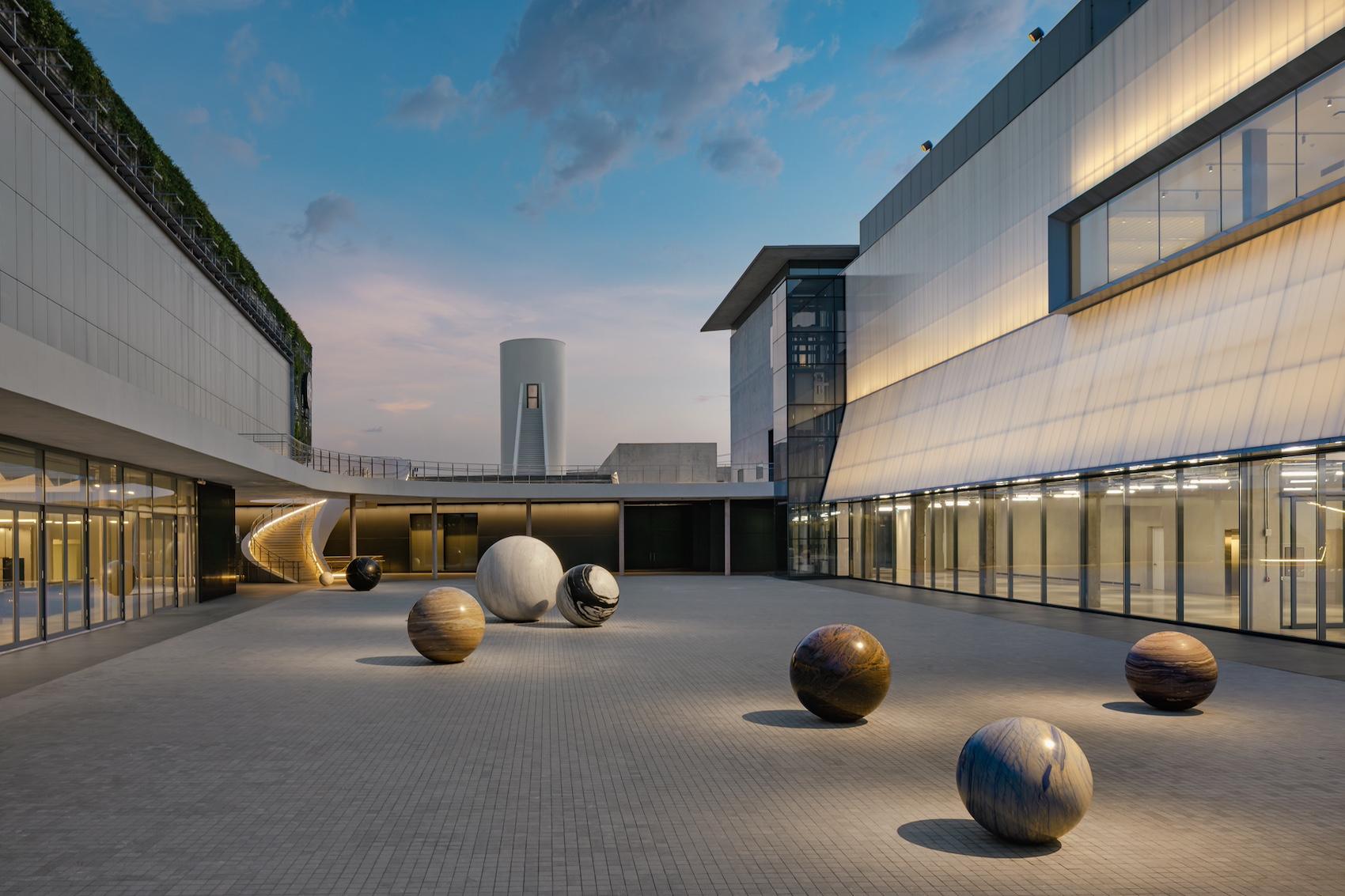
Dib Bangkok Courtyard

Thailand’s first major institution dedicated to international contemporary art, Dib Bangkok, made a grand debut with a sophisticated crowd of museum directors, curators, collectors, critics, and artists attending the opening celebration on December 21, 2025. Guided by Purat “Chang” Osathanugrah, a prominent Thai business leader and educator, the museum preserves the legacy of his late father, Petch Osathanugrah, whose distinguished art collection forms its core. The collection features over 1,000 artworks by more than 200 artists from Thailand and around the world. It focuses on pieces that challenge perceptions, spark dialogue, and promote deep reflection on life's complexities. The museum values art as the height of imagination and creativity, offering a tranquil, contemplative space where visitors can pause, reflect, and appreciate the present moment through contemporary art.

Courtesy of Dib Bangkok. Photographer Auntika Ounjittichai, 2025.

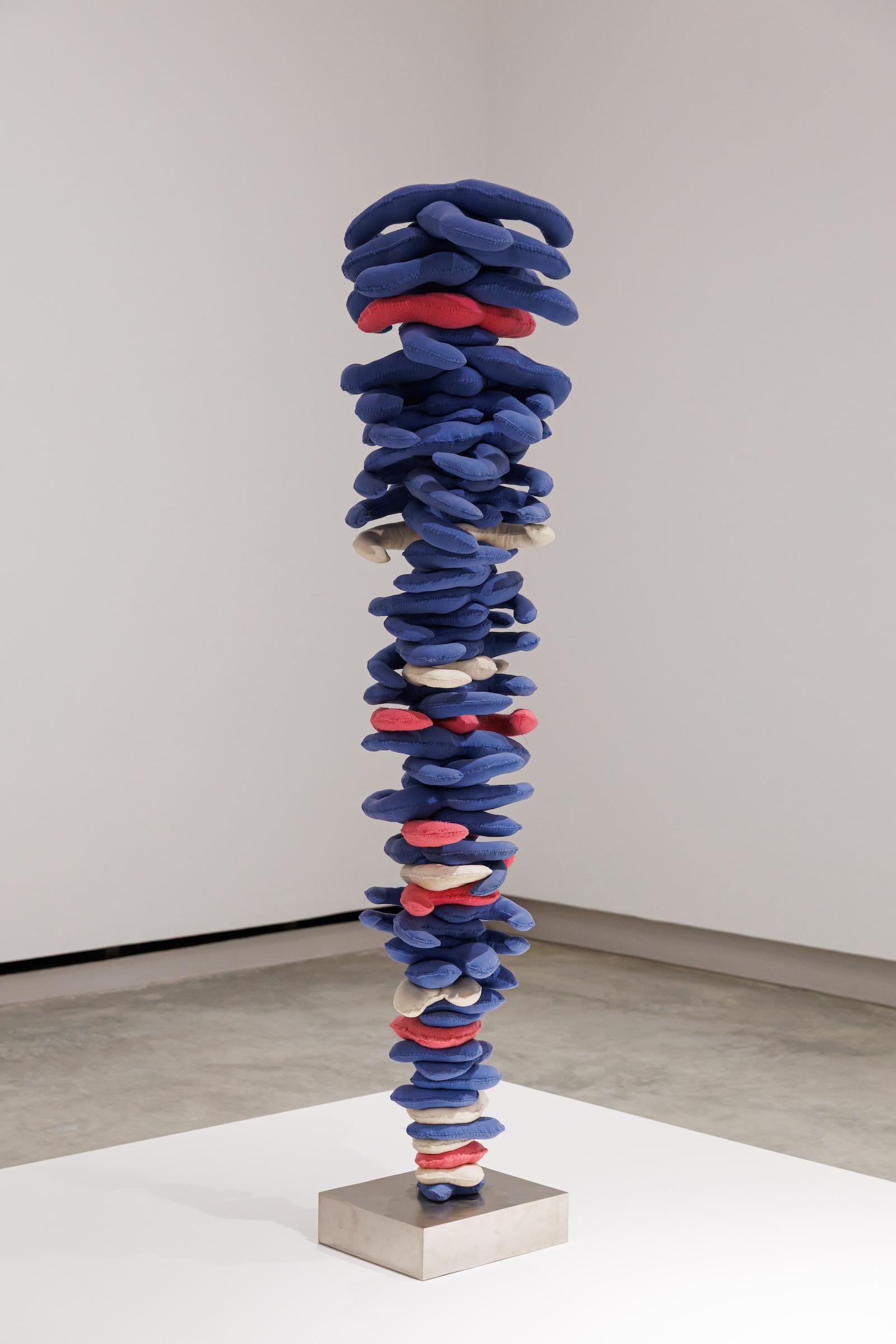
Louise Bourgeois, Untitled, 2005. 

“At its core, Dib is about helping people fall in love with art the way many of us first did when we were very young—through a moment of recognition, when something speaks to you before you have the language for it,” Chang told Art & Object. “Creativity surrounds us in many forms—in music, architecture, design, and food—but contemporary art distills these expressions into their essence: aesthetics, ideas, and philosophy. In that sense, it becomes a concentrated record of how we see, think, and make meaning—a distillation of our creative history. I like to think of art as an ocean. Some people want to dive deep; others prefer to surf, float, or dip a toe in and call it a day. Every one of those encounters is valid. Dib isn’t here to teach people how to swim—we’re here to make sure the water is open.”

Dib, meaning "raw" or "authentic" in Thai, is situated in a three-story converted warehouse near the city's port, redesigned by Kulapat Yantrasast of WHY Architecture. Founded in 2004 by Yantrasast, the Los Angeles-based architectural firm has been a leader in designing art museums and cultural institutions. In 2025, WHY renovated the Michael C. Rockefeller Wing at New York’s Metropolitan Museum of Art and is now engaged in two design projects at the Louvre. “With Dib Bangkok, WHY Architecture’s intent was to reflect the city's evolving role as an international art destination, crafting a space that fosters dialogue among artists, curators, and the public, while supporting both community engagement and creative exchange,” Yantrasast, who was born in Thailand, shared.
Courtesy of Dib Bangkok. Photographer Watcharapong Sermwichitchai, 2025. 

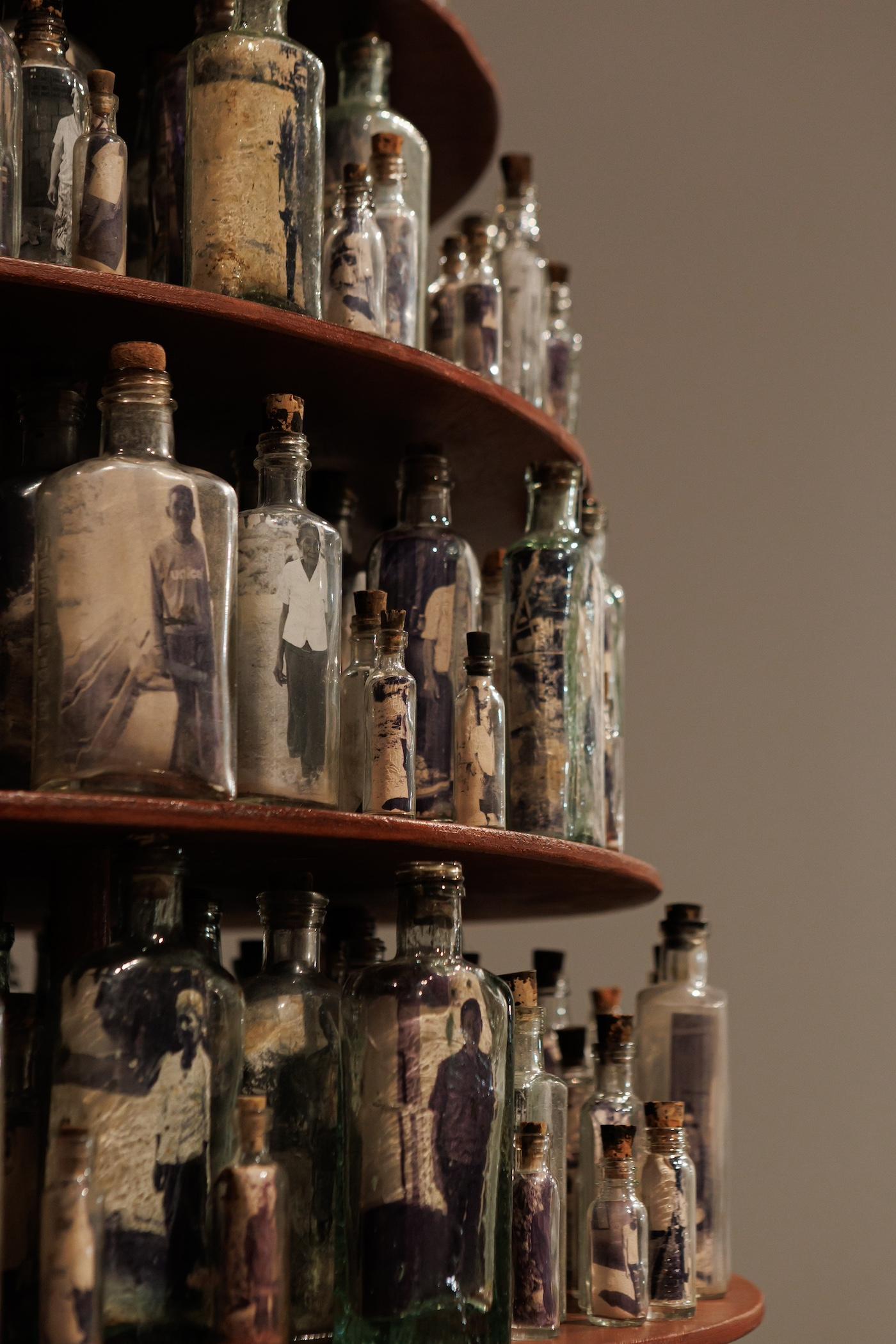
Navin Rawanchaikul​, There is No Voice, 1994. 

Dib Bangkok’s design preserves key architectural elements of the original industrial building while adding a modern touch, creating a space that honors its historic roots. It features 11 gallery spaces covering 75,000 square feet, a spacious central courtyard, an outdoor sculpture garden, a bistro bar and restaurant, and a penthouse for special events. The museum's minimalist design draws on the Buddhist concept of enlightenment, creating an inviting atmosphere with a simple, concrete ground floor that leads to more contemplative upper levels. 

Dib Bangkok’s opening exhibition, (In)visible Presence, organized by Thai artist and curator Ariana Chaivaranon under the guidance of Dib Bangkok Director Miwako Tezuka, features 81 works by 40 artists from the museum’s collection. Designed to dialogue with the building’s architecture, it creates a thoughtful narrative journey that reflects the idea of the past guiding us into the future. By juxtaposing internationally acclaimed artists with Asian artists to ensure they receive equal critical recognition, the curators paired a totemic fabric sculpture by Louise Bourgeois with Navin Rawanchaikul’s column of discarded medicine bottles containing photographs of senior citizens from Chiang Mai, the Indian diasporic artist’s hometown.

Courtesy of Dib Bangkok. Photographer Wikran Poungput. 

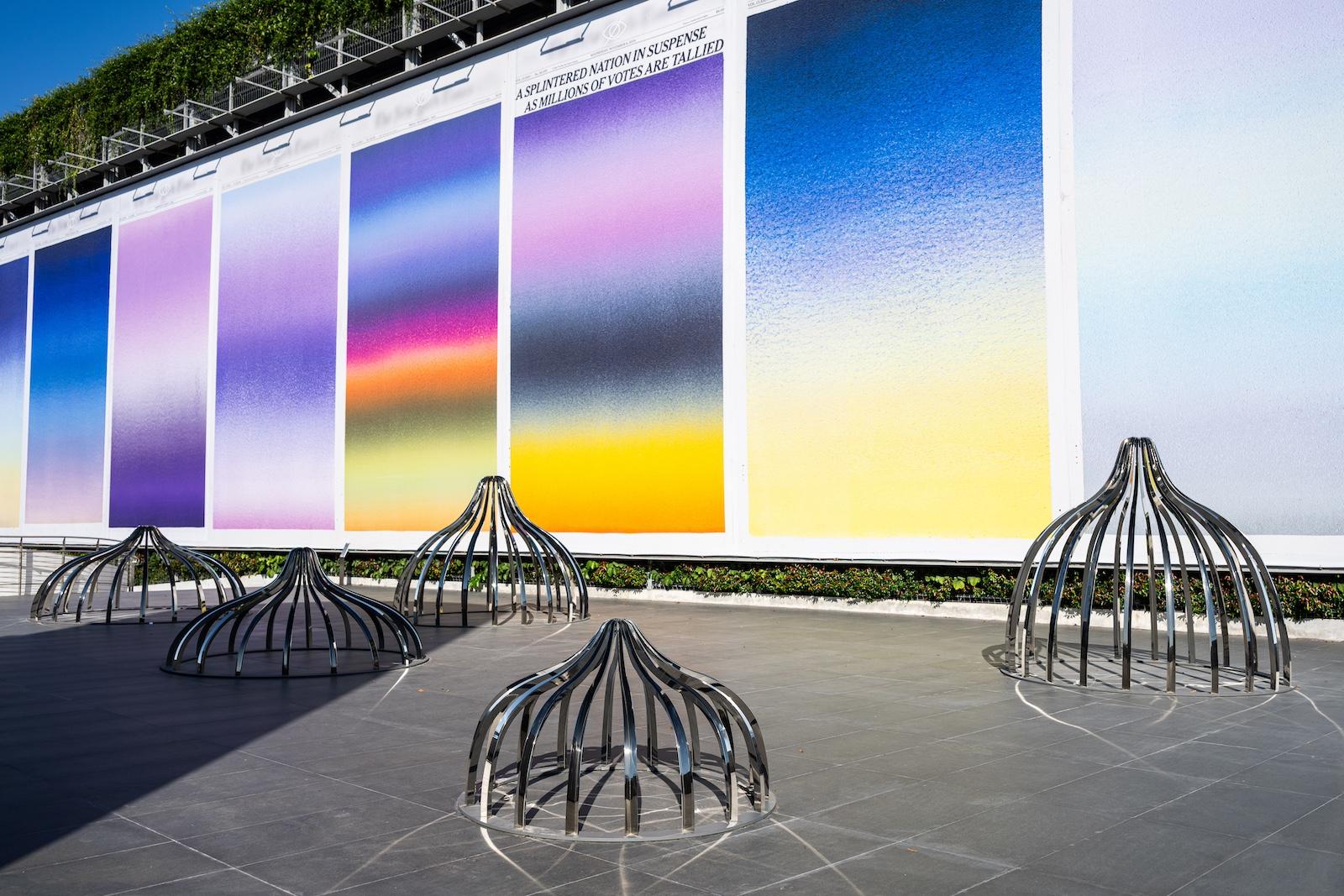
Sho Shibuya, Memory, 2025, and Pinaree Sanpitak, Breast Stupa Topiary, 2013. 

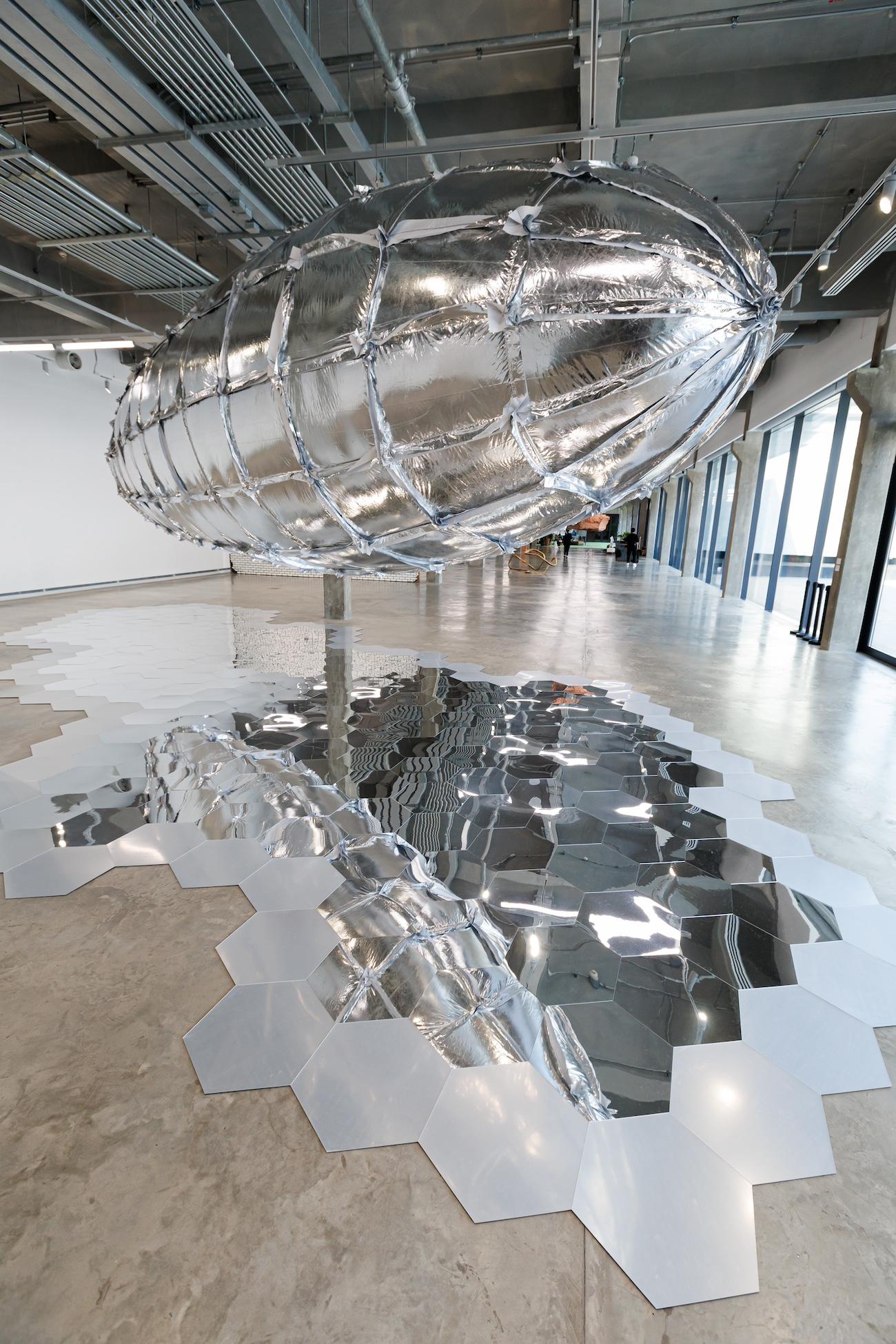
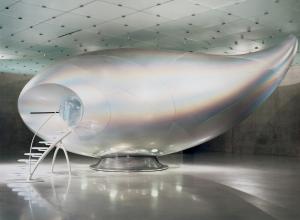
In the ground-floor courtyard, James Turrell’s permanent freestanding tower displaying a dynamic light installation contrasts the sensual spiritualism of celebrated Thai artist Pinaree Sanpitak’s stainless steel breast-shaped topiary, Polish sculptor Alicja Kwade’s spherical stone installation that evokes a mini solar system, and Japanese artist and designer Sho Shibuya’s large mural showing daily sunrise photos as gradient paintings on the front page of The New York Times, turning distressing headlines into calming, natural beauty. Another structure towering above the courtyard, a cone-shaped gallery called The Chapel, features Indian sculptor Subodh Gupta’s installation of pots and pans arranged like eggs incubating under chandeliers. Nearby, indoors, South Korean artist Lee Bul exhibits a shiny silver zeppelin suspended from the ceiling above a reflective floor, symbolizing the allure and inevitable failure of many utopian dreams.

Courtesy of Dib Bangkok. Photographer Auntika Ounjittichai, 2025.

Lee Bul, Willing To Be Vulnerable – Metalized Balloon V3, 2015/2019. 

The third level, meanwhile, pairs Anselm Kiefer, a key German postwar painter and sculptor, with the late Montien Boonma, a pioneering Thai sculptor and installation artist widely recognized as one of the most important figures in contemporary Asian art. Kiefer’s expansive lost letter installation features a printing press that emits giant resin-cast sunflowers and tendrils of printed matter, inspired by a story from Jewish mysticism about a lost consonant whose discovery could restore universal harmony. The rest of the floor displays about a dozen significant works by Boonma across various media, including a sound installation with 500 terracotta bells. Another interactive sound piece, involving a baseball bat striking a wall with hidden microphones and speakers, by Australian artist and musician Marco Fusinato, was activated by Chang during the opening ceremony.

“The collection was built over three decades by the late Petch Osathanugrah, with the intention that these works would ultimately be shared with the public in a museum setting,” Tezuka revealed to Art & Object. “Now that Dib Bangkok has become a public-facing institution, the collection will evolve further. We see this next phase as one of careful enhancement, identifying and addressing areas that can enrich the collection, such as time-based media and works that engage innovatively with new technologies. Our aim is to remain responsive to our time while staying true to the museum’s core spirit, offering access to works that inspire connection, reflection, and shared human values across generations.”

About the Author

Paul Laster

Paul Laster is a writer, editor, curator, advisor, artist, and lecturer. New York Desk Editor for ArtAsiaPacific, Laster is also a Contributing Editor at Raw Vision and Whitehot Magazine of Contemporary Art and a contributing writer for Art & Object, Galerie, Artforum, Artsy, Ocula, Family Style, Sculpture, and Conceptual Fine Arts. Formerly the Founding Editor of Artkrush, he began The Daily Beast’s art section and was Art Editor at Russell Simmons’ OneWorld Magazine. Laster has also been a Curatorial Advisor for Intersect Art & Design and Unique Design, as well as an Adjunct Curator at P.S.1 Contemporary Art Center, now MoMA PS1.

Subscribe to our free e-letter!

Webform
Art and Object Marketplace - A Curated Art Marketplace