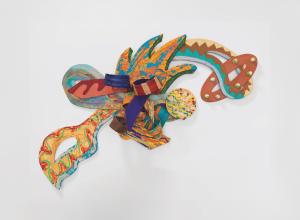
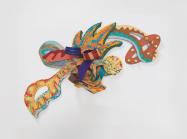

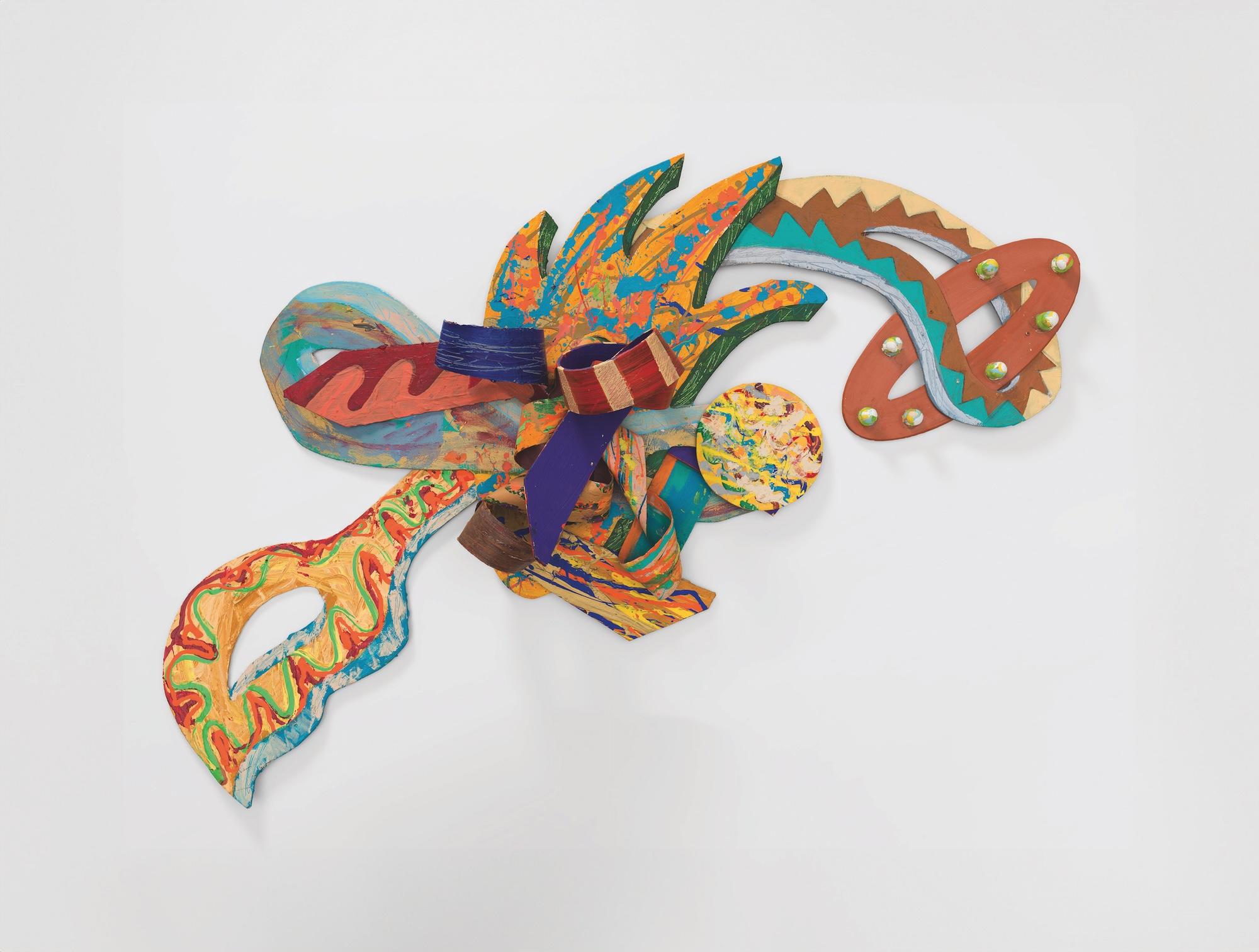
Artists Kevin Cole and Jefferson Pinder blend abstraction with materiality in their depictions of the storm. In his 2006 mixed-media assemblage, Embracing Wisdom, Cole replicates a satellite image of Hurricane Katrina. Inspired by conversations with families and friends living in the city at the time, Cole’s work traces, in part, a grid of the Ninth Ward, a neighborhood hit particularly hard by the storm. Bold colors punctuate the assembled shapes, which include folded men’s ties that allude to the legacy of racial violence in the United States, pointing toward contemporaneous criticisms that the poor response to the storm was due to structural and institutionalized racism. Toward the top of the sculpture, the artist uses seven doorknobs recovered from the storm. For Cole, the work responds to the mass evacuations of New Orleans residents to cities across the South, including Georgia, where the artist is based.
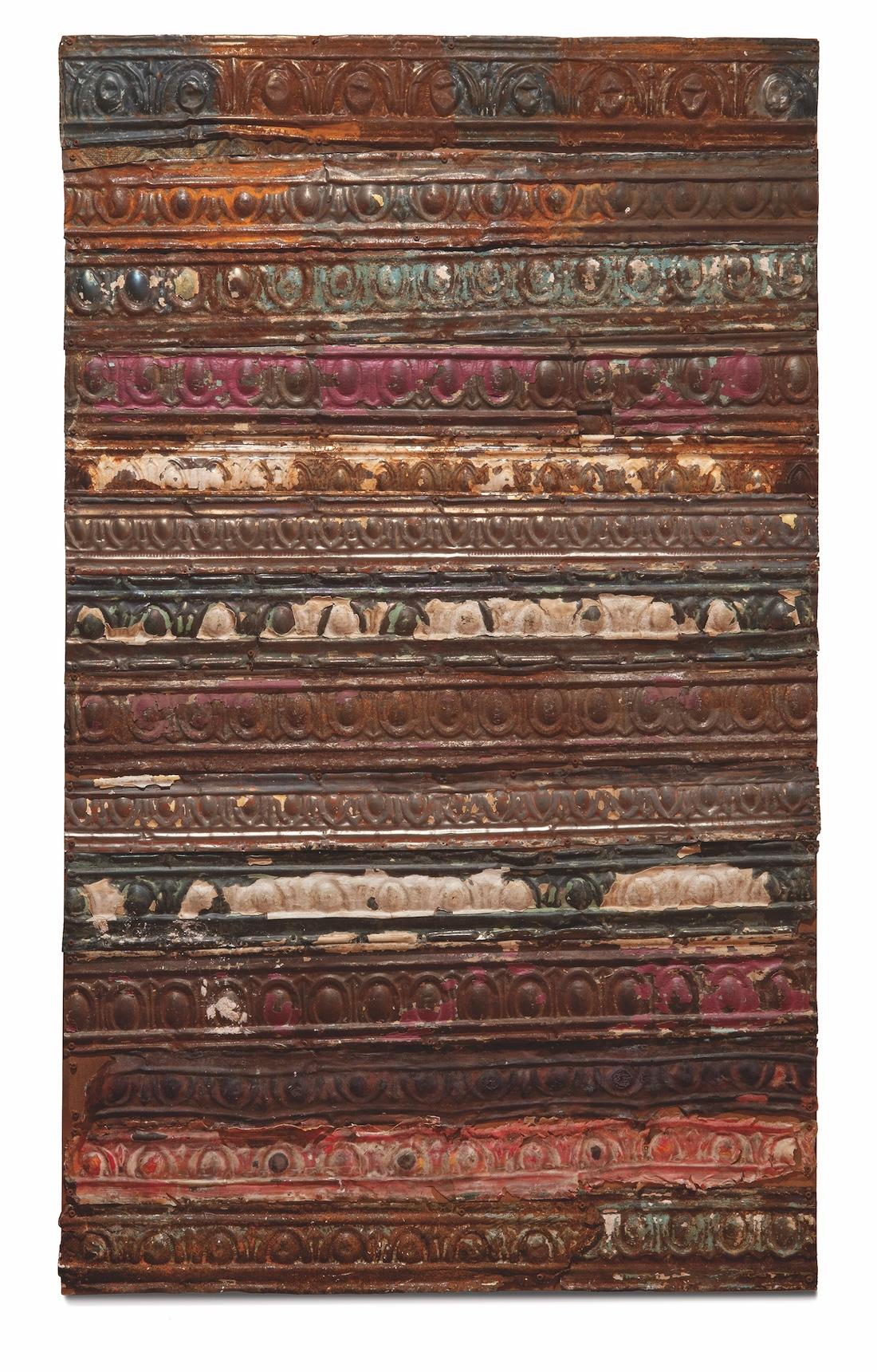
Jefferson Pinder, whose practice spans disciplines and considers issues of race, ethnicity, and class, traveled with a group from the University of Maryland to New Orleans to help local artists rebuild their studios after the storm. During his trip, Pinder collected pieces from the dilapidated houses left in the hurricane’s wake to create his mixed-media assemblage Katrina (2006). Created with strips of housing remnants spotted with rust and chipped paint, evidence of the intense battering inflicted by the storm, Katrina evokes the hard-edge abstraction of the 1950s and 1960s. His use of materials sourced directly from the storm’s aftermath functions as a memorial to the homes lost in the destruction of Katrina. A blend between found object and assemblage, the work materializes the experience of loss.
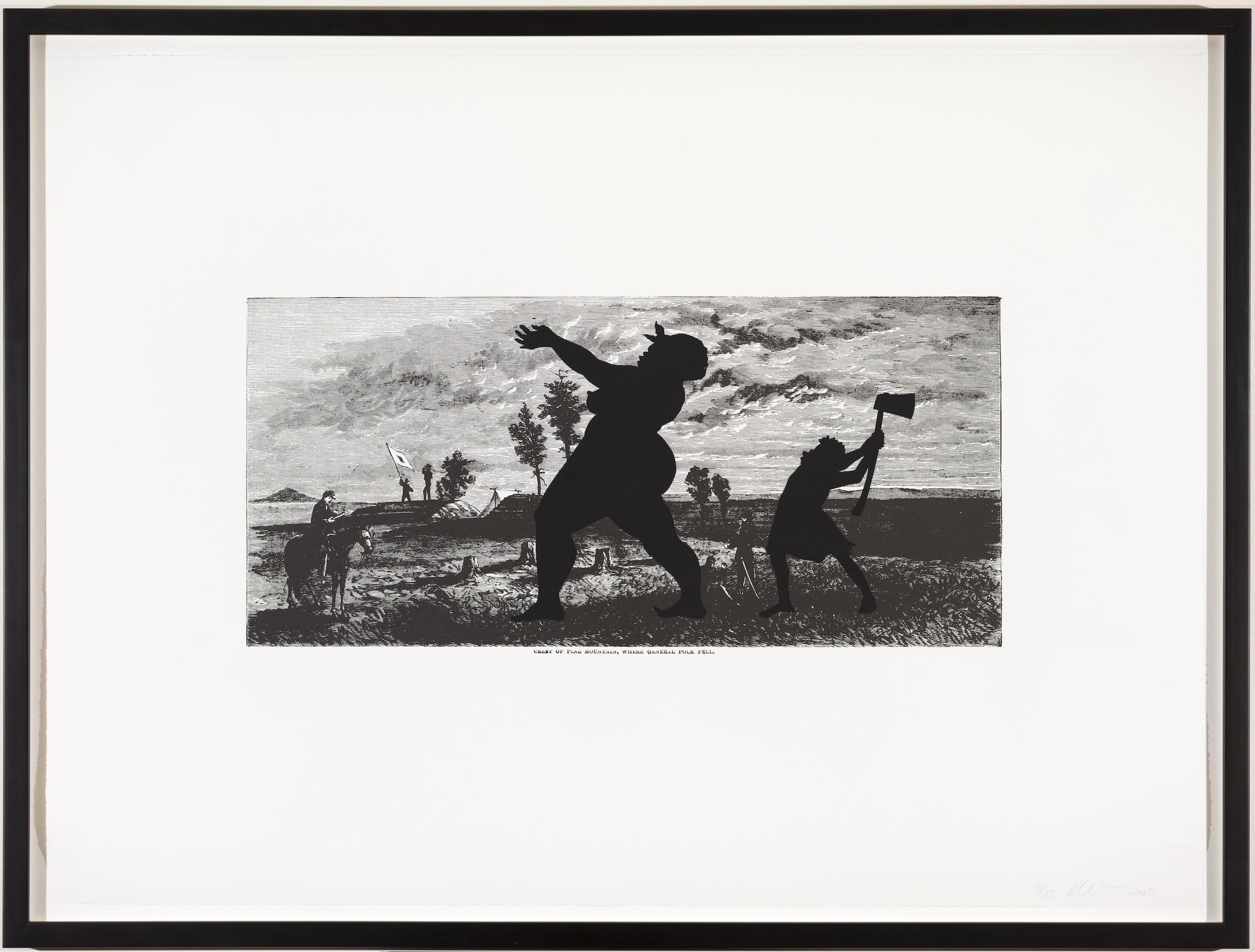
In 2006, artist Kara Walker, whose work explores race, gender, violence, and sexuality, curated an exhibition at the Metropolitan Museum of Art that brought her own work into conversation with objects drawn from the museum’s collection. As she explained at the time, “This show is not simply about the American South or Hurricane Katrina, although it was inspired by the effect of the chaotic storytelling that erupted in the media during the long, ugly aftermath. I pieced this show together as an attempt to think about visual representations of Black life, in particular, but not exclusively, as it is shaped and transformed by external forces such as the sea, the slave trade, and the failure of retaining walls.”