At Large  April 21, 2026  John Dorfman

Santa Fe: The Origins of an Art City

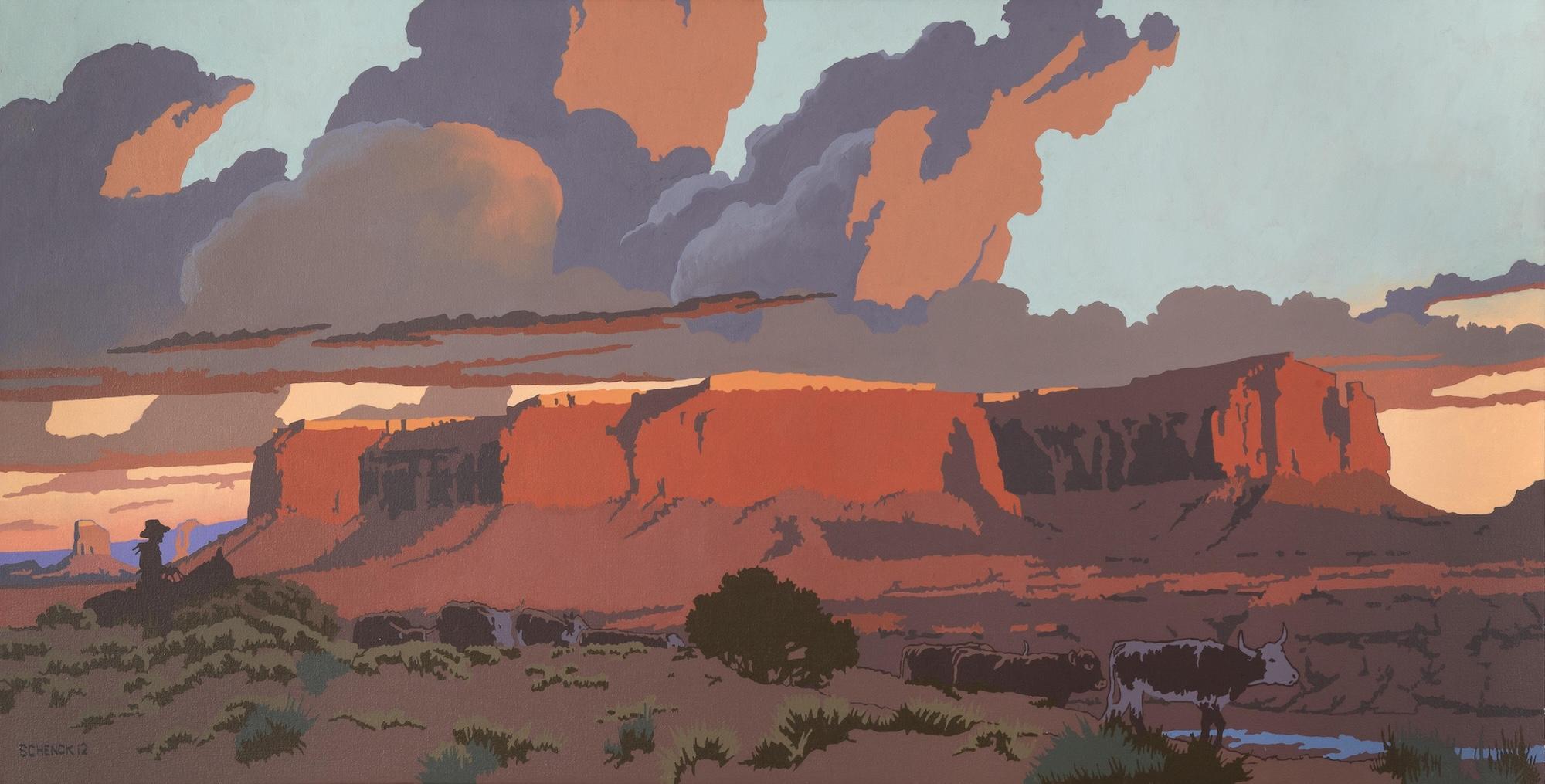
Courtesy of Santa Fe Art Auction

Bill Schenck, Seven Yearlings along the Wash, 2012.

Nestled in the sagebrush-dusted mountains of northern New Mexico, more than 5,000 feet above sea level, is a small, quaint city constructed mainly of adobe and dating back to 1607 that just happens to be one of the world’s biggest and most vibrant art centers. Italy has a term for its urban cultural treasures—città d’arte, or art city. Santa Fe, proud of its contrarian, bohemian heritage, calls itself “The City Different,” but really, it is our American città d’arte.

The reasons for that are manifold. To begin with, there is a millennia-old tradition of Native American art in the Southwest, and Santa Fe is situated amid tribal communities that continue to produce important works of art that are rooted in their history but are also very much of today. Add to that the Spanish-American culture that evolved after the conquistadors established the city, and the work of Anglo-American artists who discovered the unique charm and beauty of the area. And then, as the latest ingredient, add the extremely diverse—international, in fact—contemporary art that has found a home in the galleries, museums, and auction rooms of Santa Fe.

Alongside the creativity that has blossomed in the city, the art business of Santa Fe has exploded over the past several decades, and unlike most art scenes, it thrives especially during the summer months. In July and August, when many galleries in the rest of the country go dormant, Santa Fe hosts its outdoor Indian Market and Spanish Market and fairs such as Art Santa Fe and the Whitehawk ethnographic show, while dealers mount major summer exhibitions in the Canyon Road and Railyard gallery districts. Simultaneously, the Santa Fe Opera and the Chamber Music Festival enrich the cultural season in their own, mainly non-visual, ways.

In order to grasp the origins of Santa Fe as an art city and to understand how its various cultural strata are layered, one has to go back to the very beginning. “Indigenous people have been creating art here for centuries, long before Santa Fe became known as an arts destination,” says Danyelle Means, executive director of the Museum of Indian Arts & Culture. “Pueblo communities have held deep traditions in pottery, weaving, jewelry, painting, and carving. These weren’t just utilitarian or decorative; they held spiritual meaning, marked important events, and connected people across generations. Art was—and continues to be—intertwined with ceremony, family, and place. Many of these practices are still alive today, evolving but still rooted in community knowledge. What’s important to recognize is that Indigenous art was not a ‘discovery’ by non-Native audiences—it was always here, always meaningful, and always sophisticated in its own right.”

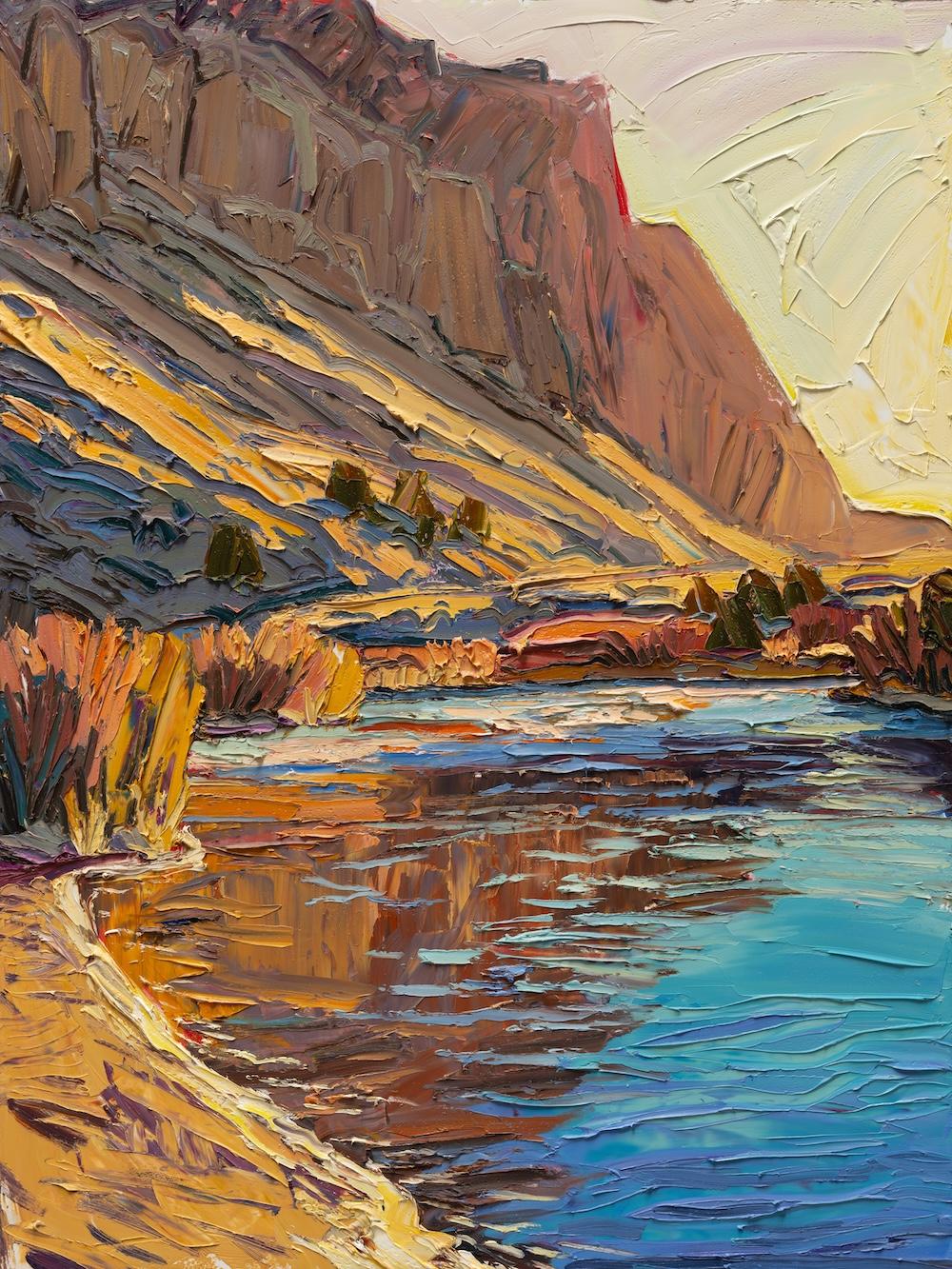
Courtesy of Lewallen Galleries

Jivan Lee, Quartzite - Late Day #1.

King Galleries in Santa Fe is one of the most important dealers of contemporary Native American pottery, representing artists such as Nancy Youngblood, Jared Tso, and Daniel Begay. Owner Charles King says, “While there are fewer younger potters today, they are more committed to the clay and among the most innovative in a generation.” And while some of these Native American artists may live in other parts of the Southwest, King says, “Santa Fe is a focal point for them to meet, discuss art, talk about future projects, and immerse themselves in the world of art. The future in native pottery is exciting.”

The modern non-Indigenous art world of Santa Fe can trace its lineage back to the year 1898, and, perhaps ironically, not to Santa Fe itself but to the nearby smaller town of Taos. Two young painters from the Eastern U.S., Ernest Blumenschein and Bert Phillips, were en route from Denver to Mexico when their horse-drawn wagon lost a wheel on a mountain road in northern New Mexico, causing them to be detained. Captivated by the picturesqueness of the Taos Valley and its people, they decided to stay and thus formed the nucleus of what eventually became the Taos Society of Artists, founded in 1915. In addition to the original two, works by Taos artists such as E. Irving Couse, Oscar E. Berninghaus, Joseph Henry Sharp, E. Martin Hennings, and Nicolai Fechin are now highly prized by collectors.

The trend of artists coming to New Mexico because of its unique quality of light, beautiful landscape, and cultural fascination gained steam, and soon Santa Fe had an artists’ group of its own, the Cinco Pintores (“Five Painters”—all Anglos despite the Spanish name), which flourished during the 1920s. The first generation of artists had a “romantic vision of Native life,” says Means. “They helped establish Santa Fe as an art colony, and their work brought national and international attention. But while they built institutions and galleries, Native artists were often excluded from those early spaces or framed through an outsider’s lens. That exclusion left a mark we’re still working to heal. But today, more Native voices are helping reshape the narrative from within.”

Toward the middle of the 20th century, a new contingent of artists, including Andrew Dasburg, Marsden Hartley, and Georgia O’Keeffe, began to arrive in the Santa Fe area. Many of them were less interested than their predecessors in painting Indians, mountainous landscapes, and picturesque processions; some of them were even abstractionists. What captivated them was an ineffable quality of light, something that is apparent even to the causal visitor. Ken Marvel, owner of LewAllen Galleries in Santa Fe, says, “Marsden Hartley came out here, and it probably transformed his art. Wolf Kahn would talk about how the light is unlike the light he found anywhere else. The feeling of the place, its light and special sensibility, inspires the artist even more than the extraordinary landscape.”

For contemporary artists today, Santa Fe can mean various things. Few of them are connected to the old romantic tradition. Many are attracted by the sense of community, by the fact that Santa Fe invests in artists through schools, programs, artist spaces, and, of course, galleries. Many have  found themselves changed by the place, though in different ways from their predecessors. When artist Anna Rotty arrived in New Mexico from the East Coast, she was struck by water’s preciousness in the desert region. She now explores that theme in photographs exhibited as sculptural installations. She says she hopes to “evoke water not as a resource, but as living kin with memory and knowledge we can learn from.” Chloe Hanken, a young artist with a printmaking-based practice who shows with Strata Gallery, says that coming to New Mexico has deeply affected her approach to her chosen subject matter, landscape. “Landscape, especially in this area,” Hanken says, “often becomes a placeholder for outsider fantasies about the West. Contrast that with the deep connections present in communities who have lived here for time immemorial, and an unshakable dichotomy becomes clear. I have recently become more interested in making images that offer critiques of memory and play with the fantasies around landscape representation rather than feign objectivity.”
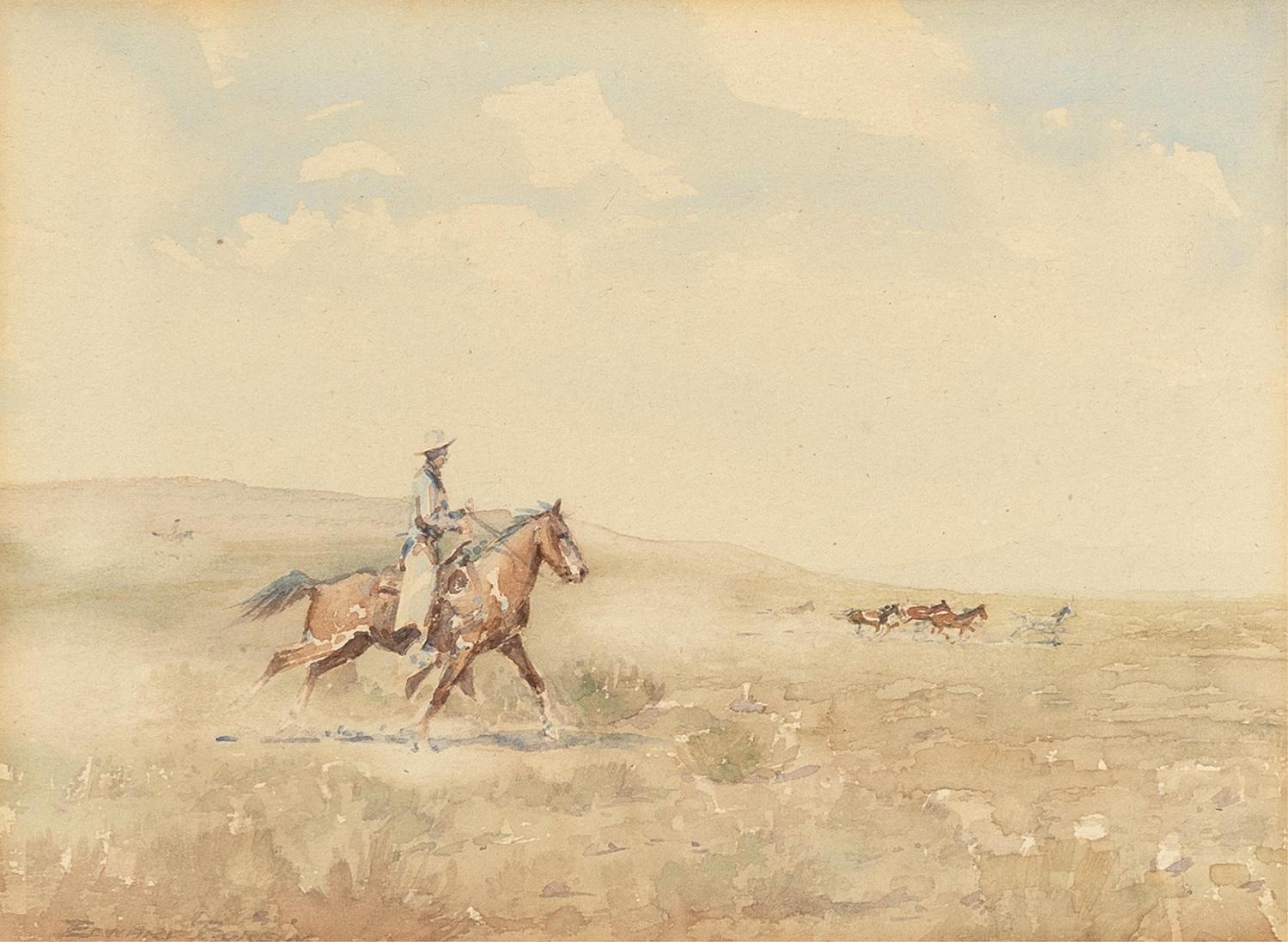
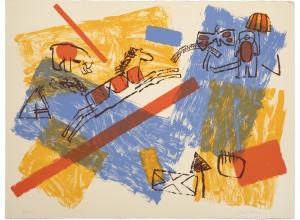
Courtesy of Santa Fe Art Auction

Edward Borein (1872 - 1945), Remuda.

The business of contemporary art in Santa Fe has been marked by expansion, not only in terms of aesthetics but in terms of urban geography. The more traditional and regionally oriented galleries are mainly concentrated in the Canyon Road art district (having long ago moved out of the downtown area), while international contemporary art dominates in the newer Railyard district, established over the past couple of decades near a disused train track confluence at the edge of town (though it’s important to bear in mind that there’s really no hard-and-fast distinction between the two districts). The seed for the Railyard’s growth was planted in 1995 by SITE Santa Fe, a massive nonprofit art space that presents a renowned biennial exhibition. Its 12th biennial will open on June 27 this year.

Santa Fe has a full-scale art market that includes not only galleries but fairs and auctions. Art Santa Fe (July 11-13), produced by the Redwood Art Group, features modern and contemporary art and design. Redwood Art Group’s CEO, Eric Smith, says, “Art Santa Fe continues to provide a unique opportunity to honor the region’s deeply rooted cultural traditions while launching into the future with cutting-edge artwork and inspiring events.” Whitehawk Antique Indian and Ethnographic Art Show (August 8-11) specializes in ethnographic material, including but not limited to Southwestern. Its organizer Kim Martindale says, “We have a select group of exhibitors with an outstanding selection of classic material as well as a curated number of modern pieces. By having both, it’s remarkable to see just how historic art evolved into the contemporary. In fact, you can come to the Whitehawk show to see how Native Americans expressed their art a hundred or more years ago, then go to Indian Market the following week to see just how contemporary Indian artists are inspired by the work of their ancestors. It’s the best of both worlds and you can see it all in a week’s visit to Santa Fe.”

As for auctions, the premier venue is the Santa Fe Art Auction, which has three sales this summer. President and CEO Gillian Blitch says, “We offer artwork that spans the breadth and diversity of the schools that have grown up here, from native pottery and jewelry to historic artists to Modernists and contemporary Western and contemporary Native American art. Individual galleries represent certain artists and schools—for example, New Mexico moderns or Taos Founders—but only the Santa Fe Art Auction brings that diversity into one place, thoughtfully curated for collectors.”

Now that Santa Fe has developed into a world-class art city, the question arises as to what the future holds, both in terms of the art business and art itself. Perhaps the key to Santa Fe’s success can be found in staying true to itself and maintaining the balance between rootedness and creative change. “Santa Fe will continue to be this oasis of beauty and quiet and a place where people can always count on being able to relax and find a diversity of cultural opportunity,” says Marvel. “And the offerings of nature, from which all else springs, will always be here. As long as gallerists continue to maintain the seriousness of their commitment to great aesthetics and serious art, Santa Fe will continue to be a major player in the world of great art.”

*This article originally appeared in Art & Object Magazine's Summer 2025 issue.

About the Author

Subscribe to our free e-letter!

Webform
Art and Object Marketplace - A Curated Art Marketplace