Museum  June 15, 2026  Jordan Riefe

An Intimate Look into Frida Kahlo’s Life at Museo Casa Kahlo

Photo by Jordan Riefe

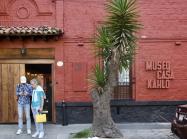
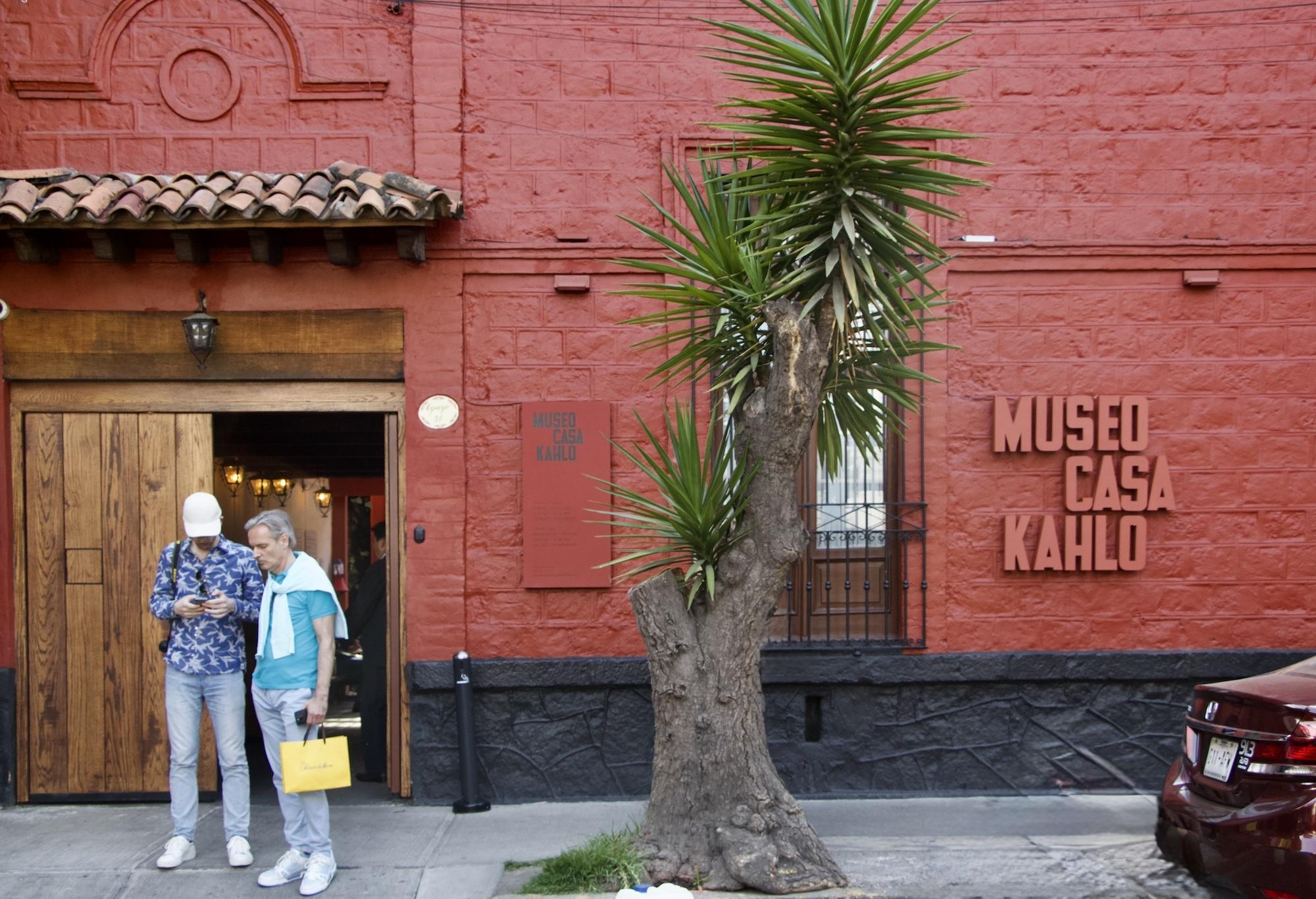
Museo Casa Kahlo, Casa Roja, 2026. 

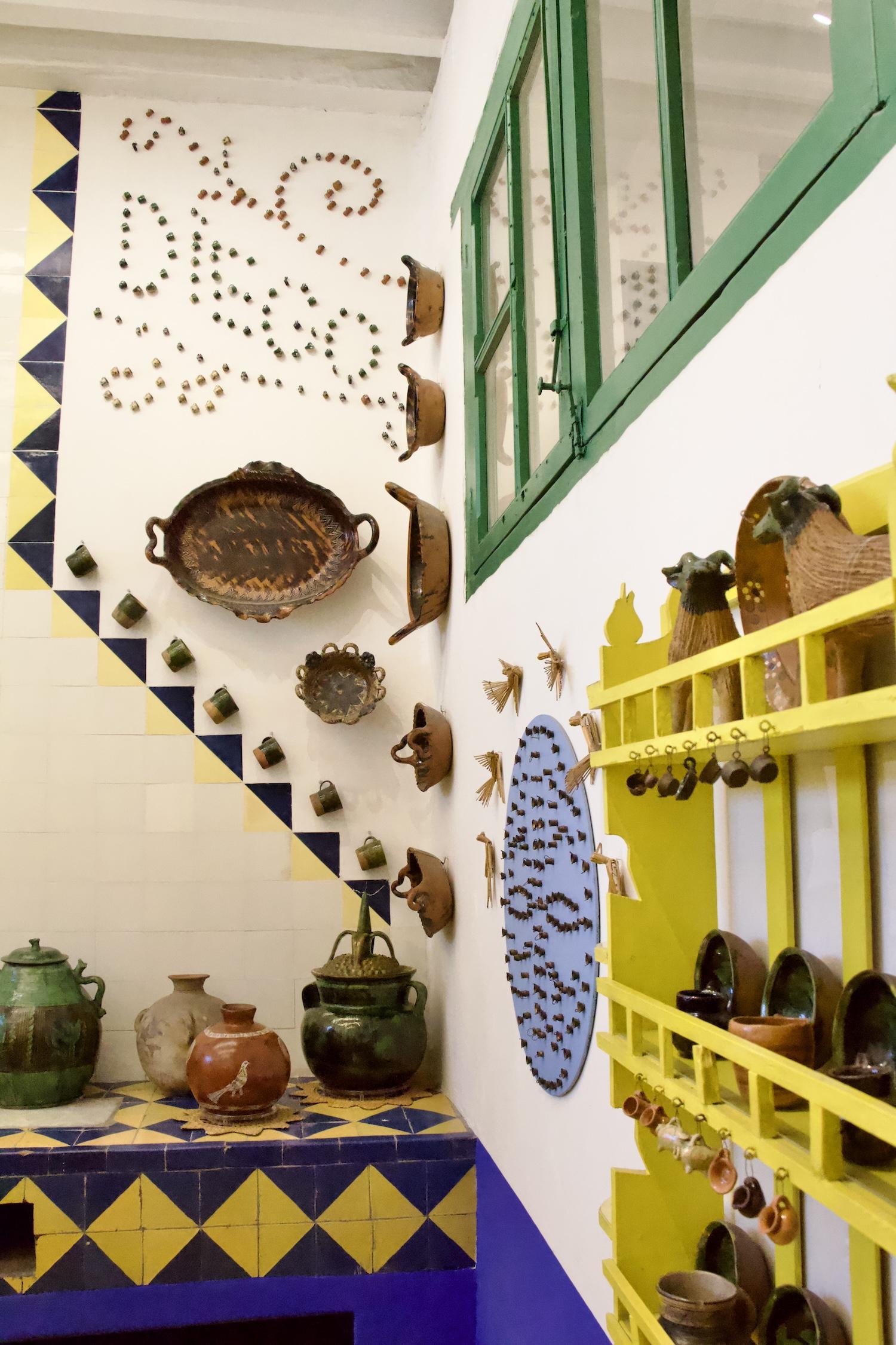
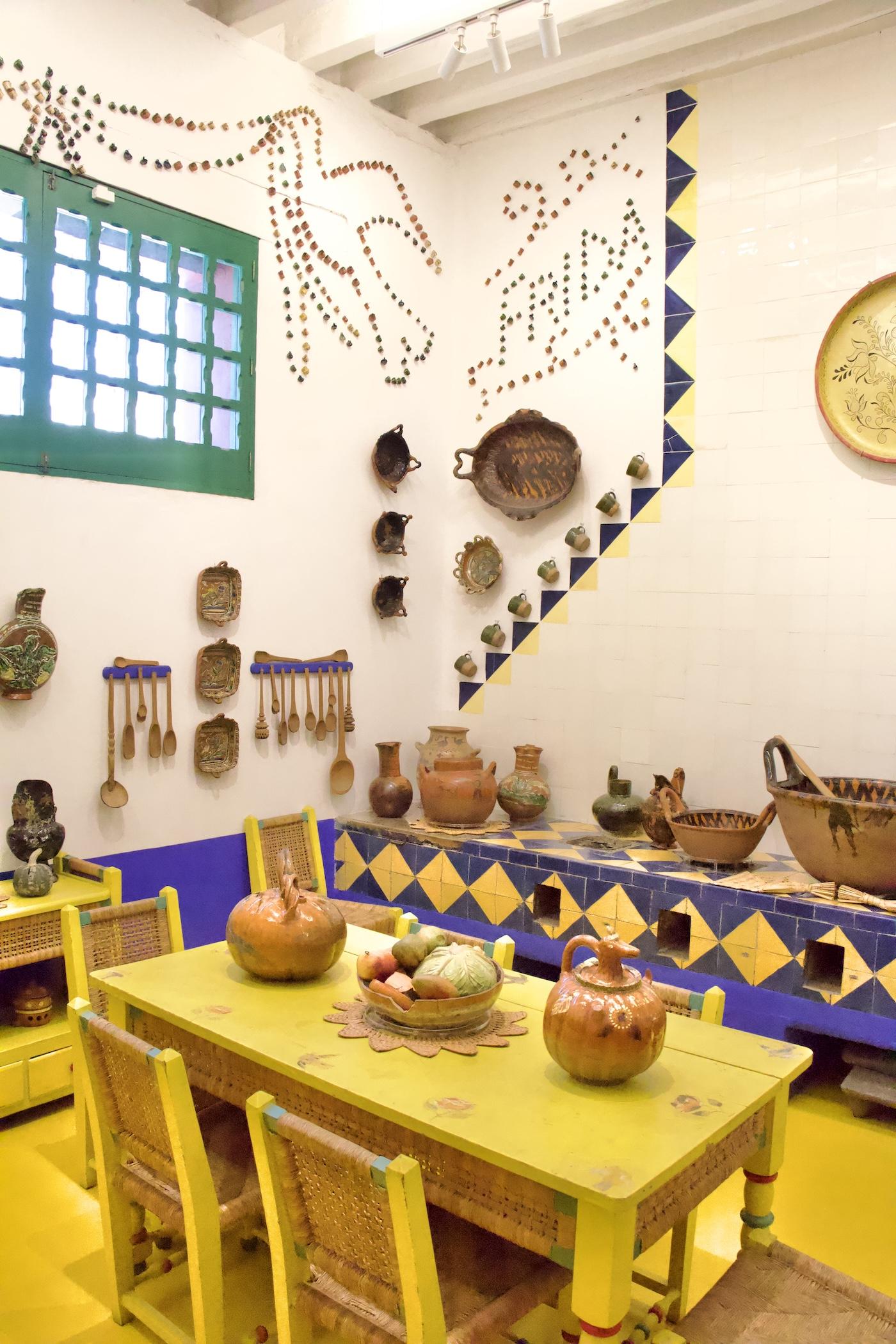
On a quiet residential corner in the Coyoacán section of Mexico City sits the cobalt blue house where Frida Kahlo was born, painted, and lived for more than four decades. The Casa Azul is at once a home and a monument: its courtyard garden hums with fountains and dappled shade, while its rooms hold the intimate wreckage and triumph of a singular life. Here is the bed where Kahlo painted through years of recovery after a catastrophic streetcar accident left her impaled on a metal pole. Here is the kitchen, with yellow and blue tiles spelling out her name and that of Diego Rivera—her great torment and the love of her life. 

For years, Casa Azul was the beginning and end of any Kahlo pilgrimage. But starting last September, a second chapter opened a few blocks away. The Casa Roja pulls back the curtain on the private Kahlo: her family and ephemera tied to her formative years under the tutelage of her father, Guillermo Kahlo, a successful photographer and mentor to her in the early 1900s. 

Photo by Jordan Riefe

Kitchen inside Frida Kahlo Museum. 

In his spare time, Guillermo painted still lifes and outdoor scenes, occasionally discovering that his missing supplies had migrated into the hands of his third daughter. When she was old enough, he put her to work tinting his photographs, passing along what would prove to be formative lessons in color and composition.

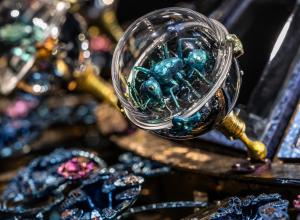
Visit Guillermo’s dark room and take in family photos, like the one of a 17-year-old Kahlo with her four sisters—she’s the one wearing a men’s suit. A gallery includes childhood sketches and Charola de amapolas (Tray of Poppies), done when she was an adolescent. Her "secret room" in the basement contains additional early works, personal items, and her insect collection.

“Guillermo was like a master or professor to Frida in many ways, how she should use light, how she should loosen her hand when she was sketching, because Guillermo, as far as we know, had a liberal arts training and wanted to become a painter,” Adán García Fajardo, director of the new museum, tells Art & Object about Frida’s father, a German immigrant who adopted the Spanish of his given name, Wilhelm. “She was bike riding and rollerskating, polio never stopped her. Not even the accident stopped her.”

At the time of the notorious streetcar accident, Kahlo was enrolled in medical school, headed toward a career as a doctor. However, months of confinement left her with little to do but paint, and a custom easel was built so she could work lying down with a mirror mounted overhead, so she had at least one subject always available. That improvised solution explains something critics have long noted: more than 50 self-portraits across her career, a body of work shaped less by vanity than by circumstance. 
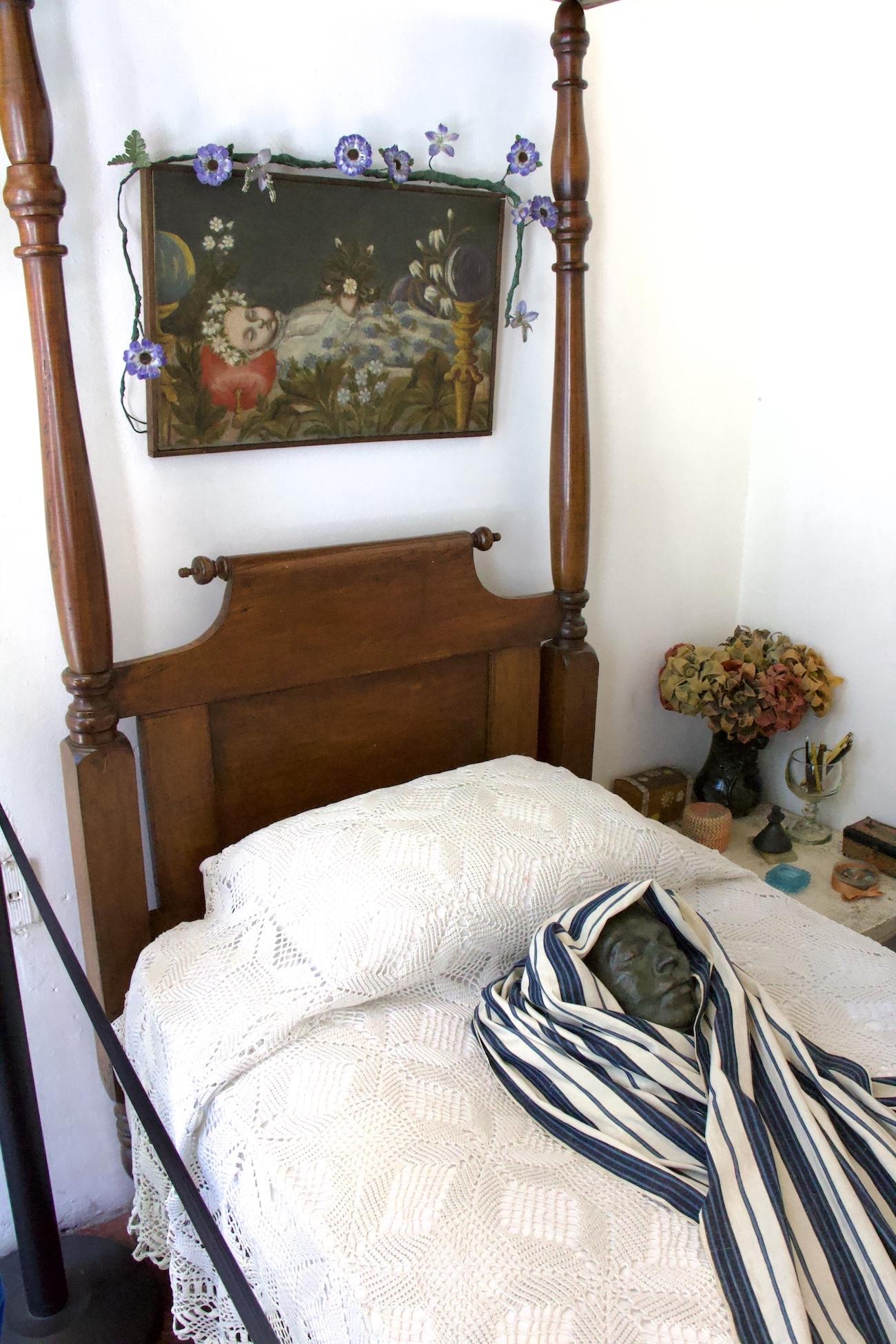
Photo by Jordan Riefe

Frida Kahlo's bed, inside Casa Roja, 2026.

“She already started painting before the accident,” notes Frida Hentschel, Kahlo’s great-grandniece. “She was working with Fernando Fernández, an engraver (of paper money), so she started doing different techniques, like pencil, oils.”

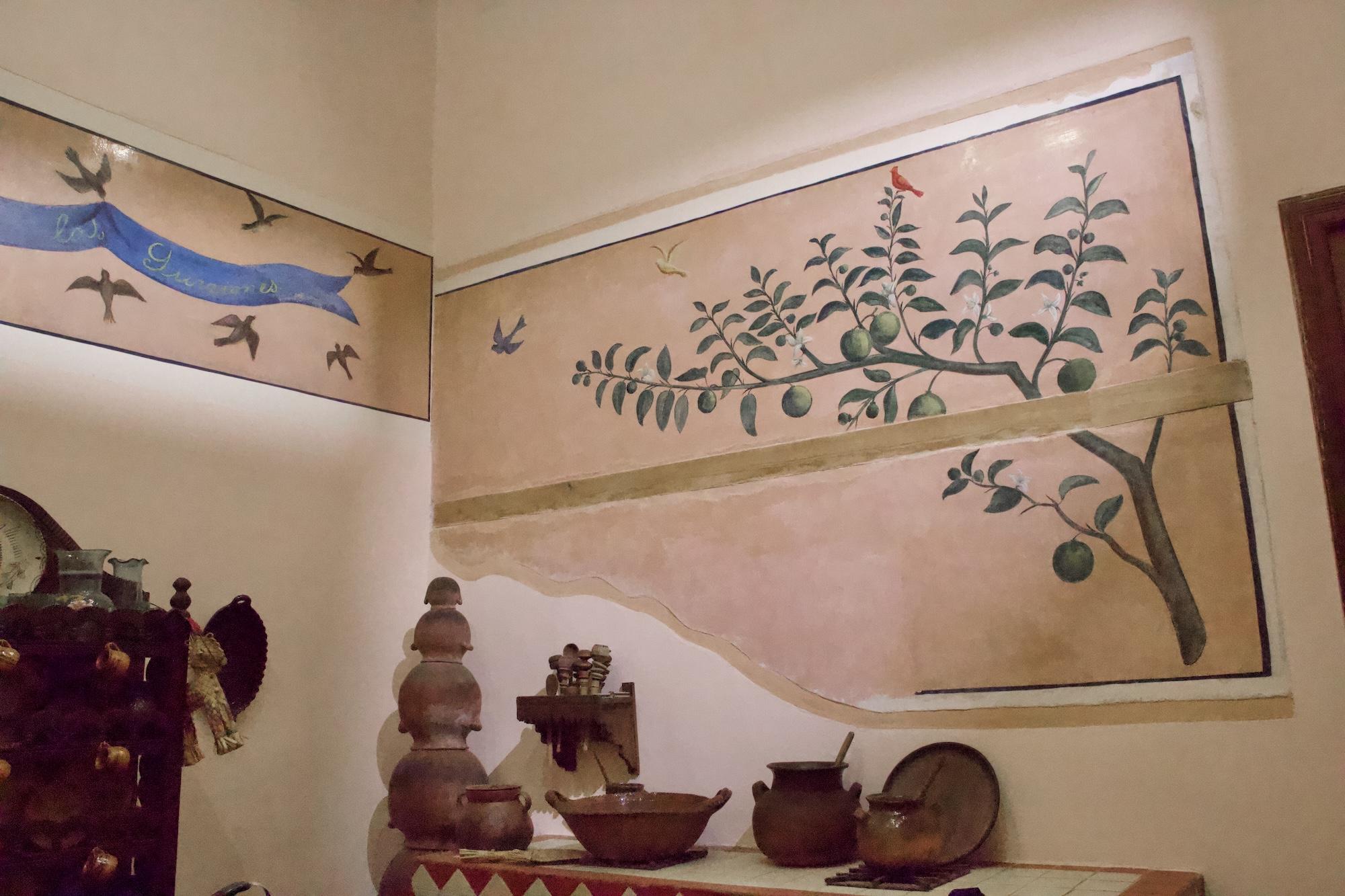
A point of contention is the mural in the kitchen. El mesón de los gorriones (The Table of the Scroungers) is painted across the walls, depicting branches of a grapefruit tree, bougainvillea, and sparrows holding aloft a banner inscribed with the title. While it bears no signature, family lore says it was painted by Kahlo. However, French newspaper Le Monde insists otherwise, citing Helga Prignitz-Poda, a German art historian, and Luis-Martín Lozano, a biographer, who reject the attribution as well as the claim that the basement served as Kahlo’s private retreat, noting that her compromised mobility would have made the steep stairway unnavigable. 

Kahlo’s grandniece, Mara Romeo Kahlo, lived in Casa Roja up until 2023. “I don't care if they say it was or it wasn't,” she says of Le Monde’s reporting. “I was eight or nine years old, I always saw those paintings on the wall. It's just a weird thing to do without backing it up with at least some scholarly research or something. My mother and my grandmother always talked about the mural, they say that it was from Frida.” 

Photo by Jordan Riefe

El mesón de los gorriones (The Table of the Scroungers), inside Casa Roja, 2026.

Fajardo notes that Kahlo featured grapefruit in her 1928 still lifePortrait of Cristina, My Sister. “It might be Frida, I don’t say it’s hers. We think it was painted around 1938. Legally, the mural can’t be traced to Frida.” 

Kahlo first crossed paths with Rivera in 1922 when she was 15. She went to watch him paint Creation, his first significant mural, on the walls of her school's auditorium and is said to have climbed the scaffolding (despite her polio) to observe him at work, frequently interrupting with comments and questions.

“When you admire someone so much, you can become infatuated with the person,” offers Hentschel. “My grandmother used to say that Diego was charming and interesting and very knowledgeable, and a great artist. And Frida fell in love with that charisma, and yeah, I think she really loved him. But, he was emotionally not supportive to her, not at all.”

Photo by Jordan Riefe

Kitchen inside Frida Kahlo Museum. 

After the pair were married in 1929, he paid off the mortgage on Casa Azul two years later—the same year her parents relocated to Casa Roja, where her mother Matilde would die in 1932. Casa Roja became a refuge of a different kind in 1934 and 1935, when Kahlo retreated there after discovering that Rivera had been having an affair with her younger sister Cristina. It was perhaps the deepest betrayal in a marriage already marred by infidelity. 

“We don’t have evidence of that,” says Fajardo, noting letters in the house written in subsequent years that indicate a strong bond between the sisters, whom Kahlo called Chaparrita, as well as a photo taken in New York City following Kahlo’s surgery in 1946 that implies sisterly love. “Frida always thought of Christina as the other half of her heart. Every letter she wrote to her was full of love. So, for someone who was betrayed by a sister, it doesn’t seem for this to be real.” 

While time has proven Kahlo to be the more popular of the pair, Rivera remains a vital and the more prevalent voice in Mexico City. The NH Collection Centro Histórico Hotel in the old city is a short drive to Casa Azul and Casa Roja and a short walk through the zócalo and past the cathedral to Secretariat of Public Education. There, in the mid-1920s, Rivera painted some 120 murals over three stories in the courtyard, depicting everything from noble workers to craven capitalists. A stay at NH Collection Reforma Hotel puts guests a short distance from Palacio de Bellas Artes where Rivera’s Man, Controller of the Universe, as well as murals by José Clemente Orozco and David Alfaro Siqueiros, adorns the lobby of this spectacular art deco theater.

Photo by Jordan Riefe

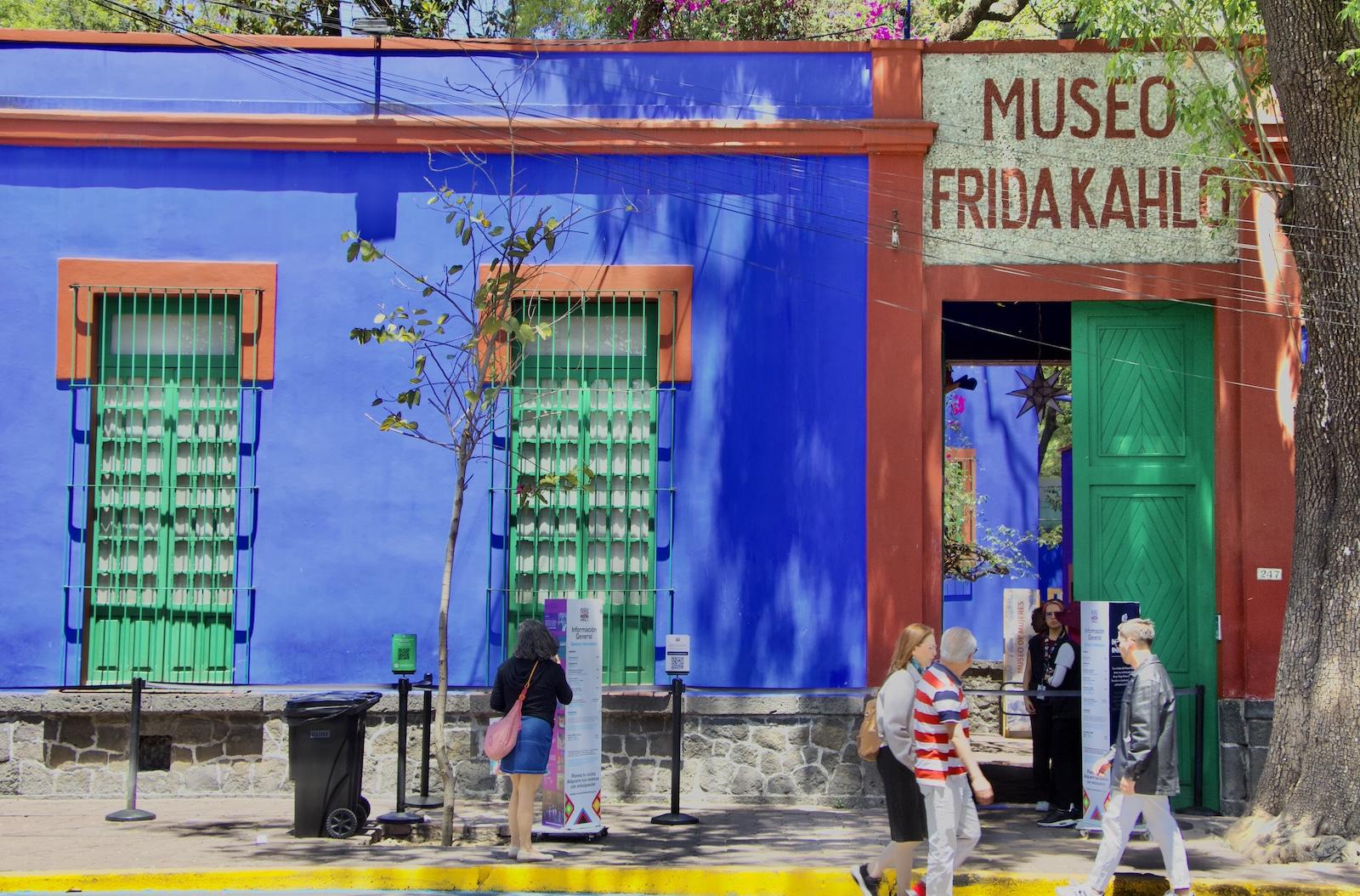
Museo Frida Kahlo, Casa Azul, 2026.

“I can tell you what I learn from their letters, he was a man child,” says Fajardo. “He didn’t bathe himself, he didn’t cook his meals, he didn’t cut his nails, he didn’t go to buy new shirts and trousers. So, they had to bathe him and nourish him and do the trousers for him, the shirts.” But, Rivera was a vital source of money. “Diego was part of this family. And, though it might be hard for us to accept, he was close to the family for a long time.”

About the Author

Jordan Riefe

Jordan Riefe has been covering the film business since the late 90s for outlets like Reuters, THR.com, and The Wrap. He wrote a movie that was produced in China in 2007. Riefe currently serves as West Coast theatre critic for The Hollywood Reporter, while also covering art and culture for The Guardian, Cultured Magazine, LA Weekly and KCET Artbound.

Subscribe to our free art newsletter!

Webform
Art and Object Marketplace - A Curated Art Marketplace