
Press Release  December 11, 2025

The Composition of an Artistic Partnership: Jon Imber and Jill Hoy

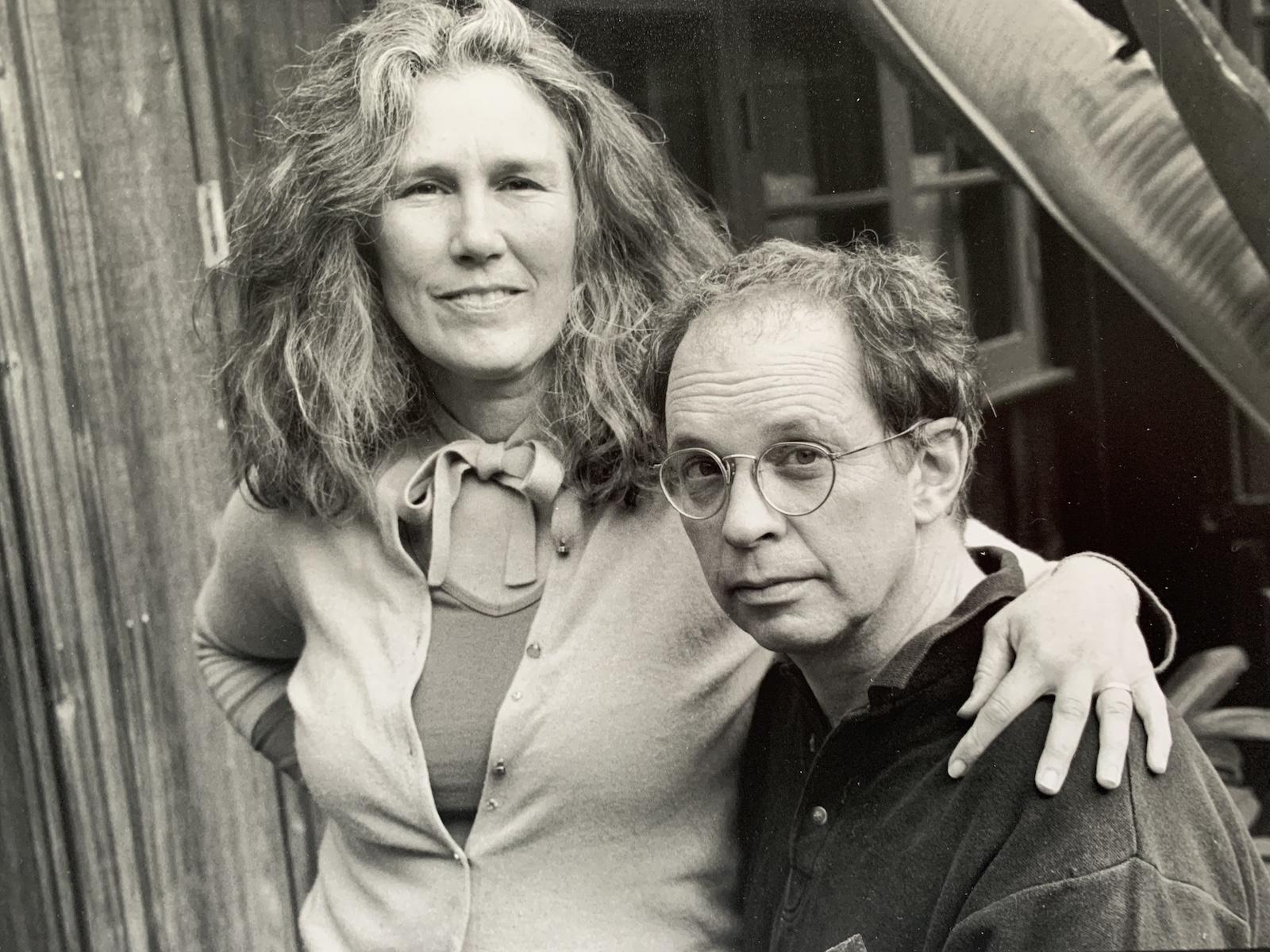
Courtesy of Jill Hoy.

Jill Hoy and John Imber, 1990s. 

An artistic partnership—where two painters share a life, a studio, and a creative dialogue—is a celebrated phenomenon. JON IMBER & JILL HOY: SIDE BY SIDE, on view at the Edward Hopper House Museum & Study Center in Nyack, NY to Feb. 15, 2027, elevates the intimate 23-year marriage of Jon Imber (1950-2014) and Jill Hoy (b. 1954) into a study of creative synergy, where mutual challenge and support resulted in a distinct, shared, and moving body of work.

Like the relationship between Edward Hopper and Josephine Nivison Hopper, who painted side-by-side in plein air, Imber and Hoy forged a partnership where their individual practices were in a constant discussion. This exhibition focuses on the resulting canvases created out-of-doors on Deer Isle, Maine and in the Boston suburbs and reflect shared interests with color, form, and the emotive power of the painterly mark.

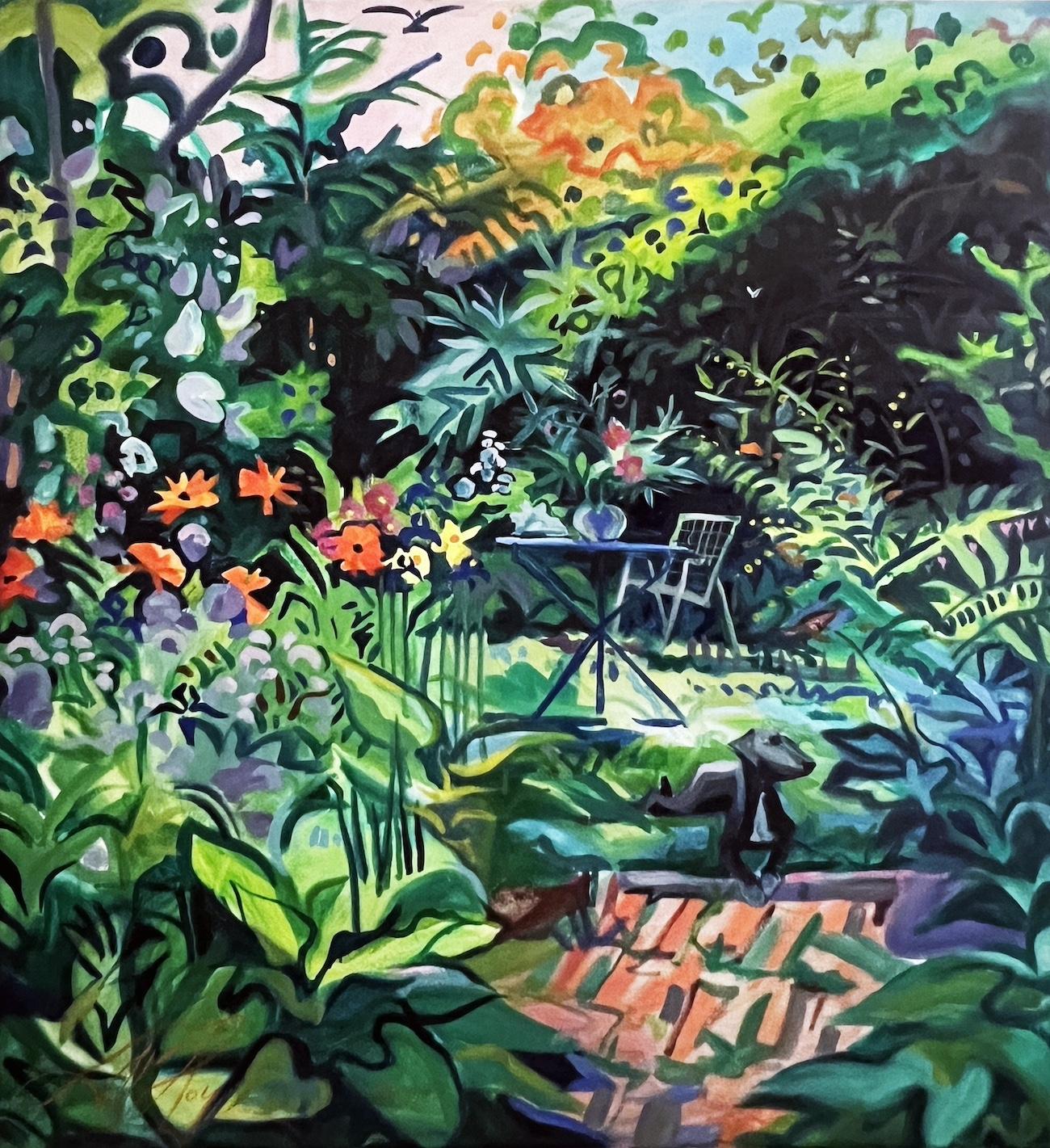
Courtesy of Jill Hoy.

Jill Hoy, Ella in the Garden, Somerville (nd), oil on canvas, 24 x 24 inches.

Their partnership hatched in 1991, when the artists met at Karl Schrag's studio on the Maine coast. They were established figures operating in distinct spheres. Imber, a student of the legendary Philip Guston, was a Boston-based figurative painter and an influential teacher at Harvard. His work, rooted in the intellectual rigor of abstract expressionism, prioritized gesture and the energy of paint. Hoy, a UC Santa Cruz graduate, was known for her figurative studio work and compelling plein-air landscapes of Stonington. Her practice was centered on observation, seeking to capture the clear, gem-like quality of the coastal light she had known since 1965. Their life settled into a rhythm split between the urban energy of Somerville and the environment of Deer Isle.

In Maine, they found inspiration in the harbor and dramatic, rocky coast. Hoy's garden—full of color, rhythm, and perspective—served as a wellspring. But their approaches to the same subjects remained fundamentally different. Hoy was drawn to the 'deep channel of the world,' seeking a connection through observation. Imber, by his own admission, used the external world as a launchpad.

"I figure as long as there's good information out there, like flowers and sky and sea with a couple of rocks," Imber once said, "I can figure out something to get me going and then I'll just rely on my reactions and try to make it an exciting painting."
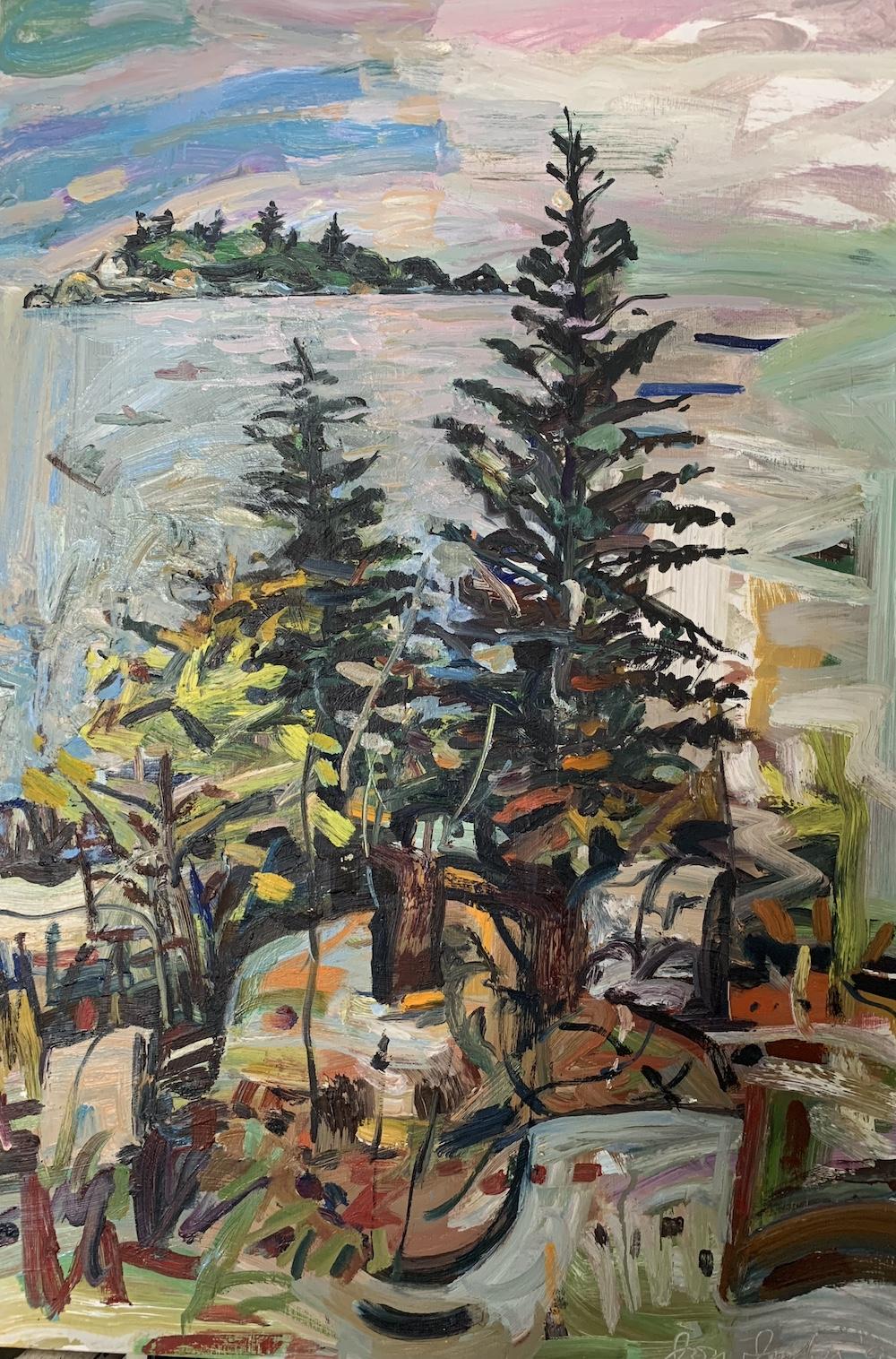
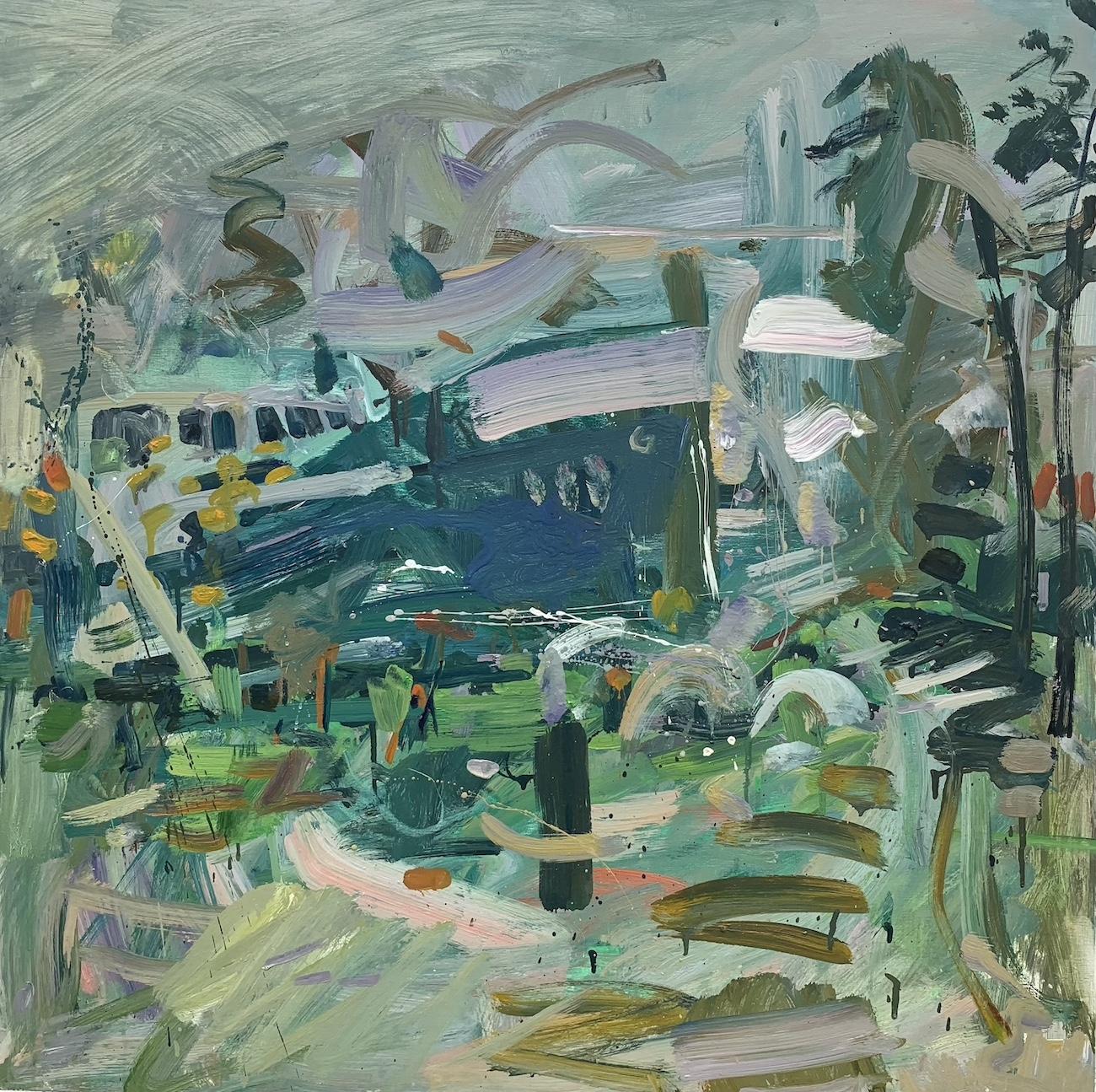
Courtesy of Jill Hoy.

Jon Imber, Two Quarry Spruce (1992), oil on canvas, 30 x 20 inches. 

Imber's response was immediate, gestural, and explosive, pushing his landscapes quickly toward abstraction while Hoy’s reaction was focused on translating light and atmosphere. The exhibition compellingly juxtaposes these two readings of a single geography, revealing how Imber’s brushwork pulled Hoy’s later work toward more gestural freedom, and Hoy’s dedication to light anchored Imber's abstraction in recognizable forms.

The partnership took on an poignancy with Imber's ALS diagnosis in 2012. As his capabilities deteriorated, his commitment to painting transformed into an act of profound will and endurance. No longer able to travel, Imber switched his focus to portraiture, with friends and family coming to his studio. The ensuing canvases document his and his circle's late-life journey with an unflinching intimacy.

Courtesy of Jill Hoy.

Jon Imber, The Elva G (2007), oil on panel, 36 x 36 inches.

Imber adapted his technique: he transitioned from painting with his right hand to his left and finally used a custom-designed bracket to hold a paintbrush. This period stripped his work down to an essential visual language, an almost combative use of gestural brushstrokes where every mark was a success over the disease. Hoy perfectly frames this dynamic when she said, "Painting for me is tapping into the deep channel of the world. For Jon it is about the combat, the fight."

Throughout this difficult phase, Hoy continued to paint by his side, her steadfast presence providing the emotional and practical support that enabled Imber to continue his final body of work. His late self-portrait, on view in the exhibition, stands as an astonishing record of creative endurance, evolving from representation toward an increasingly abstract and emotionally charged visual language. 

SIDE BY SIDE asserts that the dialogue between these two artists is as crucial to their legacies as Imber’s foundational study with Guston or the inclusion of his work in collections from the Fogg Art Museum at Harvard, the Farnsworth Museum, and and the Bowdoin College Museum of Art. Similarly, it illuminates Hoy’s distinctive contribution as an artist whose practice simultaneously honors the purity of the Maine landscape and engages with the expressive possibilities of the studio.

By presenting their works not merely as individual achievements but as intertwined responses to shared time, space, and challenge, the exhibition offers an intimate look at how a marriage can become the most rigorous and enduring form of art criticism. Their legacy is one of continuous creation, demonstrating that the pursuit of art, even against the greatest odds, is a beautiful and necessary form of persistence. The paired paintings, both landscapes and deeply personal final portraits, leaves behind a singular, inspiring document of a life lived and created together.

41.09325916385, -73.91793755

Jon Imber & Jill Hoy: Side by Side
Start Date:
October 11, 2025
End Date:
February 15, 2026
Venue:
Edward Hopper House

Subscribe to our free e-letter!

Webform