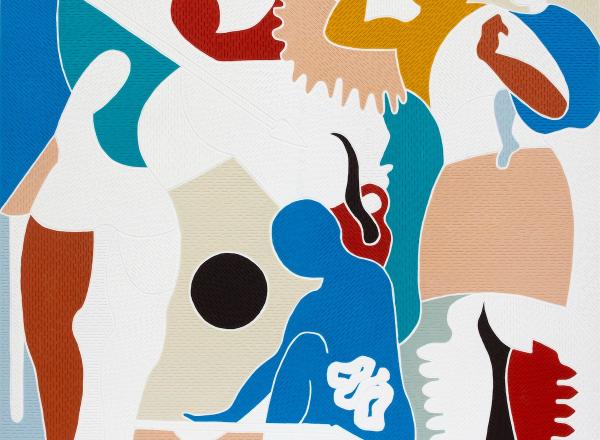



Thematically and stylistically, Wangechi Mutu’s art is a bubbling stew of ingredients that don’t always cohere. Part Afro-Futurism, part cyber-punk, and part body horror, Mutu’s sculptures, collages, and mixed-media paintings cover a lot of ground.
Art News
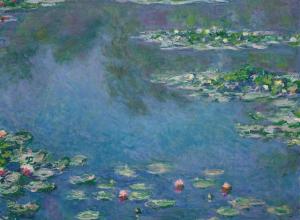
Without Claude Monet, there is no Mark Rothko, no Jackson Pollock, no Clyfford Still. His masterful rendering of light, bold coloration and gestural brushwork were not just resplendent, they represented the first forays into abstraction. On this episode of Expert Voices, Brooke Lampley discusses Monet’s Coin du bassin aux nymphéas, which will be offered as a highlight of Sotheby's Modern Evening Auction on 16 November. Coin du bassin aux nymphéas represents one of the very best of Monet’s late works and exemplifies his tremendous influence on the generation of artists who would follow.
Ever since their construction, the monuments and structures of ancient Rome have amazed and astounded their viewers with their grandeur and the ingenuity of their engineering. Throughout its history, Rome conquered much of modern Europe, northern Africa, and the Middle East, encompassing nearly 1.7 million square miles of territory at its height.
It’s the first night of Passover! Tonight, Jews all around the world will sit down together and recount the story of their ancestor’s exodus from Egypt and the Jewish people’s liberation from slavery. The Passover story is from the book of Exodus, which is one of the most central stories of the Torah, and it reflects some of the biggest themes in Jewish history: oppression, freedom, adversary, and the idea of a homeland.
Greater attention is often paid to the causes of wars than to their aftermath. The Boston Tea Party of 1773 is immortalized in paintings, but the resettlement of defeated American Loyalists after 1783 is not.
Although such collections were kept by a wide range of groups and individuals—from Tsars to churches and apothecaries to scientific academies—a new wave of scholars have taken particular interest in the motives and cultural implications of the wealthy, often aristocratic, hobbyist collector.
Lately there have been investigations that highlight new theories on some of history’s greatest artists and their paintings. We wanted to dive into these theories to discuss their arguments, histories, and if there is any validity to them. Regardless, these new theories have proven that even if a work is three, or four, or five hundred years old, it can still cease to amaze and perplex us.
In the hotly contested battleground of Gender Studies, art historian Jonathan D. Katz is a trailblazer. He was the first tenured faculty in Gay and Lesbian Studies in the United States and has curated more queer-related art exhibitions than anyone else worldwide.
In the third installment in our series on jewelry’s place in art history, we’re exploring how the once-Emperor Napoleon used jewelry, and in particular, cameos, to try and secure his place in history.
Dadaism or Dada is an art movement of the early twentieth century characterized by irreverence, subversion, and nonsense. Dada art, performance, and poetry emerged in Zurich as a reaction to the horror and misfortune of World War I.