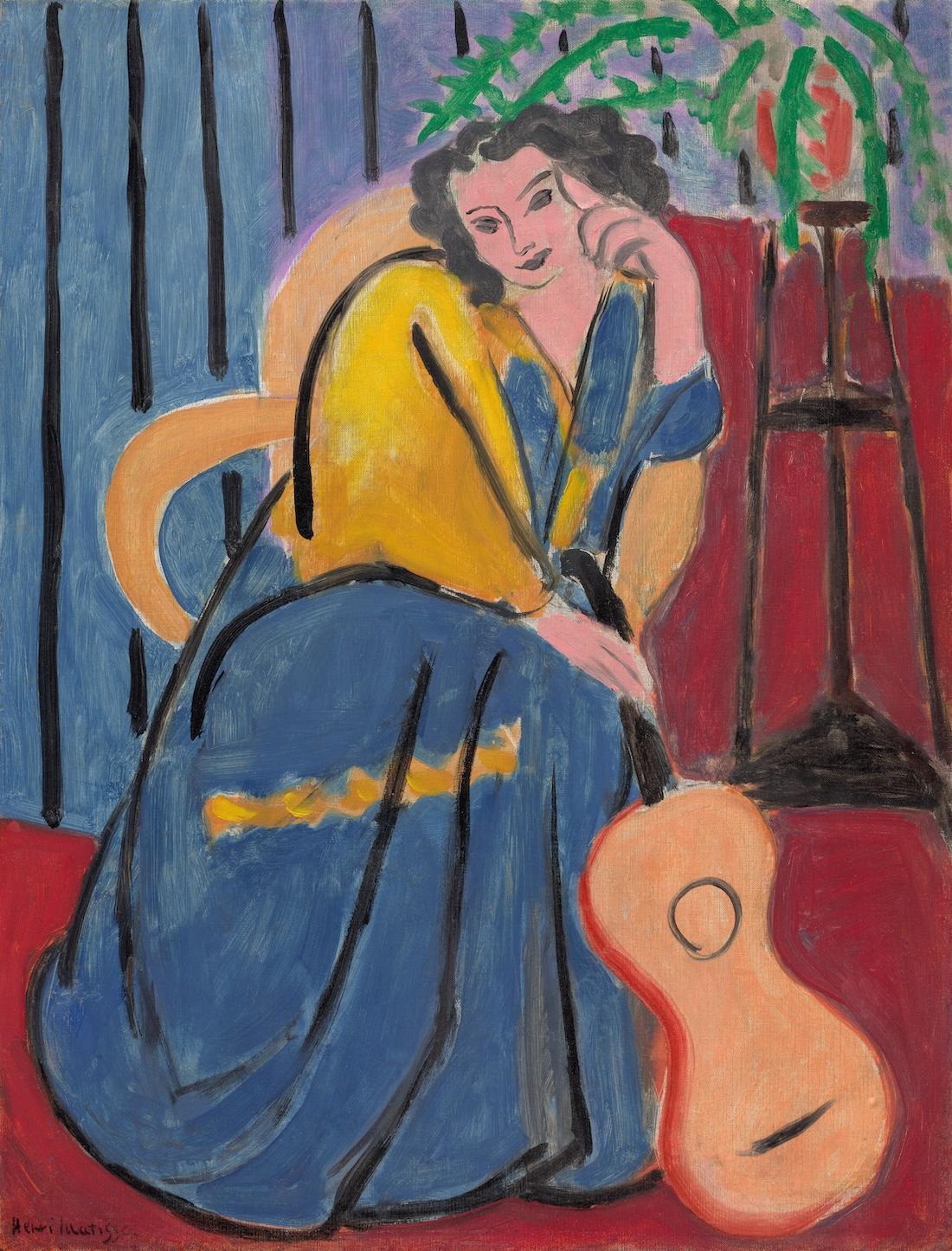


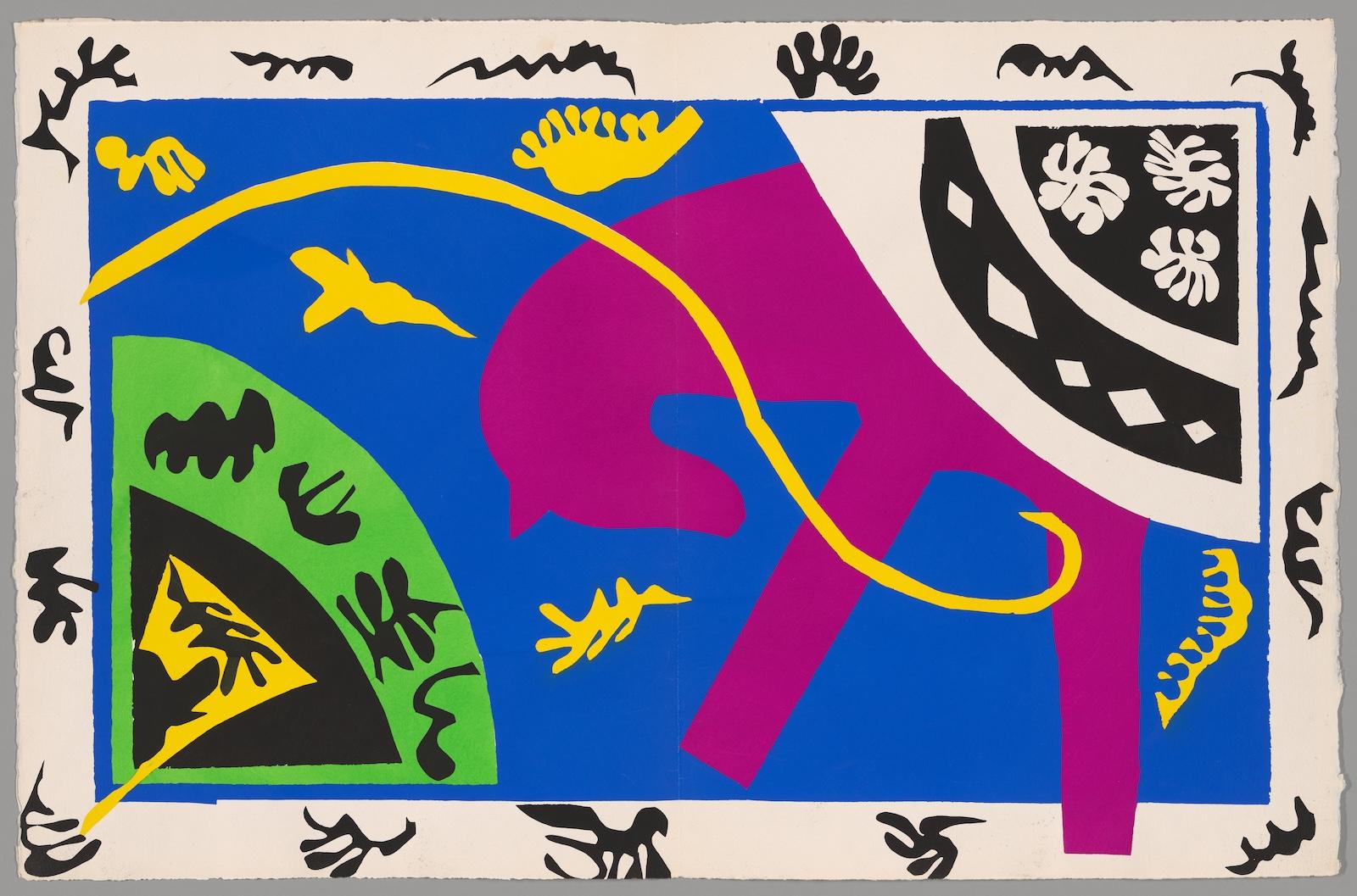
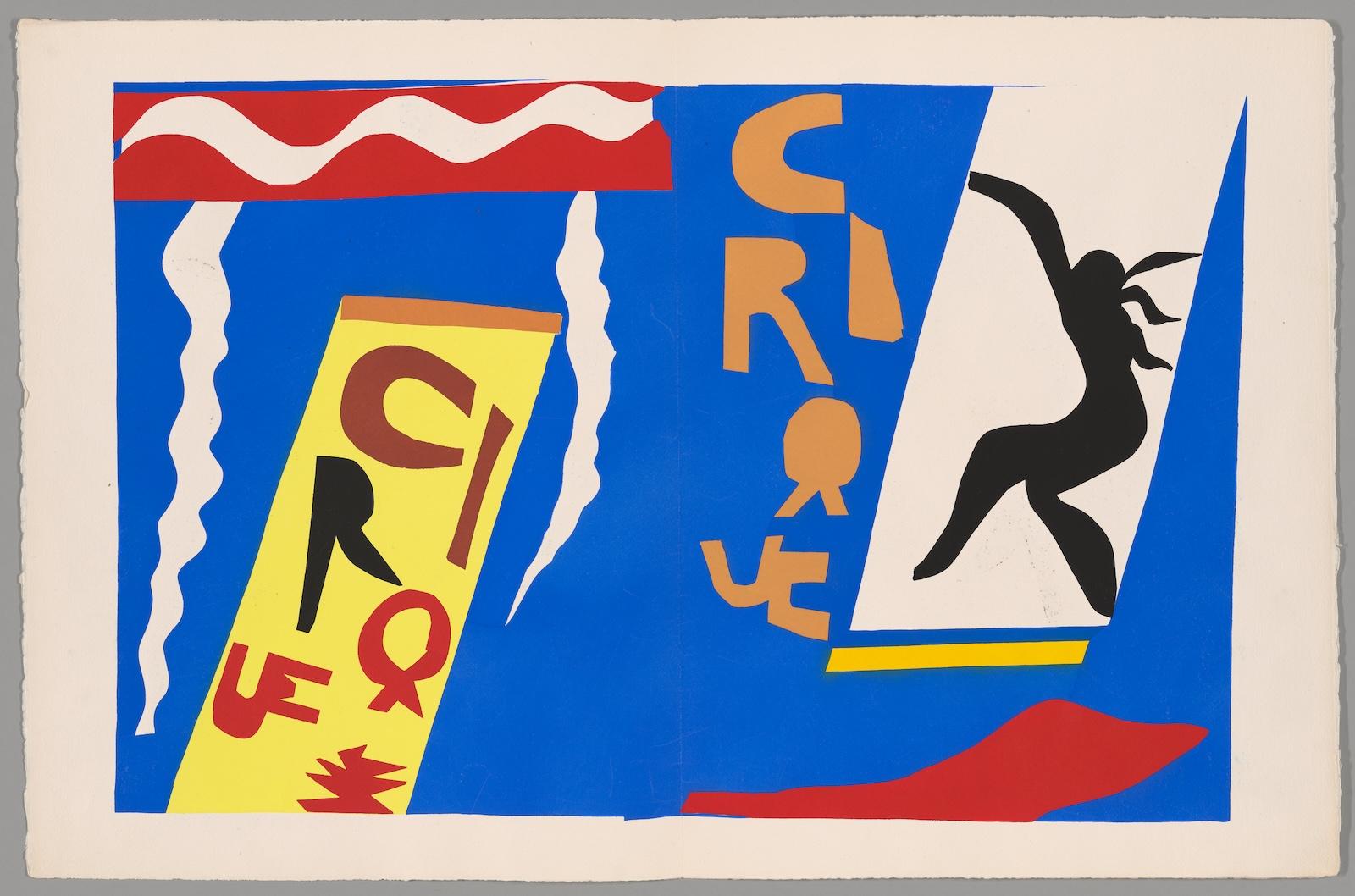
Jazz is also the title of an influential artist's book by Henri Matisse made between 1943 and 1944 after he had undergone treatment for abdominal cancer and was no longer able to stand and paint for any length of time. Responding to the confines of his situation, Matisse turned to cutting paper, a medium he called “drawing with scissors” that he practiced for the remaining 10 years of his life. The book translated Matisse’s cut paper designs into print using pochoir, French for stencil. Published in an edition of 250 in 1947, it is now the focus of Matisse’s Jazz: Rhythms in Color, a major exhibition at the Art Institute of Chicago on view from March 6–June 1, 2026.
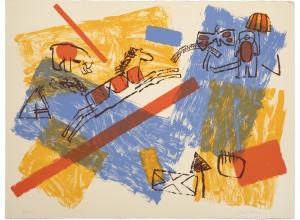
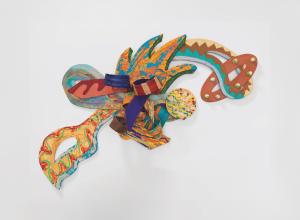
Images of brilliantly colored shapes floating among exuberant, black figurative elements dance across the page and are paired with loopy, curvilinear text in Matisse’s own hand. The combination forms a work that is simultaneously personal, in the moment, and universal, exploring themes of art, color, and life. It is considered a keystone of modern art, celebrating vitality and movement through a new, abstracted visual language. The Grand Palais in Paris is presenting a more extensive exhibition, Matisse: 1941-1954, that helps to contextualize Jazz. It is on view now through July 26, 2026.