Gallery  April 6, 2026  Cynthia Close

Visual Art and Jazz: A Crossover of Media

© 2025 Succession H. Matisse / Artists Rights Society (ARS), New York.

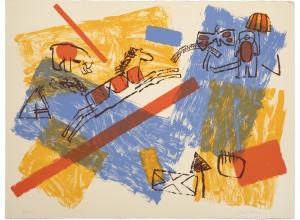
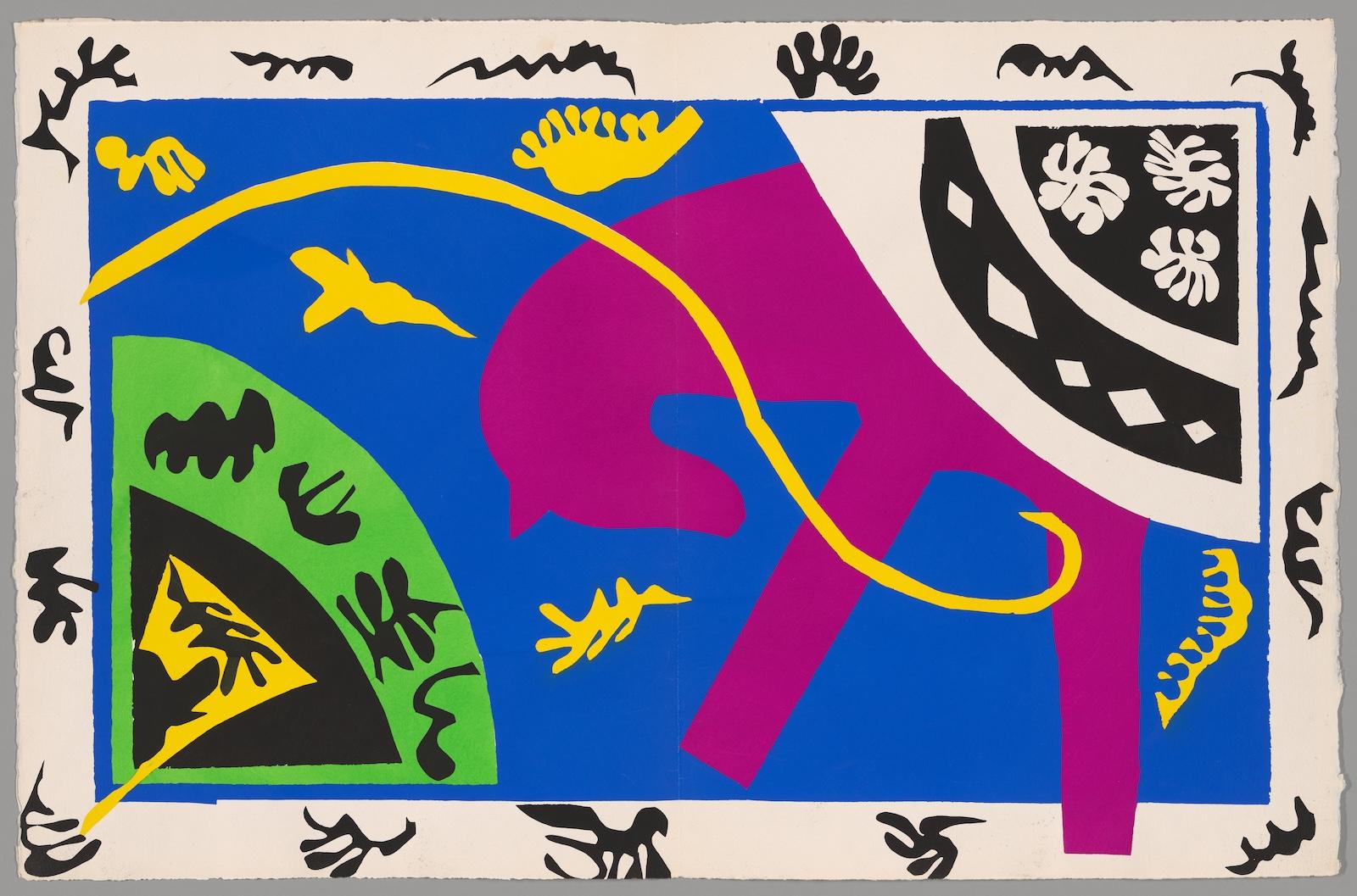
Henri Matisse, Printed by Edmond Vairel, Published by Tériade for Éditions Verve. Horse, Rider, and Clown from Jazz, 1947. Simeon B. Williams Fund. 

Improvisation, the ability to respond spontaneously to the moment, is a defining characteristic found in the work of two giants of modern art, Henri Matisse (1869-1954) and Pablo Picasso (1881-1973). Improv is also a necessary element in understanding and playing jazz, the freestyle musical genre born in the late 19th and early 20th century in African American communities in the southern United States.

© 2025 Succession H. Matisse / Artists Rights Society (ARS), New York.

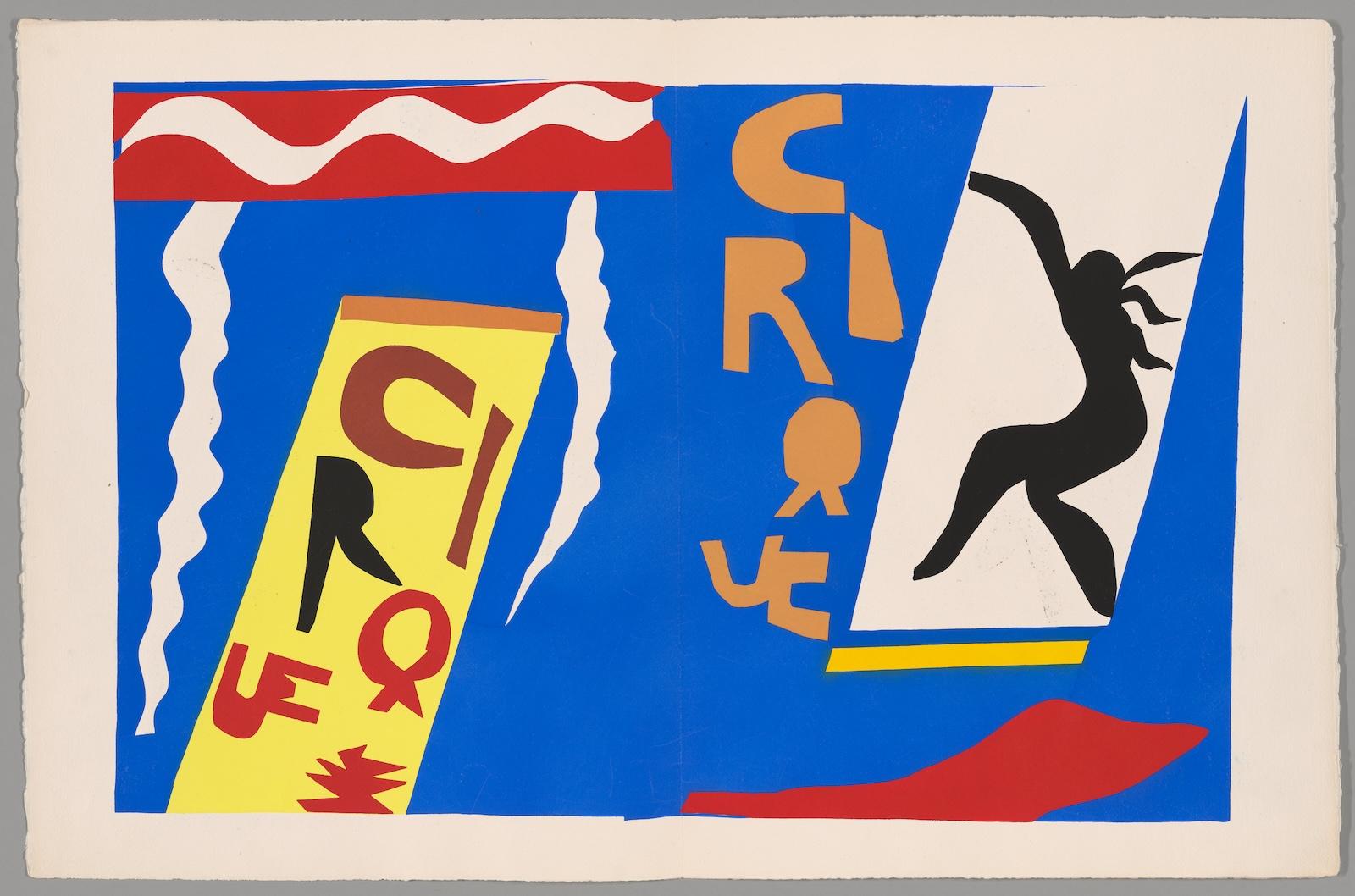
Henri Matisse, Printed by Edmond Vairel, Published by Tériade for Éditions Verve. Circus from Jazz, 1947. Simeon B. Williams Fund. 

Jazz is also the title of an influential artist's book by Henri Matisse made between 1943 and 1944 after he had undergone treatment for abdominal cancer and was no longer able to stand and paint for any length of time. Responding to the confines of his situation, Matisse turned to cutting paper, a medium he called “drawing with scissors” that he practiced for the remaining 10 years of his life. The book translated Matisse’s cut paper designs into print using pochoir, French for stencil. Published in an edition of 250 in 1947, it is now the focus of Matisse’s Jazz: Rhythms in Color, a major exhibition at the Art Institute of Chicago on view from March 6–June 1, 2026.

Images of brilliantly colored shapes floating among exuberant, black figurative elements dance across the page and are paired with loopy, curvilinear text in Matisse’s own hand. The combination forms a work that is simultaneously personal, in the moment, and universal, exploring themes of art, color, and life. It is considered a keystone of modern art, celebrating vitality and movement through a new, abstracted visual language. The Grand Palais in Paris is presenting a more extensive exhibition, Matisse: 1941-1954, that helps to contextualize Jazz. It is on view now through July 26, 2026. 
© 2025 Succession H. Matisse / Artists Rights Society (ARS), New York.

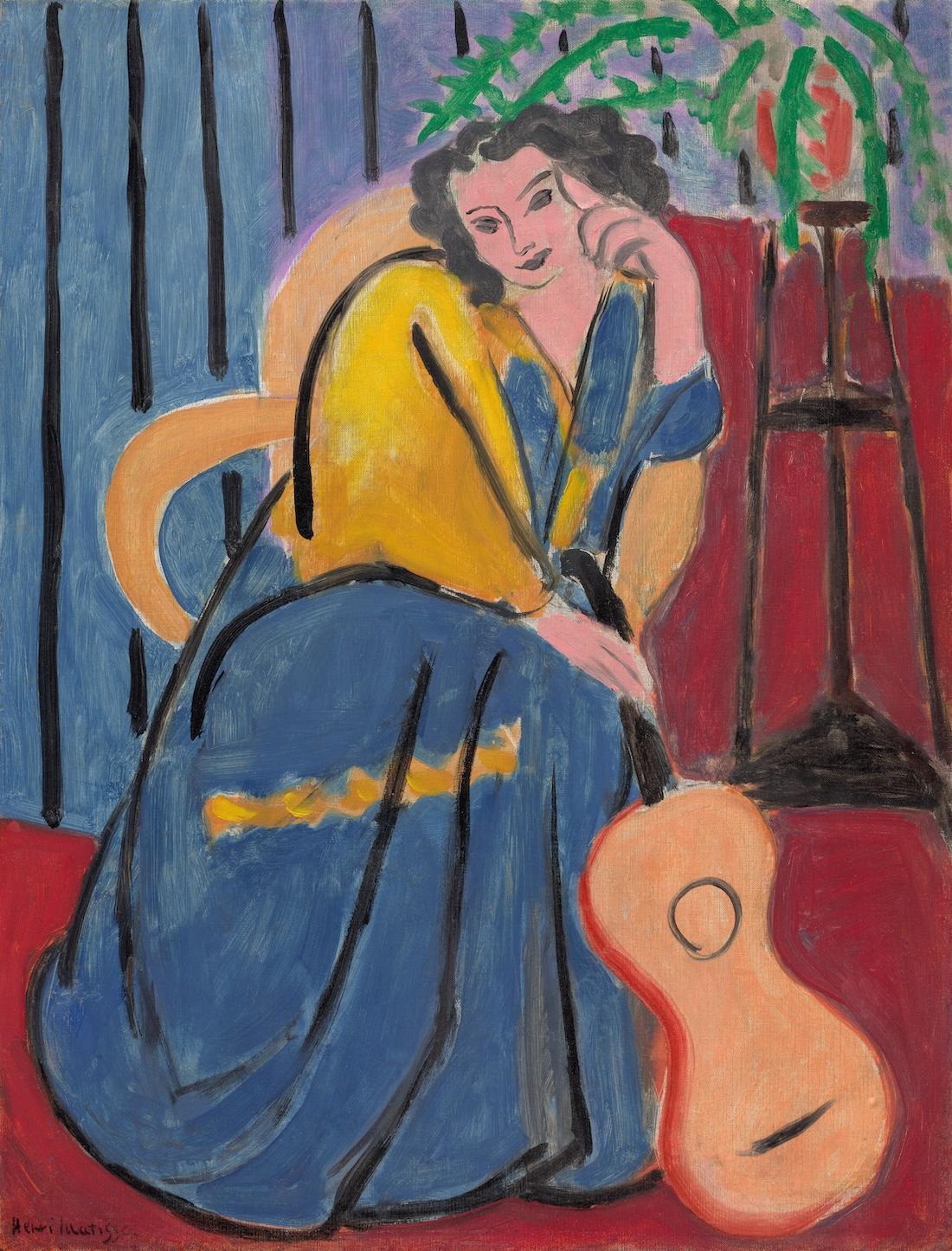
Henri Matisse. Girl in Yellow and Blue with Guitar, 1939. The Art Institute of Chicago, Brooks McCormick Estate. 

Several other institutions are presenting exhibitions and festivals that explore the intersection of visual art and jazz. The city long considered the birthplace of American jazz, New Orleans, Louisiana, is also home to the Ogden Museum of Southern Art which is presenting Herman Leonard: Images of Jazz through July 12, 2026. 

Born in Pennsylvania in 1923, Leonard (1923-2010) studied with renowned photographer Yousef Karsh (1908-2002). He lived and worked in NYCParis, and New Orleans during a time when jazz and bebop was ascending, providing opportunities to capture jazz legends like Duke Ellington, Louis Armstrong, and Ella Fitzgerald while performing in atmospheric black and white photos. Tragically, Leonard lost his New Orleans home and his studio in 2005 to Hurricane Katrina. The Ogden Museum helped to save a portion of his archive. This exhibition features 30 selenium-toned silver prints of Leonard’s iconic jazz portraits.

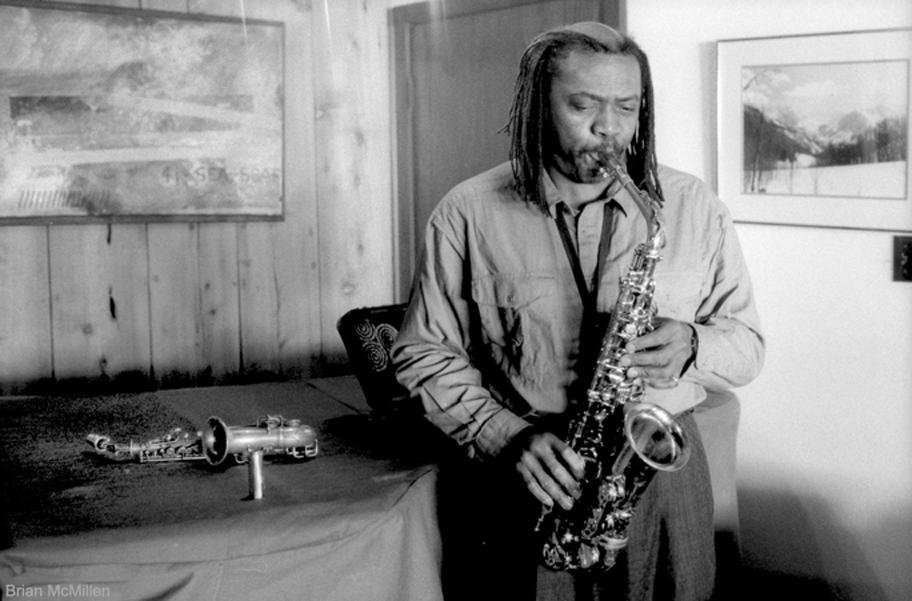
The primary focus of The Jazz Gallery in New York is to nurture the next generation of great jazz musicians, but they also feature visual art and photography exhibitions inspired by music, including Now I'm Breakin' Glass by Guggenheim Award-winning artist Oliver Lake (b.1942), open now through the end of April. Lake is a painter, poet, and performance artist. He is most prominently known as a saxophonist, but visual art has played a significant role in his life. “I picked up the brush, because it relaxes me and is very much like meditation. I started painting as a teenager but began painting on a regular basis about 35 years ago.” Many of Lake’s delightful mixed-media on paper works have the same spontaneous quality as his music. Layering, collaged elements might include found objects like feathers or buttons. His original work is modestly priced and available for purchase on his website.

WikiCommons. Photo by Brian McMillen.

Oliver Lake at Bach Dancing & Dynamite Society, Half Moon Bay CA 3/6/88 with World Saxophone Quartet: Julius Hemphill; Hamiet Bluiett; David Murray. License

Some American cities are promoting or launching jazz and visual arts festivals as a way to revitalize their downtowns. This year is the 49th anniversary in Georgia of the Atlanta Jazz Festival and Visual Artist Program held annually on Memorial Day weekend. The festival includes dedicated booths for selected visual artists, highlighting work that translates jazz into visual formats. 

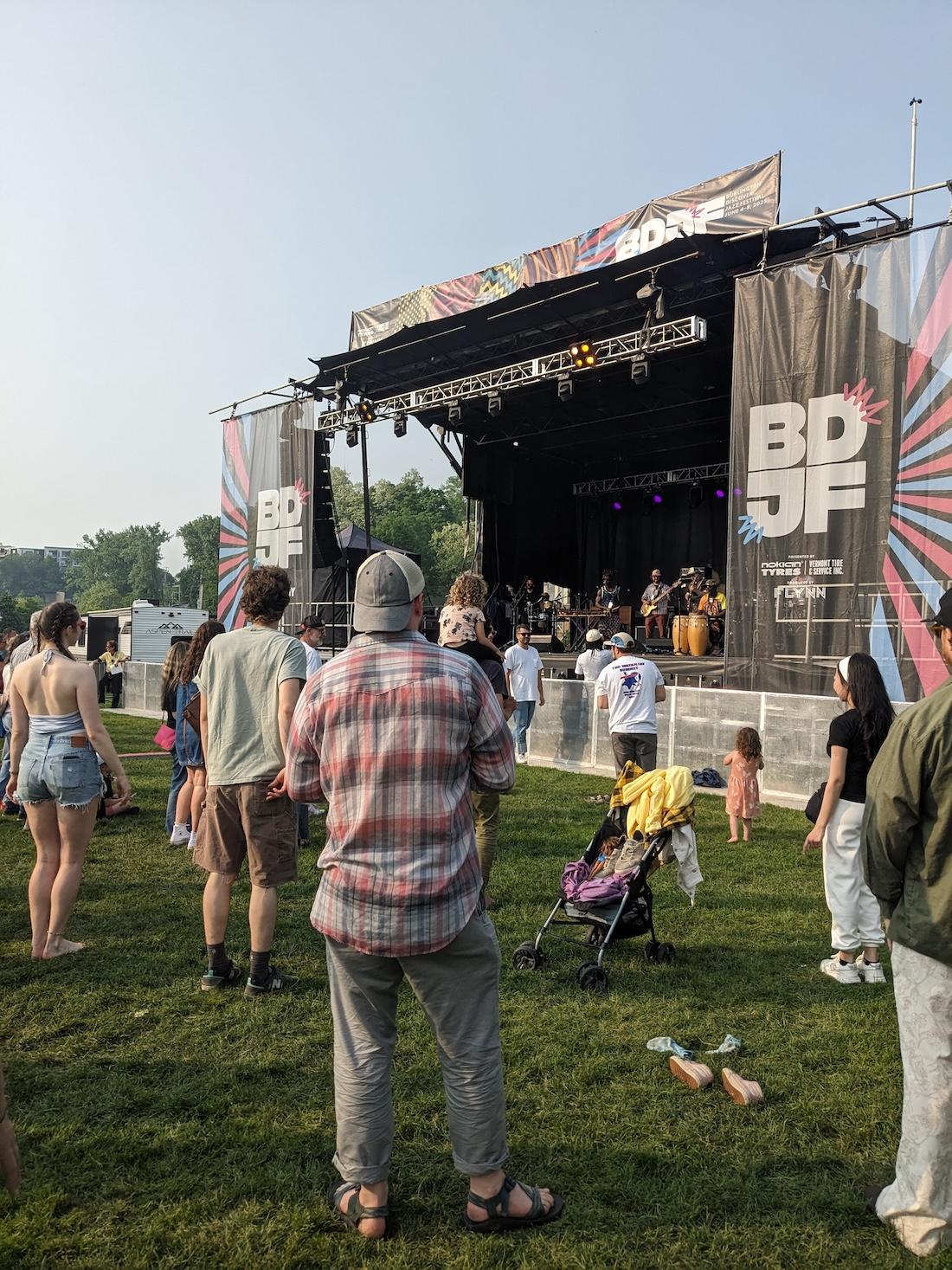
WikiCommons

Burlington Discover Jazz Festival at Waterfront Park in Burlington, Vermont. 2025. License

Farther north in Vermont, we find the long-running Burlington Discover Jazz Festival. Curated in 2026 by visionary MacArthur “Genius” Award-winning jazz/visual artist Jason Moran (b.1975), this festival (June 3–7), now in its 5th decade, integrates performance with art events throughout the city. In the past, Moran has collaborated with well-known contemporary visual artist Kara Walker (b.1969), pioneering video and performance artist Joan Jonas (b.1936), conceptual artist Glenn Ligon (b.1960), and Ethiopian-American multimedia artist Julie Mehretu (b.1970). Moran’s work was included with Matisse’s Jazz in the exhibition Art of Jazz: Form/Performance/Notes at Harvard’s Ethelbert Cooper Gallery in 2016.

Florida entrepreneurs hope that the inaugural Clermont Art & Jazz Fest, launching April 18–19, will become a tradition in this southern city. It is designed to feature a marketplace where local and regional artists sell original work alongside live jazz performances. If recent history is any indication, linking visual art and jazz is a great vehicle to bring communities together in stressful times.

41.879500314238, -87.62409465

Matisse’s Jazz: Rhythms in Color
Start Date:
March 7, 2026
End Date:
June 1, 2026
Venue:
Art Institute of Chicago
About the Author

Cynthia Close

Cynthia Close holds a MFA from Boston University, was an instructor in drawing and painting, Dean of Admissions at The Art Institute of Boston, founder of ARTWORKS Consulting, and former executive director/president of Documentary Educational Resources, a film company. She was the inaugural art editor for the literary and art journal Mud Season Review. She now writes about art and culture for several publications.

Subscribe to our free e-letter!

Webform
Art and Object Marketplace - A Curated Art Marketplace