Interview  March 30, 2026  Dian Parker

Phong Bui Practices Meditation Through Art

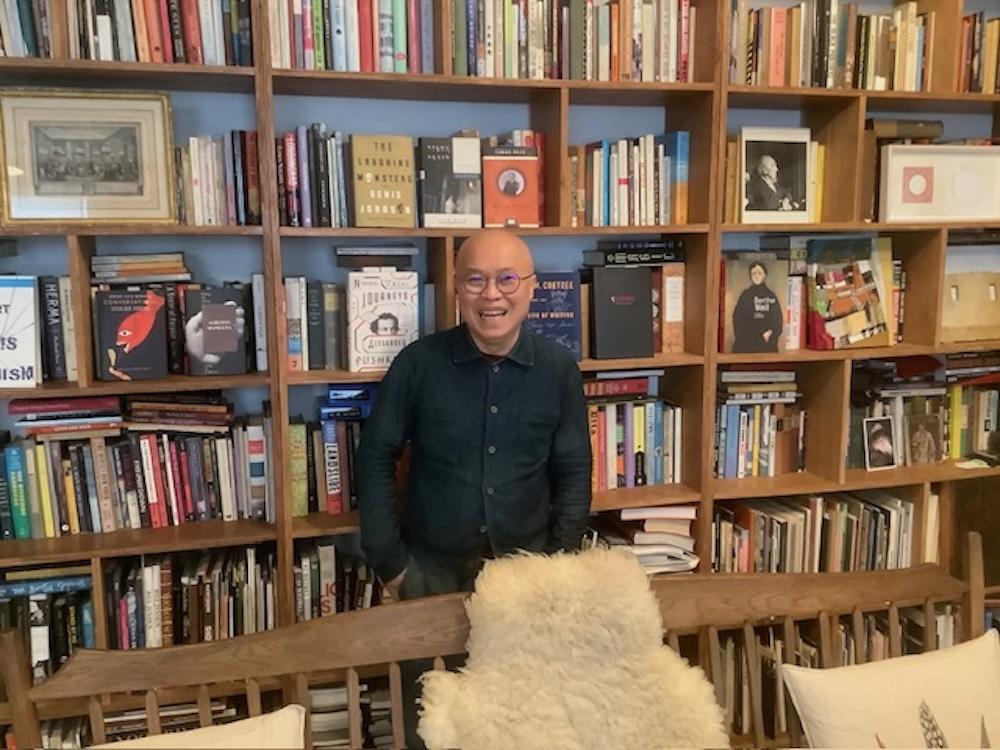
Photo by Dian Parker

Phong Bui in front of his many bookshelves. 

Phong H. Bui is a lot of people. He is co-founder, publisher, and artistic director of The Brooklyn Rail, a monthly journal that features interviews, museum and gallery shows, book-music-dance-theater reviews, and even fiction. Bui also writes the monthly editorial that is political, cultural, global, and insightful. He has the ability to write about the big picture, probably because he is an immigrant with a brilliant, electrifying mind. He’s also been the curator of over 100 exhibitions. His pencil portraits grace the pages of The Rail. He has indefatigable energy and curiosity, and he is extremely generous and committed to everything he does.

Courtesy of the artist.

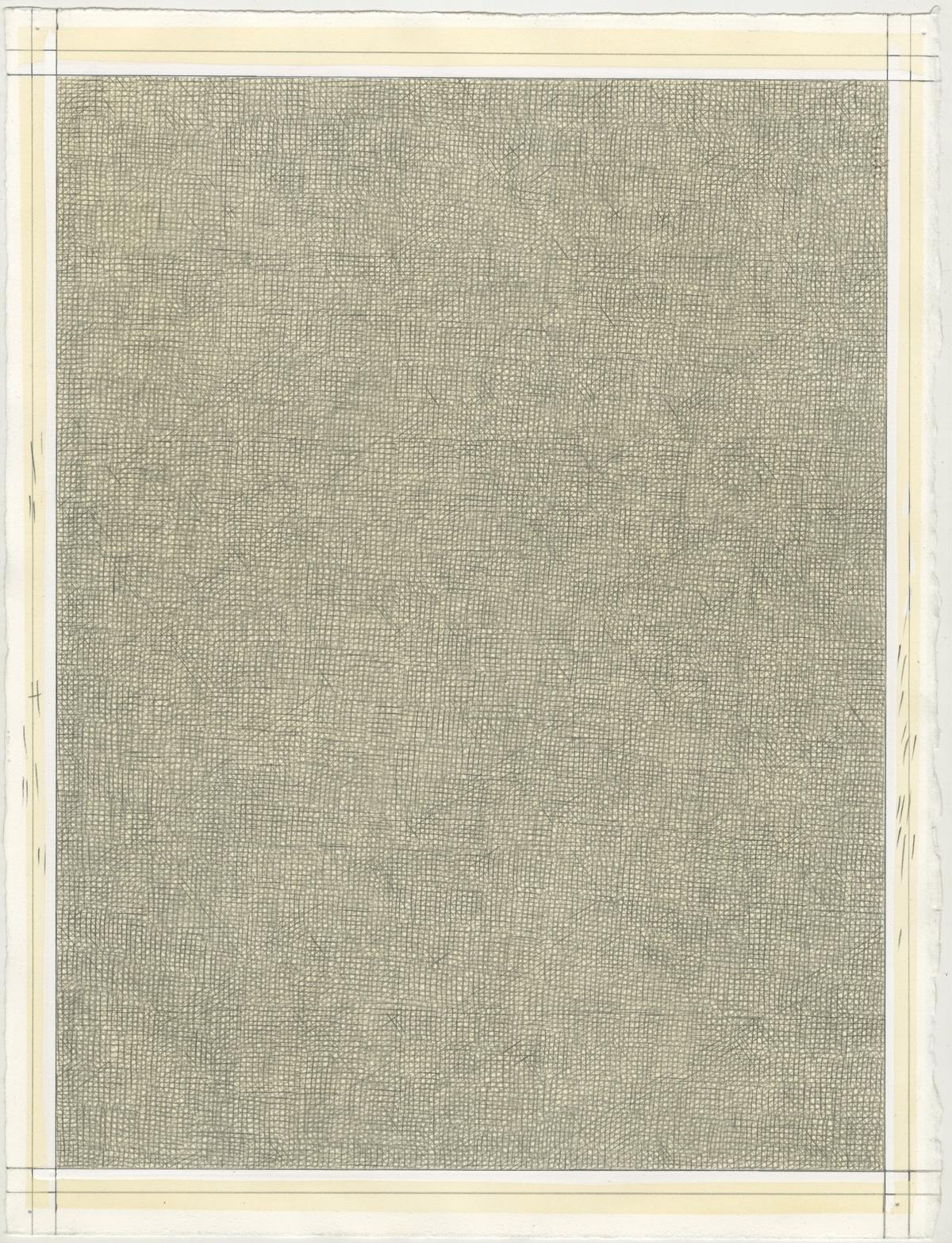
Phong H. Bui, Meditation Drawing, 2025. Pencil on paper, 16 1/2 x 12 3/4 inches. 

Born in Huế, Vietnam in 1964, Bui came over with his family after spending three and a half years in labor camps. He spoke no English but quickly learned, earned his high school GED, and later graduated from the University of the Arts in Philadelphia, receiving a first prize for illustration which opened a lot of doors. He was awarded a traveling scholarship and visited Italy, saturating himself in art.

Art & Object spent six hours with Bui in his large Brooklyn apartment, surrounded by Goya prints, original de Kooning, Guston, and Rackstraw Downes drawings, countless sculptures and paintings given as gifts, along with hundreds and hundreds of books. He reads voraciously. When we met, he was reading The Idealist about Kissinger. During our free-wheeling conversation, Bui often bookended his answers with insightful views on current affairs. We began by discussing the difference between a trip and a journey. Bui said, “Creative beings have a need to leave their home. They take a journey, a lifelong labor of love that never ends.”

Dian Parker: When you arrived in the States, did you know your journey had begun?

Phong Bui: As a child, I knew. My beloved grandmother, a Buddhist, had a deep influence on me. She said, “Grandson, when you grow up, you will suffer like everyone else and never think your suffering is better than theirs. Be sure to suffer in the right way.” It means to love what you love and you follow it, no matter what. I spent one year at the New York Studio School and was very unhappy—my first year in New York. Then, I had an epiphany when I went to MoMA, alone for the first time, and recognized the soul of an artist, this holiness of life.
Courtesy of the artist.

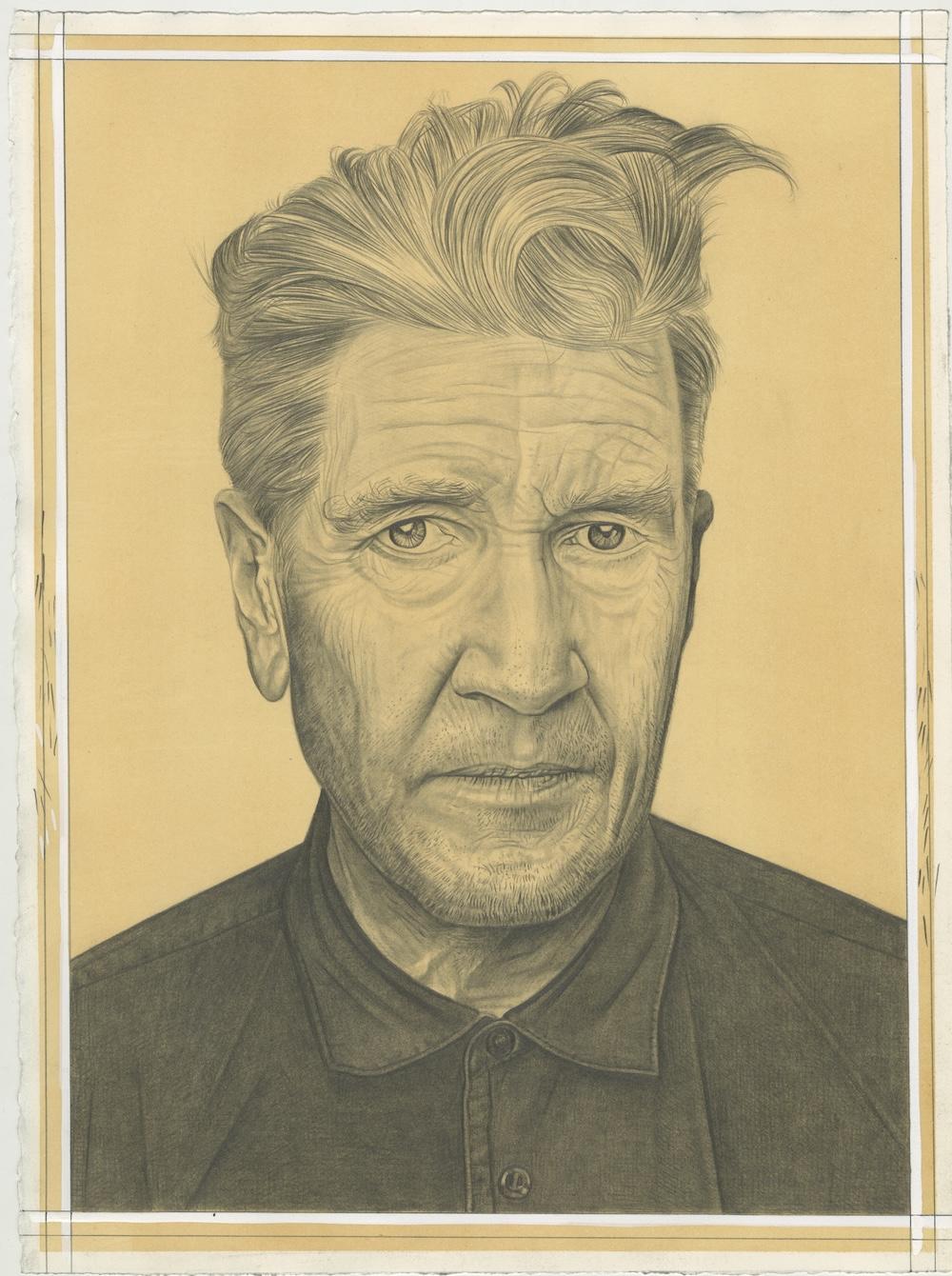
Phong H. Bui, Portrait of David Lynch, 2019. Pencil on paper, 16 1/2 x 12 3/4 inches. 

DP: What artist has had the deepest influence?

PB: Willem de Kooning, absolutely. He created his own life. Coming over from Holland, he first worked for a magazine but found he didn’t like being told what to do and took a job as a housepainter. I admired him so much that I became a house painter, on and off till 2010. I was a plasterer. My nickname was Skimble. I did that until my body wore out. America has forgotten to support artisans, laborers that work with their hands. De Kooning admired his own skill as a house painter. It is a terrible moral collapse to not respect those that clean houses, garden, etc.

DP: That’s why immigrants are so important for this country—a necessary balance, a grounding force.

PB: Immigrants come here to start a new life and to give their family a new life. They did not come here to exploit this country but to make a contribution. The Brooklyn Rail is my contribution.

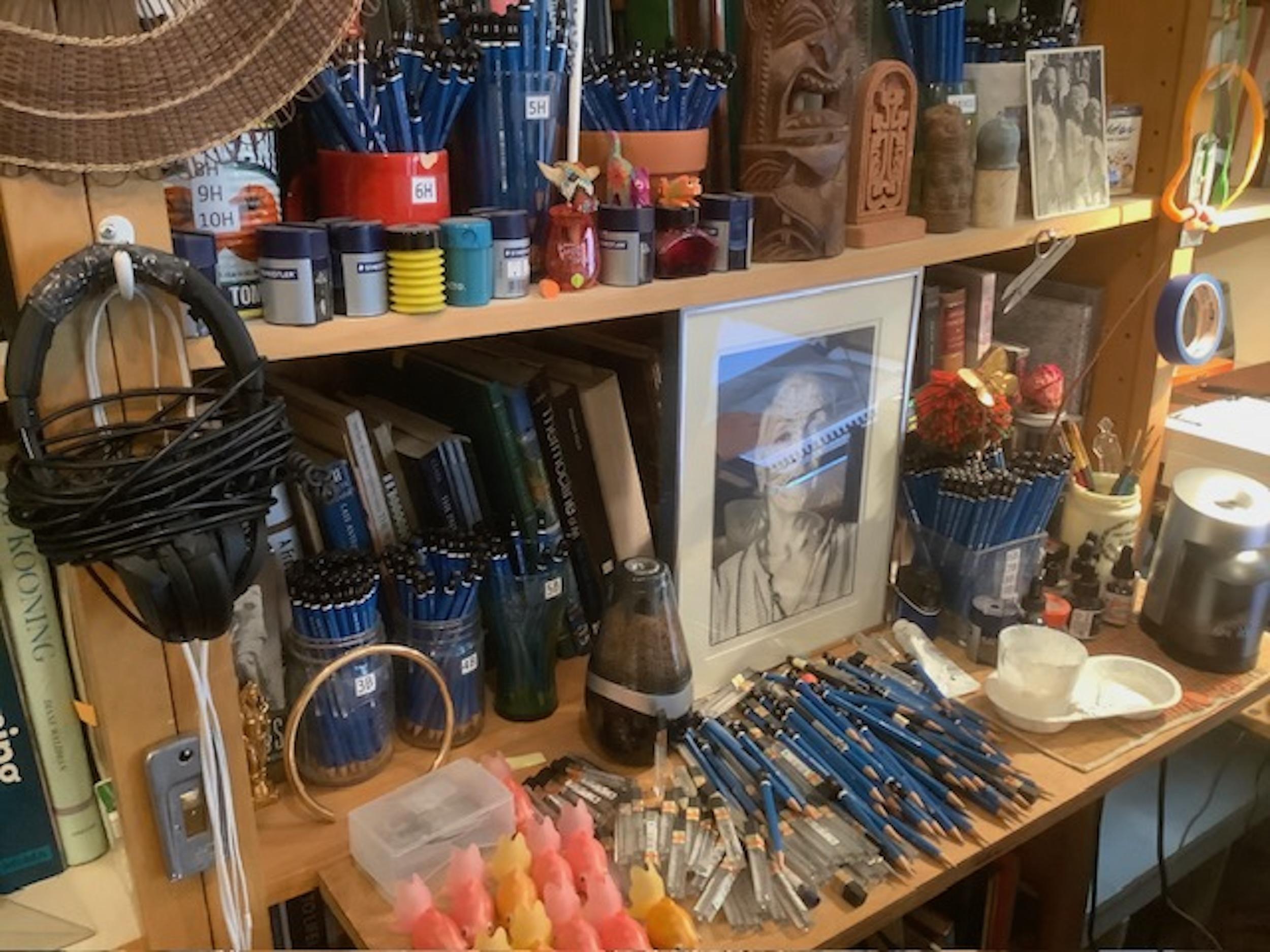
Photo by Dian Parker

Phong Bui's art materials.

DP: In The Rail, you write the editorial for every issue. In them, you give us the big picture. They aren’t bipartisan. You not only give us history, but specific names and dates. I learn so much about this country and history reading them. I’d like to quote from an editorial you wrote in 2025: ‘America is a nation of extreme contradictions. It is capable of losing its mojo by a self-effacing inferiority complex compared to other old cultures in the world, but also capable of expressing a strong sense of self-entitlement, arrogance, and narcissism in order to assert supremacy.’ How do you manage to be on 15 advisory boards, curate countless exhibits, write editorials, manage a staff of 18, put out The Rail every month, make portraits and meditation drawings, and write?

PB: I have a very predictable routine. I wake up at six every morning, do my workout, my to-do list, read, work with my team, go to openings in the evening. The creative force is unpredictable, and I have to be open to it, but I am very predictable. I can be unpredictable if someone tries to conform me. Like you, I don’t censor my enthusiasm.

DP: You’ve been awarded many honors, including a Rabkin Prize in 2017 and others since then. Which has been particularly meaningful for you?

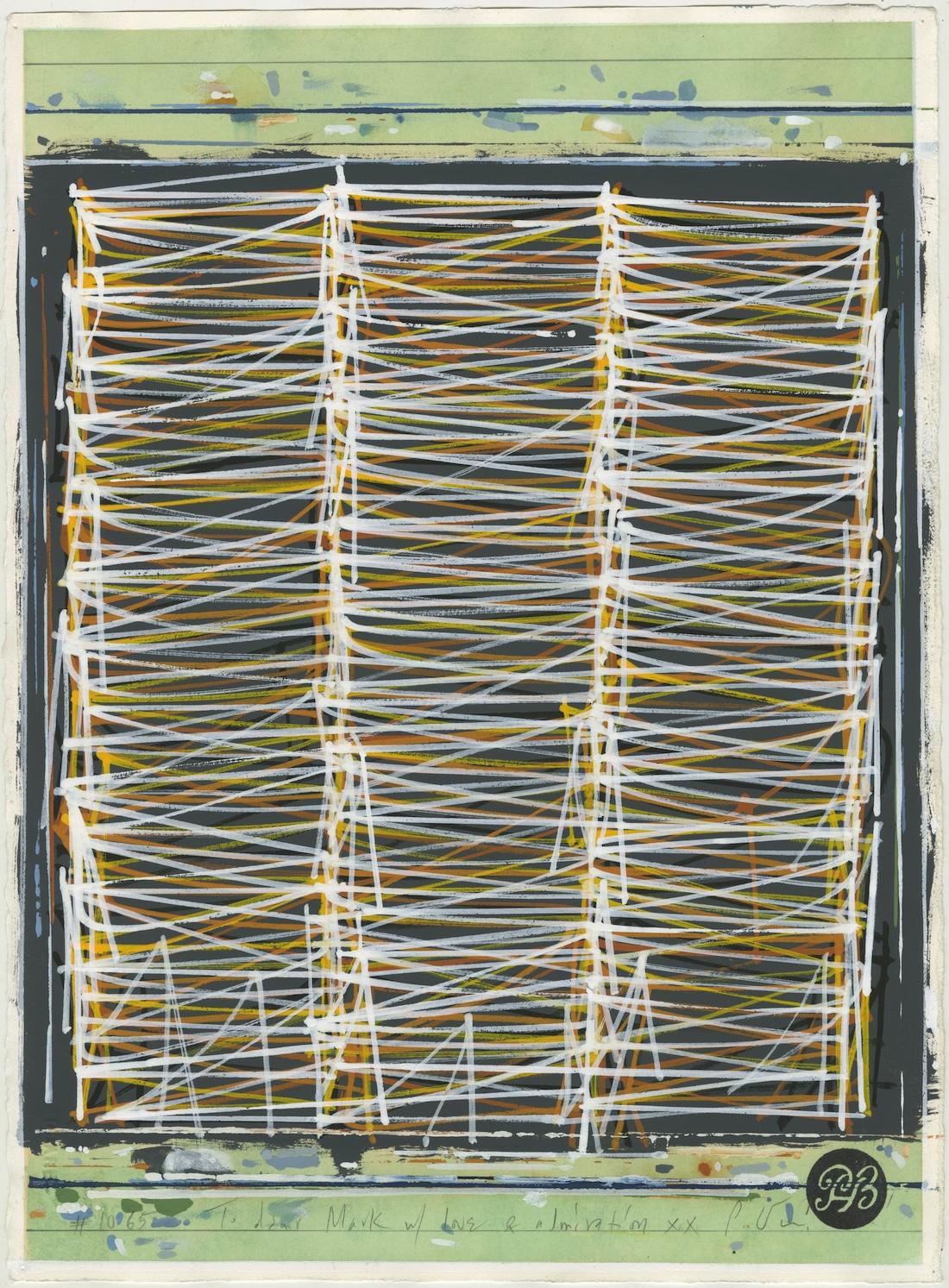
Courtesy of the artist.

Phong H. Bui, Meditation Painting #1065, 2024. Gouache, watercolor, and pencil on paper, 16 1/2 x 12 3/4. 

PB: The American Academy of Arts and Letters Award for Distinguished Service to the Arts in 2021. I have been countering speed with slowness of culture. To bring warmth to social media. To elevate the long form, the process. Like my drawings that take 8 to 10 hours requiring deep focus. I’m a nomadic rabbi that eats books.

DP: You do so much and many people are magnetized to you. How do you navigate all that attention without ego? You are able to drop boundaries for the person to come into you.

PB: I was brought up a Buddhist. Christ on the cross symbolizes individual suffering. Buddha was trying to get rid of himself, the opposite of the West. My portrait drawings celebrate the uniqueness of the individual, and my meditation paintings aim to attain absence, not being there, the void. I practice meditation through my art. I am not unique. I’m a part of the social fabric, a part of community. 

DP: How can someone nurture what you have?

PB: I discovered early on that culture has been associated with the cultural elite. Rail is radical in not spoon-feeding the readers nor condescending to them either. I am a cosmic optimist.

About the Author

Dian Parker

Dian Parker’s essays have been published in numerous literary journals and magazines. She ran White River Gallery in Vermont, curating twenty exhibits, and now writes about art and artists for various publications. She trained at the Royal Academy of Dramatic Art in London. To find out more, visit her website

Subscribe to our free e-letter!

Webform
Art and Object Marketplace - A Curated Art Marketplace