Museum  April 7, 2026  Alisa Lagamma

From Mali to Madagascar: The Met’s African Art Collection Renewed

Courtesy of The Metropolitan Museum of Art in New York

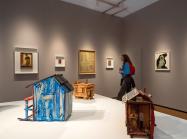
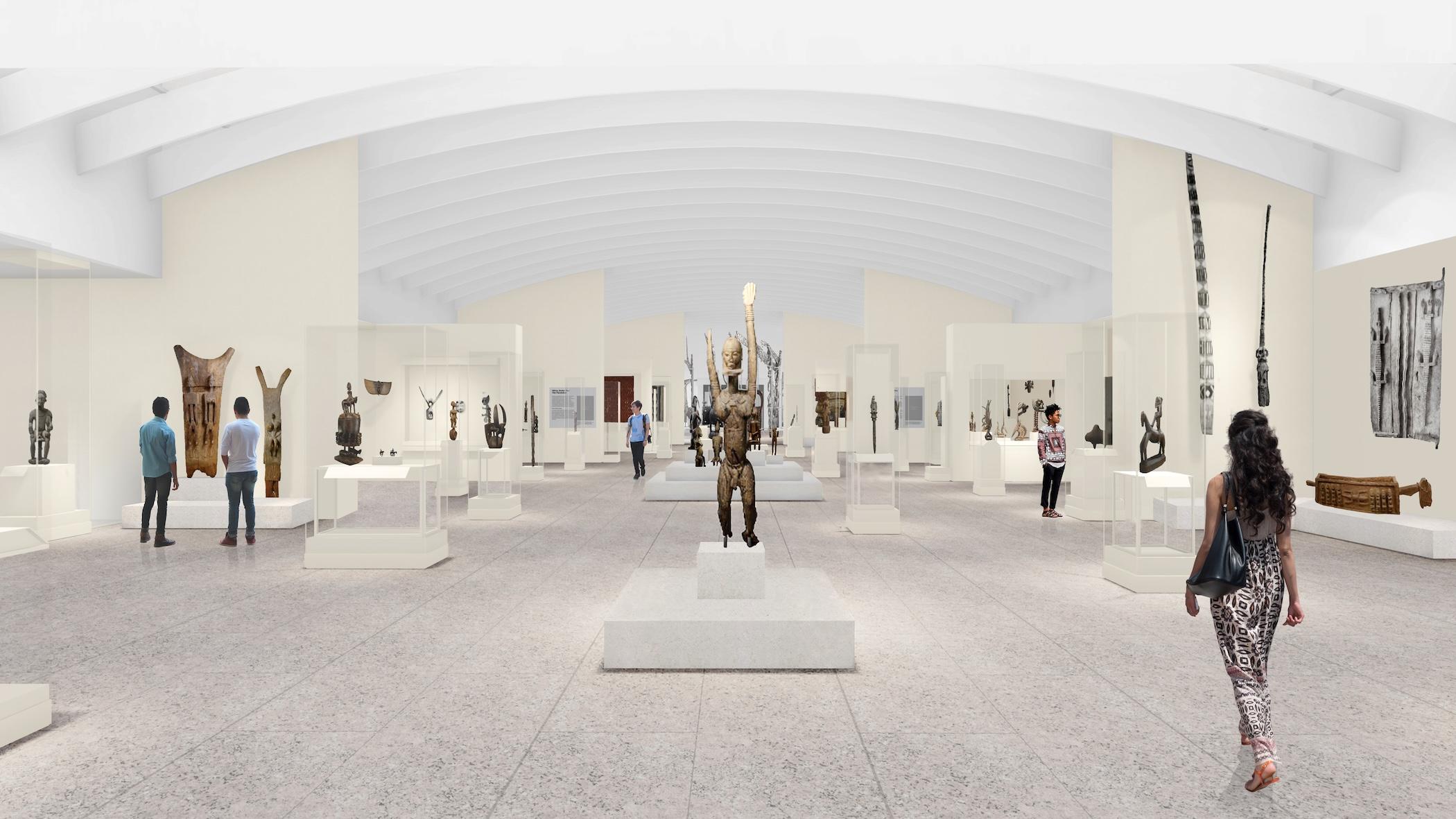
View of the Arts of Africa gallery in the Michael C. Rockefeller Wing at The Metropolitan Museum of Art in New York.

The Metropolitan Museum of Art’s Michael C. Rockefeller Wing was built over the course of the 1970s to showcase the world-class collections of art from sub-Saharan Africa, Oceania, and the Ancient Americas assembled by Nelson Aldrich Rockefeller.

When it opened in 1982, its neutral Modernist galleries set the standard for fine arts presentation of non-Western art. Forty-three years later, a re-envisioned edition of the Michael C. Rockefeller Wing opens to the public on May 31. While the Wing remains 40,000 square feet in size, its glass wall abutting Central Park, gallery design, and flow of the collections within have undergone a radical transformation.

The Michael C. Rockefeller Wing’s renewal was developed over the course of nearly a decade and executed in collaboration with WHY Architects. The key objectives have been to conceptually reframe and afford greater autonomy and distinction to what are three major regions of the world through drawing upon relevant architectural vernaculars, reintroduce the permanent collection with advances in art historical scholarship, and incorporate filtered natural light within an upgraded interior.

Within the third of the space allocated for art from sub-Saharan Africa, a grandiose high ceiling main gallery draws aesthetic inspiration from one of the continent’s great landmarks, Mali’s Great Mosque in Jenne. At either side of that awe-inspiring interior are lateral sections devoted to regional chapters of the subcontinent’s artistic traditions. The presentation of the collection within unfolds in a geographic survey extending from Mali to Madagascar. Its installation places a premium on viewing works of sculpture in the round so that iconic landmarks of the collection shine brighter than previously.

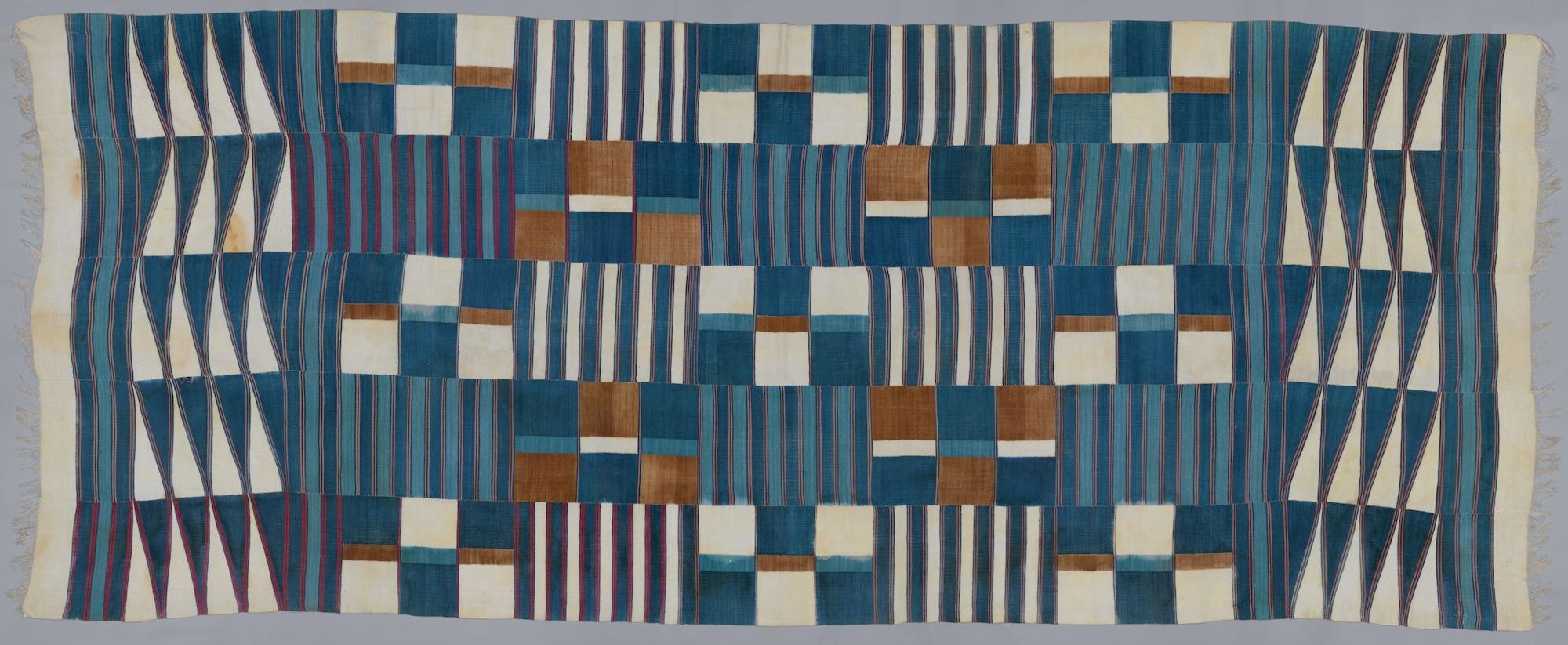
A radically different feature is the penetration of color introduced by the ubiquitous presence of textiles. These represent a diversity of techniques,  formats, and aesthetics, from stunning bodily fashions to the grandeur of creations designed to define architectural interiors. Among the marvels to behold is the remarkably complex composition and epic scale of a thirteen-foot Mende kpoikpoi canvas from Sierra Leone. Assembled from horizontally woven bands, its mesmerizing dynamic composition of checkerboard, striated, and triangular motif patterns complements the designs applied by Baga sculptors to sinuous serpent headdresses from neighboring Guinea that share the same sightline.

PURCHASE, LILA ACHESON WALLACE, DANIEL AND MARIAN MALCOLM, AND JAMES J. ROSS GIFTS, 2001

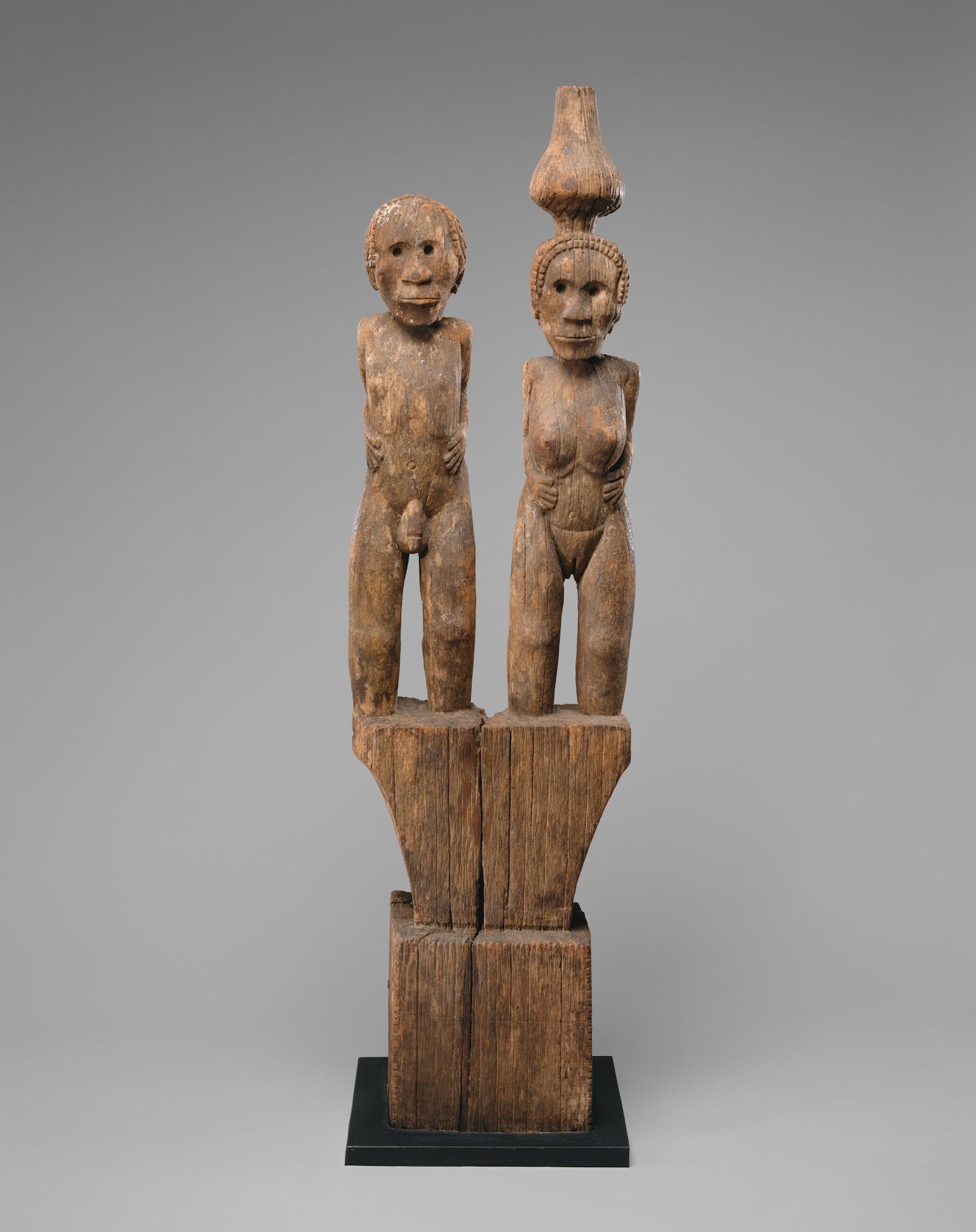
Sakalava artist, Tsiribihina River, Menabe region, Madagascar, Hazomanga finial, 17th–late 18th century.

Among the icons at the heart of the collection is a sensational tribute to a Fang founding ancestor from  Gabon and muse to the Western avant-garde. Before her arrival in the studio of the painter André Derain, she was positioned as the publicly accessible vigilant presence at the summit of a portable altar carried by members of a family as the location of their community shifted generationally. Her physical being is defined as a series of discrete volumes that may constitute a conceptual genealogical map. In Fang society the intense inky black tonality of the wood is associated with absence and its luminosity derived from the application of reflective palm oil evokes an ancestral state of being. Although works by African artists were ushered into institutions like The Met as a response to the transformative role and impact they had on a modern rebirth of Western expression, our new edition foregrounds the worldviews of their original authors. As much as possible, the emphasis in these galleries is on the biographies of those individuals and the original objectives that informed creations that by any measure attest to their virtuosity and ingenuity.

One of the most monumental extant works of Dogon sculpture, dating from as early as the 16th century, faces the point of entry to the new galleries. The corporeal presence of that over-life- sized priest with arms raised acts as a conduit for prayers to the heavens for life-giving rain on behalf of his constituents. Placed in dialogue with this classical landmark on the opposite wall is Bleu no. 1 (2014) by Abdoulaye Konaté. That contemporary fiber creation is a meditation on indigo as a critical ingredient of the region’s textile traditions whose palette evokes the skies overhead and seasonal rains that contrast with the arid Sahelian landscape.

At the other end of the survey is a parallel juxtaposition that at once highlights the range of visual media and their dynamism past and present. A Malagasy sculptural landmark created off the coast of East Africa in the Indian Ocean reflects the heritage of its author’s forebears from both Africa’s mainland and Asia. Once the  focus of rites of passage within a Sakalava community, despite centuries of exposure to the elements the gaze of this couple from the summit of a ceremonial post remains penetrating. Oriented toward galleries devoted to Oceanic art, the nude figures flank one another with hands held to their sides. The disparity in their heights is compensated for by a vessel of water delicately balanced on the woman’s head. Immediately adjacent are contemporary fiber creations by leading Malagasy artists—one by Martin Rakotoarimanana, reviving the brilliance of the island’s silk weaving tradition, and one by Jöel Andrianomearisoa, paying homage to the gentle hues of the island’s natural beauty.
PURCHASE, WILLIAM B. GOLDSTEIN AND HOLLY AND DAVID ROSS GIFTS, 2013

Mende or Vai artist, Sierra Leone, Kpoikpoi (prestige hanging), early 20th century.

The greater spaciousness afforded by this renovation has allowed for the addition of a critical mass of new works given by donors in celebration of the museum’s investment in the presentation of African art. In some instances, this expansion of the collection allows us to juxtapose works that represent  the same genre interpreted by multiple artists. This is the case for elegantly refined face masks carved by Baule sculptors in Côte d’Ivoire, animated in performances. The mask of Mblo encompasses cameo roles for the heavenly body of the moon. Two exquisite moon masks are now highlighted in the galleries along with footage of the operatic productions combining dance, music, song, and theatrical entertainment in which they once featured.

Other important gifts deepen our representation of the oeuvre of major artists. Also new to our galleries is an architectural element by the celebrated Yoruba master sculptor Olowe that dates from the 1904 decorating campaign waged by the Arinjale of Ise to have his residence renewed. Ekiti sovereigns continually remodeled their palatial residences in southwestern Nigeria. The great demand for Olowe’s talents during the first half of the 20th century is reflected in praise poetry that enumerates his achievements. Admired for his ability to imbue his complex compositions with a sense of dynamic motion extending into the viewer’s space, in The Met panel, and its companion now in the Smithsonian, Olowe vividly commemorates the state visit of two British officials. That work joins a pillar by Olowe for the interior courtyard of another palace in a new expanded section of the galleries devoted to the achievements of Yoruba artists.

The newly configured Africa galleries share interior thresholds with Oceanic art as well as the neighboring Greek and Roman and European Sculpture and Decorative Arts Wings. Those arbitrary adjacencies have been recast with relevant content. At the main point of entry from Greek and Roman, an interstitial space underscores the antiquity of visual expression in Africa. Wrapped in an original Duro Olowu design inspired by Sudanese textiles, at its center is an ancient Nubian stela on loan from the Boston Museum of Fine Arts that signals a point of connection with The Met’s Ancient Egyptian Wing. Finally, highlighted at the juncture of a once-shuttered portal, a selection of elegant ivories carved in Sierra Leone and commissioned by the earliest Portuguese travelers to West Africa are now featured heading into European Sculpture and Decorative Arts. Delicate hybrid products of converging cultures, such works entered the collections of the princely patrons of trans-Atlantic voyages and are contemporaneous with  those of the European Renaissance featured in the adjacent galleries.

*This article originally appeared in Art & Object Magazine's Summer 2025 issue.

About the Author

Subscribe to our free e-letter!

Webform
Art and Object Marketplace - A Curated Art Marketplace