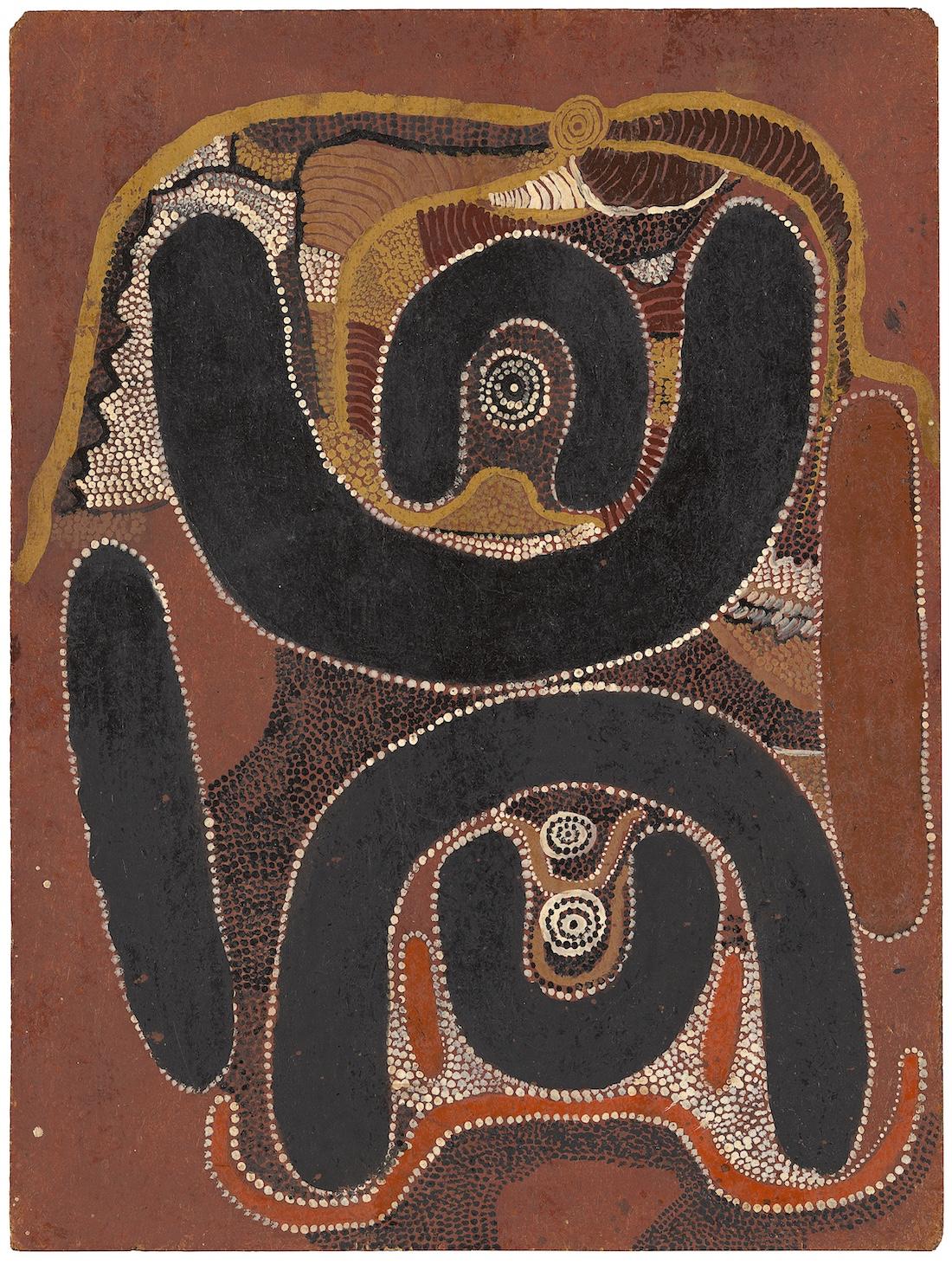
Younger generations of artists and activists, Indigenous and non-Indigenous, are rethinking and reinterpreting histories from other perspectives, while the availability of social media and online platforms have allowed direct access to audiences once out of reach. Museums, galleries, other art venues, art fairs, and festivals are showing such work more frequently, abetted, no doubt, by the appointing of more Indigenous people to leadership roles in the arts, not to mention the sudden demand for Aboriginal art by, among others, American collectors John W. Kluge, Steve Martin, and John and Barbara Wilkerson. Perhaps most significantly, the 65,000 years’ worth of time-tested knowledge of the environment possessed by Aboriginal nations in a time of ecological crises has catapulted them to the head of the line as experts in sustainability, offering guidelines on how to live harmoniously with the Earth.
The Stars We Do Not See is curated by Myles Russell-Cook, formerly of the NGV, now the artistic director of the Australian Centre for Contemporary Art, who says it was an “impossible task” to tell the complex saga in a single exhibition. Nonetheless, it is a thoroughly marvelous opening salvo. Even better, it is a visual gift of arresting masterwork after masterwork, often of monumental scale. (For those who want to delve deeper—and there will doubtless be many—the beautifully illustrated catalogue provides a solid overview of the subject.) It is a reprise of sorts of an exchange between the two museums presented in 1941 but happily reflects the radical shift in attitude between then and now. In the current enterprise, the NGV focuses on Aboriginal and Torres Strait Islander art instead of the scant 150-year evolution of European art in Australia that characterized the first, the Indigenous heritage at the time considered almost worthless.
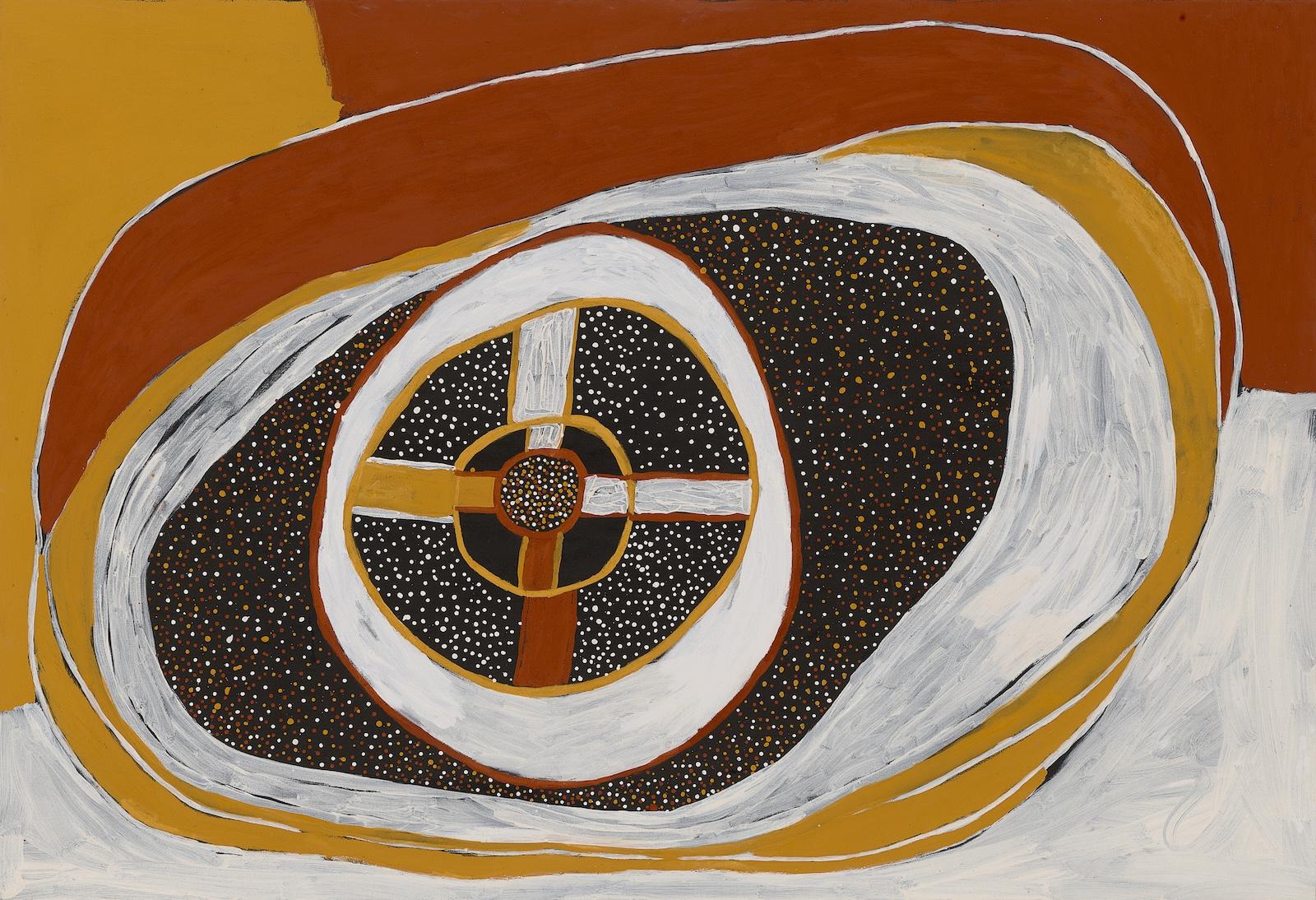
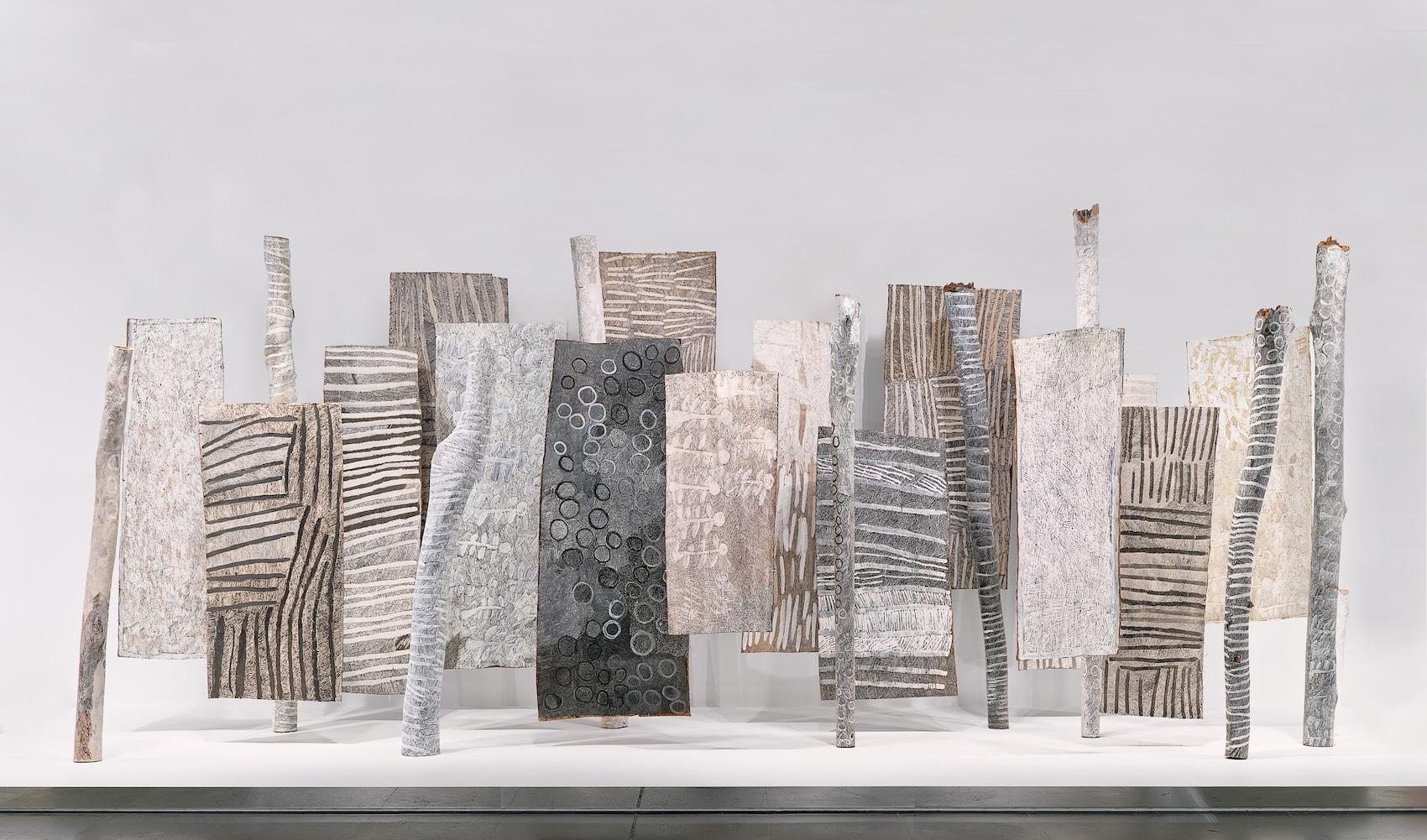
One important function of the exhibition is to introduce audiences to the sweep of Australian Aboriginal artistic practice. Traditional Aboriginal art—map paintings or dot paintings, bark paintings, weavings and magnificent ritual objects—is deeply rooted in ancient customs and beliefs and governed by strict cultural protocols, varying across specific regions, clans and knowledge systems. The word “Dreaming” (or “Dreamtime”) appears often and recounts and explains the origins of the world. It refers to ancestral beings who shaped the land and established its laws and customs, an event that did not only occur in the mythic past but is an eternal presence that confounds the Western concept of linear history. “Country” encompasses the living, sentient land, water, sky, people, ancestors, and spirit. “Songlines” (Bruce Chatwin’s wildly popular 1987 book of that name introduced a generation to them) are the walking routes across country that trace the journeys of these ancestral beings, providing encoded knowledge about the land that is visualized as symbolic abstracted maps, a living cartography passed on to successive generations. Together, they form the living, breathing, interconnected system of Aboriginal life.
There are 250 Indigenous nations from the continent and the Torres Strait Islands represented in the exhibition, the iconographies and style specific to each nation. One of the most revered of Aboriginal artists in the show and among the earliest to achieve international fame was Emily Kam Kngwarray. Her 1995 masterpiece, Anwerlarr Anganenty (Big Yam Dreaming), completed the year before her death, is being shown for the first time outside Australia. Measuring a mighty 9 by 27 feet, it depicts the underground network of roots and yams, the rhythmic, intricately looped pattern made from a charged, single continuous line, a prodigious act of creative combustion that she was celebrated for.
If you think of traditional Aboriginal art as ochres and browns, you will be surprised by artists like Nora Wompi, Nyapanyapa Yunupiŋu, Tiger Palpatja, and so many others, who are all uninhibited colorists. Dhambit Munuŋgurr is credited as the first to use blue, as seen in her elegant Iarrakitj (memorial poles), among other works, while Noŋgirrŋa Marawili, an early recycler, was attracted to pink, magenta, fuchsia, using ink from discarded toner cartridges mixed with earth pigments in some works. A knockout in flamboyant hues is Dulka Warngiid (Land of All) (2007), a grand collective telling of seven prominent artists’ personal stories to create a collaborative portrait of Country, one of the NGV’s most beloved works.
Weaving is an important practice among Aboriginal artists, connecting them to the land and the knowledge of generations. Mun-Dirra (Maningrida Fish Fence) (2023), an immense multi-panel fiber work by 13 artists, is another showstopper, a gracefully undulating tapestry of pandanus that seems to dance in space, aglow with light, the flow continuous, emblematic of that unbroken lineage.